Categories
Breaking News

Ancient Tick Engorged with Mammal Blood Found Fossilized in Amber

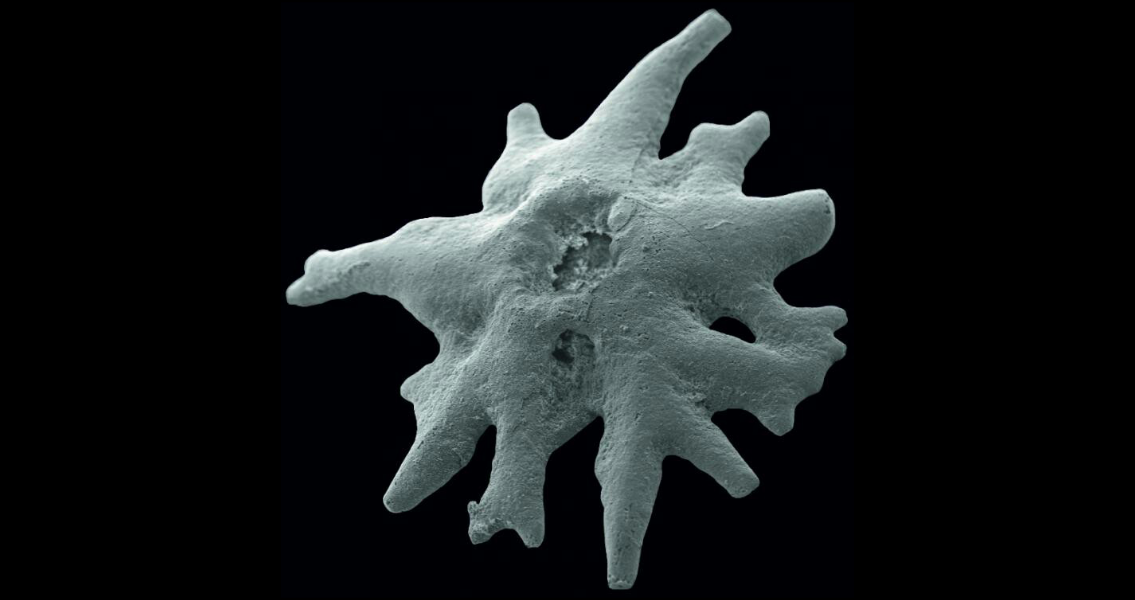
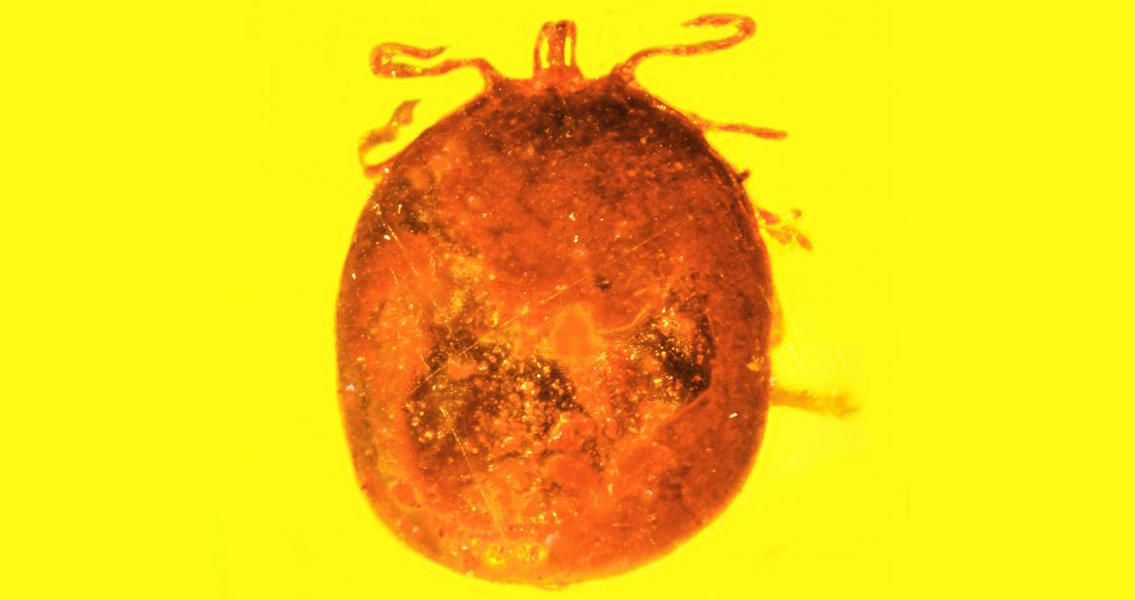
Babesia microti, a parasite that has survived to this day and is still transmitted by ticks to humans and other mammals. With its stomach distended by its last meal, the engorged tick looks as if it tumbled into a patch of tree sap after it was freshly plucked from a mammal sometime between 20 and 30 million years ago. Two small holes on its back, likely indicative of a primate pulling it off itself or a mate during grooming, were even oozing blood at the time the tick became encased in what would eventually become the piece of amber. Study author George Poinar, Jr., professor emeritus of Oregon State University’s College of Science, says the state of the tick speaks volumes of life millions of years ago in what would have been a tropical jungle in the modern Dominican Republic. The professor, an international expert on fossilized amber, added that the fossilized blood cells within the tick, which were infected with the B. microti parasite, are so detailed as to be “amazing.” B. microti can lead to a disease in humans known as babesosis, which mimics malaria in its symptoms and can be just as fatal. A genetically similar parasite is well-known for causing Texas cattle fever in live stock, a problem that has plagued plains states in the past. More than 500,000 acres of land in Texas have already been quarantined this spring because of an outbreak of the disease. Today, B. microti can be carried by the common deer tick, which is also known to carry Lyme disease. In a press release from Oregon State University, Poinar says that the life forms discovered in amber can unveil untold wonders concerning the evolution and history of diseases that modern humans are still plagued with to this very day. It’s now clear, thanks to the newly-discovered amber fossil, that B. microti was around well before humans ever evolved, and had adapted to flourish in our primate ancestors and other hosts, the scientist added. One of the unique facets of this find is how remarkably well-preserved the parasites and blood cells are within the amber-fossilized tick, Poinar said. The researcher likened it to a professional job, remarking that it was almost if they had been prepared in a laboratory in order to be subjected to study. In fact, the amber embalming process showcased the texture and the density of the parasites, which were different enough from the red blood cells harboring them to make them clearly identifiable. The new research study, which appears in the Journal of Medical Entomology, can be found online here Photo by George Poinar, Jr., courtesy of Oregon State University]]>
Categories
Breaking News

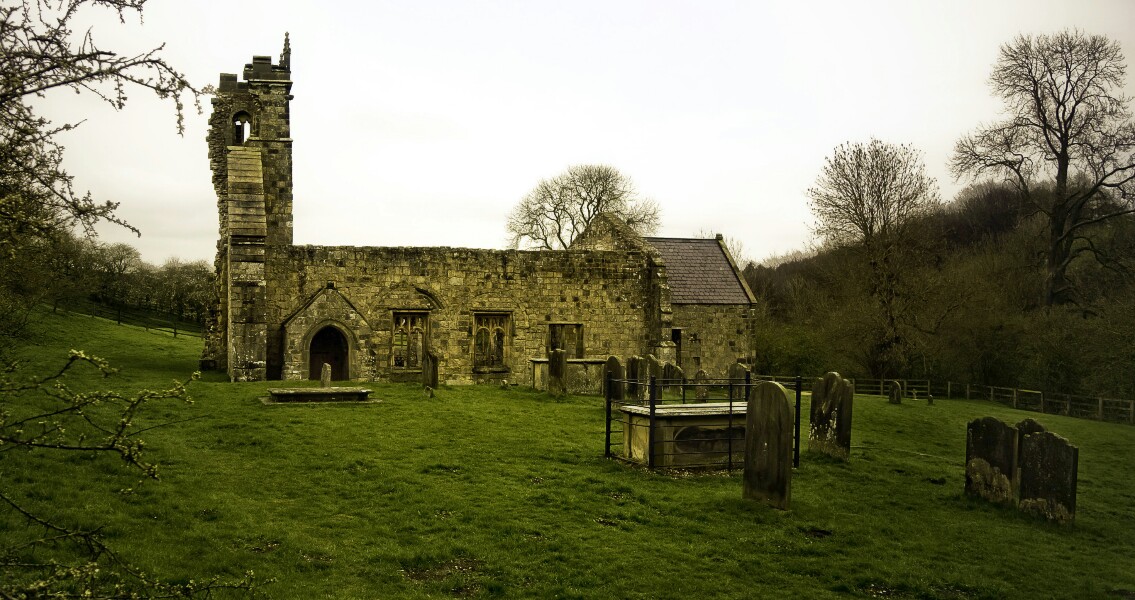
Study Examines Centuries Old Efforts to Prevent the Dead from Rising

Journal of Archaeological Science. ]]>

Categories
Breaking News

Rare Fossil Discovered in remnants of Trench From WWI

here Image courtesy of Ohio State University]]>

Categories
Breaking News

Church of the Holy Sepulchre at Risk of Collapse

National Geographic, the Edicule housed within the Sepulchre and thought by the faithful to be the final resting place of Jesus Christ, is at “very real risk” of collapse because of the church’s crumbling foundation. To make matters worse, the Edicule itself rests on a mix of rubble, mortar, and warren-like passageways and tunnels, all of which have compromised the integrity of the ground beneath it. Ironically, the discovery of the damaged floor was made during a $4 million project to restore and renovate the church itself to protect it for future generations of visitors. In some cases, more than four feet of unconsolidated rubble lie beneath the floor, which is doing its best to support the stone pillars that in turn hold the rotunda of the Church’s roof above the Edicule; each of these pillars is thought to weigh more than 20 tons. NTUA’s chief scientific supervisor Antonia Moropoulou spoke in dire terms of the foundation of the Edicule failing. Saying it’s a matter of when, not if, it occurs, Moropoulou remarked that the process will be slow but catastrophic. Such an event is unlikely to occur, however, considering the deep religious significance of the church to the world’s Christians. A newly-proposed project, drafted by the NTUA, calls for a $6.5 million excavation to shore up the foundation, which would take nearly a year and involve replacing rotted mortar and ancient rainwater and sewage drain systems around the holy site. The history of the site itself is inextricably tied with the state of the Edicule’s foundation, researchers say. In the time of Christ, the site was likely an old limestone quarry that had been repurposed as a burial ground for influential Israelites. Additional tombs discovered on the grounds lend credence to this theory. During the Roman occupation of Judea, a temple was built over the site sometime after it had become the supposed resting place of Christ. This temple was razed to the ground in 324 CE, revealing what the first Christian Emperor assumed to be the tomb of Jesus. Constantine built a shrine around the tomb, which stood until the seventh century CE when Persian invaders partially destroyed it. It was again razed by the Fatimids in the early eleventh century before being rebuilt once again. Periods of rebuilding punctuated the site’s history after this, from attempts by Europeans during the Crusades to later reconstruction efforts in the sixteenth and nineteenth centuries. Many of these construction phases are encompassed by the Church’s existing edifice. The dome of the rotunda, held up by those massive pillars on the Edicule’s crumbling foundation, is thought to mark the foundation of the original shrine erected by Constantine. Researchers hope that the new restoration work will provide opportunities for archaeologists to learn more about the church and its shrine, though there are fears that the cadre of religious authorities that oversee the site will not permit the activity. ]]>

Categories
Breaking News

Neo-Assyrian Tomb Complete with Skeletons Discovered in Iraq

Categories
Breaking News

Art and Symbolic Objects Found From First Humans On Sulawesi

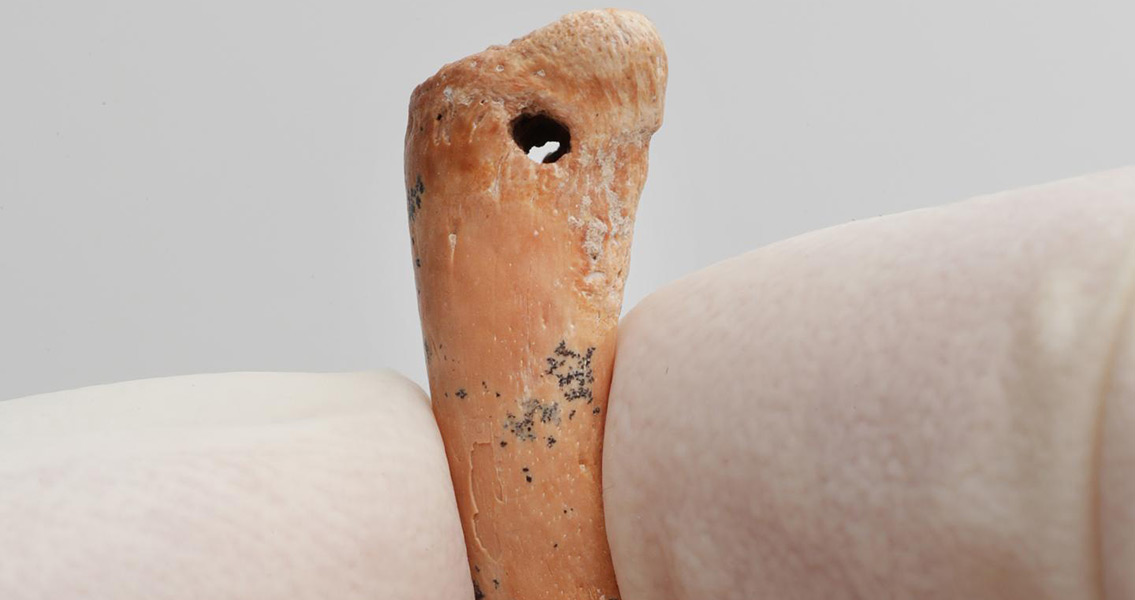
Proceedings of the National Academy of Sciences. The first Homo sapiens to inhabit the islands north of Australia arrived there sometime prior to 50,000 years ago. Little is known about these first human inhabitants of the Pacific Islands, which has led some to conclude the cultures were unsophisticated. A range of artefacts discovered recently however, are shedding new light on these people’s culture and symbolism. “Scientists have long been curious about the cultural lives of the first Homo sapiens to inhabit the lands to the immediate north of Australia sometime prior to 50,000 years ago — part of the great movement of our species out of Africa,” said Associate Professor Adam Brumm, an Australian Research Council (ARC) Future Fellow, who co-led the recently published study. “Some have argued that Pleistocene human culture declined in sophistication as Homo sapiens ventured beyond India into the Southeast Asian tropics and the island chains east of continental Eurasia, known as ‘Wallacea’. “However, the onset of new research programs in Wallacea is steadily dismantling this view.” The team led by Brumm and study co-author Dr. Michelle Langley have discovered a range of prehistoric rock art and ornaments. The breakthrough came in 2014, when they found 40,000 year old cave art on the Wallacean island of Sulawesi. This cave art is considered to be some of the oldest ever discovered anywhere on the planet. Since then, a host of other fascinating artefacts have been found, which are documented in the new study. These include an unusual assemblage of never seen before symbolic objects excavated from a Sulawesi cave site called Leang Bulu Bettue. Dated to between 22,000 and 30,000 years ago, the objects consist of disc shaped beads made from a babirusa (pig-deer) tooth, and a pendant fashioned from the bone of a bear cuscus. A series of stones incised with mysterious geometric patterns were also excavated. Evidence for rock art production at the site has also been found in abundance, such as discarded ochre pieces, ochre stains on tools, and a bone tube that could have been a ‘blow-pipe’ for creating hand stencil motifs. The oldest of these items date to at least 40,000 years ago. “Previously, assemblages of multiple and diverse types of Pleistocene ‘symbolic’ artifacts were entirely undocumented from Wallacea,” explained Dr Langley. “It was also unknown if or how Sulawesi cave artists adorned their bodies or whether their artistic repertoire even extended beyond rock paintings. Our understanding of the symbolic lives of these people is now much richer.” Fascinatingly, Brumm and Langley suggest that the art and jewellery they’ve discovered could be evidence that the spiritual beliefs of modern humans changed and developed as they encountered new types of animal life on the long migration from Asia to Australia. “Sulawesi, in particular, is renowned among biogeographers for its extremely high rate of species endemism – essentially all of the island’s land mammals, except for bats, occur nowhere else on earth,” said Associate Professor Brumm. “The discovery of ornaments manufactured from the bones and teeth of two of Sulawesi’s flagship endemics – babirusas and bear cuscuses – and a previously recorded painting of a babirusa dated to at least 35,400 years ago, shows that humans were drawn to these dramatically new faunal species. This may indicate that the conceptual world of these people changed to incorporate exotic animals.” Brumm and Langley speculate in their study that the progression through the diverse ecosystems of Wallacea could have prompted new ways of thinking about and engaging with the natural world. This, they suggest, could mean that elaborate human-animal spiritual relationships seen in Australian aboriginal cultures, could have their origins outside of Australia. Image courtesy of Griffith University ]]>

Categories
Editorial

Jack the Ripper, Giant Bears and Lost Continents – The First Quarter 2017

Jack the Ripper’s Final Victim – A Mystery That May Never Be Solved Britain’s most infamous serial killer, Jack the Ripper, has a whole industry surrounding his gruesome deeds in Victorian East London. Typically, most of the speculation about Jack the Ripper concerns his identity, but earlier this year the Ripper story entered the news due to uncertainty over the identity of his final victim. Jack the Ripper lore states that on 9th November 1888 Mary Jane Kelly was murdered and brutally mutilated in her home in Spitalfield’s, East London. The death is widely considered to have brought the Ripper’s reign of terror to an end, yet in 2015 a book claimed that the victim that night was actually a woman named Elizabeth Weston Davies. A team was assembled to determine the plausibility of locating the supposed remains of Mary Jane Kelly and then subjecting them to DNA testing to verify the identity. In March they concluded that uncertainties over the exact location of Kelly’s remains made it impractical to attempt an exhumation, while the level of disruption that would be required to search the graveyard in question would almost certainly mean legal permission wouldn’t be granted. The identity of Jack the Ripper’s final victim will remain shrouded in mystery. A Lost Continent is Discovered In February an international team of researchers confirmed the discovery of a lost continent located beneath the island of Mauritius in the Indian Ocean. The continent was apparently created around 200 million years ago, as the super continent Gondwana began to break apart. Zircon, a mineral formed in volcanic eruptions, was key to the remarkable discovery. The rock that makes up Mauritius dates to 9 million years old, yet 3 billion year old zircons have been found there. Finding zircons of such an advanced age proves that there are much older crustal materials beneath Mauritius, according to the study authors. The geologists claim that these materials could only come from a continent located under the island. A Giant Polar Bear? In late March archaeologists announced the discovery of a giant polar bear skull in northern Alaska. Radiocarbon dating revealed the skull, which is the fourth largest from a polar bear ever discovered, to be 1,300 years old. Measuring 41cm (16 inches) from the back of its neck to the tip of its nose, the skull has an unusually elongated shape much unlike modern polar bears. Scientists speculate that it could be an example of a now extinct species of ‘giant’ or ‘king’ bear. Ethnographers have documented countless stories of ‘oversized’ bears in a variety of Inuit groups. These include accounts of bears that were up to 12 foot long. The researchers speculate that descendants of giant bears, such as the one whose remains were found in northern Alaska, could be the oversized bears recorded by the indigenous populations of Alaska and the Arctic circle. ]]>

Categories
Breaking News

New Tyrannosaur Discovered With a Scaly Face and Sensitive Nose

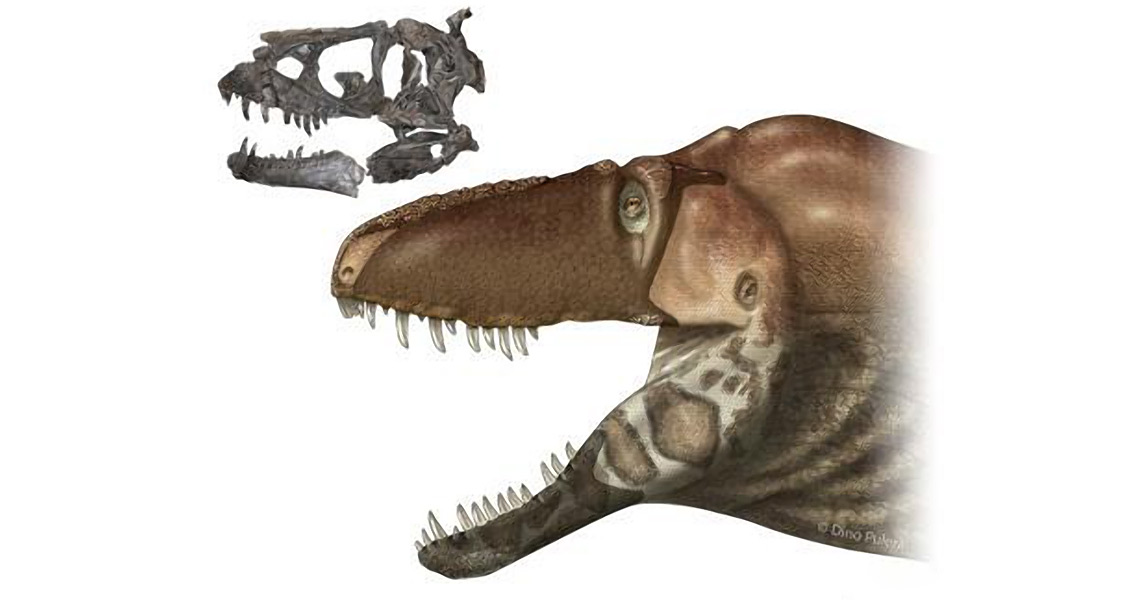
Daspletosaurus horneri – “Horner’s Frightul Lizard” – the new species is named after renowned paleontologist John “Jack” R. Horner. Horner, a former curator at the museum of the Rockies, discovered numerous dinosaur fossils in the region and also mentored local students towards scientific careers. “Being a tyrannosaur, they had really small arms,” said UNM Honors College Professor Jason R. Moore, who was involved in the discovery. “They wouldn’t be able to interact with their environment with their hands the way mammals do — find food, build nests, tend to eggs and young. In order to do these things, Daspletosaurus needed to use its feet or head. The discovery and analysis of the tyrannosaur shows that the dinosaur had a developed face sensitivity similar to the sensitivity in our finger tips, suggesting it could use its snout for all those complex ecological interactions, similar to the way crocodiles do today.” Published in Nature Publishing Group’s Scientific Reports, the study led by Thomas Carr of Carthage College’s Department of Biology in Wisconsin sheds new light on the development of the tyrannosaur lineage. “Daspletosaurus horneri was the youngest, and last, of its lineage that lived after its closest relative, D. torosus, which is found in Alberta, Canada,” explained Carr. “The geographic proximity of these species and their sequential occurrence suggests that they represent a single lineage where D. torosus has evolved into D. horneri.” The team’s research suggests the evolution of the tyrannosaurs was slow, the transition from D. torosus to D. horneri taking two million years. Carr and colleagues’ study stands to drastically enhance our understanding of tyrannosaurs, revealing a great deal about how their faces would have looked. “It turns out that tyrannosaurs are identical to crocodylians in that the bones of their snouts and jaws are rough, except for a narrow band of smooth bone along the tooth row,” explained Carr. “We did not find any evidence for lips in tyrannosaurs: the rough texture covered by scales extends nearly to the tooth row, providing no space for lips.” “However, we did find evidence for other types of skin on the face, including areas of extremely coarse bone that supported armor-like skin on the snout and on the sides of the lower jaws. The armor-like skin would have protected tyrannosaurs from abrasions, perhaps sustained when hunting and feeding.” Like crocodylians, tyrannosaurs had highly sensitive snouts and jaws, penetrated by numerous small nerve openings which would have allowed a multitude of branches of nerves to innervate the skin. This reveals a great deal about the development of the trigeminal nerve, responsible for sensations and motor actions in the face. “The trigeminal nerve has an extraordinary evolutionary history of developing into wildly different ‘sixth senses’ in different vertebrates, such as sensing magnetic fields for bird migration, electroreception for predation in the platypus bill or the whisker pits of dolphins, sensing infrared in pit vipers to identify prey, guiding movements in mammals through the use of whiskers, sensing vibrations through the water by alligators and turning the elephant trunk into a sensitive ‘hand’ similar to what has been done to the entire face of tyrannosaurs.” explained Jayc Sedlmayr, professor at the Louisiana State University Health Sciences Center New Orleans. Image courtesy of @Dino ]]>

Categories
Breaking News

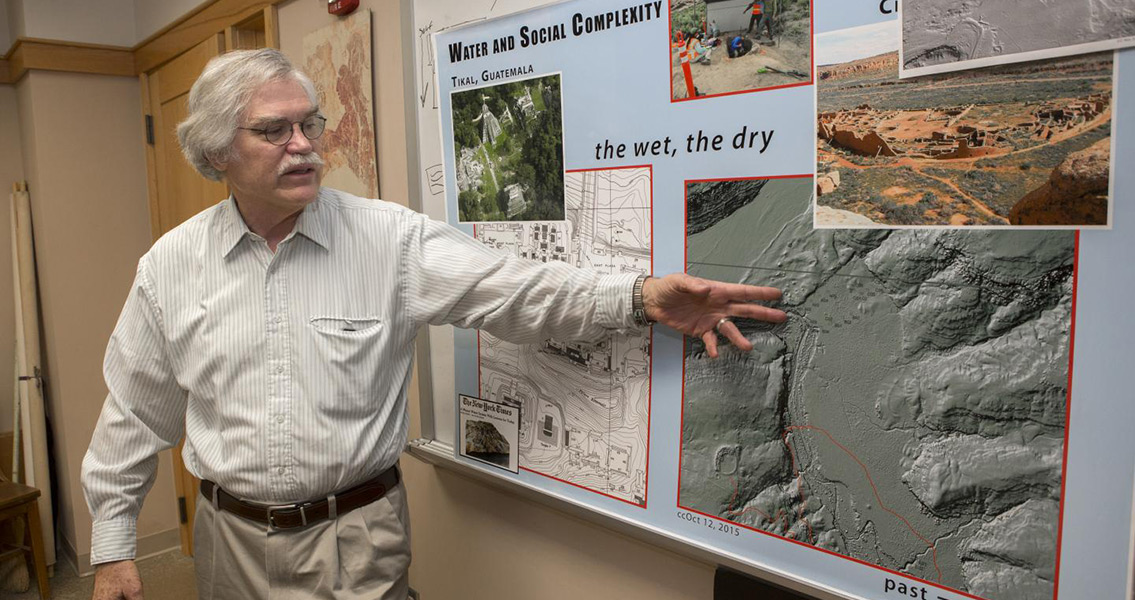
Maya and Ancestral Puebloans Providing Clues on World Water Crisis

Categories
Breaking News

Iron Age Remains and Chariot Found in East Yorkshire

Geographica in around 150 CE. By comparison, the Arras culture’s grave sites date back as far as the Middle Iron Age – around 800 BCE – and stretch to approximately 70 CE. Parisi and Arras culture territories overlap to some degree, though the Parisi are thought to have had stronger ties to continental Europe than the Arras. Chariot burials appear in both cultures. ]]>