Proceedings of the National Academy of Sciences, can be found here Image courtesy of Yonaton Goldsmith ]]>

Proceedings of the National Academy of Sciences, can be found here Image courtesy of Yonaton Goldsmith ]]>



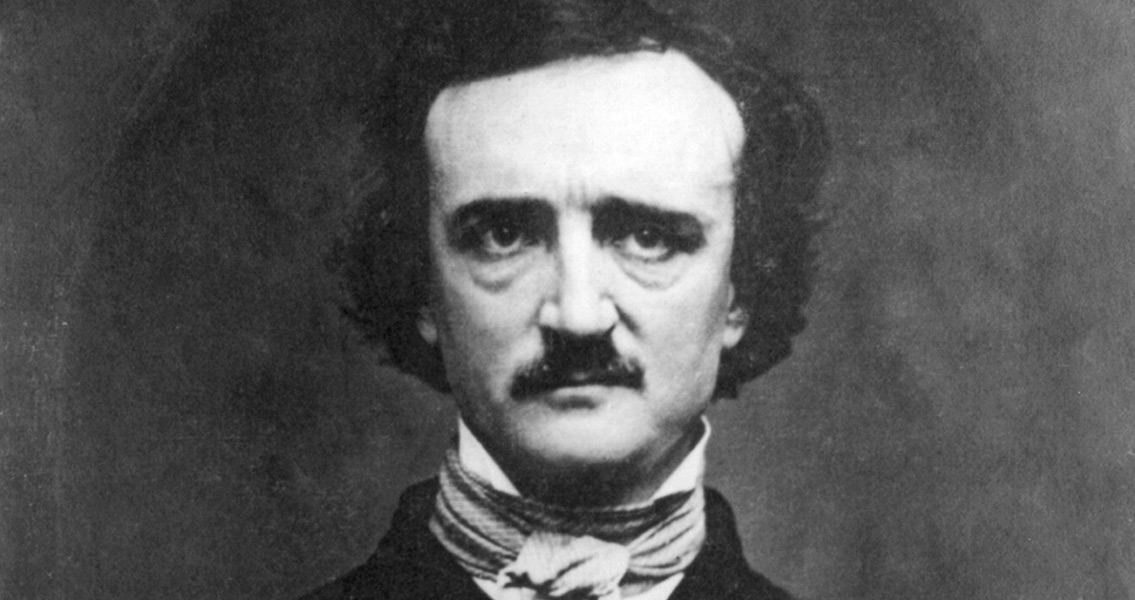
Eureka: A Prose Poem was Poe’s last major work before his death in 1849. Jumping between metaphysics and cosmology, the book is far from one of his most well known and was subject to heavy criticism at the time of its publication. Of particular interest now, however, is a passage which describes a ‘primordial particle’ whose rapid expansion created the universe as we know it. The similarities between this description and the Big Bang Theory are uncanny. “The willing into being the primordial particle, has completed the act, or more properly the conception, of Creation. We now proceed to the ultimate purpose for which we are to suppose the Particle created – that is to say, the ultimate purpose so far as our considerations yet enable us to see it – the constitution of the Universe from it, the Particle.” Poe wrote in Eureka. “This constitution has been effected by forcing the originally and therefore normally One into the abnormal condition of Many…. From the one Particle, as a centre, let us suppose to be irradiated spherically – in all directions – to immeasurable but still to definite distances in the previously vacant space – a certain inexpressibly great yet limited number of unimaginably yet not infinitely minute atoms.” Poe’s startling insights in Eureka are not limited to the radiation of matter from a Big Bang. He describes “non-luminous suns” which could be seen as comparable to modern ideas of dark matter. He postulates that the expansion and contraction of the universe could be repeated an infinite number of times, another common belief of modern cosmology. Put simply, Poe imagined a dynamic, constantly evolving universe. To modern readers this may seem obvious; in the nineteenth century it was anything but, with most scientists then conceiving of space as static and non changing. Where did Poe come up with these remarkable insights? One idea is that it was just chance. Poe had no formal training in philosophy or the natural sciences, despite being an avid reader of science books (Eureka is dedicated to naturalist Alexander Humboldt). T.S. Eliot even used this as a criticism of the 150 pages of Eureka. “[Eureka] makes no deep impression” he wrote, “because we are aware of Poe’s lack of qualification in philosophy, theology or natural science.” More recently, scientists have pointed out that many of the ideas in Eureka don’t align with modern cosmology – it’s only a few that do which have overshadowed what Poe didn’t get right. Others claim that Poe’s idea of the universe reveals the true scope of his intellect. Either through aesthetic reasoning or some other insight, Poe was able to come up with the outlines of a revolutionary theory of how the universe worked, but it took until the 1960s for scientists to develop the mathematics and reasoning to flesh it out and give it credibility. Importantly, Poe himself seemed convinced that what he’d described over the course of Eureka was not an exercise in fantasy or whimsy. He wrote to a friend in 1848: “What I have propounded will (in good time) revolutionize the world of Physical & Metaphysical Science, I say this calmly – but I say it.” ]]>
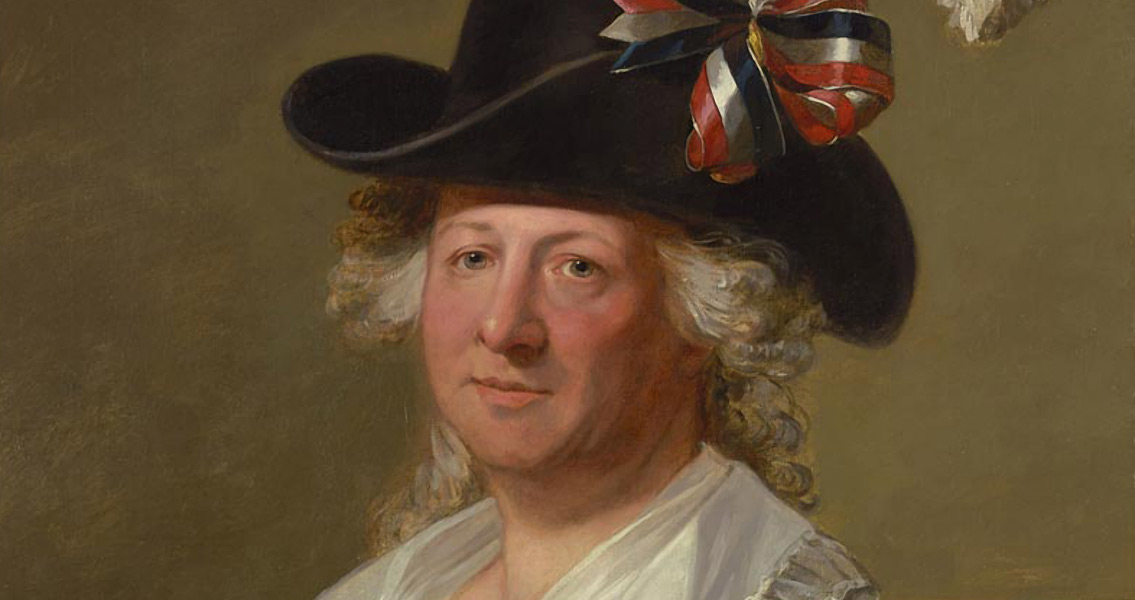
le Secret du Roi, “the King’s Secret”, a clandestine network of spies created by Louis XV in the 1740s. The King’s Secret’s first mission was to have Louis’ cousin, Prince Conti, placed on the Polish throne – thereby making the country a useful French satellite and ally in Eastern Europe. D’Eon was tasked with winning the support of Russian Empress Elizabeth, as well as promoting French interests in Russia more generally. Some biographies claim that d’Eon’s time in Russia also saw his first encounters with cross dressing. Empress Elizabeth held regular ‘drag balls’ where all attendants were obliged to arrive in a dress, regardless of their gender. When the Seven Years War erupted in 1756, d’Eon returned to France to serve as a dragoon in the French army before being appointed as a secretary to the French ambassador in 1762 as peace was secured between the warring nations. It was a role which would embroil d’Eon in all manner of geopolitical intrigue, as the French King looked for ways to gain revenge for the colonies France lost in the final treaty. As a member of the civil service d’Eon was employed as an ambassador in the British court. As a member of the King’s Secret he was tasked with scouting the British coast in preparation for a French invasion. D’Eon’s relationship with the French government deteriorated to the extent he threatened to reveal secret documents to the British. Several attempts were launched by French authorities to extradite d’Eon back home, some through diplomatic channels, others via force (D’Eon evaded kidnapping several times and was forced to live under armed guard). In 1764, he gave his first warning to the French authorities, publishing a book which contained all of his personal correspondence with the French royal family – embarrassing revelations which served to isolate him from France but win popularity in England. At the same time, rumours started to appear concerning D’Eon’s gender and habits. Some claimed he dressed as a woman, regularly buying ladies’ corsets for himself. D’Eon likely started some of these rumours, although others could have been created by his enemies to discredit him. Another story surfaced that he had actually been born a woman – it was common in this period for women to pretend to be men to gain entry into the army. Eventually, a deal was agreed between d’Eon and the French king. D’Eon would receive a lucrative pension from France and in exchange he would hand over all documents which could incriminate the French government. D’Eon would remain in London, exiled from France but still delivering reports for the King’s Secret. One final condition was included. D’Eon would have to officially declare a gender. In a remarkable turn, she elected to be known as a woman for the rest of her life. In 1777 she returned to France, the official story being d’Eon had been born a woman but raised a man by a father desperate for a son. Mademoiselle la Chevaliere d’Eon even had a formal unveiling in the French court, wearing an elaborate dress and make-up. Her life in France however, was a miserable one. D’Eon suddenly found herself a victim of the patriarchal society of the day. Politically her voice had been silenced, while attempts to rejoin the army were repeatedly blocked. Quickly she was forced into retirement, returning to England in 1785. A celebrity to the British public, d’Eon was nevertheless brought to near poverty when the French Revolution resulted in the cancellation of her pension. To make ends meet she began staging and taking part in fencing competitions, mesmerising the public as a ferocious woman sword fighter. Well into her sixties she continued the displays, until a serious injury forced her to retire. For the final years of her life d’Eon lived in virtual obscurity, lodging with an elderly woman in London and increasingly vanishing from the public eye. It was only when she passed away in 1810 that a mortician discovered Mademoiselle la Chevaliere d’Eon was biologically male. ]]>
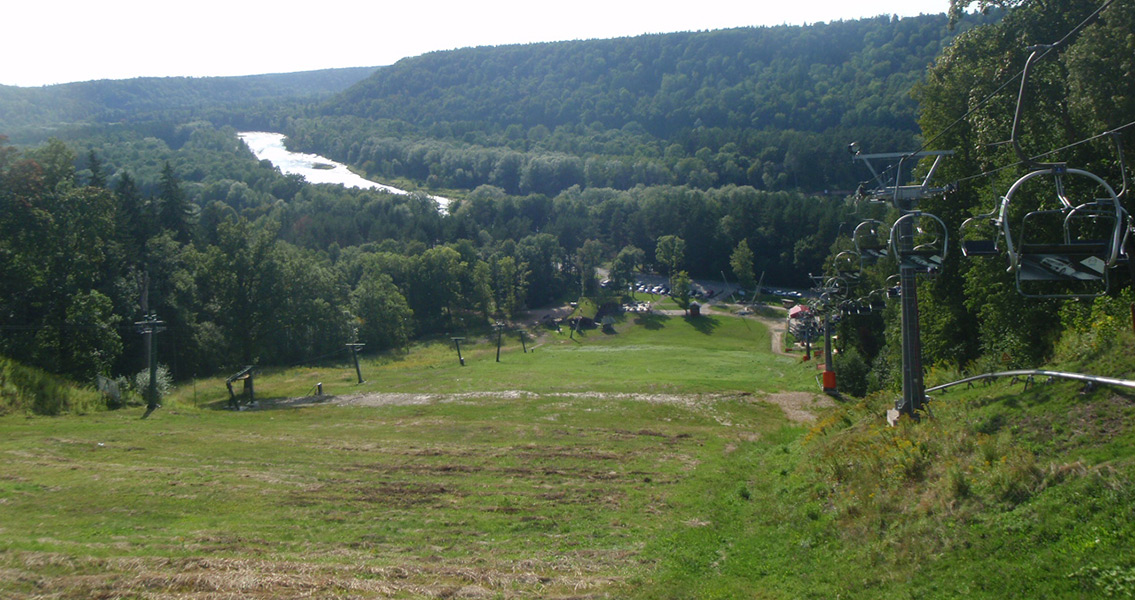
Current Biology, the latest study suggests that migration was not a ‘universal driver’ for the spread of farming through Europe. Although archaeology shows that the technologies of the Neolithic Package did reach the Baltic region, the genetics of the populations there remained the same as those of the hunter-gatherers throughout the Neolithic. “Almost all ancient DNA research up to now has suggested that technologies such as agriculture spread through people migrating and settling in new areas” said Andrea Manica from the University of Cambridge, a senior author on the study. “However, in the Baltic, we find a very different picture, as there are no genetic traces of the farmers from the Levant and Anatolia who transmitted agriculture across the rest of Europe.” “The findings suggest that indigenous hunter-gatherers adopted Neolithic ways of life through trade and contact, rather than being settled by external communities. Migrations are not the only model for technology acquisition in European prehistory.” The team reached their conclusion by extracting ancient DNA from a number of remains discovered in Latvia and Ukraine dating to between 5,000 and 8,000 years old. The remains spanned the Neolithic period, and the transition from a hunter-gatherer way of life to one based on food production. Fascinatingly, the team’s results also shed new light on the spread of Indo-European languages. Although showing no influence from Levantine farmers, one of the Latvian genomes did show signs of an external influence which the scientists believe could be from the Pontic Steppe in the East. Lead author Eppie Jones, from Trinity College Dublin and the University of Cambridge, explained: “There are two major theories on the spread of Indo-European languages, the most widely spoken language family in the world. One is that they came from the Anatolia with the agriculturalists; another that they developed in the Steppes and spread at the start of the Bronze Age.” “That we see no farmer-related genetic input, yet we do find this Steppe-related component, suggests that at least the Balto-Slavic branch of the Indo-European language family originated in the Steppe grasslands of the East, which would bring later migrations of Bronze Age horse riders.” Combined with archaeological data, the new study suggests the arrival of the Neolithic Package to the Baltic region was a much more gradual process than elsewhere in Europe, facilitated by trade networks rather than rapid migration and interbreeding. Manica concluded: “It seems the hunter-gatherers of the Baltic likely acquired bits of the Neolithic package slowly over time through a ‘cultural diffusion’ of communication and trade, as there is no sign of the migratory wave that brought farming to the rest of Europe during this time. “The Baltic hunter-gatherer genome remains remarkably untouched until the great migrations of the Bronze Age sweep in from the East.”]]>
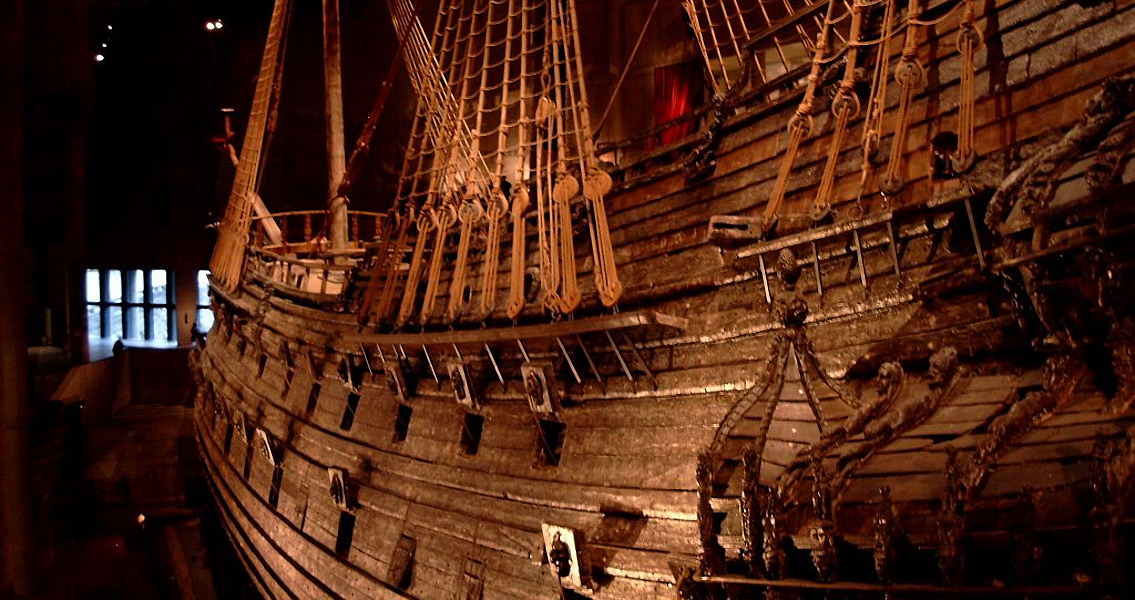
The Local, the ship is approximately 45 meters long and carried 68 or 70 cannon. Launched in 1682, it was the first ship ever built in Karlskrona, eventually ending up back where it started in 1713. A curator with the Swedish National Maritime Museums, Jim Hansson, explained in the article that the warship may have been sunk deliberately in order to utilize its cannon to defend the city during the King’s campaign against Russia, a campaign which would eventually lead to the ruin of the Swedish Empire, causing Karl XII to flee to the Ottoman Empire. The newly discovered ship is remarkably similar in size and age to the warship Vasa. The only ship from the seventeenth century to ever be salvaged practically fully intact, the 64-gun Vasa, which sank on her maiden voyage in 1628 and was salvaged in the 1960s, is on display at the world-famous Vasa Museum in Stockholm, Sweden. Opened in 1990, the Vasa Museum is reportedly Scandinavia’s most visited museum, with over 1.3 million visitors in 2016. The Vasa foundered after sailing approximately 1,300 meters into her maiden voyage. Built on the orders of Sweden’s King Gustavus Adolphus at the naval yard in Stockholm, she was armed mainly with bronze cannon which were cast specifically for the ship. Richly decorated, after completion, the Vasa was among the most powerfully armed ships in the world. However, she was also dangerously top-heavy and unstable, and yet despite her lack of stability the ship was ordered to sea. During the recovery process in 1961, thousands of objects and artifacts, along with the remains of fifteen people at a minimum, were discovered by marine archaeologists inside and around the ship’s hull, including weapons, clothing, cannon, coins, tools, cutlery and six of the ten original sails. These items, as well as the ship herself have provided researchers with invaluable information regarding naval warfare, shipbuilding and everyday life in Sweden in the early seventeenth century. The Blekinge, however, is far from being in good condition. A part of the ship seems to have been flattened when the stone pier at Karlskrona shipyard was constructed, although it’s possible the lower sections are better preserved. “Part of her is embedded in deep layers of sediment. We believe there could be a relatively in-tact level of deck under it. The ship’s not at all as well preserved as the Vasa, but the part which lies outside of the pier could be better preserved,” Hansson explained in the article. It’s likely that further research will be conducted on the shipwreck, given its historical significance as the first ship built at the Karlskrona shipyard, where a naval base is still located. The shipyard was established around 1680, at practically the same time as the city. It was a necessary facility due to heavy losses suffered by the Swedish navy in 1659. Areas of the city, consisting primarily of the Naval Port, have been declared a UNESCO World Heritage Site. ]]>
Science Advances, can be found here Image courtesy of Yuriy Chernyavskiy]]>