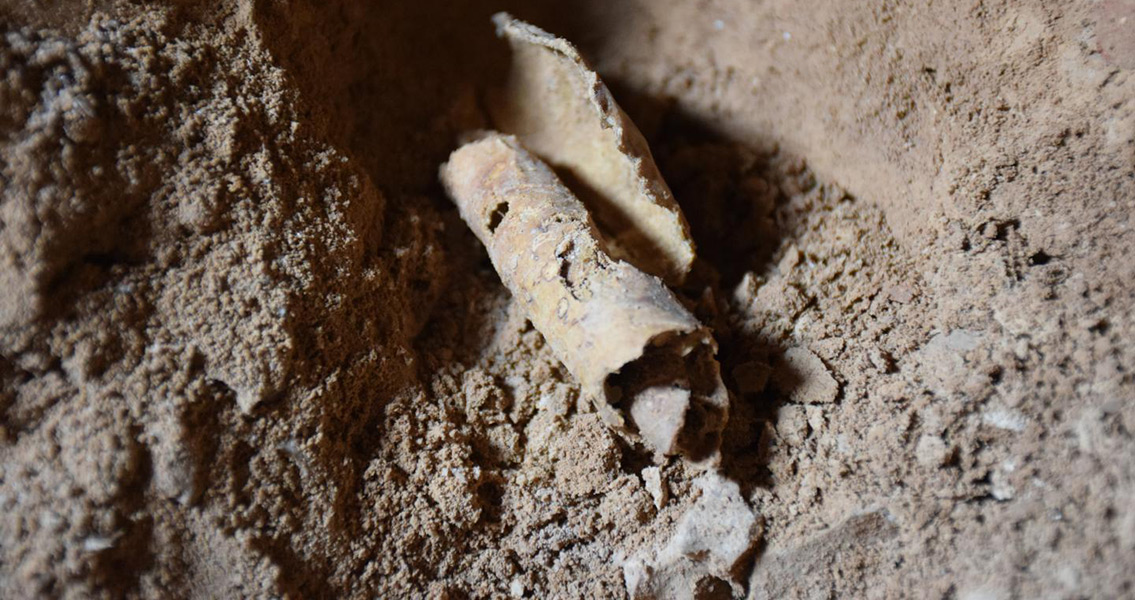
Current Biology, is available here Image courtesy of Botting, J. P]]>

Current Biology, is available here Image courtesy of Botting, J. P]]>

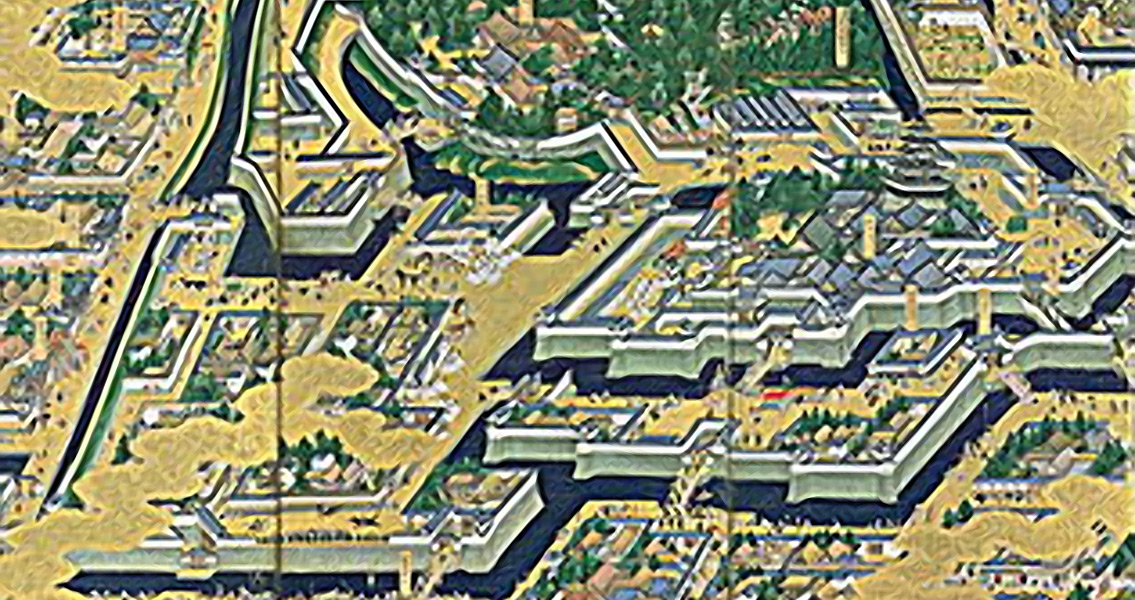

Homo neanderthalenisis is now long extinct, the differences between the two species can actually be hard to pinpoint. A fact further complicated by the now widely accepted belief that the two species interbred during the time they both inhabited Eurasia.
History
The first point of difference between the two species can be found in their respective histories. Neanderthals migrated into Eurasia long before modern humans did. Exactly when they left Africa is far from certain, but scientists generally estimate it was sometime between 300,000 and 200,000 years ago.
Humanity’s path to Eurasia is also far from certain. The earliest recognisably modern human fossils have been found in Omo Kibish in Ethiopia, and date to around 200,000 years ago. Genetic and paleontological records suggest modern humans started to leave Africa between 60,000 and 70,000 years ago. Exactly why this migration started is unclear, but it is generally believed to have been due to the onset of the last Ice Age.
Some 50,000 years ago the first humans started to arrive in what is now the Middle East (this was likely a different group to the original explorers out of Africa, who instead migrated East through India). It was this group that would eventually go on to colonise much of Europe and Asia.
Anatomically modern humans then, arrived in Eurasia much later than their evolutionary cousins. Nevertheless, the two species lived alongside each other for several thousands of years, with the Neanderthals finally going extinct sometime between 40,000 and 30,000 years ago.
Appearance
Although similar in many ways, there are clear physical differences distinguishing Neanderthals and modern humans.
Neanderthals were significantly shorter and stockier than modern humans, with much broader rib cages and pelvises. To give some perspective, the average height for a man in the USA is 1.76 metres. Conversely, based on the fossil records available, the average height for a Neanderthal was just 1.6 metres.
A study published late last year suggested that some of these anatomical differences could be the result of the Neanderthals being forced to adopt a much more high protein diet than modern humans.
Intelligence and Behaviour
One of the hottest topics in scientific research right now involves determining just how intelligent Neanderthals were. For years, the prevailing view was that Neanderthals were primitive, poorly developed brutes when compared to modern humans, only capable of expressing themselves in grunts and groans. Discoveries in the last few years have really brought this assumption into question. ⦁ A study last year presented remarkable evidence that Neanderthals may have used vocal communication in a way similar to modern humans.
⦁ Archeologists working at Neanderthal sites in France believe Neanderthals deliberately collected manganese oxide to use in chemically assisted fire making 50,000 years ago.
⦁ Earlier this year, a study pointed towards Neanderthals being rock collectors, suggesting they placed symbolic importance in the objects around them. This is widely considered a signifier of cultural development.
⦁ Jewellery found at various paleolithic sites has long been a bone of contention, with some arguing it was created by humans, others that it was the work of Neanderthals and thus further proof of how advanced they were.
If true, any of these discoveries would point to Neanderthals being for more advanced than their typical depiction in popular culture would suggest.
The physical differences between Neanderthals and humans are quiet clear, especially in terms of anatomy. Beyond that though, it’s becoming increasingly uncertain just how distinct we are from our closest extinct evolutionary cousins.]]>
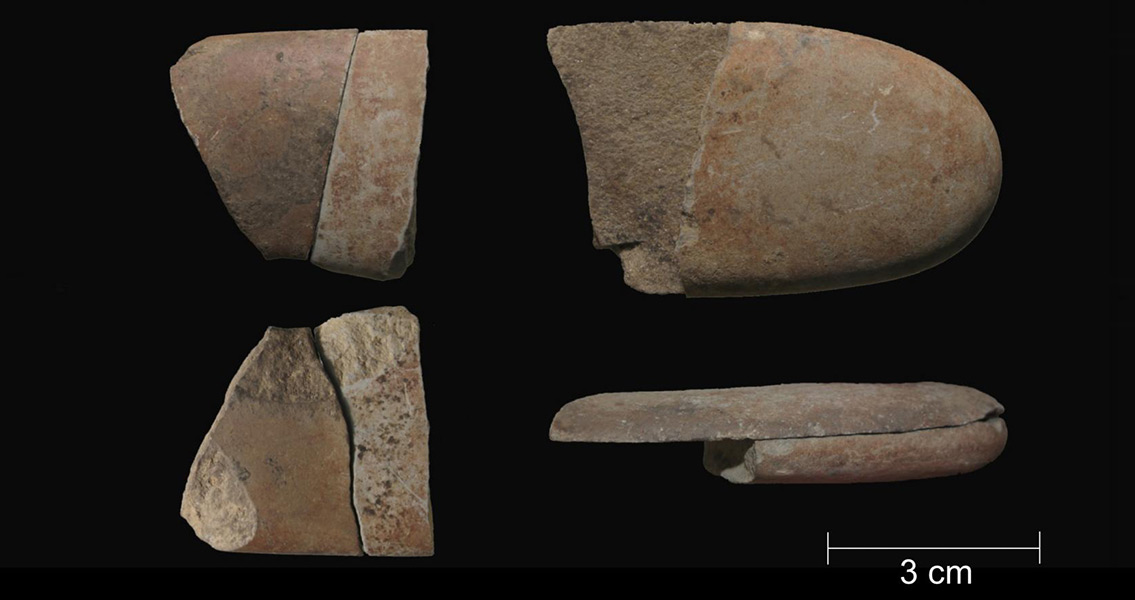
Cambridge Archeological Journal, claims to have found evidence that this symbolic killing was actually practiced up to 5,000 years earlier. Researchers from Université de Montréal, Arizona State University and University of Genoa examined 29 pebbles taken from an Upper Paleolithic burial site in Italy to make their conclusion. They believe that roughly 12,000 years ago the flat, oblong pebbles recovered from Caverna delle Arene Candide on the Mediterranean Sea in Liguria had been brought up from the beach and used as spatulas to apply ochre paste to decorate the dead. Once the decoration had been completed, the pebbles were broken and discarded. Study co-author Julien Riel-Salvatore, an associate professor of anthropology from the UdeM, said the reason for breaking the stones could have been to “kill” them, “discharging them of their symbolic power”. Roughly the size of a hockey rink, the Arene Candide cave is home to a necropolis containing the remains of some twenty adults and children. Situated in a steep cliff some 90 metres above sea level, it’s considered a vital reference site for the Neolithic and Paleolithic periods in the Mediterranean. Although the cave has been known about and subject to excavation since the 1940s, the broken pebbles were always overlooked. “If our interpretation is correct, we’ve pushed back the earliest evidence of intentional fragmentation of objects in a ritual context by up to 5,000 years,” said study lead author Claudine Gravel-Miguel, a PhD candidate at Arizona State’s School of Human Evolution and Social Change, in Tempe. “The next oldest evidence dates to the Neolithic period in Central Europe, about 8,000 years ago. Ours date to somewhere between 11,000 and 13,000 years ago, when people in Liguria were still hunter-gatherers.” Crucially, no matching pieces were found for the pebble fragments analysed by the team. They speculate that this could be because the missing halves were kept as talismans or souvenirs. “They might have signified a link to the deceased, in the same way that people today might share pieces of a friendship trinket, or place an object in the grave of a loved one,” explained Riel-Salvatore. “It’s the same kind of emotional connection.” For five years the team painstakingly excavated the Arene Candide area using trowels and dental tools before carrying out rigorous microscopic analysis on the pebbles they found. For comparison, they also carried out a similar process on pebbles from nearby beaches, to prove that those from Arene Candide had indeed been deliberately broken. “This demonstrates the underappreciated interpretive potential of broken pieces,” the authors write in the conclusion to their study. “Research programs on Paleolithic interments should not limit themselves to the burials themselves, but also explicitly target material recovered from nearby deposits, since, as we have shown here, artifacts as simple as broken rocks can sometimes help us uncover new practices in prehistoric funerary canons.” Broken pebbles are often overlooked during excavations. Riel-Salvatore suggests that this could have led to many vital insights being missed. “Historically, archeologists haven’t really looked at these objects – if they see them at a site, they usually go ‘Oh, there’s an ordinary pebble,’ and then discard it with the rest of the sediment. We need to start paying attention to these things that are often just labeled as rocks. Something that looks like it might be natural might actually have important artifactual meaning.” Image courtesy of Université de Montréal]]>

Wenwu in 2015. This same article has now been translated into English and published in the journal Chinese Cultural Relics. In the journal article, the archaeologists also discuss the other tombs they found in the cemetery, noting that they excavated 69 tombs in total. The research team included members from the Shanxi Provincial Institute of Archaeology, the Shanxi University’s School of History and Culture, the Agency of Cultural Relics and Tourism of Jinyuan District, Taiyuan city, and the Taiyuan Municipal Institute of Cultural Relics and Archaeology. ]]>

here]]>
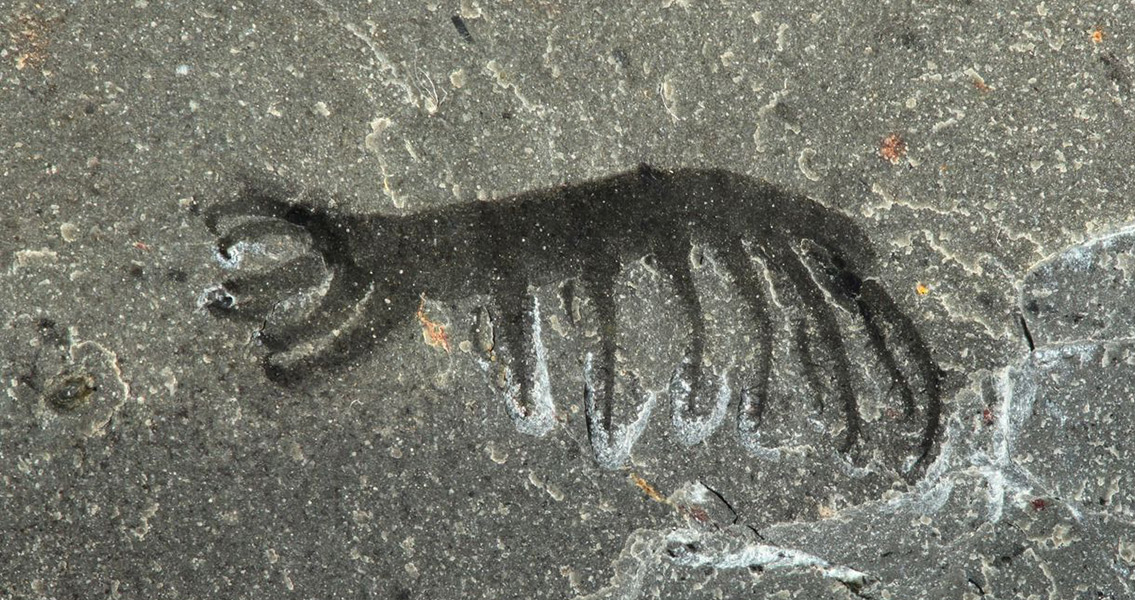
Ovatiovermis cribratus, a 500-million-year-old worm no bigger than a thumb and with leg-like appendages, has recently been identified as a new species. The fossil specimen resembles a flattened shrimp, but the tiny creature, a distant relative of arthropods and tardigrades, hung around in North America’s shallow seas eons before shrimp existed. Evolutionary biologists based their approximation of the worm-like creature on two fossils, the first discovered decades ago and a second which was found by a tourist in 2011 visiting the Burgess Shale. The Burgess Shale Formation, where both specimens were found, is a UNESCO World Heritage site known for its extraordinary deposit of marine fossils. The Formation, a former seafloor, is found in the Canadian Rockies of British Columbia and boasts more than just exoskeletons and bones. It’s also known for the exceptional preservation of the soft tissues of the fossils there. At 508 million years old, Burgess is one of the earliest fossil beds known to contain soft-part imprints. The rock formation is black shale and is visible at several locations near the city of Field, B.C., in Yoho National Park and Kicking Horse Pass – a high mountain pass on the border of Alberta and British Columbia. Another outcrop is located 42 km south, in Kootenay National Park. The Burgess Shale was discovered in 1909 by Charles Walcott, a paleontologist. He returned with his family in 1910 and established a quarry at Fossil Ridge. The importance of soft-bodied preservation, and the wide range of organisms Walcott recognized as being new to science, caused him to return to the site numerous times until 1924. By 1924, at age 74, Walcott had collected more than 65,000 specimens. The name, Ovatiovermis cribratus, stems from how researchers believe the creature fed. Ovatiovermis because it’s thought the creature stood up on the seafloor, in an ongoing standing ovation of sorts, and cribratus in reference to the way it may have sieved passing water in order to collect food. Lobopodians (meaning “blunt feet” in Greek) are worm-like organisms with stubby legs. “Lobopodians have mostly been seen so far as an eclectic group. We think that suspension feeding was common among them and turned out to be important in the initial ‘burst’ of that colossal group that gave rise to water bears, velvet worms and arthropods,” Cédric Aria, a co-author of the recently published study, said in a statement. Other animals, the skeleton shrimp for example, have comparable eating patterns. The Burgess Shale Formation and its fossil-carrying deposits correlate to the Stephen formation, a collection of dark mudstones approximately 508 million years old. The beds holding the fossils were deposited at the bottom of a cliff that was around 160 meters tall, deep enough to be below the agitation caused by waves during a storm. Originally it was believed the Burgess Shale was set down in anoxic conditions, ongoing research, however, suggests oxygen was present on a continual basis. Ovatiovermis cribratus was identified in an article recently published in BMC Evolutionary Biology. Photo courtesy of Jean-Bernard Caron—Royal Ontario Museum ]]>

The Cambodia Daily, University of Illinois at Chicago archaeologist Mitch Hendrickson described the find: first the footprint of the furnace was discovered, along with some of the collapsed sidewalls. The base was also found, the Canadian researcher added. There isn’t a question as to whether the people of the Angkor Empire were aware of the process of smelting. In fact, there have been plenty of finds from the time period that point to Angkorian metalsmiths having the knowledge of processing ore in order to extract base metals. What is noteworthy, however, is that this discovery marks the first find of a furnace. The site that yielded the smelter was first surveyed in 2009 by Hendrickson and his colleague Phon Kaseka, the Royal Academy of Cambodia’s director of archaeology. The initial survey was noteworthy because of what appeared to be furnace pipes jutting from the ground; a return in 2013 saw researchers extracting charcoal for radiocarbon dating, revealing that it would have been produced sometime during the Angkor Empire era – between the eleventh and twelfth centuries CE. The new discovery also has implications for what is known about iron production during the Angkor Empire. The metal would have been a key component in all of Angkorian life, from making farming implements to forging weapons for war. Even the construction of Angkor-era temples would have made use of iron bars for reinforcement, according to Kaseka. Kendrickson also commented on the construction of the site, remarking that, based on the evidence, the team believes these furnaces were constructed from clay. The process would have been to smelt the iron within the clay furnace and then break down the walls in order to extract the “bloom”, a porous mass of iron and slag that would then be processed further. The site was likely used for quite some time for smelting, based on several indications. This makes it likely that the nearly intact furnace found by the excavation was the final one used at the facility before winding down smelting operations for some unknown reason. In fact, there were at least six or seven different smelting phases on site, based on one of the excavation trenches that cut through the entire mound, Hendrickson remarked. This, he believes, indicates that there are several more furnaces below where the team is excavating currently. Surprisingly, the size of the furnace was much smaller than anticipated. Kaseka states that even a modest clay furnace of just 1 meter by 2 meters would be sufficient, as long as it was set at a proper angle to allow molten iron ore to flow from it. Images of the excavation can be found here: here]]>