Categories
Breaking News

Leprosy Bacterium Virtually Identical Now to Middle Ages Epidemic

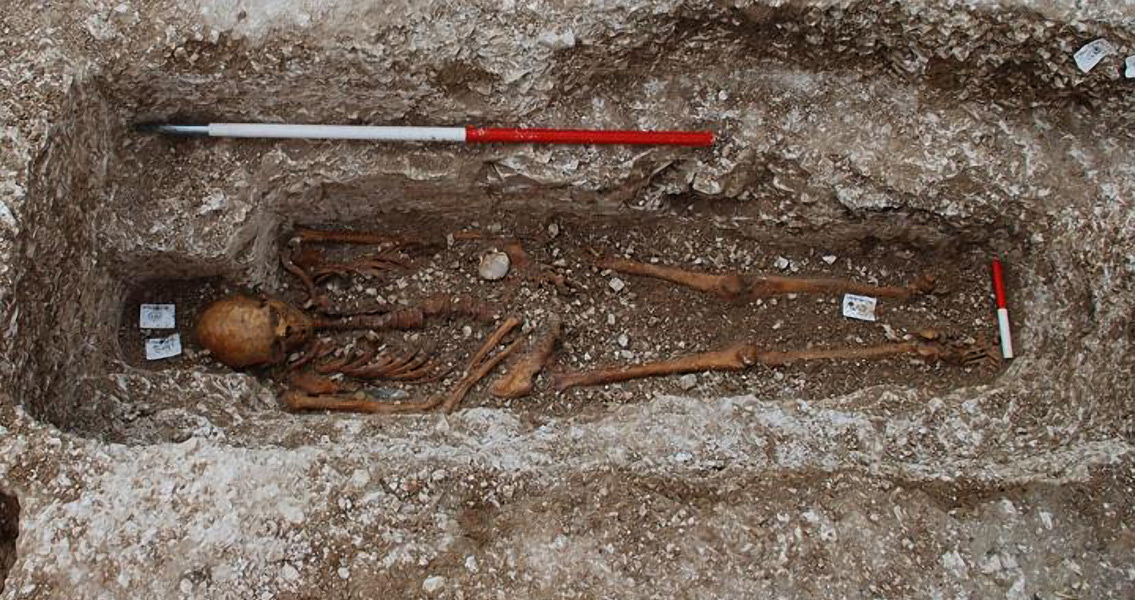
Mycobacterium leprae or Mycobacterium lepromatosis, it has affected human societies across the world for millennia. Reaching epidemic levels in the Middle Ages, leprosy continues to infect people to this day. The organisms responsible for leprosy are close relatives of M. tuberculosis, the bacteria that causes tuberculosis. Scientists theorise that leprosy enters the body through either breaks in the skin or through the mucous membranes of the nose, a theory supported by the fact that the disease tends to get transmitted after prolonged periods of close contact. Ultimately however, scientists are still unsure of the exact mechanism behind leprosy’s transmission. A multidisciplinary team investigated the strain of leprosy found in a leprosy hospital cemetery in Winchester, UK. Extensive tests were performed on a skeleton excavated from the cemetery, including genotyping, radiocarbon dating, biomolecular analysis, osteology, strontium, and oxygen isotopic analyses, as well as host of archaeological tests. Radiocarbon dating revealed that the remains studied had been buried in either the late eleventh or early twelfth century. The team believe that the individual was likely a wealthy religious pilgrim from outside the UK. As well as analysing the single skeleton in great detail, the team found that 86% of all remains sampled at the burial site displayed skeletal lesions indicative of leprosy. Simon Roffey and Katie Tucker, of the University of Winchester UK, and Michael Taylor of the University of Surrey, UK, along with their colleagues, determined that the M.leprae genome had not changed significantly since the terrible epidemic that ravaged the Middle Ages. The finding is hugely significant, suggesting that the lack of variation in the genome has allowed humans to build up a resistance to leprosy, leading to the substantial decline in the disease’s transmission. The strain of M.leprae sampled from the skeleton was found to belong to the 2F lineage, a strain which today is associated with leprosy cases in South-Central and Western Asia. Although most of the M.leprae strains found at the Winchester cemetery fall into the 2F lineage, the sample presented in the paper was genetically distinct from these isolates. It remains unclear exactly where or when the pilgrim actually contacted leprosy. Nevertheless, the team’s findings have the potential to greatly enhance our understanding of the transmission of leprosy in the past, and the present. “These findings confirm the benefits of a multidisciplinary approach which allows investigation of the wider relationship between leprosy, medieval pilgrimage and M. leprae transmission.” the authors write in the study, published in open access journal PLOS Neglected Tropical Diseases. Image courtesy of Roffey, S. and colleagues, PLOS Neglected Tropical Diseases ]]>
Categories
Breaking News

3,500 Stolen Artifacts Seized in Massive Sting Operation

Categories
Breaking News

Mutilated Skeletal Remains Dating to Roman Era Found in UK

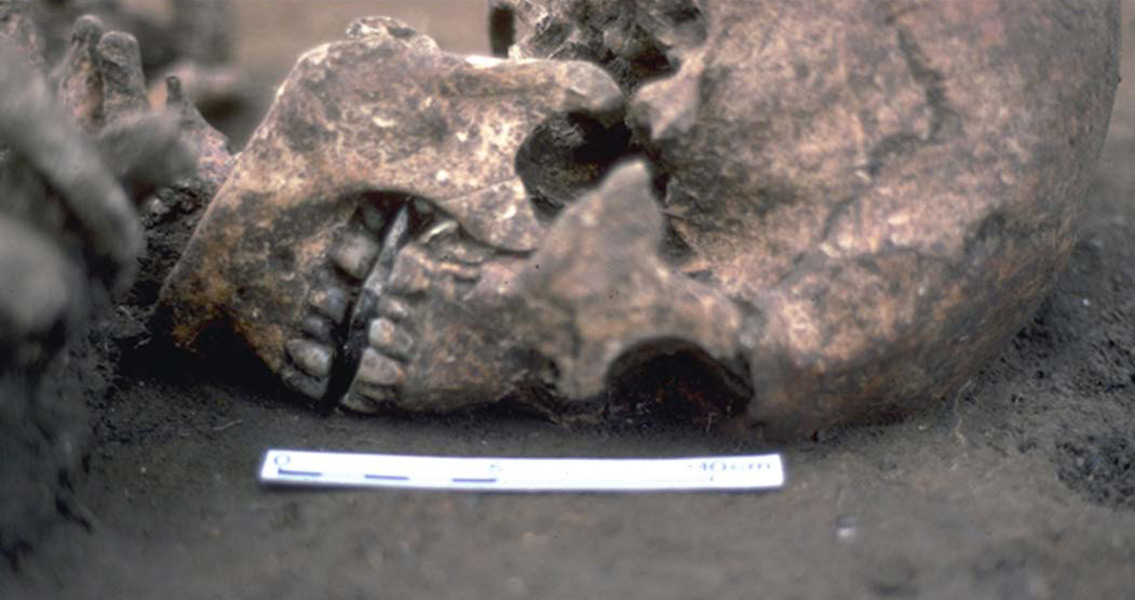
The Guardian. Archaeologists that studied the burial say that the man could have been buried in such a manner to prevent him from rising from the dead and terrorizing the living. Discovered near the river Nene at Stanwick, the original site dates to either the third or fourth century, when the region would have been dominated by small farming communities. Originally discovered in 1991, it was only recently that research methods had progressed to the point where specialist archaeologists and other experts from Historic England were able to uncover the complex mysteries of the burial. The mutilation in question is thought to have been unique among Romano-British remains, according to human skeletal biologist Simon Mays, who worked with Historic England to study the burial. Never before has such a practice been identified in the archaeological record, Mays added, remarking that the position of the body would have been consistent with an individual who was either a threat to a community – or just seen as distressingly, perhaps dangerously, odd. It’s difficult to pinpoint the age of the man when he died thanks to the lack of precision in modern methods. However, scientists feel that, based on the evidence they have gathered, the man is likely to have been at least in his thirties when he died – and that the fact that his tongue was severed could have been the result of a self-inflicted wound due to poor mental health. Another more sinister theory is that the loss of his tongue might have been meted out as punishment for some crime. There are ancient Germanic laws that prescribed the removal of the tongue as a punishment for malicious slander or bearing false witness, Mays said. There’s no known Roman laws to that effect, but researchers are looking into the possibility as the knowledge modern historians have about Romano-British practices are not nearly as complete as they could be. May said that the team latched on to the idea of the man’s tongue being amputated by looking at other Romano-British burials where missing body parts were replaced by foreign objects at appropriate anatomical locations. There’s around less than a dozen such identified instances, the majority of which are decapitations where a pot or a stone was placed in the grave in lieu of a head, the burial expert explained. With the stone found in the front part of the mouth, where the tongue would have been, the researchers felt it was a safe bet to conclude it had been placed there to take the place of a missing tongue. Corroborating evidence regarding the loss of the man’s tongue prior to his death came in the form of traces of bacterial infection in the bones of the mouth typical of the type of infection one would have received in the third or fourth century after having their tongue removed. Image courtesy of Historic England]]>

Categories
Breaking News

The Lost Arthurian Kingdom of Rheged Discovered in Scotland

Categories
Breaking News

The Meteorites Currently Bombarding the Earth are Surprisingly Strange

Nature Astronomy, the new paper by lead author Philipp Heck of The Field Museum in Chicago marks the first “big picture look” at these meteorites from deep in the earth’s past. Four hundred and sixty-six million years ago, well before the time of the dinosaurs, there was a spectacular collision in outer space; an unknown object smashed into a massive asteroid and tore it apart, sending chucks of rock and debris falling towards the earth. Today, many millions of years later, it is still the fall out from this collision that is responsible for the majority of meteorites that fall to earth. Heck and his team decided to find out what kind of meteorites were falling to earth before the massive collision. They determined that the kinds of meteorites which bombarded the earth’s surface then are incredibly rare now. “We found that the meteorite flux, the variety of meteorites falling to Earth, was very, very different from what we see today.” explained Heck, in a press release from the Chicago Field Museum. “Looking at the kinds of meteorites that have fallen to Earth in the last hundred million years doesn’t give you a full picture,” explains Heck. “It would be like looking outside on a snowy winter day and concluding that every day is snowy, even though it’s not snowy in the summer.” Put simply, meteorites are pieces of rock that have fallen to earth from outer space (asteroids on the other hand, are pieces of rock still in space). They’re typically formed from the debris of cosmic collisions involving bodies such as moons, asteroids and planets. There are however, a huge number of different types of meteorites, reflecting the compositions of the different bodies involved in the collisions that created them. Analysing the composition of the different meteorites that fall to earth can give scientists valuable insight into the history of our solar system. “We knew almost nothing about the meteorite flux to Earth in geological deep time before this study,” said coauthor Birger Schmitz of Sweden’s Lund University. “The conventional view is that the solar system has been very stable over the past 500 million years. So it is quite surprising that the meteorite flux at 467 million years ago was so different from the present.” Heck’s Swedish and Russian colleagues excavated samples of rock from an ancient seafloor now exposed in a Russian river valley containing meteorites, and then dissolved the rocks in acid so that only microscopic chromite crystals remained. “Chrome-spinels, crystals that contain the mineral chromite, remain unchanged even after hundreds of millions of years,” said Heck. “Since they were unaltered by time, we could use these spinels to see what the original parent body that produced the micrometeorites was made of.” Chemical analysis showed that the meteorites and micrometeorites that fell over four hundred and sixty six million years ago were different to the ones that have fallen since. A full 34 percent of the pre-collision meteorites belong to a meteorite type called primitive achondrites; today, only 0.45 percent of the meteorites that land on Earth are of this type. William Bottke of the Southwest Research Institute, one of the contributors to the paper, said: “Meteorite delivery from the asteroid belt to the Earth is a little like observing landslides started at different times on a mountainside. Today, the rocks reaching the bottom of the mountain might be dominated by a few recent landslides. Going back in time, however, older landslides should be much more important. The same is true for asteroid breakup events; some younger ones dominate the current meteorite flux, while in the past older ones dominated.” Heck and his team now hope to expand their study, to explore different windows in time in order to learn more about the formation and interaction of different bodies in the solar system. Image courtesy of © Don Davis, Southwest Research Institute.]]>

Categories
Breaking News

Timeline of Maya Collapse Pinpointed

Proceedings of the National Academy of Sciences, can be found here Image courtesy of Takeshi Inomata/University of Arizona ]]>

Categories
Breaking News

Archaeological Dig at Colosseum Yields Horse Skull

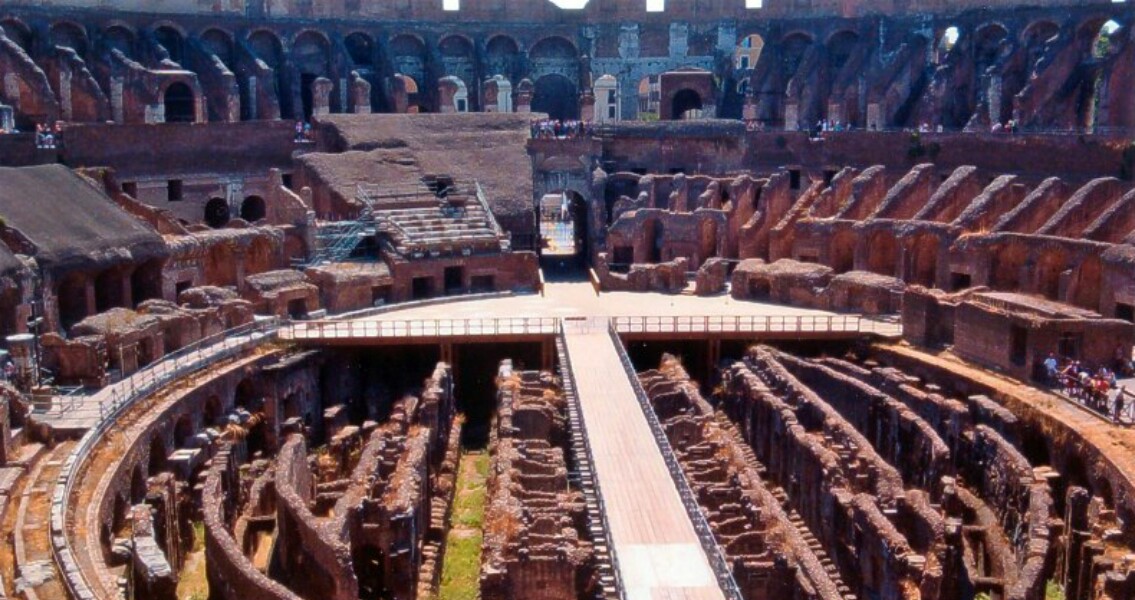
The Local. But hold your horses – this isn’t a Roman-era chariot horse the likes of which you would imagine in scenes reminiscent of Ben-Hur. Chariot races, of course, would have been held at Rome’s nearby Circus Maximus, not the Colosseum, which was primarily the home of gladiatorial combat (though this could have incorporated mounted combat at times). Instead, archaeozoologists say that the equine skull dates back to the twelfth or thirteenth century, well after the fall of the Roman Empire and placing it well out of reach of any bloodsport. In fact, the remains were discovered during routine cleaning of the steps leading down to the massive amphitheater’s basement levels, with the skull being found nearby, according to a statement made by Francesco Prosperetti, the Superintendent for Archaeology for Rome. For now, it’s unclear the age of the horse when it died, the state of health it was in, or just what it might have been doing in the neighborhood. During the twelfth century, large portions of the massive monument were rented out for commercial or residential use, which could have been why a horse would have been within the confines of the Colosseum. Meanwhile, from the late twelfth to the middle of the thirteenth century, the influential Frangipani family of Rome wrested control of the amphitheater away from other tenants, partially transforming the Colosseum into a fortress-like edifice, even going so far as to connect several family houses throughout Rome to the Colosseum by underground tunnel. If the horse skull comes from the period that the Frangipani were the lords of the Colosseum, the horse may have belonged to the family. The Frangipani would have been considered incredibly powerful during their heyday in early thirteenth century Rome. Originally known as the Onicii in the eighth century, the family changed its name to Frangipani. With the name bearing links to the Latin phrase for “breaking bread”, historians believe the family might have gained local fame for distributing food to the masses during a harsh famine. The tactic was widely used by influential families during the time period as a way to garner support among the populace. Whatever the Frangipani did seemed to have worked; the family played a pivotal role in the election of Pope Honorious II in 1124 CE. The family used a combination of bribery to pay off rival houses that supported the choice of Celestine II for the position and outright violence by literally physically attacking Celestine II during the ceremony that would have seen him become Pope officially. Whatever the case may be, the equine skull will need to undergo more thorough analysis before a clearer indication can be made. Once identified more definitively, the animal remains may join others found near the monument, which are on display at the Colosseum’s nearby museum. ]]>

Categories
News

The Japanese Soldier Who Spent 27 Years Waiting for Orders

Categories
Breaking News

Researchers Discover Otzi the Iceman’s Last Meal

Science. ]]>

Categories
Breaking News

Faeces Eating Fungus Shows Humans Sent Megafauna Extinct

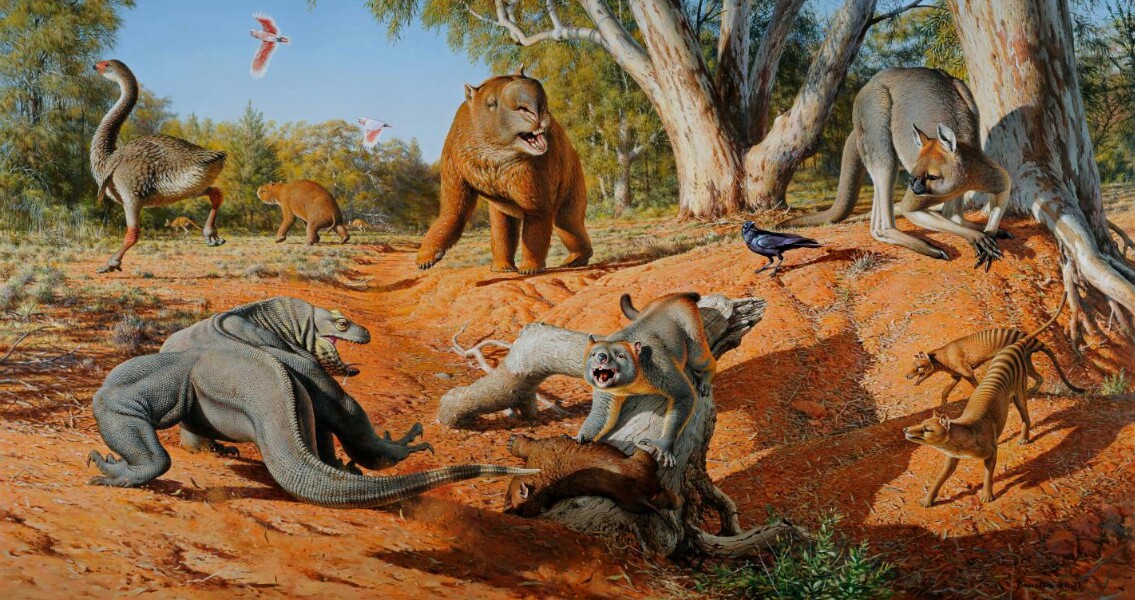
Nature Communications places the blame firmly on humans. Typically, explanations for the extinction of Australian megafauna have focused on either climate change or hunting by humans. The new study, led by scientists from Monash University in Victoria, Australia and the University of Colorado Boulder, has used the ancient faeces left behind by the megafauna to reach its conclusion. The team used a sediment core drilled from the Indian Ocean off the southwest coast of Australia to reconstruct past climate and ecosystems on the continent. The sediment core contains chronological layers of material blown into the ocean including ash, dust, pollen and spores from a fungus known as Sporormiella which thrived on the dung of plant eating mammals. Analysis of the sediment revealed that spores from Sporormiella were in abundance from 150,000 years ago, until plummeting around 45,000 years ago. “The abundance of these spores is good evidence for a lot of large mammals on the southwestern Australian landscape up until about 45,000 years ago,” said Professor Gifford Miller from CU Bolder’s Department of Geological Sciences, one of the study’s authors. “Then, in a window of time lasting just a few thousand years, the megafauna population collapsed.” According to Miller, the study results suggest that shortly after the arrival of humans 85 percent of Australia’s megafauna weighing over 100 pounds went extinct. Tellingly, the sediment core analysis also revealed that Australia’s southwest had dense forests 45,000 years ago, much like it does today. A hotbed of biodiversity, these forests make it unlikely that ecosystem change was behind the extinction of the megafauna. “It’s a region with some of the earliest evidence of humans on the continent, and where we would expect a lot of animals to have lived,” Miller explained. “Because of the density of trees and shrubs, it could have been one of their last holdouts some 45,000 years ago. There is no evidence of significant climate change during the time of the megafauna extinction.” Miller suggests that “imperceptible overkill” could have caused the extinction. A study published in 2006 claimed that even a small amount of megafauna hunting, at a rate as low as one juvenile mammal being killed per person per decade, could well have led to a species going extinct within a few hundred years. “The results of this study are of significant interest across the archaeological and Earth science communities and to the general public who remain fascinated by the menagerie of now extinct giant animals that roamed the planet – and the cause of their extinction – as our own species began its persistent colonization of Earth,” said study leader Sander van der Kaars of Monash University. The issue of the cause behind Australian megafauna extinction is likely to remain controversial, however. Just last week a study was published arguing that humans and certain megafauna coexisted for a least 17,000 years in Australia, highlighting just how complicated the extinction process might have been. Image courtesy of Peter Trusler, Monash University]]>