Categories
Breaking News

Mammoth Preservation Project Underway in Mexico

IB Times, adding, “The discovery in Tultepec is important because it indirectly supports the presence of humans 40,000 years ago.” Preliminary research reports the woolly mammal was approximately 25 years old at the time of its death, it was 3.5 meters (11.5 feet) tall and 5 meters (16.5 feet) in length, and weighed around 5 tons. The experts are hopeful that the mammoth remains are in good enough condition to be reassembled and displayed. Woolly mammoths died off around 5,000 years ago. “We are talking about 40,000 years ago so it is a very considerable period of time. The affect (on the bones) over such a period is that the bones are very sensitive.” explained assistant archaeologist Felipe Munos in the article. However, the fact that the remains were found in sediment at the bottom of a lake, and the mud was of a good level, helped to conserve the mammoth remains. Mexico was a hotbed of dinosaur activity at one time, and although the area surrounding modern-day Tultepec is arid, in earlier eras it is thought to have had an ample water supply and lush vegetation. Off the coast of Yucatan, around 825 miles south of Mexico City, is the Chicxulub crater, an impact crater that’s buried underneath Mexico’s Yucatán Peninsula. It was left behind when a large comet or asteroid, approximately 6 miles (10 kilometers) in diameter, struck the Earth. The impact coincides exactly with the Cretaceous–Paleogene (K–Pg) boundary some 66 million years ago, and it’s widely accepted that the global climate disruption caused by the event caused the mass extinction (the Cretaceous–Paleogene extinction event) of 75% of the earth’s animal and plant species, including all of the non-avian dinosaurs. ]]>

Categories
Breaking News

New Study Traces Aboriginal Ancestry Back 50,000 Years

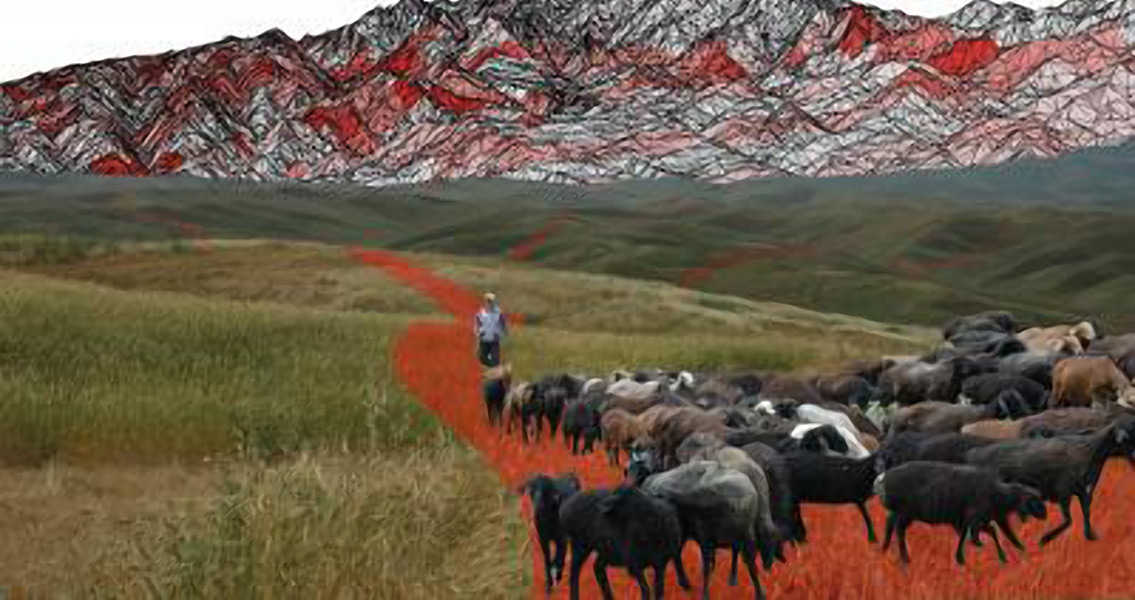
Popular Archeology, adding, “This is unlike people anywhere else in the world and provides compelling support for the remarkable Aboriginal cultural connection to country. We’re hoping this project leads to a rewriting of Australia’s history texts to include detailed Aboriginal history and what it means to have been on their land for 50,000 years – that’s around 10 times as long as all of the European history we’re commonly taught.” This research is the first phase of a 10-year project intended to allow people to trace their Aboriginal heritage and regional ancestry in order to construct a family genealogical history. Additionally, it will also help with the return of Aboriginal artifacts. “Aboriginal people have always known that we have been on our land since the start of our time,” said Mr. Lewis O’Brien, a Kaurna Elder who was among the original hair donors and is a member of the study’s advisory group. “But it is important to have science show that to the rest of the world. This is an exciting project and we hope it will help assist those of our people from the Stolen Generation and others to reunite with their families.” The research will be further extended to study paternal Aboriginal lineages and obtain additional information in the nuclear genome. Team member Dr. Ray Tobler, a postdoctoral researcher who has an Aboriginal heritage from his father’s side, was granted an Australian Research Council (ARC) Indigenous Discovery Fellowship to continue the AHP research, and investigate how the longevity of the Aboriginal populations in various habitats in different regions of Australia has helped form the amazing physical diversity found in today’s Aboriginal Australians. The research findings have been published in the journal Nature. ]]>

Categories
Breaking News

First Ever Study of a Garment from the Mediterranean Neolithic

IBTimes UK. “The presence of red deer canines is unique in the region, and the combination with columbella is unique too,” adding, “This burial is also important because there burial constructs containing grave goods are rare. But the materials worn by the dead here are obvious and ornaments are visible. The burial is exceptional.” The single, isolated grave was discovered and partly unearthed in the 1970s, with various artifacts from it exhibited and then stored at the Calvet Museum. The grave’s rediscovery in 2009 revealed that the deceased male had been buried in primary deposition with no preserved architectural features. Using calibrated AMS dates researchers were able to reliably date the garment to the early 5th millennium BCE, which reinforces existing evidence of long distance relationships between the Neolithic cultures in Europe. Avignon and the surrounding region have been inhabited since the Neolithic, evidenced by the discovery of a small anthropomorphic monument carved from Burdigalian sandstone in the shape of a tombstone. This stele is believed to represent the first Avignonnais and dates from the Copper Age to the Early Bronze Age, a period which is referred to as the southern Chalcolithic. The face of the stone is engraved with a stylized human figure that has no mouth, and eyes marked by small holes. At the bottom there’s a deep indentation that has eight radiating lines that form a representation of the sun, unique for this type of monument. Other findings from this time period include two polished axes made from greenstone, several Chalcolithic objects used for adornment and numerous shards of Hallstatt pottery. The study has been published in the Journal of Field Archaeology. Image courtesy of Aurélie Zemour ]]>

Categories
Breaking News

Unusual 4,000 Year Old Dolmen Discovered in Galilee

JewishPress.com, “during that time all of those people had to be housed and fed. The building of such a huge construction necessitated knowledge of engineering and architecture that small nomadic groups did not usually possess. And even more importantly, a strong system of government was required here that could assemble a large amount of manpower, provide for the personnel and above all direct the implementation and control of a large and lengthy project.” The study has been published in the scientific journal PLOS One. Image courtesy of Gonen Sharon/Tel Hai College ]]>

Categories
Breaking News

The Silk Road Before it was the Silk Road

Nature. Illustration by M.Frachetti/ T. Bukowski. ]]>

Categories
Breaking News

More Orichalcum Ingots Discovered on Shipwreck Near Sicily

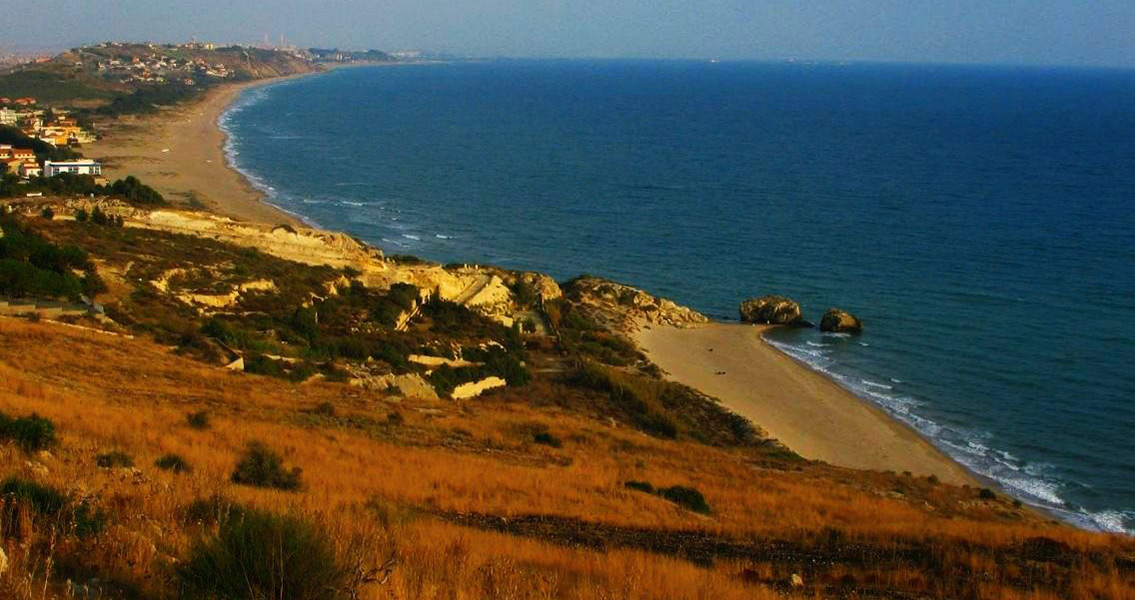
Seeker. “It was likely caught in a sudden storm and sunk just when it was about to enter the port.” Long considered a mystery, orichalcum has, until now, never been found in any significant quantity, and its origin and composition have been widely debated. In Greek mythology, it was invented by the Phoenician founder Cadmus, who was also the first king of Thebes. Although orichalcum is mentioned in a number of ancient texts that go back to Hesiod, a Greek poet believed to have been active between 750 BCE and 650 BCE, it was the Greek philosopher Plato, from the fourth century BCE, who made it a legend. Plato’s Critias dialogue tells the story of the island kingdom of Atlantis and its failed effort to conquer Athens. In the dialogue, Critias, an Athenian figure, claims orichalcum was mined in Atlantis and used to cover the interior walls, floors and columns of Poseidon’s temple. Critias describes the metal as shiny and more precious than any other metal except gold. According to the story, the metal was so revered that inside the temple was an orichalcum pillar that had been inscribed with Poseidon’s laws. Plato wrote, “The outermost wall was coated with brass, the second with tin, and the third, which was the wall of the citadel, flashed with the red light of orichalcum.” Today, most scholars agree that while orichalcum is rare, it’s much less precious than described in Plato’s writing. It’s actually a brass-like alloy, produced in antiquity through a cementation process using zinc ore, copper metal and charcoal. X-ray fluorescence analysis indicates the recovered ingots are indeed an alloy produced using between 75 and 80 percent copper, and 15 and 20 percent zinc, along with small percentages of iron, nickel, and lead. The archeological work to fully excavate the sunken ship and retrieve its cargo is ongoing. ]]>

Categories
Breaking News

Copper Mine Seized and Expanded by the Romans found in Spain

Categories
Breaking News

Census Document Details the Aztec Land Conquered by Cortés

Categories
Breaking News

Neanderthal DNA Still Affecting Modern Humans

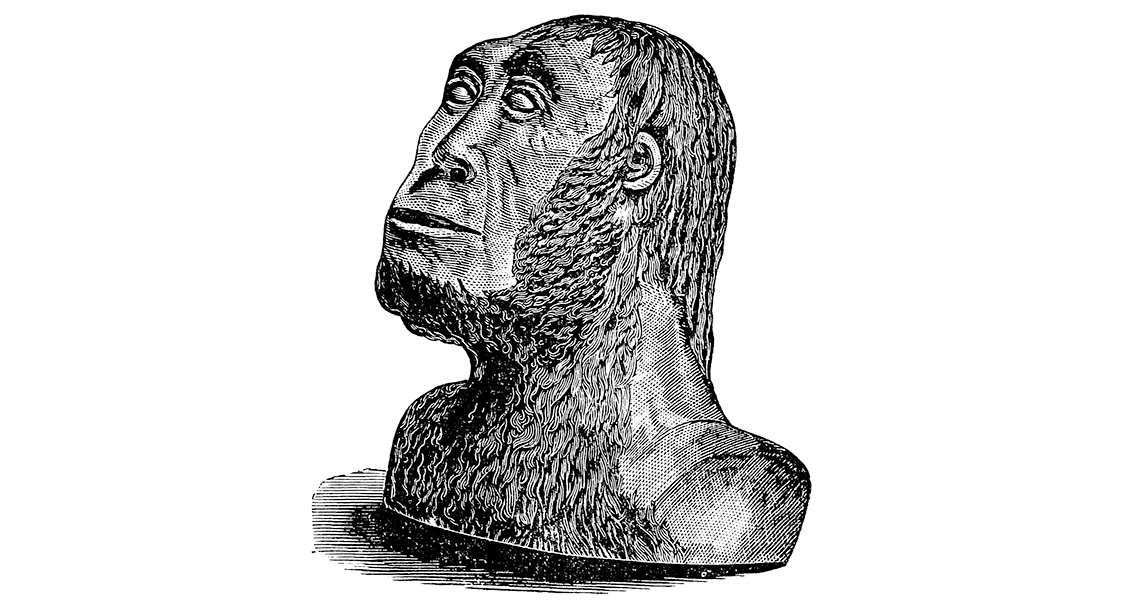
New Scientist. “The results add to increasing evidence that these effects are often the outcome of changes to the genetic switches,” said Tony Capra of Vanderbilt University in Nashville, Tennessee. His own results published last year revealed Neanderthal influences on a variety of human disorders, including depression and addiction. The control of Neanderthal DNA decreased the most in regions of the brain critical for perception and fine motor skills, the basal ganglia and the cerebellum, which further evolved in humans to enable advanced thinking, behavior and the ability to process language. NTRK2 is another Neanderthal gene with fading influence. This gene is key to neuron survival in addition to the development of brain connections and its reduced influence illustrates the sort of fine-tuning which may have permitted our ancestors to take off intellectually. Another gene in which Neanderthal DNA lost control is a testes gene that affects a sperm’s ability to penetrate and subsequently fertilize an egg. Researchers theorize that once control of this gene was relinquished, neither the Neanderthals nor the human- Neanderthal hybrids were able to mate with humans. This theory is consistent with research results showing a reduction in the health of male offspring from hybrid unions. ]]>

Categories
Breaking News

New Discovery Shows Children Have Always Played in the Mud