Categories
Breaking News

Jewels Discovered in Chinese Tomb Say You Can Take it with You

Chinese Cultural Relics. Based on the tomb’s design and the artifacts recovered from inside, researchers were able to determine that the woman lived around 1,500 years ago; just a few decades prior to the end of the Northern Wei dynasty, which controlled that region of northern China from 386 until 534. The historical records indicate that Datong City, where the tomb was found, served as the capital of the dynasty until 494. The earrings recovered from the tomb were made from gold and bear the images of a human face and dragons. The researchers described the designs in Chinese Cultural Relics: “The human figure has curly hair, deep-set eyes and a high nose; wears a pendant with a sequin-bead pattern on its neck; and has inverted lotus flowers carved under its shoulders”. Adding: “In recent years, many gold earrings have been unearthed from Northern Wei dynasty tombs, but the earrings unearthed from this tomb are surely some of the most exquisite.” Additionally, the earrings are decorated with gold, teardrop-shaped designs inlaid with gemstones; with amethysts and gold chains which would have hung down on each side of Farong’s face. Similar designs have been found on earrings discovered in northern Afghanistan, indicating that the Northern Wei dynasty maintained cultural ties with the people in central Asia. The thread which held together the necklace Farong was wearing when she was buried had long since decomposed. However, because the beads remained relatively concentrated and unmoved when this occurred, researchers were able to successfully reconstruct it. The article states: “The small beads are the size of millet grains, some black and some green, and all are oblate, each with a perforation in the middle.” The Northern Wei dynasty was founded by the Tuoba clan of the Xianbei, and ruled northern China during the era of Southern and Northern Dynasties. Considered a period of political turbulence and intense cultural and social change, the Northern Wei dynasty is notable for the unification of northern China and the introduction of foreign ideas, including Buddhism. Images of the jewelry can be found at LiveScience Image courtesy of Wikimedia Commons user: Nicor ]]>

Categories
Breaking News

Team Recreates Bronze Age Trepanation Step-by-Step

The Siberian Times that: “…the key to a successful surgery was the patient’s complete trust and confidence that the surgeon had the necessary skills and knowledge to carry out such an operation.” Another critical element was the patient’s ability to endure the pain. The plants that were being used as painkillers in other areas are not found in Siberia. Instead, the researchers identified other flora used by indigenous peoples to bring a person to an “altered state of mind.” They believe that magic mushrooms, cannabis and even ecstatic styles of dancing were all used for pain control during early brain surgery, 3,000 years ago in Russia. The team has been able to recreate the procedure based on the shape and inclination of the opening’s edges. It seems the patient was lying on his back with his head turned to the right, and that the surgeon likely stood to his left side. A wide cut through the skin and tissue to the bone was made, after which the skin and aponeurosis were peeled away. The shape of the hole suggests the bone was scraped rather than cut, to expose the dura mater. High survival rates following trepanation in ancient times were likely due to the fact that the operations were primarily extradural. After the operation, the opening would have been covered with skin; although it’s unclear if bandages or sutures were used, how the wound was drained, and how any bleeding was stopped. Of course, no written records are left, the experts however, theorize that ‘herbs or red-hot objects’ were used. The grave in which the skull was found had been looted in ancient times, and only a little more than the skull remained, including tubular bones fragments from the ribs and upper limbs. A traditional Karasuk-style knife was also found in the grave, but there is no indication it was used for the surgery. This study has been published in the International Journal of Osteoarchaeology. ]]>

Categories
Breaking News

City of Lincoln Council’s Charter from 1301 Authenticated

Phys.org as saying, “We are very proud of our historic charters in Lincoln, so it is incredible to find one that dates back this far. A find like this shows just how important a part Lincoln played in the country’s history, especially when you consider the other major charters that have links with the city such as the Charter of The Forest and Magna Carta.” ]]>

Categories
Breaking News

Now You See Them, Now You Don’t. Petroglyphs Revealed on Beach

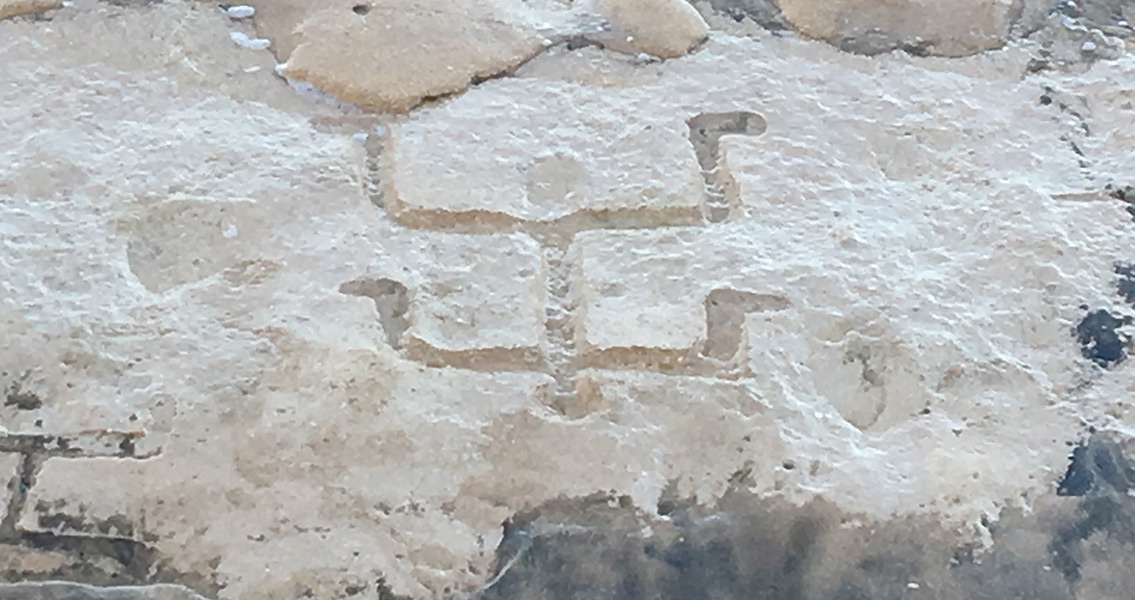
Atlantic: “We consider these Waianae petroglyphs to be consistent with traditional pre-Cook Hawaiian petroglyphs. The ones we’ve seen appear to be those with a linear torso—commonly and regrettably referred to as ‘stick figure.’” Pre-Cook refers to the British explorer James Cook, who arrived in the Hawaiian Islands for the first time in 1778. Petroglyphs have been found at various historic sites all across the Hawaiian Islands, it’s uncommon however, to find them in such close proximity to the water according to a statement released by the state Department of Land and Natural Resources (DLNR). Archaeologist Alton Exzabe, with the U.S. Army (which is responsible for the management of numerous Hawaiian archeological sites), said in the statement that the petroglyphs stand out for their size – one carving is almost 5 feet tall (1.7 meters) while the typical size of other petroglyphs is around one foot. Fingers and hands are also depicted, something else which is not typical. What the petroglyphs represent is a subject of debate among scholars. Several appear to be spiritual or sacred in nature, while others have been interpreted as simply markers of someone’s presence at the location, an ancient sort of “____ was here.” The Stasacks explained in the Atlantic that the meaning and symbolism can vary from location to location. Because of the relative isolation of Hawaii, it’s possible the petroglyphs are uniquely revealing in regards to Hawaiian culture. Dating the petroglyphs will also be challenging due to their exposure to seawater, and at this point is only speculative. Archaeologists have estimated the recently discovered engravings to be approximately 400 years old. In the statement from DLNR it’s said that the carvings may have been seen in the past by locals, but they’ve never been scientifically recorded. The sands have already covered them again. Glen Kila, who is a descendant of one of the first aboriginal families on the Waianae coast, told Seeker that the petroglyphs “record our genealogy and religion, it’s very important to know about the lineal descendants of the area and their understanding of these petroglyphs.” The Department of Land and Natural Resources is currently collaborating with the State Historic Preservation Division and the U.S. Army on a preservation plan for the petroglyphs, which are so fragile that even brushing the sand away from them can cause damage. Image courtesy of Hawaii Department of Land and Natural Resources. Additional images of the petroglyphs can be found here]]>

Categories
Breaking News

Terrifying 300 Million-Year-Old Sharks Were Filial Cannibals

Paleontology. Image courtesy of Aodhán Ó Gogáin (Trinity College Dublin)]]>

Categories
Breaking News

Has Evidence of Human Sacrifice in Ancient Greece Been Found?

Categories
Breaking News

New Study Shows How America’s Earliest People Didn’t Get There

Categories
Breaking News

Neanderthals' Extinction May Rest on Not Having a Coat

Journal of Anthropological Archaeology, the quartet describe how they determined the possible reason Neanderthals perished during the Ice Age while early humans survived, by looking at what’s been found at each groups’ campsites. It’s not what the researchers found by analyzing the data related to Neanderthal campsites that is so significant, but what they didn’t: any evidence the Neanderthals used animal fur to stay sufficiently warm. When the campsites of modern humans and Neanderthals were compared, the researchers discovered the one glaring difference at the Neanderthal sites was the absence of animal remains of the type that would have been used to make the parka style clothing needed in a cold climate. By comparison, numerous examples of fox, mink, rabbit and wolverine remains were identified at 56 locations of early human campfires, many of which might have been skinned for use in crafting fur coats or parkas. The discovery of wolverine remains in particular was of note because it’s the animal which people living in the Arctic often use to keep warm, as it works extremely well as a fringe and lining on the hood. The Neanderthal extinction happened suddenly, at around the same time modern humans started to expand into Eurasia. Since the discovery of the first Neanderthal remains, both their place within the human family tree and their relationship to modern humans has been a hot topic of debate. They’ve been classified, at different times, as both a separate species known as Homo neanderthalensis, and as a subspecies named Homo sapiens neanderthalensis. Following an analysis of 40 individual Neanderthal sites in western Europe, researchers concluded in 2014 that the Neanderthals became extinct around 40,000 years ago. Although much earlier than previous estimates, this date was established using improved methods of radio carbon dating (Neanderthals could have survived longer in Siberia and eastern Europe). Theories on the Neanderthals’ extinction include: an inability or failure to adapt to the changing climate, or competitive exclusion as a result of the encroachment of modern humans. It’s also possible their extinction was hastened by violent conflicts with early humans. Warfare and conflict were pervasive features within hunter-gatherer social groups. Additional evidence of early humans creating warm clothes has also been found, for example, bone needles and other types of tools used to scrape animal pelts. Also, a number of figurines discovered in Siberia, which have been dated back to around 24,000 years ago, were found wearing parka-like animal fur coats. No evidence of Neanderthals wearing or crafting cold weather clothing has ever been discovered. Why the Neanderthals didn’t have clothes warm enough to survive the colder climate remains a mystery, the researchers suggest in their paper that they might have lacked the know-how, or perhaps their cultural traditions somehow prevented it. ]]>

Categories
Breaking News

Archaeologists Suspect Medieval Inn on the Black Sea was a Brothel

Radio Focus Varna. Other recently discovered artifacts unearthed during the excavations in Kastritsi include a Lydian stone, very rare in Bulgaria, which was used to test the carats of silver and gold coins and was an essential instrument in commercial dealings. Additionally, archaeologists unearthed a small anvil and a mold used to forge silver icons of the Virgin Mary, from the middle of the fourteenth century. Another mold, used to forge icons of Jesus Christ the Pantrokrator, was found during earlier work at the site. Researchers also discovered cattle, pig and lamb bones inside the kilns at the medieval inn, as well as tuna and turbot bones and fish hooks. The exposed parts of the medieval inn are located in Cape Yani, the same location that Tsar Ferdinand, the Third Bulgarian Tsardom ruler between 1887 and 1918, would watch the sea while sitting on a stone throne. The throne was later destroyed during construction of a breakwater in the Communist period. Many of the amazing discoveries found at the Kastritsi Fortress include coins: a hoard of 36 coins featuring Ottoman Sultan Bayezid I the Thunderbolt who ruled from 1389 until 1402, along with a cache of silver coins featuring his father Emir (Sultan) Murad I, who ruled between 1362 and 1389. Another coin unearthed at the site features Bulgarian Tsar Ivan Alexander (ruled 1331-1371) and Despot Dobrotitsa, ruler of the Principality of Karvuna in northeast Bulgaria (1347-1385). Coins from Egypt, Asia Minor, Italy, Wallachia and Poland have also been found. Archaeologists in Bulgaria have excavated over one-fifth of the Kastritsi Fortress site, part of which is open to the public. Images of the Inn can be found here: here Featured Image, Euxinograd Palace, Courtesy of Wikimedia Commons user: Dimcho Panayotov (Benkovski)]]>

Categories
Breaking News

One Church, One 1,000-year-old Coin, and Many Graves in Iceland