Categories
Breaking News

Joan of Arc’s Visions Could Have Been More Medical than Mystical

Live Science they initially came up with the hypothesis while they were examining documentation relating to Joan during her Trial of Condemnation, where she was tried for being a heretic and a witch, and ultimately sentenced to death. Joan of Arc, also called “The Maid of Orléans”, is a heroine in France for her role in the Hundred Years’ War. She has been canonized as a Catholic saint. Several aspects of the symptoms Joan had, which are detailed in the historical accounts, support the diagnosis, d’Orsi’s and Tinuper’s letter states. For example, the historical documents indicate that Joan reported seeing saints, like St. Margaret and St. Catherine, and hearing voices. These visual hallucinations (which only occurred occasionally) and auditory hallucinations are symptoms associated with this form of epilepsy, the team told Live Science. Additionally, sufferers of this type of epilepsy (40%) have seizures while asleep, another symptom Joan of Arc reported having. The frequency with which Joan heard voices, however, is not completely consistent with the proposed diagnosis, and other researchers point to the fact that patients with this form of epilepsy experience seizures infrequently. While diagnosing a medical condition in a person who lived during the 1400s isn’t easy, there may still be an opportunity to definitively answer the question; all that’s needed is a strand of Joan’s hair. It’s believed that Joan sealed her letters with red wax, imprinted with a fingerprint and a hair, to prove her identity. If historians can find even one of these letters, scientists may be able to test the DNA of the hair. To date, all efforts to find a letter sealed in this manner by Joan of Arc have been unsuccessful, but if such a discovery is ever made, scientist have identified the genes which are linked to this specific form of epilepsy, making DNA testing possible. ]]>

Categories
Breaking News

High Energy X-Ray of Little Dinosaur Produces Big Results

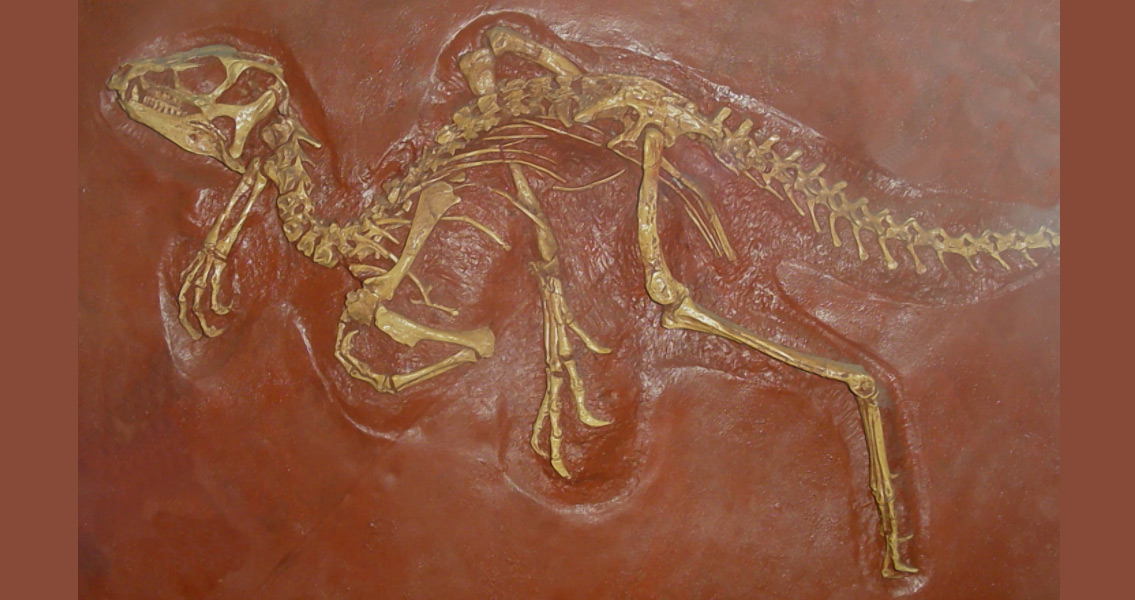
Heterodontosaurus tucki, a small herbivorous dinosaur that roamed Earth 200 million years ago, paid a visit recently to the European Synchrotron Radiation Facility (ESRF), or at least its fossilized skeleton did. The purpose was to study the dinosaur’s anatomy, through the collaborative efforts of scientists from the Evolutionary Studies Institute at the University of the Witwatersrand, South Africa, and paleontologists at ESRF. Synchrotron-generated light produces X-rays that are brighter than hospital X-rays by a factor of 100 billion. Simply put, the x-rays are produced at the ESRF by high energy electrons that sprint around a circular tunnel (a storage ring) that measures 844 meters around. ESRF has been designing these non-invasive techniques used specifically for paleontological studies since 2000, using their own team of paleontology experts and several beamlines dedicated solely to X-ray imaging. These beamlines provide the unique combination of high brilliance, high-energy, and the wider X-ray beams which are necessary to scan large dinosaur fossils. The beam’s high coherence is a key factor for this research because fossilized bones and the rock which typically surrounds them have almost identical densities, with ESRF’s high level of coherence there is a distinct contrast between the two materials. This is critical for “virtually” excavating a fossil. The dinosaur specimen was discovered in the Eastern Cape province of South Africa. Because the small skeleton was embedded in hard rock, any attempt to extract the bones would have caused irreparable damage, so to study Heterodontosaurus’s anatomy, the X-rays provided by the ESRF were used to reconstruct the skeleton, non-invasively and in incredible detail. Heterodontosaurus was a plant eating animal, with big canines in the front of the jaw and grinding teeth in the back. In order to understand how the dinosaur moved, ate and breathed, the scientists scanned the specimen over a five-day period, and then examined the X-rays created by the ESRF. What they got was a three dimensional reconstruction of the skull from which they were able to determine that the specimen was most likely a juvenile (based on the weak bond of the skull bones), and gained insight into how it held its head, based on the reconstructed balance organs, and how the dinosaur interacted with his environment – all examples of data that a two dimensional image wouldn’t have revealed. The dinosaur skeleton was discovered within a stream bed, on a farm in the Eastern Cape province. With assistance from the Albany Museum in Grahamstown and Rhodes University Geology Department, the fossil was excavated and enough rock was painstakingly removed from the bones to be able to identify the specimen. Any additional preparation work, however, was close to impossible considering the size and fragility of the skeleton and how hard the rocks around it were, meaning the scientists couldn’t fully study the skeleton’s anatomy. Using synchrotron technology scientists are able to reconstruct skeletons with amazing detail, and no damage. ]]>

Categories
Breaking News

Volunteers Strike Again with Discovery of Bronze Goddess

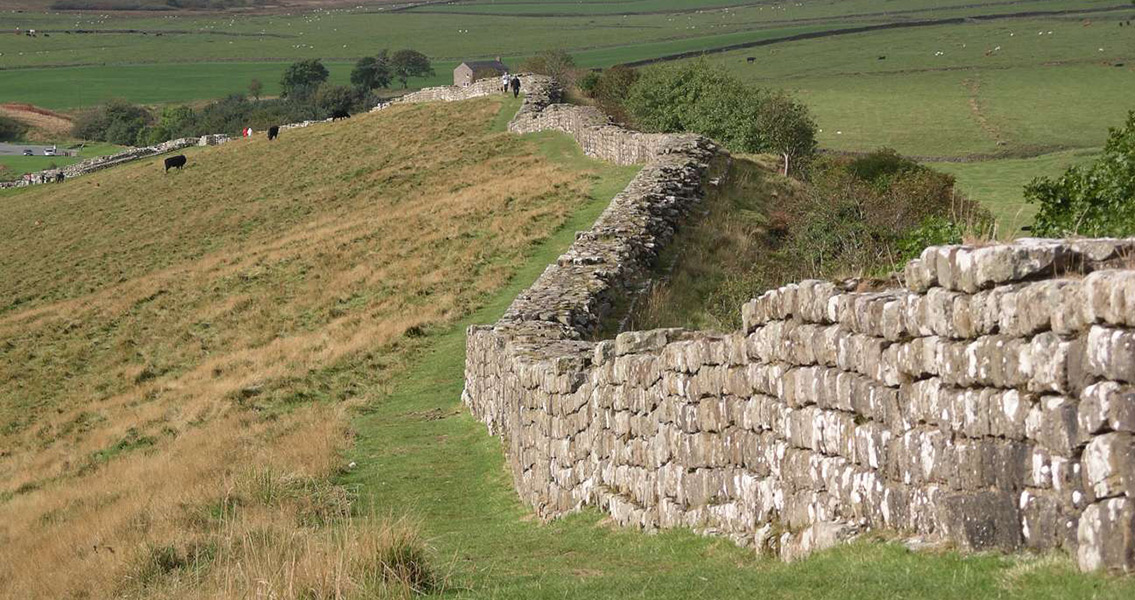
Wallquest project has unearthed at Arbeia. In 2014, another volunteer discovered the head of a protective goddess, a tutela, carved out of stone. The site of the only permanent stone granaries left in Britain, the fort, constructed sometime around 120 CE, was occupied until the fifth century when the Romans left Britain. One possible interpretation of Arbeia is “fort of the Arab troops”, which refers to a time when Mesopotamian boatmen were garrisoned there, as was the First Asturian, a squadron from the Spanish cavalry. It was not uncommon for Roman forts to be manned by troops from somewhere else within the empire, where they often assimilated and recruited locally. Ceres, the goddess of the harvest, was credited with teaching mankind how to grow, and then preserve and prepare corn and grain. She was also believed to be responsible for the fertility of the land. The only god involved in the day-to-day lives of common people, she is typically portrayed holding a scepter or a farming tool with one hand, and a basket of fruit, grain or flowers with the other. Hadrian’s Wall, also known as the Roman Wall, was a defensive fortification in the Roman province of Britannia during the rule of Hadrian, the Roman emperor between 117 CE and 138 CE. Built along the River Tyne, it was constructed to mark the northern limit of the Roman Empire. The total length of the wall was 80 Roman miles or 73 modern miles (117.5 km). The structure consists of a stone wall atop a stone base, with two turrets in between milecastles (small forts, or fortlets, guarding a gateway), and forts approximately five Roman miles apart. Designated a UNESCO World Heritage Site in 1987, the portion of the wall that remains standing can be followed by visitors using the Hadrian’s Wall Path. Amanda Seim, the Earthwatch volunteer working with the Wallquest Community Archaeology Project, who discovered the Ceres figure, described the moment she found the figure to Heritage Daily, “At first I didn’t believe the goddess was real since the condition seemed pristine and the detail was incredible, but then our site supervisor fell eerily-quiet triggering a hum of authentic excitement.” The goal of the Wallquest project is to learn about the easternmost section of Hadrian’s Wall – an approximately 30 mile long section between Hexham/Corbridge and South Shields. Although the wall isn’t always visible in this area, locals are exceptionally interested in it and this project allows them to become involved in the excavations and research. Visitors to Arbeia will see the two newly discovered goddesses displayed in the site’s museum. ]]>

Categories
Breaking News

New Project Will Determine If a Rose By Any Name Was Still a Rose

Heritage Daily. “Supported by hundreds of years of scholarly enterprise, Shakespeare is now a global phenomenon. One of the areas we know very little about is what the Elizabethans themselves would have made of Shakespeare’s language. When they heard a word in one of Shakespeare’s plays, what did it mean to them?” As the project moves forward, researchers also hope to learn what made Shakespeare’s writing unique by comparing the language he used to the language used by his contemporaries. An earlier pilot study has provided some hints, as Culpeper explained to Heritage Daily. “Shakespeare seems to love the word ‘I’ as in the pronoun referring to one’s self. It is a little word but an important one. Modern drama is similar to an over-heard conversation – we listen to characters asking questions like ‘What do you think about X?’ and we learn about characters from their answers. But Shakespeare is much more geared to the direct presentation of the self through the word ‘I’”. The project is being funded by the British Arts & Humanities Research Council, and published in two separate volumes. All of the resources used in its creation will be made available to students and scholars. ]]>

Categories
Breaking News

Water Tunnel Under Palenque Pyramid Was a Conduit to the Underworld

Sci-Tech Today that this belief was shared by other pre-Hispanic people as well; like those who lived at Teotihuacan near Mexico City, where a water tunnel was also found. Sanchez Nava cited the allegorical meaning that water had for these cultures, as the cycle of life beginning and ending Excavations began in 2012, when researchers using geo-radar detected underground anomalies in the area directly in front of the pyramid. Fearing a geological fault or hole that might cause the pyramid to settle or even collapse, they excavated the area and unearthed three layers of stone which had been carefully fitted to cover the top of the tunnel. Arnoldo Gonzalez, an archaeologist at the site, told Sci-Tech Today that the same type of layered stone covering had been discovered in the floor of Pakal’s tomb inside the pyramid, adding that there doesn’t appear to be a connection between the tunnel and the tomb, although the conduit hasn’t been thoroughly explored because it’s too small for a person to crawl through. Most of the tunnel has been viewed using a robotic camera. The Temple of Inscriptions was built as the funerary monument of Hanab-Pakal, the most famous ruler of Palenque. The temple is home to a glyphic text, the second longest from the Maya world, and records the city’s history from the fourth through the twelfth K’atun, a period of around 180 years. In his 1968 book ‘Chariots of the Gods?’, author Erich von Daniken suggested that Pakal’s stance, as engraved on the lid of the stone sarcophagus lid, resembled the position astronauts take. Von Daniken also claimed that it looked like the ruler was seated in a contraption that had flames shooting out of it. Experts, however, say that the “flames” are actually depictions of the Maya’s “Tree of Life” or “World Tree” which, the Maya believed, had roots that reached into the underworld. The Maya city of Palenque was at its peak during the seventh century. The Palenque ruins have been dated from 226 BCE to 799 CE. After it declined, the city was enveloped by the jungle of cedar, sapodilla, and mahogany trees. It has since been unearthed and restored, becoming a popular archaeological site that attracts thousands of visitors annually. ]]>

Categories
Breaking News

Neanderthals in Germany Went Extinct Right After Population Peak

Homo neanderthalensis was the dominant human species in Europe, populating the whole of the continent. Although archaeologists have discovered numerous settlements in Germany, they have also uncovered evidence which shows that Neanderthal populations there came to an unexplained, sudden end. Based on the analysis of several archaeological sites, Jürgen Richter (Collaborative Research Center 806 — Our Way to Europe), has concluded that shortly after Neanderthals reached their peak population in Germany, their numbers rapidly declined, leading to their extinction. Neanderthals lived during the Middle Paleolithic, the time between 200,000 and 40,000 years ago. Richter’s research suggests that over 50 percent of the identified Neanderthal settlements in Germany specifically date back to between 60,000 and 43,000 years ago. Therefore, the peak Neanderthal population lies within this period. Neanderthals were an ancient human species, part of the genus Homo, that became extinct approximately 40,000 years ago. With 99.5% of the same DNA, they’re closely related to modern humans. Bone and stone tools left by Neanderthals have been found throughout Eurasia, in western to central Europe, and northern and western Asia. Their species is generally classified as Homo neanderthalensis, believed to have separated from Homo sapiens around 600,000 years ago. Some experts however, believe Neanderthals were a subspecies of Homo sapiens and therefore should be classified as Homo sapiens neanderthalensis. The number of Neanderthal sites, as well as the analysis of artifacts discovered in them, indicate the Neanderthal population in Germany were subjected to extreme demographic changes. For example, during the Middle Paleolithic there seem to have been numerous migrations, increases and declines in population, even extinctions in certain locations followed by a return of settlers. During the time period between 110,000 and 70,000 years ago there were only four identified Neanderthal settlement sites in Germany, however, during the following period between 70,000 and 43,000 years ago there were ninety-four. Less than 1,000 years later, after this peak in population, there was a rapid decrease and the Neanderthals disappeared. Why the species went extinct is still unknown. It may have been the result of decreased genetic diversity; another possibility is competition for resources with the growing number of Homo sapiens. Around 55,000 years ago, the climate began to fluctuate back and forth from extremely cold to milder cold conditions in the span of a few decades. Neanderthals had bodies that were well suited for surviving in cold climates, with stocky limbs and barrel chests that stored body heat much better than Cro-Magnons (the first early modern humans). However, these rapid climate fluctuations also caused ecological changes that the Neanderthals could not easily adapt to; familiar animals and plants would have been replaced by completely new ones within the space of a lifetime, and the Neanderthals’ ambush hunting technique wouldn’t have worked as trees replaced the grasslands. Neanderthals eventually went extinct in Europe between 41,000 and 39,000 years ago, coinciding with a period of extreme cold. This article has been published in the Quaternary International Journal. Image courtesy of Wikimedia Commons user Claire H. ]]>

Categories
Breaking News

Archaeologists Discover the Eighth Priestess of San José de Moro

Harvard Gazette. “When I started as a young student, 25, 30 years ago, we thought the Moche was a culture led by powerful kings, warriors, or priests”, said Castillo. This is the eighth royal tomb found in the past 25 years by the San José de Moro Archaeological Program, and all eight tombs have showcased women who were found wearing beaded necklaces and intricate headdresses, surrounded by sacrificial victims. Collectively known as the priestesses of San José de Moro, they put a spotlight on the prominent role women played in Moche society. “These women were among the most important individuals in their society,” Castillo told the Harvard Gazette. “Their elaborate burials are narratives of their lives, and the ornaments they were buried with are indicators of their high status.” Another finding which supports the women’s role as priestesses are the scenes depicted in Moche art – scenes of Moche rituals include figures wearing similar headdresses and carrying silver goblets like the ones found with the remains. The Moche people didn’t have a written language, but they left thousands of ceramic pots covered with intricate drawings that portrayed their daily lives and their astral beliefs. In the scenes that depict human sacrifice, a priestess wearing a headdress holds a silver goblet full of the victims’ blood. Considered the first state-level culture in the Americas, the Moche thrived and ruled the northern coastal area of Peru from the first to eighth centuries (prior to the Incas), at the same time that the Mayans were prospering in Central America and Mexico. They conquered the desert with a complex system for irrigation, constructed adobe pyramids and used religion to unite their society like many other ancient cultures. Following the recent discoveries, another widely held belief concerning the Moche, that they lived under a single ruler, is also being reconsidered by archaeologists. “They were multiple polities, small chiefdoms that never achieved a political unification,” Castillo told the Gazette, “Some communities may have been led by women and others by men.” “They were not the sisters, the mothers, or the wives of somebody powerful,” Castillo stated in the Gazette, “In all the burials, the women had a status associated with Moche priests. They were priestesses, but they could have also been rulers. In ancient cultures, political and religious power were blended, and the rulers were often the priests.” Image courtesy of Wikimedia Commons user: Kevstan]]>