Categories
Breaking News

DNA Confirms the Bacteria Responsible for the Great Plague

Yersinia pestis, was present in the victims, a year after the discovery of a suspected mass burial pit during excavation work associated with the Crossrail project at Liverpool Street, in East London. The identity of which microbes were responsible for the Great Plague has long been debated. The search for the bacterium was conducted by the osteology department of the Museum of London Archeology (MOLA), where the finds from Liverpool Street are stored. Michael Henderson led the examination of a number of skeletons from the site. He told BBC News, “They’re carefully boxed, individual elements, legs separately, arms separately, the skulls and the torsos. We excavated in the region of three and a half thousand skeletons, one of the largest archaeologically excavated to this date. A vast data set that can give us really meaningful information.” Teeth from the London remains were extracted and sent for DNA analysis at the Max Planck Institute for the Science of Human History, in Germany. “The best thing to sample for DNA is the teeth; they’re like an isolated time capsule,” Henderson explained in the BBC News interview. Once in Germany, Kirsten Bos, a molecular palaeopathologist with the institute, led the painstaking effort to drill out the tooth pulp used in the search for the seventeenth-century bacteria, resulting in positive results from five of the individuals tested. “We could clearly find preserved DNA signatures in the DNA extract we made from the pulp chamber and from that we were able to determine that Yersinia pestis was circulating in that individual at the time of death. We don’t know why the Great Plague of London was the last major outbreak of plague in the UK and whether there were genetic differences in the past, those strains that were circulating in Europe to those circulating today; these are all things we’re trying to address by assembling more genetic information from ancient organisms.” Bos told BBC News. The horrific fate of the infected Londoners was described in the eighteenth-century account of the event: A Journal of the Plague Year, by Daniel Defoe. “The plague, as I suppose all distempers do, operated in a different manner on differing constitutions; some were immediately overwhelmed with it, and it came to violent fevers, vomitings, insufferable headaches, pains in the back, and so up to ravings and ragings with those pains,” Defoe wrote. “Others with swellings and tumours in the neck or groin, or armpits, which till they could be broke put them into insufferable agonies and torment; while others, as I have observed, were silently infected.” Alison Telfer, from MOLA, told the BBC’s Today program, “We’ve found about three-and-a-half thousand burials on this site. We’ve been working here for the last five-and-half-years on and off and we’re hoping we’ll be able to get positive identification of the plague on a number of the individuals.” Bos’s team will continue sequencing the full DNA genome in order to completely understand the spread and evolution of the disease. ]]>
Categories
Breaking News

First-Ever Hittite Human Remains Discovered in Turkey

Categories
Breaking News

Children Sacrificed to Serve as “Guardians” for Chornancap Priestess

Categories
Breaking News

Findings from the Site of David Versus Goliath on Display for the First Time

Tazpit Press Service (TPS), “Archaeology cannot find a man and we did not find the remnants linked to King David himself, but what we did find is archaeological evidence of the social process of urbanization in Judea.” This evidence of urbanization is in line with what the Bible describes as the formation of the Kingdom of David, when fortified towns replaced small agricultural communities. Carbon testing on olive pits unearthed at the Khirbet Qeiyafa site indicates the town was built towards the end of the eleventh century BCE, which fits the chronology of the Biblical narrative. Two aspects of the Elah Fortress were of particular interest to archaeologists, the large number of iron stones found and the wall with two unusual hollows, which encircled the site. Sha’arayim means “two gates” in Hebrew, and the hollows in the modern wall, which was constructed directly on top of the ancient wall, were in the same place, precisely, as the ancient wall’s two gates had been. The town’s geographical location also fits with the Biblical description of Sha’arayim, following the battle of David and Goliath and again in the Book of Joshua. The finds from the site include two inscriptions (in Canaanite script) which are considered to be the earliest writing examples of the Hebrew language, and a pottery shard with the Hebrew words, “king”, “don’t do”, and “judge”, easily identifiable. “Although I led the excavations, I myself was amazed to see the different pieces brought together in a way that allows visitors to get a clear picture of how the town looked and that gives them an opportunity to go back in history to the times of the kingdom of David,” Professor Garfinkel told TPS. The biblical account of the battle between David and Goliath tells of it occurring near the Valley of Elah, when the Israelites were facing the Philistines. For 40 days, twice daily, Goliath, the Philistines’ champion, challenges the Israelites to send out their own champion to decide the outcome with a single combat. No one comes forward until David accepts the challenge, taking only his staff, sling and five stones. David defeats Goliath with just one stone from his sling, and the Philistines flee. The exhibition, “In the Valley of David and Goliath”, at the Bible Lands Museum will include the pottery shards in addition to a clay model of a shrine discovered at the site and the huge stones used to build the wall enclosing the town. ]]>

Categories
Breaking News

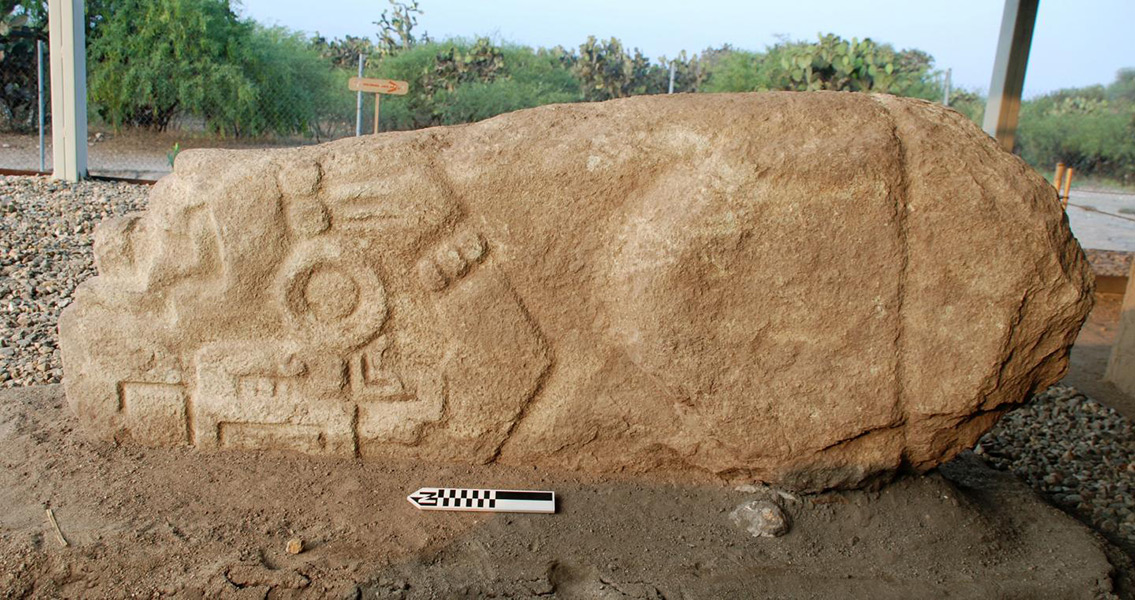
New Findings Have Archaeologists Rethinking Valley of Oaxaca History

Categories
Breaking News

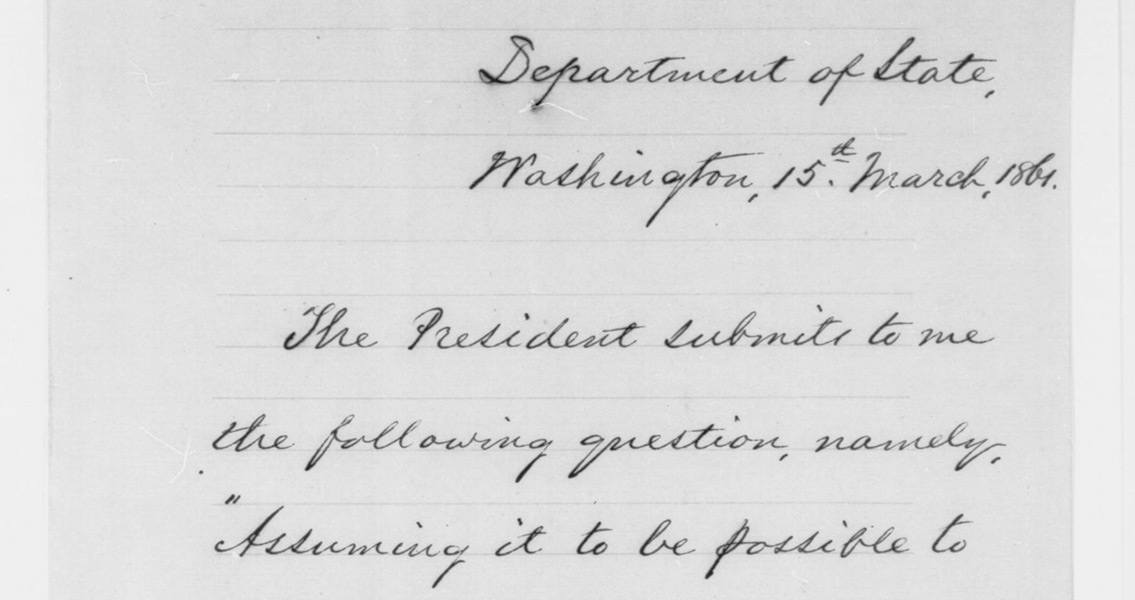
Decoded Civil War Telegrams Offer a Glimpse of Humanity

L.A. Times regarding the cache of documents and 35 leather-bound ledgers related to telegrams that were sent between 1862 and 1867. “We don’t really know what is in here. Every single telegram has a story behind it, from the president to the greatest generals and to the privates and telegraph operators. It’s like putting together a huge jigsaw puzzle.” The telegrams were kept by Thomas T. Eckert: head of the U.S. military telegraph office at the War Department and a Lincoln confidant. The Huntington has begun a Decoding the Civil War crowdsourcing campaign relying on volunteers to unravel secret texts using cipher charts. So far, over 2,100 “citizen archivists” and war buffs around the world have been able to transcribe less than a third of the collection. The project still has an open invitation for volunteers. The telegrams cover the gamut; from heartbreak, sarcasm, warning and conniving to draft riots, downed cables and cotton markets. They also include the latest news from the battlefield, like Lincoln’s venturing that Grant’s forces had “Petersburg completely enveloped” and had captured “about twelve thousand prisoners & fifty guns.” In a telegram about troop movements, Gen. William T. Sherman reflects sorrow: “my eldest boy Willie, my California boy, nine years old died here yesterday of fever and dysentery contracted at Vicksburg. His loss to me is more than words can express.” Some are less serious, like the telegraph sent by J.W. Carver that informs Eckert: “Family matters require my immediate attention at home for a few days. If not attended to at once I am utterly destroyed.” The messages, tapped out by around 1,500 telegraph operators, traveled over approximately 15,000 miles of telegraph lines and revolutionized wartime communications. Eckert, who would go on to become president of Western Union, took the telegram ledgers when he retired in 1867. Until he died in 1910, the documents were left in storage. In 2008 they surfaced and were subsequently sold at auction for $36,600 to a company that specializes in rare books, the William Reese Co. The collection was sold to the Huntington in 2012. “The telegrams were actually considered lost,” Mario Einaudi, who is overseeing the project to digitize the documents on behalf of the Huntington Library, told the L.A. Times, “They’re significant in that what we’re making available to people is raw history. The language comes through so loud and clear that it puts you back on your heels.” ]]>

Categories
Breaking News

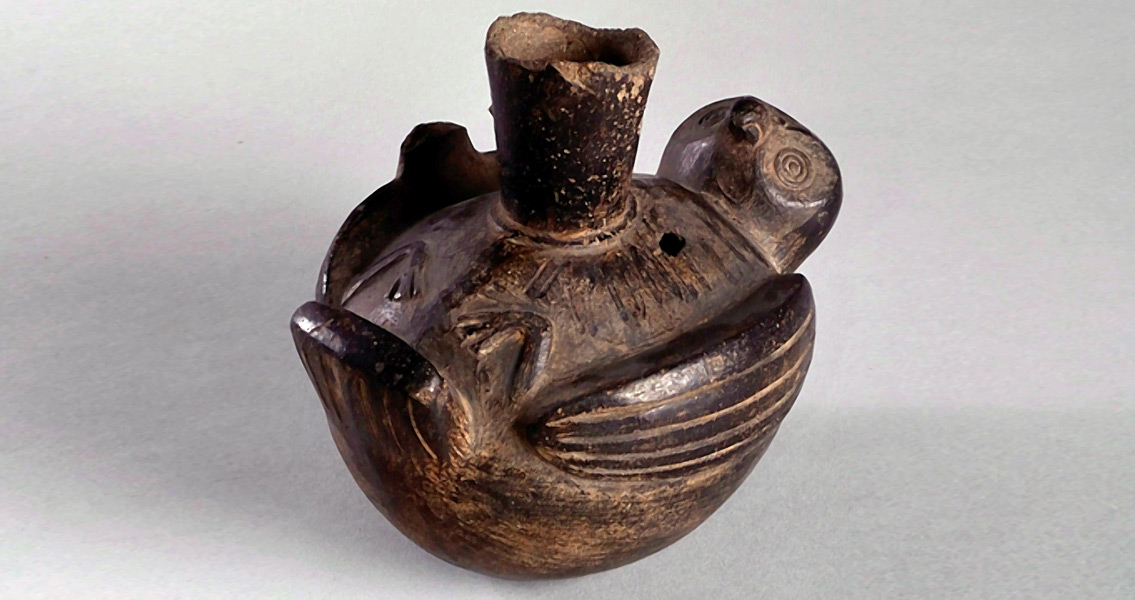
Scientists Working Above the Arctic Circle Find 1,000-year-old Persian Cup

Siberian Times: “From the 6th and 7th centuries AD Central Asian merchants began to appear in the Upper Kama region. They exported walrus tusks, hunting birds and fur from the north. Through the Kama region they had penetrated to the Ob region in 7th and 8th centuries.” The Persian items that traders brought north with them often took on ritual meanings for the indigenous Khanty and Mansi peoples who lived in the area. They were seen as gifts to gods and spirits, stored in holy places and often used as serving dishes to carry ceremonial food given to the gods at festivals. Since the second millennium BCE, the regions between the Kama and the Irtysh rivers have been home to the indigenous Khanty and Mansi peoples. A number of researchers believe the Khanty’s ancestors were the prehistoric Andronovo culture, which are known for their ancient metalworking skills. Other researchers claim that the Khanty originated in the Ural steppe and then moved north to their present location around 500 CE. Traditionally, Khanty religion was closely connected to nature. The Crow Spring celebration is celebrated in April, while the Bear Celebration follows each successful bear hunt. The Bear Celebration can last 5 or 6 days (depending on the sex of the bear), and includes over 300 songs and presentations. With the arrival of Soviet power and the establishment of collective farming came the persecution of Khanty shamans along with the destruction of their burial grounds. Khanty children were even forcibly removed and sent to boarding schools. After an outburst of resistance, known today as the Kazym rebellion, the Khanty were brutally suppressed by the Soviet army; Khanty villages were burned along with anything else connected with their culture. Following that event, anyone who participated in the traditional bear funeral rites faced ten years in prison. In a census taken in 2010, only 30,943 people identified themselves as Khanty. The intention of the research expedition that brought the scientists to the Arctic to begin with was a project to monitor and compare the depth of the permafrost over a 30 kilometer area near Lake Parisento, on Gydan Peninsula. The scientists installed the monitoring equipment and then compared the recorded data with information that was obtained from the same location 25 years previously. Image of the artifacts can be seen here ]]>

Categories
Breaking News

Remains of Soldiers from the Battle of Dunbar will Remain Together

Categories
Breaking News

Clues to The Great Dying Event Found in the Arctic

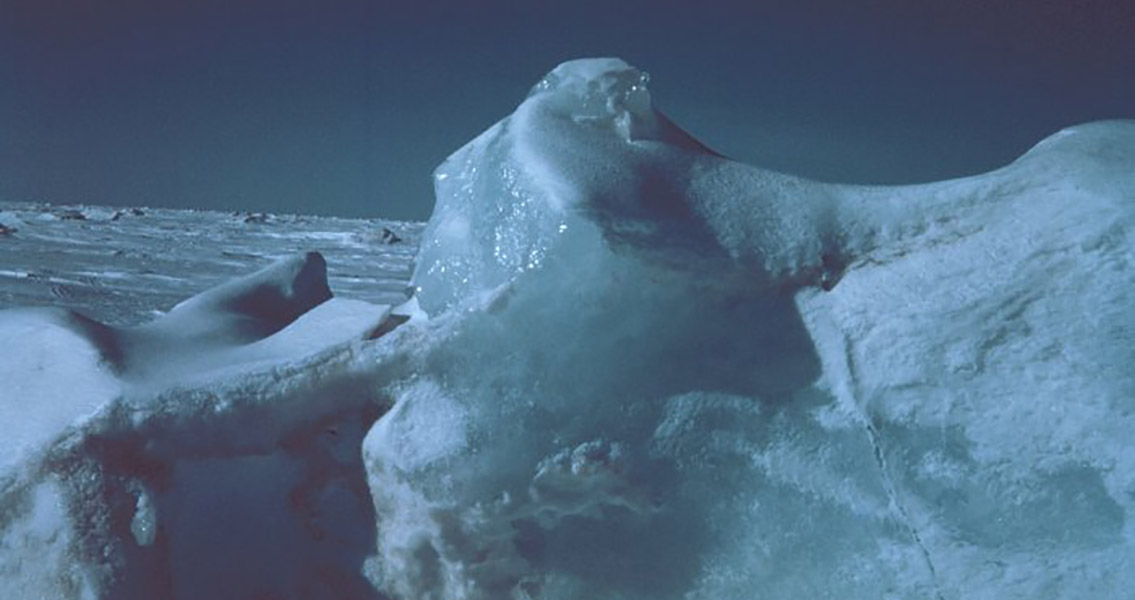
Science Daily. Knies is a co-author of a new study that looked to the Arctic for clues as to exactly what slowed the return of life to the world´s oceans. The results of the study illustrate the potential long-term impacts to marine ecosystems of global warming. “What used to be the northwestern continental margin of the supercontinent Pangaea is now Canadian High Arctic. There we found evidence in geological records for a significant nutrient gap during this period. This means that global oceans were severely poor in nutrients such as nitrogen,” Knies says in Science Daily, adding, “The high temperatures caused deepening of the thermocline and nutricline in the ocean so that upwelling of nutrients from the bottom to the surface of ocean ceased. With that the marine algae productivity was stalled.” This nutrient gap was likely caused by the extremely high temperatures of the ocean surface following the extinction event. The planet’s oceans are not just a single layer of water. They consist of boundaries and layers defined by nutrients (nutricline) and temperature (thermocline) among other things. With no algae present, which are at the bottom of the food chain, life in the ocean couldn’t thrive. When the oceans finally began cooling between 6 and 7 million years after the event, the nutrient rich waters returned. “The boundaries that kept the nutrients from reaching the surface were weakened and the ocean waters were mixed. This caused the upwelling of nutrients, resuscitating the oceans, and leading to an explosion of life. The ecosystem voids created by the worst mass extinction in Earth history were finally filled.” Knies explains in Science Daily. The Permian-Triassic mass extinction altered the evolution of both marine and terrestrial life, and made it possible for dinosaurs to evolve. They were left to die off in yet another mass extinction event 66 million years ago. Today there are scientists that contend we’re now facing a new period of mass extinction, caused by human activities for the most part. ]]>

Categories
Breaking News

Grave of Okunev “Noblewoman” Discovered in Siberia

Siberian Times, “For such an ancient epoch, this woman has a lot of items in her grave. We have not encountered anything like this in other burials from this time, and it leads us to suggest that the items in her grave had some ritual meaning. We hope to get even more rare and spectacular finds next year, when we will continue to study this unique (burial) mound and open the central burial plot.” The funerary items which had been buried with her include approximately 100 decorations (made with the teeth of various animals), bone and horn carved items, an incense burner, bone needles, jars, and a bronze knife. Additionally, her funeral costume was embellished with more than 1,500 beads. Researchers were particularly excited after the discovery of a clay incense burner because it’s decorated with the same sun-shaped faces previously-discovered on ancient rock art in Siberia. Polyakov explained in the Siberian Times, “Its importance is hard to overestimate. All such images previously discovered had been found only on cliffs or separate stones. Now there is the prospect to find out when they were made,” adding, “Now, thanks to our current research, we can definitely say that these rock arts were made by the representatives of the Okunev culture.” The location where the grave was found is known as the Itkol II burial site. Excavations at the site started in 2008, with around 560 archeologically significant finds unearthed so far. The culture owes its name to the nearby city of Okunev, in the south region of Khakassia, where the first burial site was discovered in 1928. The Okunev Steles, anthropomorphous stone columns which are several meters high, are the most well-known monuments attributed to the Okunev culture. Dr. Polyakov is quoted in the Siberian Times as saying, “Okunev archaeological culture is a unique phenomenon of the Early Bronze Age of Southern Siberia. We have a huge quantity of artistic heritage in the form of numerous images – ‘masks’, carved or engraved on the rocks. They have special style, which is a kind of symbol of Okunev culture.” After the incense burner has been restored and precisely dated it will be exhibited at the Hermitage Museum in St Petersburg. ]]>