“Ancient Ethiopian genome reveals extensive Eurasian admixture throughout the African continent” Image courtesy of Wikimedia Commons user: Thomas Splettstoesser]]>

“Ancient Ethiopian genome reveals extensive Eurasian admixture throughout the African continent” Image courtesy of Wikimedia Commons user: Thomas Splettstoesser]]>
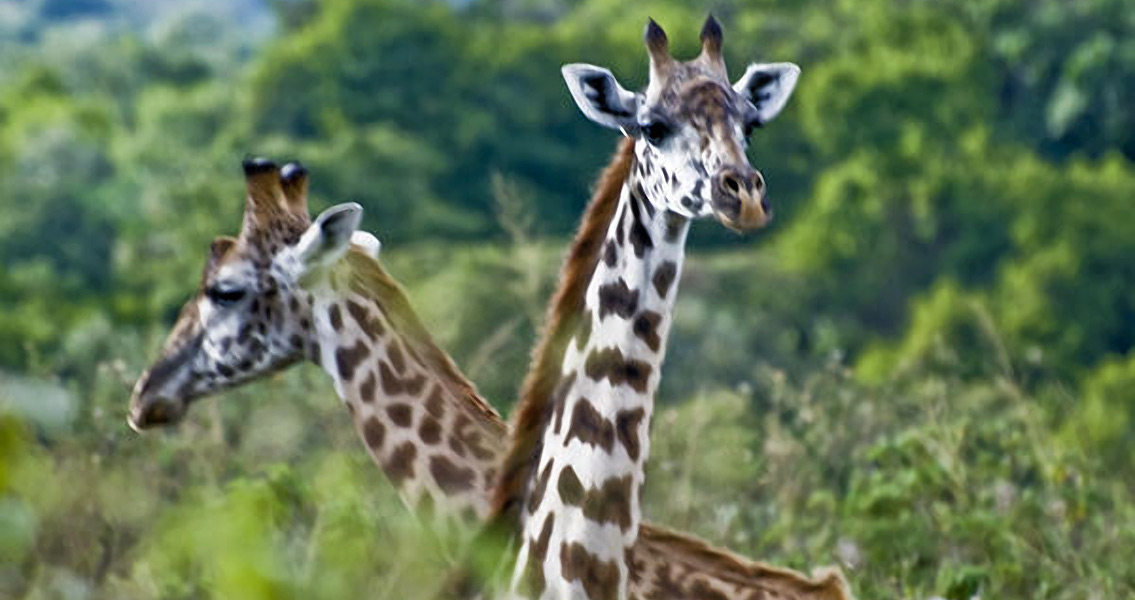
Samotherium. Six million years later, the second stage of elongation took place, in the back part of the third cervical vertebra. Modern giraffes are the only species still surviving to this day that underwent both stages of the elongation, to get where they are now, with their third cervical vertebra similar in length to the upper arm bone of an adult human. Meanwhile, the okapi only experienced the first stage of elongation and over the following millions of years its neck underwent a kind of reverse evolution, with the animal ending up with a shorter neck than it had started with. The giraffes, National Geographic author Brian Switek notes, are not the only animals in history with superlong necks. The rest, however, were all dinosaurs, whose neck evolution involved the emergence of additional vertebra. Giraffes only have seven cervical vertebrae, like humans. Apparently, Switek writes, the giraffes were constrained by their mammalian anatomy, so they evolved long necks in other ways. The team responsible for the research verified its findings using a mathematical model that showed how the cervical vertebrae would develop over these millions of years, Live Science reports. According to the model, after the initial lengthening that Samotherium underwent, its third cervical vertebra would need a second phase of elongation, which confirmed what the researchers found from the fossils they had studied. Regarding the purpose of the long necks, Melinda Danowitz said that both possible reasons – reaching food and gaining a fighting advantage (for the males) in order to improve mating chances – remain valid possibilities. The debate as to which one was the driver of this unique neck evolution will probably continue but at least there will be more clarity as to the mechanism behind it. For more information: “Fossil evidence and stages of elongation of the Giraffa camelopardalis neck ” Image courtesy of Wikimedia Commons user: Fiona Bischof]]>

Homo naledi, has shown that the hominin was probably equally good at climbing trees as walking, even running, on the ground. What’s more, Homo naledi seems to have been handy with tools, media report. This new examination focuses exclusively on the anatomy of the hands and feet of the hominin and has found that the shape of the bones is very similar in many ways and distinctly different in others from our own. Among the similarities are the shape of the foot, specifically the ankle joint area, as well as the absence of a “grasping big toe”, the researchers say in their new paper, Still, the toes were more curved than ours, which suggests Homo naledi felt comfortable in the trees. Commenting on the paper, Jeremy Da Silva, an anthropologist from Dartmouth College, told Reuters that the foot and leg anatomy of Homo naledi revealed the species was well adapted for long-distance walking and running, with elongated bones, and ankles and knees like modern humans’. At the same time, however, Homo naledi had a lower arch than modern humans, and the toes were curved. Another commenter, William Harcourt-Smith from the American Museum of Natural History, told the BBC that the hominin’s lifestyle probably involved long periods of being on the ground, and going up in the trees to escape predators or to feed. All in all, however, Harcourt-Smith said the species was “much more bi-pedal than not, but not 100%.” The hand bone fossils found in the Rising Star cave in South Africa offered even more fascinating insight into this ancient ancestor of ours. The shape of the hand suggested that although the fingers were more curved than are ours, Homo naledi could manipulate tools. This suggestion could fuel a hypothesis that tool use is not as directly related to cognitive capacity as traditionally believed. Homo naledi’s brain was just a third of the size of ours, something that would usually make scientists think the species was unable to make and use tools, but apparently the case is the opposite. One palaeoanthropologist commenting on the paper, Tracy Kivell from the University of Kent, told Reuters that this discovery “causes us to perhaps rethink the cognitive requirements for tool use.” The Homo naledi fossils were found in August and the discovery was made public in September. Starting with one nearly complete skeleton, so far researchers working at the site have unearthed partial remains from around 15 individuals. Hand fossils alone number almost 150, with one almost complete specimen of the right hand of an adult, while foot bones total 107 so far, with one completely preserved right foot, again of an adult. Luckily for science, the bodies in the cave were not disturbed after they were put there or died there and they did not suffer the effects of the elements, such as floods, which would have dissolved some of the smallest bones, Tracy Kivell told the BBC. For more information: “The hand of Homo naledi”]]>

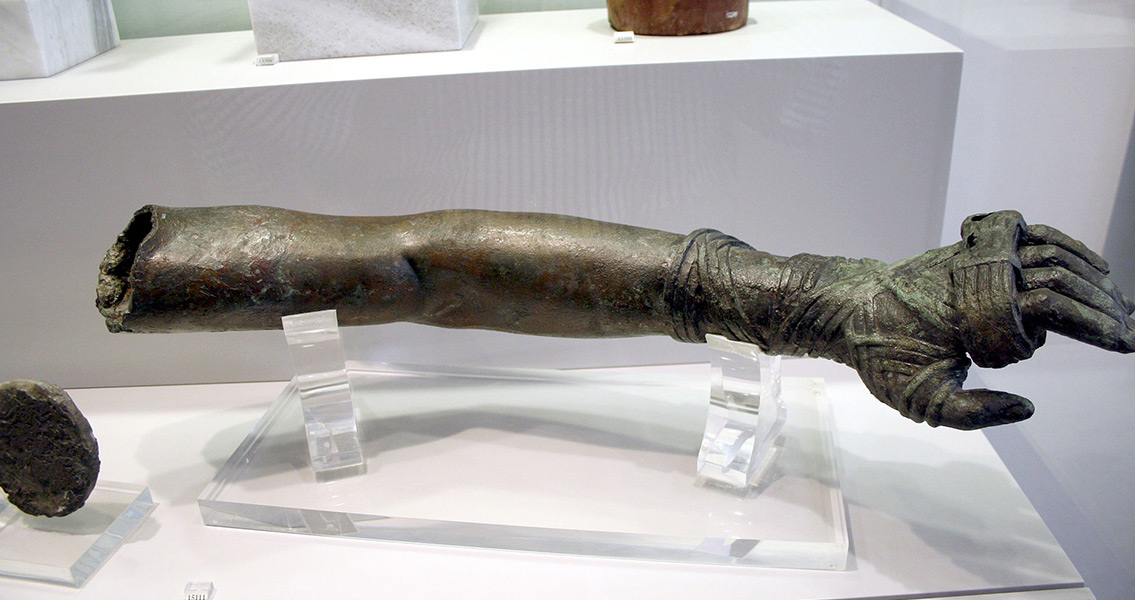

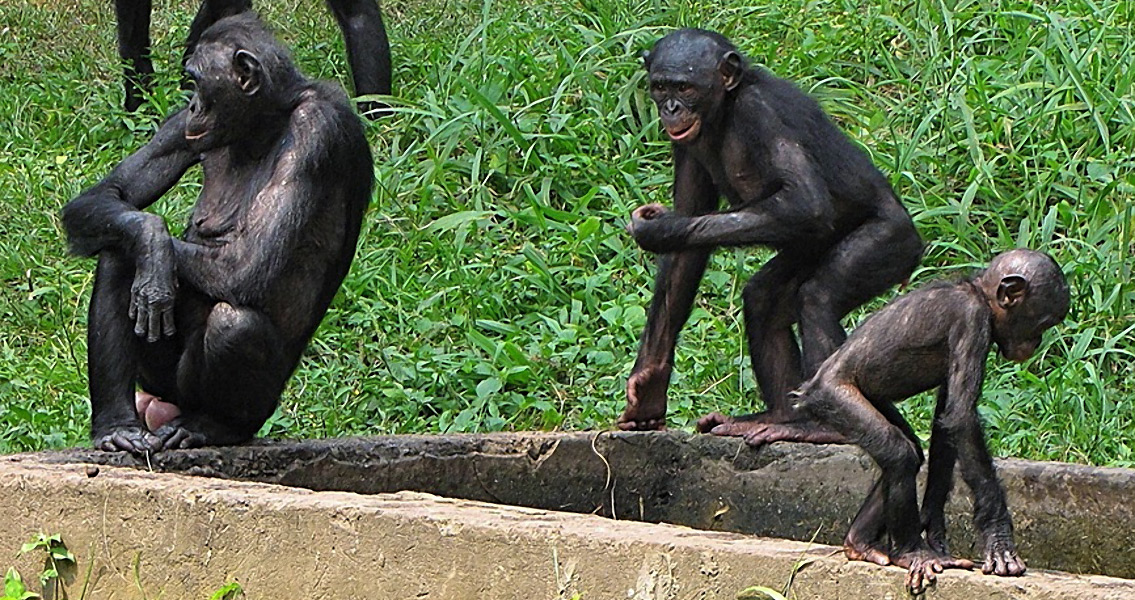
Vulnerable Apes hypothesis, a hypothesis that challenges some of the foundations of the traditional understanding of human evolution. The central idea is just as fascinating as it is simple to grasp: compassion, the ability to accommodate less than “optimal” individuals in the community and help them survive, gave evolution a major push and demonstrated our ability to learn new behaviours when circumstances call for them. This compassion, the willingness of parents to take care of their infants that, unlike the babies of other primates, go through a longer period of complete dependency and have straighter feet, shorter arms and hairless bodies, is what spurred human evolution onward, ultimately turning those flaws into evolutionary advantages. I had the pleasure of talking to Nick Winder a while ago. He shed further light on why the heroic model of evolution, the model that describes natural selection as a constant battle against survival odds of varying importance, is oversimplified and therefore wrong, and on why it is important to rethink basically everything we have long taken for as an indisputable truth in the evolution field. Thomas Hobbes, Nick recalls, described the lives of our ancestors as “solitary, poor, nasty, brutish, and short.” Well, it seems Hobbes and a lot of other authorities may have got it wrong. The pinnacle of evolution The fundamental concept around which this new evolutionary hypothesis is organized is the ability of an entity, or organism in this case, to perform an activity purposefully, intentionally. This ability science refers to as agency. Agency, Nick says, was not recognized by social or political sciences for a very long time; in fact, until the emergence of the modern computer in the 1960s. Until then, he says, scientists by and large plainly refused to accept that anyone different to white western Europeans, let alone their hominin ancestors or non-human animals, was capable of agency. Nick points out that the main reasons behind this were the socio-political environment in which Darwin’s theory was born and the fact that much of early evolutionary theory was produced by Britons, shaping future attitudes and perceptions. In that highly stratified environment, where institutional constraints (which we’ll come to later) discouraged individual agency, Queen Victoria was all but considered the pinnacle of human evolution. Even today, says Nick, natural scientists find it difficult to come to terms with the idea of individual agency, not just among humans – who have time and again been proven to be capable of purposeful action – but also among animals. Still, the paradigm is shifting, thanks in no small part to the emergence of interdisciplinary studies in recent decades, which are beginning to reveal evolution as a process much more complex than early evolutionists and even not so early ones could have imagined. The reason – those socio-political factors that dominated science for so long prevented physical and social scientists from grasping its complexity. “There are certain math problems you can solve,” says Nick, “if you ignore certain parts of their complexity.” Agents and plesionic systems Agency is the central idea in Winder and Winder’s hypothesis, the idea that both human and non-human animals are capable of intentional actions. But agents do not function in a vacuum, they function within what Nick calls plesionic systems, from the Greek word plesion, meaning “neighbour”. A plesionic system is an interval of space and time, called an arena, containing one or more agents (as well as other things) and these agent/s work within the arena to understand or perhaps even influence another plesionic system which they come into contact with at a certain point in time. Nick explains plesionic systems using time geography, an interdisciplinary framework created by Swedish geographer Torsten Hägerstrand in the 1960s. One example of a plesionic system is a person walking on the street and texting. Or someone driving a car. Any agent doing something purposeful, in short. In this purposeful activity, the agent is naturally constrained by spatial factors: we can’t see through walls, for example, and we can’t hear someone talking if we are a mile away from them. Yet, in spite of these constraints agents find ways to come into contact with other agents in other plesionic systems and the points of these contacts are called pockets of local order. A Skype connection is possible because of a pocket of local order called a computer. A geographical feature that has been consistently occupied through the ages, like a city or an ancient monument, is also a pocket of local order, Nick explains. Context is king From these pockets of local order we can reconstruct past plesionic systems that came into contact there and this is possible because of one very important aspect of plesionic systems: they have a context, which is created by the agent. Agents don’t move through time and space in jumps, says Nick, they carry a sort of “lifeline” with them that unwinds as they move and interact with other agents and plesionic systems. The movements of agents create a fabric of plesionic systems, in which each plesionic system has its own memory. This memory is contained in the arena and is created by the constraints inherent in every arena but also by the ways in which the agent themselves change the arena, by rethinking it. Each instance of rethinking an arena creates a context for it. Context, says Nick, literally means an interweaving of information. This interweaving happens over time and results from “the friction between the agent and their arena.” What’s more, this context changes all the time, we constantly recontextualise our arenas. We do this every time we make a decision, then change it, take actions and remember these actions. This recontextualisation lays the foundations of learning new behaviours. The ability to learn new behaviours, in its turn, is an essential aspect of evolution. This itself is not a new discovery: the ability to learn new behaviours, to recontextualise our arenas, has long been recognized by science, just not in its full complexity. Back when Homo sapiens was fresh off the trees (even before that), when hominins lived in small communities in places with relatively sufficient resources to survive but a limited gene pool because of the size of the community, some individuals were hard pressed to pass on their genes. They had two choices: not pass their genes at all or mate with close kin, taking the risk of producing offspring that was at a disadvantage to the rest of the community. To help this offspring survive, the parents had to learn new behaviours, they had to be compassionate. Compassion, in this context, meant the ability to cope with genetic disadvantages, a biologically determined ability, rather than an acquired characteristic that developed as part of later evolution, with the emergence of highly organized societies. The irony of institutions You might well be wondering where these vulnerable apes that we used to be went as evolution progressed and humans started settling down and forming communities and societies. It seems that with the emergence of societies and social constructs like institutions the vulnerable apes gradually turned into genocidal apes, as Winder and Winder call them. Should institutions be blamed for this? To an extent, and it is a considerable extent, yes, they should. Institutions aim to create and maintain order, to rein in the forces of chaos while at the same time placing significant constraints on individuals, on agents. Some of these, the agents put in themselves, and others are imposed externally, so to speak, by the institutions themselves, says Nick. Take the church, for instance, any church. It has a dogma that believers follow, for the most part voluntarily. But even if an individual believer has a problem with some aspect or element of the dogma, they will, if they are sincere in their belief, accept that aspect or element because it is part of the dogma. What’s perhaps more fascinating than this kind of cognitive dissonance is the fact that institutions are in a sense no more than “artefacts of human opinions.” Every individual has a certain opinion of an institution, a different idea of it. Take the above believer – they will probably have an opinion of their church of preference that is very different from the opinion of an atheist. Since both the believer and the atheist are agents and as such equal, both their opinions, albeit different, are valid. More importantly, however, despite these differences in opinion, institutions are, as we have all felt at some point or other, very real constructs, a sort of virtual agent whose main purpose, just like individual agents, is to take care of its vested interest. Obviously, sometimes the interests of one individual agent and an institution are at odds, and it is not the individual agent that usually comes out of such a situation as the winner. Institutions are powerful and there is a good reason for it – remember, they create and maintain order. They are not evil constructs whose aim it is to constrain individuals. Yet the irony in all this is that the inherent compassion of the vulnerable apes started declining when institutions started being created. Suggesting a causal relationship between the two would be too speculative but it is a fact that historically, modern humans at least have for the most part been non-compassionate to their fellow human beings. Only recently – within the last hundred years, which is a second on the scale of human evolution – have we begun to appreciate agency for what it is, to recognize it in humans and even non-human animals. Incidentally, it’s only been recently as well that we have started questioning the merits of this or that institution on a large scale. So, we were once compassionate apes who had compassion and co-operation among their survival tactics. These evolved along with competition, and may well be seen as the second major driver of evolution. Yet over the millennia, the vulnerable ape gave way to a smarter, more dangerous species, the genocidal ape. “Genocidal” may sound like too harsh a word but if we think about it, it is an accurate description. Human activity has been established as a major contributing factor for the sixth mass extinction, which is already taking place. We are literally wiping out hundreds of species at rates that are anything but natural. We are also trying to wipe out ourselves, so we are not just homicidal but suicidal as well. So, what do we do now? Sadly, there is no ready answer. Becoming more aware of our environment, the same environment that sustains us, is one step in the right direction. Another step, in the scientific field, is the increase of interdisciplinary studies; it seems that interdisciplinary research can and does help overcome a lot of obstacles such as obsolete ideas and concepts that have long plagued the science world, effectively preventing research from moving beyond a certain boundary.]]>

two secret doors leading to what could be other burial chambers. He then explained that it was possible one of these chambers belonged to Nefertiti, wife of religious reformer Akhenaten and very likely ruler of Egypt after his death. In support of his hypothesis, Reeves noted the treasures found in the boy-king’s burial chamber – treasure that was too rich compared to the scarcity of artefacts in the rest of the tomb. This led the University of Arizona researcher to suggest that Tutankhamun had died suddenly, leaving no time to prepare a proper tomb and furnishings, so the priests had to improvise by adding another chamber in Nefertiti’s tomb. Reeves backed his hypothesis by pointing out that other egyptologists have established that a lot of the artefacts in Tutankhamun’s chamber were meant for the co-regent of his father – this co-regent is widely believed to have been Nefertiti. At the moment, the Egyptian antiquities authorities are conducting further scans in Tutankhamun’s tomb using thermal and radar imaging methods. According to Antiquities Minister Mamdouh Eldamati, as quoted by Ahram, even if the scans reveal hidden burial chambers it will be a while before their occupant or occupants are identified, adding that before any digging starts for these hidden chambers, measures must be taken to preserve Tutankhamun’s chamber. The minister seems to be much more cautious with speculation as to who might be in those hidden chambers, telling media that although the discovery of Nefertiti’s body would be a sensation, he doubts it is her that is buried in Tutankhamun’s tomb. Image courtesy of Wikimedia Commons user: Ibrahim.ID]]>
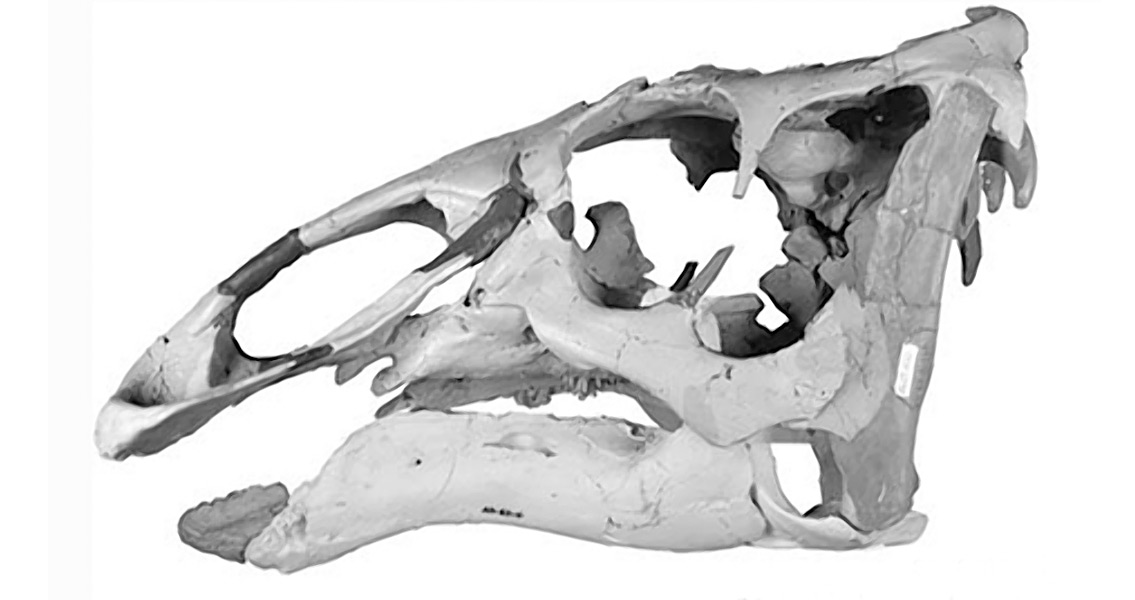
Ugrunaaluk kuukpikensis, a hadrosaur, or duck-billed dinosaur, probably lived around 69 million years ago and spent four months every year in darkness, surviving on tree bark, ferns, and whatever other vegetation was left when the sun went down for the winter. The hadrosaur fossils were discovered in the Liscomb Bone Bed, a geological layer rich in ancient fossils along Colville River, in the Prince Creek formation, the University of Alaska Fairbanks said in a press release. Pat Druckenmiller, one of the authors of the new study and the earth science curator at the University of Alaska Museum of the North, said the animal stood between six and seven feet tall and was up to 30 feet long. The creature’s hind legs were much longer that its front legs but it could walk on all fours, the authors also report. Another one of the authors, biologist Gregory M. Erickson from Florida State University, told the New York Times that the “ancient grazer” had crests along its back, like Godzilla, and a mouth full of as many as 1,000 sharp teeth. Although Ugrunaaluk kuukpikensis had to survive snowfalls and a long period of darkness, the authors note that temperatures above the Arctic Circle during the Cretaceous were warmer than they are now, with the average standing around 4 degrees Celsius above zero. Still, if that was the average, then there were certainly prolonged periods when temperatures dipped below zero, which suggests the hadrosaur was a uniquely hardy creature. Druckenmiller told the New York Times that the species is completely new to science, distinctly different from other dinosaur species discovered earlier at lower latitudes in Alaska, a “truly polar” dinosaur. The authors of this new paper, which was published in the journal Acta Palaeontologica Polonica, had earlier published work suggesting that there were animals living in northern Alaska 69 million years ago, when there were forests in the area because of the more temperate climate, the press release notes. Erickson says that the discovery of the Ugrunaaluk kuukpikensis fossils “challenges everything we thought about a dinosaur’s physiology.” he added that the discovery prompts the question of how the duck-billed herbivores survived the harsh Arctic winter. Since 1961, when palaeontologist Robert Liscombe, after whom the area is named, discovered the first dinosaur fossils in the Northern Slope of Alaska, a total of 6,000 dinosaur bones have been unearthed there. Most of them belong to young, smaller, animals, probably a herd that was suddenly killed, Druckenmiller says in the press release. As for species, three distinct ones have been named and catalogued, all of them unique to northern Alaska. This latest one, “the ancient grazer” as its name translates from the language of the local indigenous community, is by far the most complete ever discovered in a polar region, Druckenmiller says. For more information: “A new Arctic hadrosaurid from the Prince Creek Formation (lower Maastrichtian) of lower Alaska” Image courtesy of Wikimedia Commons user: Hirotsugu Mori, Patrick S. Druckenmiller, and Gregory M. Erickson]]>
