chimpanzees have also been found to have a preference for cooked meat. For more information: “The significance of cooking for early hominin scavenging” Image courtesy of Wikimedia Commons user: Alina Zienowicz Ala z ]]>

chimpanzees have also been found to have a preference for cooked meat. For more information: “The significance of cooking for early hominin scavenging” Image courtesy of Wikimedia Commons user: Alina Zienowicz Ala z ]]>

www.maneyonline.com Image courtesy of Wikimedia Commons user: Rennett Stowe from USA ]]>

last Autumn during excavations 200 metres south of Takashima Island. The ship was lying around fifteen metres below the surface, with its bow pointing southward. The remains measure twelve metres long, and three metres across at their widest point. Archaeologists from the University of Ryukyus and the Maatsura Board of Education confirmed on the 2nd July that the shipwreck was indeed part of the Mongolian led invasion force of the thirteenth century. It is the second shipwreck that has been discovered from the Kublai Khan led attempt to invade Japan. Professor Yoshifumi Ikeda from the University of Ryukyus, the leader of the excavations, told the Asahi Tribune that his team had found three other ships at the Takashima Kozaki site which could have been part of the invasion force. The team have reached their conclusion based on a wealth of artefacts discovered in and around the shipwreck, and the structure and shape of the ship itself. Around twenty examples of Chinese ceramic wares, including a white porcelain bowl, a brown glaze pottery vase, roof tiles and iron ware, were found in the shipwreck. These have been dated to the twelfth and thirteenth century, which the archaeologists claim is proof the ship is from the Mongolian invasion. By 1274 Kublai Khan’s empire included most of what is modern day Asia, and he had declared himself emperor of China. In 2011, a team of archaeologists discovered and identified the only other confirmed shipwreck from the attempted Mongolian invasion, just off the coast of Nagasaki. Using ultrasound equipment they discovered the well preserved wreck three feet below the sea bed. 4,000 artefacts were unearthed from the site including cannonballs and stone anchors. Kublai Khan attempted to launch two invasions of Japan in the thirteenth century, at a time when the Mongolian Empire was expanding rapidly through Asia and Europe. Both invasions were prevented by ‘kamikaze’: massive typhoons which forced the Mongolians to abandon their attempts at expansion into Japan. The first invasion took place in 1274, when up to 900 ships landed at Japan’s Hakata bay. Heavily armed with weaponry superior to the Japanese, the Mongolian troops initially made substantial inroads into the country’s territory. The typhoon struck however, forcing them to return to their ships for shelter. Over night the storm intensified, destroying most of the invader’s ships and forcing the remainder to return to what is now Korea. In 1281 a second, much bigger invasion was launched comprised of two fleets, one containing 900 ships, the other 3,500. Improved Japanese sea defences held up the Khan’s forces, holding off the massive invasion. The second typhoon struck, sinking 80% of the fleet and drowning a huge section of Khan’s warriors. Those troops who did make it onto the Japanese mainland were quickly killed by an army of Samurai. Historians speculate that the second invasion was so cataclysmic for the Khan because the preparation had been rushed. Desperate to conquer Japan, a fleet of ships had been hastily assembled, many of which were simply inadequate for the journey across the sea. The archaeologists working at the Takashima Kozaki site hope that the information gleaned from the recently identified shipwreck can be used as a starting point to identify other ships in the region. “We have successfully confirmed the two ships from the Mongolian invasion, and further research on them is expected to lead to the discovery of even more sunken Mongolian ships,” Ikeda told the Asahi tribune. Image by Anige of Nepal – an astronomer, engineer, painter and confidant of Kublai Khan ]]>

www.cell.com Image courtesy of Wikimedia Commons user: Tracy ]]>
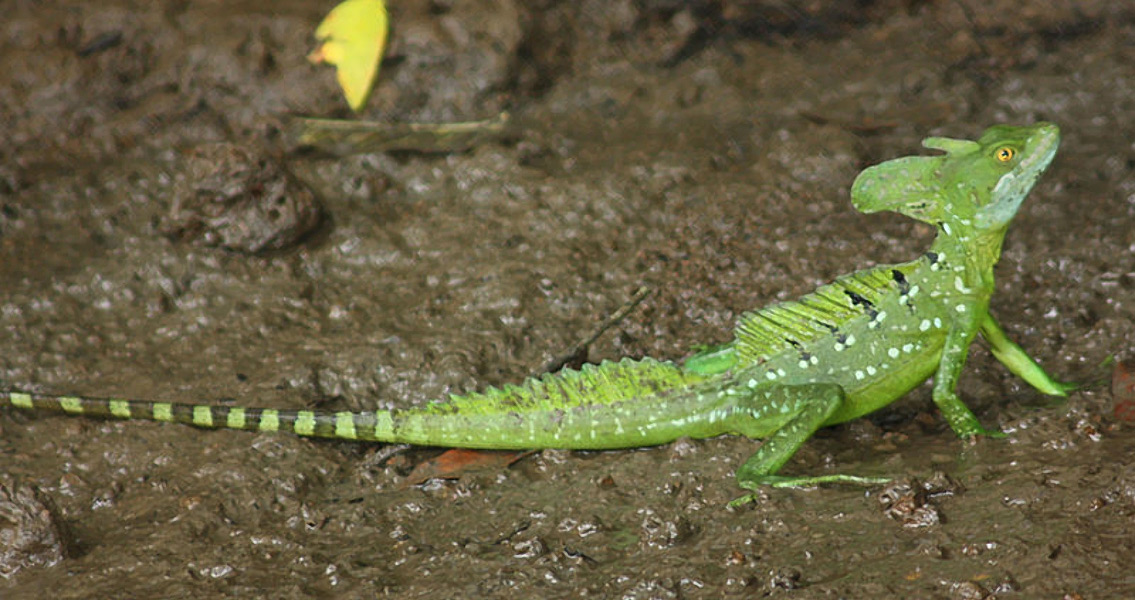
Babibasiliscus alxi and suggested it may have been the first representative of the Jesus lizard family. He said in a press release the lizard was probably active during the day and lived mostly in trees. A bone ridge on the top of its head provided shade from the sun and at the same time probably made it look constantly angry. It had small teeth that ended in three points, suggesting its usual diet included anything from snakes and other lizards to fish, insects, and even plants. However, it also had wide cheekbones, so it is possible that it ate larger animals as well. The basilisk family, which also includes chameleons and iguanas, is among the least studied representatives of the reptile world because there are not many fossils that scientists can study. Today these lizards live across North America, in Central America and as far down south as Ecuador. They are collectively called casquehead lizards, or helmeted lizards, because of the ridge they have on their heads – in some species on just the males, and in others on both females and males. In naming this ancient ancestor of today’s Jesus lizards, Conrad said he had honored an indigenous people from Wyoming, the Shoshone, in whose language “babi” means cousin; pointing to the kind of genetic relationship the ancient species has to modern-day Jesus lizards. These reptiles are called that because of their ability to run across the surface of water over short distances. Based on the fossil record it has previously been suggested that at some point, around 50 million years ago, mid and even high latitudes were characterised by tropical climate but as the weather started cooling down, these heat and humidity loving species moved south. According to Conrad, any evidence of these developments can be useful for the future as it may, he says, “give us an idea of what to expect from our dynamic Earth”, especially at this point in time, when the planet is undergoing another period of global warming. For more information: “A New Eocene Casquehead Lizard (Reptilia, Corytophanidae) from North America. Image courtesy of Wikimedia Commons user: Charlesjsharp]]>

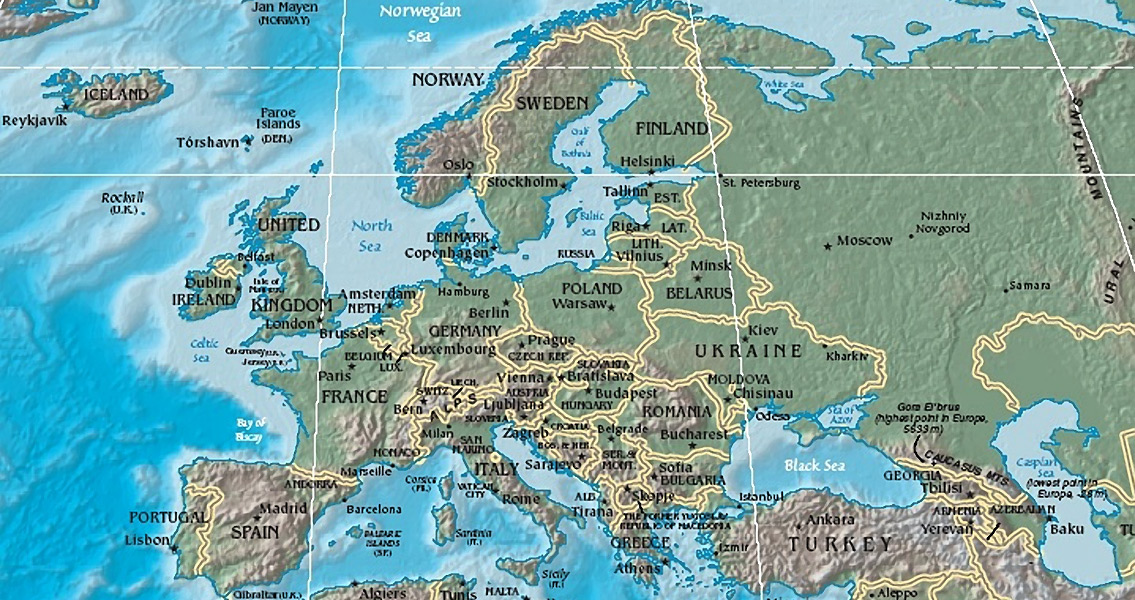
American Journal of Physical Anthropology, suggests that linguistic diversity can predict genetic diversity better than geographical distribution. This idea about a parallel between genetic and linguistic diversity was first put forward by Charles Darwin but so far it has been difficult to devise a methodology that would allow science to actually prove this correlation. With the help of geneticists and linguists from two Italian universities, Ferrara, and Modena and Reggio Emilia, the lead author of the study, linguist Giuseppe Longobardi, developed a methodology using two new tools for comparative linguistics research. The first tool was a refined list of Indo-European cognate words and the second a hitherto unavailable method of language comparison, which can be used to estimate linguistic diversity based on “a universal inventory of grammatical polymorphisms”. This method allows researchers to compare languages from different families, which is what the team did, comparing languages from the Indo-European and the Uralic families. Using these tools, the team identified two sets of linguistic distances, they wrote in the paper, one syntactic and one lexical. Then they used matrix correlation tests to compare these sets with certain values of geographical and genomic distances. The methodology was applied to fifteen European languages and the respective nations. In a press release from the University of York, Longobardi said that, for instance, the French and the Russians speak notably different languages, they have “a certain degree of linguistic diversity”. The study, however, found that the degree of genetic diversity between two populations in Europe was proportional to the extent of linguistic diversity. As a general historical rule, he added, it can be assumed that populations as geographically and linguistically diverse as the Japanese and the Kenyans, for instance, will also be proportionally diverse genetically. Still, as every rule, this also has exceptions. In the case of European populations and languages, the marked exceptions are Hungarians, who are genetically very close to the Slavic and Germanic peoples but linguistically very different. The diversity resulted from a conquest, which brought the new language into the territory of what is today Hungary. Longobardi said the study will now be expanded to include languages spoken outside Europe, hopefully reaching a global scale at some point. This expansion will allow the scientists to see if the rule holds true and they are even hoping that it could tell them exactly when and how the Indo-European languages were brought into Europe. In addition to the purely linguistic perspective, however, the team are hoping that their findings and any future ones will also help the study of genetics. As Longobardi said, “Ultimately being able to identify the ancestry of a population just on the simple basis of the language they speak may benefit identifying genetic properties of these populations, which could ultimately be of practical use even for medical research.” For more information: “Across language families: Genome diversity mirrors linguistic variation within Europe” Image courtesy of Wikimedia Commons user: public domain, CIA]]>
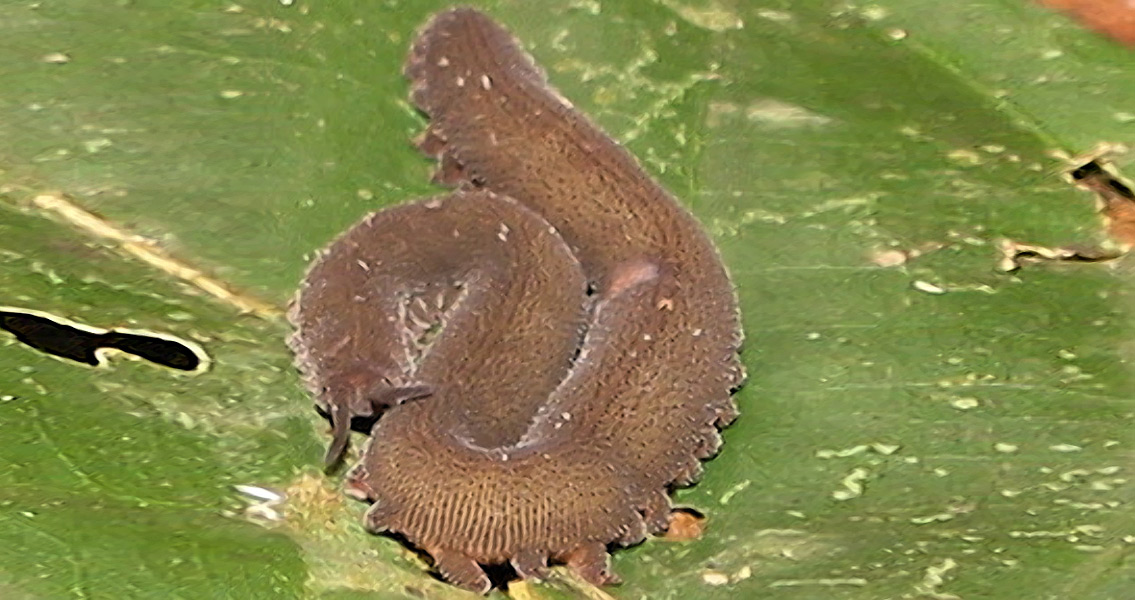
Collinsium ciliosum, the armored worm has been nicknamed “Hairy Collins’ Monster” after Desmond Collins, the Canadian paleontologist that initially illustrated the worm during the 1980s. The closest living relative to C. ciliosum today would be the velvet worm, a strange centipede-like worm with segmented legs; large, almost snail-like antennae; and a distinct lack of armor. There are around 180 species of velvet worm in existence, with most of them living in the Southern hemisphere and exhibiting little in the way of differentiation besides size and coloration. However, according to Cambridge University’s Dr. Javier Ortega-Hernández, the lead author of the study on C. ciliosum, the evolutionary great-great grandfather of the velvet worm exhibited a startling amount of diversification, coming “in a surprising variety of bizarre shapes and sizes” according to a university press release. The sheer volume of divergent forms the armored worms took so far in the past is typical of the geological era in which they lived. Called the Cambrian explosion, the time period was characterized by intense evolutionary development. Other creatures from the period, such as lamp shells and sea lilies, have also demonstrated a high level of evolutionary activity during the Cambrian explosion, but this is the first time that it’s been evidenced in a relatively soft and squishy group of creatures such as that which C. ciliosum belongs to – even if its hard, aggressive-looking carapace seems to belie that description. It is likely that the otherwise soft and tender body of the worm made it a prime target for larger predators. The creature’s limited mobility and its status as a sedentary filter-feeder meant that it could have easily faced extinction through predation if it had not adapted the hard shell that it came to be encased in, complete with as many as 72 sharp, fierce, spiky horns of varying shapes and sizes. Ortega-Hernández referred to C. ciliosum as “Hallucigenia on steroids”, referencing a recent but unrelated fossil find in Canada of a similar worm-like creature that also existed in the Cambrian. The two worms are in fact members of the same evolutionary family and bear a passing resemblance to one another, though Hallucigenia lacked the impressive armored suit that its cousin C. ciliosum evolved to keep itself safe from harm. For more information: www.pnas.org Image courtesy of Wikimedia Commons user: Thomas Stromberg]]>

“A Milk and Ochre Paint Mixture Used 49,000 Years Ago at Sibudu, South Africa” Image courtesy of Wikimedia Commons user: Gribeco ]]>