Categories
Breaking News

New Human Ancestor Raises Questions About Our Origins

Australopithecus deyiremeda, as the new human ancestor has been named, lived in the Afar region of Ethiopia some 3.3 million to 3.5 million years ago. This means it would have lived alongside Australopithecus afarensis, another hominin species from the Afar region whose most famous representative, “Lucy”, was discovered in 1974. A. afarensis lived in what is now Ethiopia, between 2.9 million and 3.8 million years ago. “The new species is yet another confirmation that Lucy’s species, Australopithecus afarensis, was not the only potential human ancestor species that roamed in what is now the Afar region of Ethiopia during the middle Pliocene”, said Dr. Yohannes Haile-Selassie, curator of physical anthropolgy at the Cleveland Museum of Natural History and the project team leader of the study, in a press release. The fossil specimens were found on 4th March, 2011, in the Woranso-Mille Paleontological Project study area, situated in the centre of the Afar region, about 325 miles north east of Ethiopia’s capital Addis Ababa, and just 22 miles north of the site where Lucy’s remains were unearthed. Differences in jaw bone mark the two species apart. A. deyiremeda had thick enamel teeth of a different shape and size to Lucy, and a more robust lower jaw. The anterior teeth were also comparatively smaller in A. deyiremeda, suggesting it had a different diet. A. deyiremeda‘s discovery adds to the increasing ambiguity about the process of human evolution. For much of the twentieth century the general consensus among scientists, based on available sources, was that during the Pliocene period only one human ancestor species existed at any time. In 1995, a hominin species called Australopithecus bahrelghazali was discovered in Chad, and in 1999 another called Kenyanthropus platyops was discovered in Kenya. Both of these species were reported to have lived at the same time as Lucy, although this assertion was met with skepticism from the scientific community over whether they really were separate species or simply another example of A. afarensis. Skeptics in the scientific community may still need to be convinced that A. deyiremeda is indeed a distinct species but its discovery adds further weight to the idea that the evolution of homo sapiens was not just a straight line from A. afarensis. “Some of our colleagues are going to be skeptical about this new species, which is not unusual. However, I think it is time that we look into the earlier phases of our evolution with an open mind and carefully examine the currently available fossil evidence rather than immediately dismissing the fossils that do not fit our long-held hypotheses”, said Haile-Selassie. For more information: www.cmnh.org Image courtesy of Wikimedia Commons user: Chartep]]>

Categories
News

The Fall Of Constantinople

Categories
Breaking News

Rumours Are A Useful Historical Source

www.onlinelibrary.wiley.com Image courtesy of Wikimedia Commons user: Flickr upload bot]]>

Categories
Book Reviews

Dracula

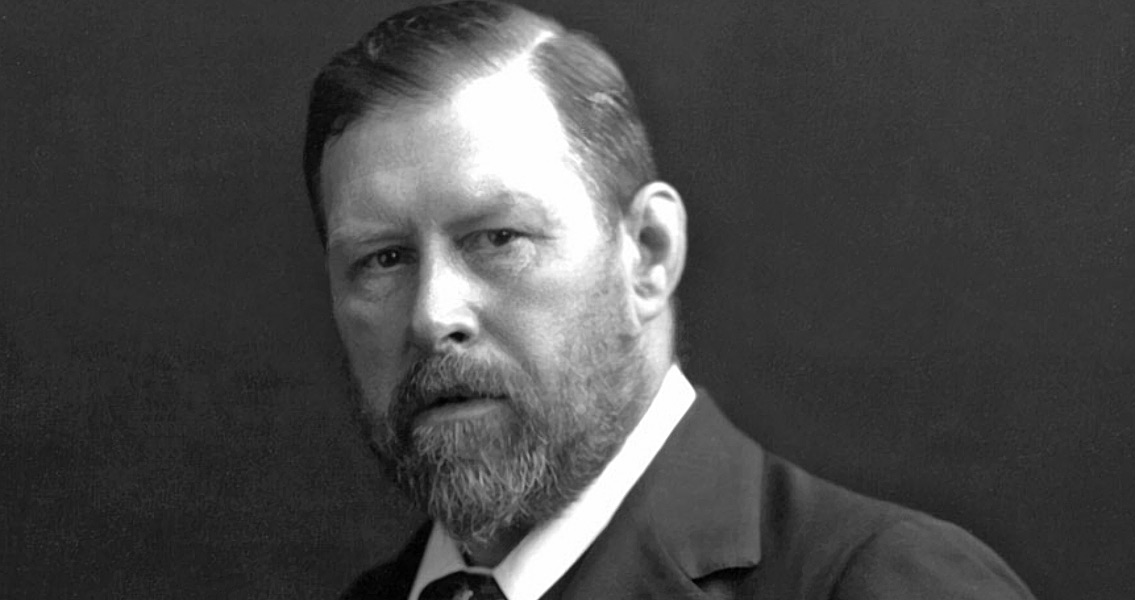
Dracula. First released in English bookshops in 1897, the book remains for many the classic vampire novel. The book’s author, Bram Stoker, was born in Dublin, Ireland, in 1847. A sickly child, Stoker was forced to spend much of his youth confined at home. His mother, a charity worker and writer, entertained him with fantastic stories. Stoker became healthier as he grew older, and went on to study Mathematics at Trinity College, graduating in 1867. Stoker worked as a civil servant in Dublin while also writing theatre reviews for the Dublin Mail newspaper. He met the famous actor Sir Henry Irving, who hired Stoker as his manager, forging a working relationship which would last for the best part of the next three decades. The new job saw Stoker move to London, where he began his writing career and started to move in the city’s literary circles alongside the likes of Oscar Wilde, Arthur Conan Doyle and Alfred Lord Tennyson. Easily Stoker’s most well known novel, Dracula is composed of a collection of diary entries, letters and telegrams between several key characters. This narrative technique was intended to give the story a more unnerving sense of reality, as though the narrators are relaying simple fact rather than consciously telling a story. It also lends the book a distinct style: lacking a fixed narrator, the story is told from several first person perspectives. A central theme in the book is the relationship between science and tradition, a key concern of the late Victorian era. Industrialisation and scientific advances had led to an increasing detachment from rural traditions, while works such as Darwin’s On the Origin of Species had called into question religious belief systems as a means to understand the universe. Count Dracula however, is something beyond science, a supernatural being whose weaknesses can only be found through traditional means. It is only Van Helsing, a doctor trained in both scientific and non-scientific knowledge, who can identify the threat Count Dracula poses and stop it. Female sexuality is another central issue in Dracula, and in many ways the depiction of women in the book is a reminder of the patriarchal society in which it was written. Many critics argue that the novel was intended to stimulate the imaginations of Victorian men, with Dracula’s female victims metaphors for lust. Many of the female characters are portrayed in a very flat, one dimensional way, often serving as mere objects in the development of the story rather than active subjects. Count Dracula’s attacks lead to his victims breaking from ideals of Victorian womanhood, as seen in his first victim Lucy, or the seductive female vampires in his castle. Throughout, women are either victims or temptresses, their characters are never developed beyond these very basic allegorical roles. It is important to remember that Dracula was not the first vampire story written. Stoker’s work in fact drew on ancient folk stories of the blood sucking undead who attacked their victims at night. Nevertheless, it is the basis for most modern vampire stories, providing an image of vampires that is influential to this day and serving as a reflection of the late Victorian world in which it was written.

Related Books


Dracula book

Dracula
by Bram Stoker

[gap height=”20″] ]]>

Categories
Breaking News

The Ardennes and the Battle of the Bulge, by Anthony Beevor

www.anthonybeevor.com]]>

Categories
Breaking News

Unique Golden Vessels Unearthed in Scythian Tomb

Digital Journal, however, pegs them as the work of the Scythians themselves. One of the bucket-like vessels features a depiction of two gryphons attacking a deer on the one side, and another two gryphons attacking a horse. The depictions are done with stunning detail, including the spots on the skin of the deer. Another vessel features a fighting scene in which you could even see the stitches on the participants’ clothes, their shoes, and the type of bow they hold. The central figure in this depiction is an elderly man, with wrinkles on his face, and it is this figure and the fact that the old man is attacking a much younger one that suggest the find may have historical implications as well. According to Belinski and his colleagues, the scene is very likely a depiction of the so-called “Bastard Wars” described by Herodotus. The Bastard Wars, the story goes, took place after the Scythians returned from a long war to find their wives had borne children to their slaves. So, the scene on the vessel could be a piece of evidence that these wars took place. On the other hand, as Belinski himself notes, it could be a depiction of the ‘Bastard Wars myth’, as he calls it. The vessel with the gryphons killing animals most probably depicts a scene from the Underworld, and both it and the one with the Bastard Wars scene are thought to have been used for ritual purposes by the high priest of the tribe, who was also usually the king, Belinski told MK.ru. Image courtesy of Wikimedia Commons user: Derzsi Elekes Andor]]>

Categories
News

The Founding of St. Petersburg

Categories
Breaking News

Sierra Leone's Colonial Diamond Mining Examined

www.onlinelibrary.wiley.com Image courtesy of Wikimedia Commons user: Archdiamond]]>

Categories
Breaking News

Ancient Skull Trauma Survivors Unearthed in Bolivia

Categories
News

English Colonists Massacre a Pequot Village