

www.juh.sagepub.com Image courtesy of Wikimedia Commons user: Poco a poco ]]>



The Americas Researchers from New York Queens College have found that the Ancient Maya city Nixtun-Ch’ich, in Northern Guatamala, was built with a grid pattern design, something not seen in other cities from that time and region. Thought to have thrived between 600 and 300 BCE, the city featured a ceremonial route lined with up to 15 flat top pyramids which were each up to 100 feet tall. Running from west to east, the route only had a 3-degree variation from true east. Other Maya cities tended to be much more ‘relaxed’ in design and the researchers, led by Timothy Pugh from Queens College, have suggested that Nixtun-Ch’ich’s strict design may have given a sense of being constantly controlled for the people living there. A study by Jack Williams and Samuel Munoz has looked at the largest pre-colonial settlement north of Mexico, the city of Cahokia, located on the flood plain of the Mississippi River. By studying 2000 years old sediment cores from the flood plain, Munoz and Williams have shown that major flood events could have been linked to the rise and fall of the city. Correlating the history of the city with the record of floods, it was found that the rise of Cahokia took place between 600 and 1200 CE, a relatively flood free period. A major flood hit the area after 1200 CE, around the same time that the city entered a period of decline culminating in its complete abandonment in 1400 CE. The study could be hugely important for other studies of early agricultural societies as it has highlighted the importance of flood as a possible cause of decline, as well as shedding new light on a rarely studied period of North American history. Human Origins and Development Several studies published in May about our prehistoric origins have the potential to cause a major rethink about our distant past. Grasping the connectivity of such developments can be difficult. Below, several of the most important news stories from this month are presented in chronological order of the periods of which they relate to. An international team of scientists has just announced the discovery of a new human ancestor species which they have called Australopithecus deyiremeda. The scientists believe that this species inhabited the Afar region of Ethiopia around 3.3 million to 3.5 million years ago. This is hugely significant as it means Australopithecus deyiremeda lived in the region at the same time as Australopithecus afarensis (whose most famous representative is Lucy). The study has the potential to question the hitherto dominant theory that only one human ancestor species inhabited the earth at any time during the Pliocene period. Jumping forward three million years, a study from the Wellcome Trust Sanger Institute and the University of Cambridge used genetic sequencing to understand the path of human migration through Africa. Based on a study of the DNA of 100 Egyptians and 125 Ethiopians, the team observed that the DNA of the Egyptians was closer to that of Eurasians. From this, they concluded that the divergence from Egyptians to Eurasians occurred around 10,000 years later than that from Ethiopians to Eurasians. Based on these conclusions, the team believes that the bulk of the human migration from Africa went through Egypt rather than Ethiopia. Other studies have looked at the development of early culture and societies. Genevieve von Petzinger, an anthropologist from the University of Victoria, has looked at the origins of written communication. It is generally believed that the use of written symbols as a source of communication first emerged in Sumer around 3,000 BCE. After examining 52 caves around Europe where ancient humans had lived, von Petzinger believes that written symbols were intentionally used as a way to convey information over 40,000 years ago. These written symbols are clearly not as sophisticated as a modern written language, but if von Petzinger is correct, they would suggest that human cultural development actually started much earlier than previously thought – possibly before the migration out of Africa. Finally, a study by Pontus Skoglund from Harvard Medical School and the Broad Institute, and Love Dalén from the Swedish Museum of Natural History, has suggested that the relationship between humans and dogs may have formed much earlier than previously thought. Scientists generally argue that the domestication of dogs occurred around 16,000 years ago, but this new study argues it actually took place as far back as 35,000 years ago. The conclusions are based on research into the dates that modern dogs diverged from wolves in Siberia (Scientists consider the divergence between dogs and wolves to have been a consequence of human domestication of the animals). ]]>

www.onlinelibrary.wiley.com Image courtesy of Wikimedia Commons user: Martin Kraft ]]>
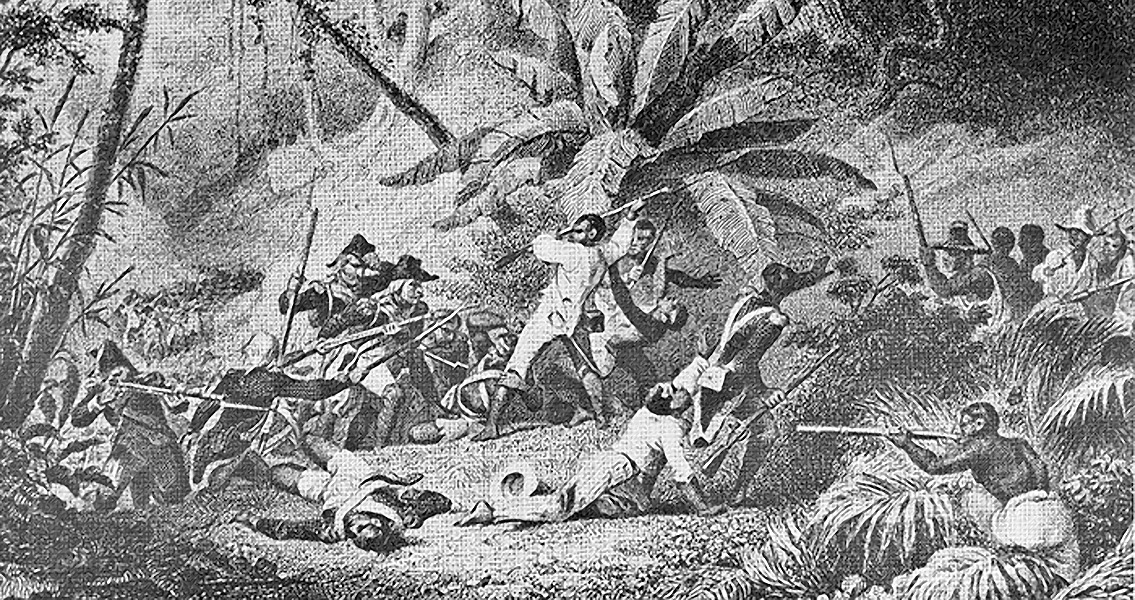
History Compass. The post-Revolution crash, Taber argues, does not necessarily reflect the policies of an independent Haiti. The expansion of Haiti’s plantation economy in the mid-eighteenth century and the importation of hundreds of thousands of slaves explains the colony’s economic productivity explosion. “It is probable that soil exhaustion and deforestation would have diminished Saint- Domingue’s economic role even without the revolution,” Taber writes. Taber argues that most slaves, who initially had little property, probably saw their living standards increase following the Haitian Revolution. Later scholarship, Taber writes, influenced by “Algerian independence from France, the USA civil rights movement, and general de-colonization coupled with the emergence of social history generated new interest around the Atlantic in the Haitian experience and its significance for understanding decolonization, black liberation, and structural racism.” There is still heated debate around the political ideas of Haitian slaves and the possible influence of Enlightenment ideas on their thinking. Taber notes that historians such as Laurent Dubois have argued that slaves further radicalised Enlightenment ideas as they adopted them. “In contrast, Geggus, Thornton, and Ogle show that most slaves followed a type of royalism that allowed an appeal to an authority higher than the planters,” Taber wrote. Most of the Haitian Revolution does not fit into easy narratives of racial solidarity or universal liberation. Numerous historians have argued over what caused the Revolution, with little concession. It is tempting, Taber writes, “to describe Saint-Domingue simply as the abyss of 18th-century slavery and colonialism and the Haitian Revolution as the universal triumph of human rights, but such easy narratives do a disservice to the women and men involved and mask Haiti’s complexity.” His conclusion is that further work needs to be done. Taber’s summary of Haitian history is impressive in scope and offers a wonderful synopsis for anyone wanting to understand Haiti’s complicated and nuanced past. For more information: www.onlinelibrary.wiley.com ]]>
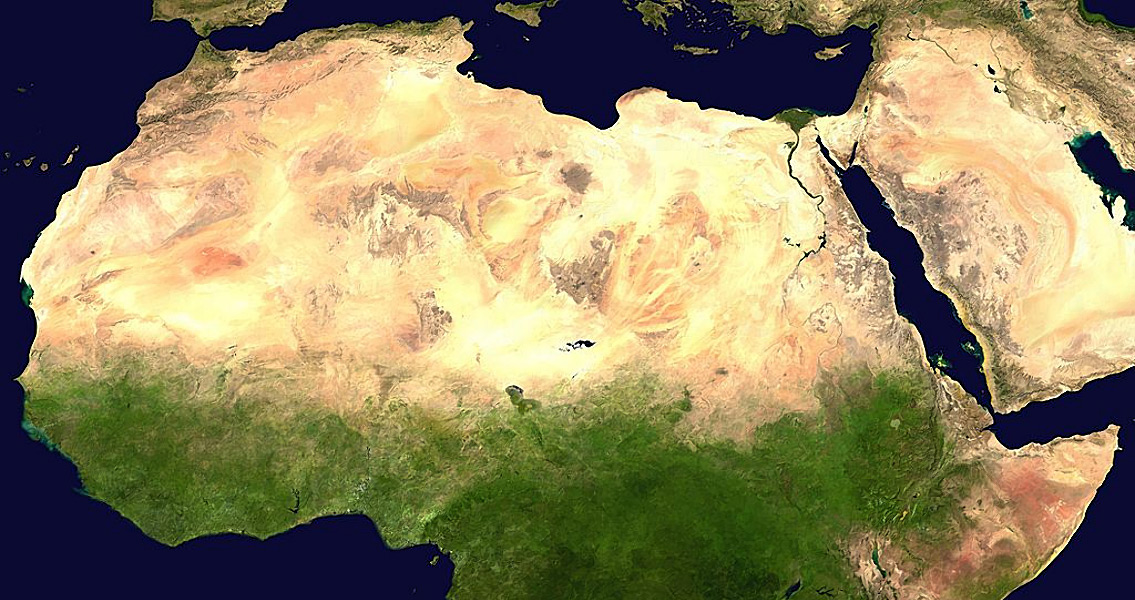
Live Science, the lead author Luca Pagani said that what is most exciting for the team is shedding light on an important stage of the evolution of all European and Asian peoples. This will deepen the understanding of billions of people of their “biological history”. Another of the authors, Toomas Kivisild from the University of Cambridge, told media that the results give a clear map of how modern humans moved out of Africa, even though they do not account for all the aspects of the process or give it any precise timing. One additional benefit of the study is that science has gained a neat genomic database of the genetic diversity present in Ethiopia and Egypt, which can be used as reference in other studies, Phys.org notes. Some questions related to this major exodus in the evolution of humans are still waiting to be answered however, says co-author Chris Tyler-Smith from the Wellcome Trust Sanger Institute. One such question is whether the route through Egypt was the only mass migration of that period, or were there other groups that left the continent without their genetic makeup surviving to the modern day? This question could be answered by the examination of ancient genomes from the areas through which such a migration would have passed. It has been established that the route through Ethiopia was indeed used, but probably by fewer people who did not go beyond the Arabian peninsula and whose genetic makeup has left no trace in the modern day, Pagani told Live Science. Image courtesy of Wikimedia Commons user: NASA]]>

PLOS ONE journal. What makes the find particularly interesting is the fact that it is the earliest known example of murder, taking place much earlier than the appearance of the Homo genus on the world scene. The proof that the Neanderthal’s death was the result of deliberate injury can be seen in the presence of two nearly identical fractures to the frontal skull bone of the individual. Examination of the fractures revealed that they had been inflicted with one weapon and the trajectory that could be inferred from their shape and size told scientists that this weapon had been used in a close, face-to-face, conflict. Moreover, the authors say, the fact that there is more than one fracture, given that the severity of each of them would have been lethal, suggests “an intention to kill.” The major conclusion of the analysis was that intentional killings were part of our ancestors’ lives, something for which there has not been abundant evidence from this period of pre-human history. According to the authors, any insight into early hominin violence is of interest because it sheds light on the relations within communities and between different communities with regard to resources and their distribution, the density of the population, and the distribution of land. The authors also note in their paper that up until now there has been no evidence of “direct traumatic injury” in hominins from the Middle Pleistocene, although there has been previous evidence of non-fatal injuries and cannibalism. There is also abundant evidence from the Middle and Upper Pleistocene of skull trauma, although the sufferers survived in the majority of cases. In fact, only two fossils have been discovered that could be said to have belonged to people who died violent deaths, but not with a high degree of certainty, the PLOS ONE paper authors write. One of these two fossils has a lesion on one of the ribs but the shape of the bone actually suggests he lived for a few weeks after the injury was inflicted, so it cannot be established whether the lesion was the real, or only, cause of death. The other fossil shows signs of severe trauma to the first thoracic vertebra, which has been taken as the cause of this individual’s death, but it is unclear whether this trauma was caused by the deliberate actions of another hominin or was the result of an accident, while hunting, for example. It is the scarcity of fossils bearing the clear marks of an intentional death that makes the Spanish find so precious for the scientific community. It might also provide clues as to why there were so many people in this cave, which, at the time, could only be accessed through a 13-metre high chimney. Two of the hypothesis put forward so far have been ruled out, namely predators or geological activity dragging the bodies there. The two remaining hypotheses have to do with accidental falls and intentional killings. These latest findings could support the latter hypothesis. For more information: www.journals.plos.org Image courtesy of Wikimedia Commons user: Jose-Manuel Benito]]>