Sapajus libidinosus) uses rocks for a variety of purposes, such as cracking open a seed or fruit to extract the edible part. In addition, they hammer rocks against stone outcroppings, with the clear intention of smashing them. The process frequently produces sharp-edged conchoidal flakes with smooth rounded facets resembling the shape of a scallop shell. Crucially, the flakes are discarded by S.libidinosus, they are not used as tools. The monkeys performing this process have been observed licking and sniffing the quartz dust created by the rock fragmentation, leading scientists to speculate that the routine is performed for a dietary reason – perhaps in search of the trace element silicon, or to extract lichen from the rocks. A team of researchers from Sao Paulo University’s Psychology Institute (IP-USP), in collaboration with colleagues at the University of Oxford’s Archeology School and University College London’s Archeology Institute in the UK, have analysed the inadvertently produced rock fragments as part of the Thematic Project “Tool use by wild bearded capuchin monkeys (Sapajus libidinosus)”. Their results have been published in the online edition of the journal Nature. “We discovered that some of the stone flakes produced accidentally by these capuchin monkeys were very similar to Oldowan stone tools”, said Tiago Falótico, a postdoctoral fellow of IP-USP and one of the authors of the study, in a press release. First identified in Tanzania, Africa, Oldowan tools are among the oldest stone tools ever found and considered the earliest evidence of cultural behaviour, dating to as far back as 2.6 million years ago. Named after Olduvai Gorge, where they were first found, the tools are usually associated with Homo habilis, one of the earliest species of the Homo genus. The stone flakes and other materials gathered by Falótico and principal investigator Eduardo Ottoni over the course of several years were analysed by Tomos Proffitt, a researcher at Oxford University’s Archaeology School and expert on Oldowan tools, and Michael Haslam, a researcher at UCL’s Archaeology Institute. Proffitt and Haslam’s results showed that the stone flakes produced by the capuchin monkeys had identical characteristics and morphology to deliberately produced hominin tools. Half of the flakes exhibited conchoidal fractures, an attribute usually associated with the hominin production of tools. They also displayed varying levels of percussive damage as well as sharp edges, again, characteristics associated with hominin tools. “Paleoanthropologists use the characteristics of sharp-edged stone flakes both to distinguish them from naturally broken stones and to attribute them to the hominins that produced flakes with these shapes intentionally in order to use them as tools,” Falótico said. The fact the capuchin monkeys produced flakes which are indistinguishable from hominin produced ones, however, opens up a range of interesting questions about how we read the paleontological record. “When sharp-edged flakes are found at an archeological site, it’s usually easier to attribute them to hominins because the same digs generally also turn up many stone cores and signs of human occupation, such as fires,” Falótico said. “However, when they’re found in isolation with few or no other archeological artifacts, we should bear in mind that they might not necessarily have been produced by human ancestors.” ]]>

Western Digs: “The conventional thinking left a lot of room for speculation about when and why people might have abandoned the area. The new study doesn’t explain why violence occurred at the site, but it does provide a mechanism for the abandonment. Aside from a small research project conducted in the 1980s, very little archaeological work had been done since the 1930s.” When the site was originally studied approximately 80 years ago, archaeologists discovered a large amount of evidence, including burnt roof beams and charred areas on the wall plaster. One of the structures, the one that became known as Montezuma Castle, was built inside a natural alcove on the face of the limestone cliff, about 90 feet (27 meters) above the canyon floor. The other, erected on the ground next to the canyon’s north wall, was named Castle A. The charred remains of both buildings led many to the conclusion that the buildings burned after they had been abandoned. Later, however, that changed, and some experts came to think the sites had been burned intentionally by the Sinagua as part of some unknown ritual performed as they were leaving. This new research was undertaken to see if new archeological methods and technology could uncover information about why the dwellings were abandoned. Guebard, along with his colleagues, reviewed notes from the original excavations, studied features of the site as well as artifacts which included roof beams, ceramics, and a variety of other architectural elements. Additionally, Guebard solicited several tribal groups whose ancestors were from the Verde Valley, for their input. “Generally speaking, we spend a lot of time and effort working closely with culturally associated Native American tribal governments”, Guebard says in Western Digs. “They review many of our projects and provide important feedback that helps to develop project objectives.” Following these lines of evidence, a completely new picture of the final days at the cliff dwellings started to become clear. For example, new dating of the charred plaster indicates the fire occurred between 1375 and 1395, while the pottery from the dwelling showed signs of having been made in styles from that same time period, suggesting that Castle A was inhabited right up to the time it was burned. Even more persuasive are the four bodies. Discovered in the original excavation in the 1930s, at the time it was believed that the deceased had been buried well before the fire, but a closer look at the earlier research reveals the dead had suffered trauma before their deaths, such as bones with cut marks, burn marks, and skull fractures in three of the four bodies. “We learned that the interior portion of each fracture displayed evidence of singeing on live bone,” Guebard is quoted as saying in the article. “So, the sequence of events seems to be blunt trauma followed closely by burning. It is also interesting to note that all of the remains with reported evidence of trauma and burning were found in a single grave.” The research was corroborated by the oral histories of the Native Americans, which describe Castle A being attacked by rival bands seeking to drive the Sinagua away. “Years before starting the project, I had heard from tribal members that there were stories about violence at the site”, Guebard explains in the article. “So as I started to realize that the archaeological evidence was supporting violence at Castle A, I felt it would be helpful to get their unique perspectives on the project and on my interpretation of the data. What was interesting is how close the oral histories match up with the archaeological evidence, but also how each story provided a unique and different perspective of the event represented by the archaeological evidence.” A Hopi Bearstrap Clan member recounted stories of Sinagua villagers running into Montezuma Castle and then pulling up the ladders, while invaders set it on fire. Members of the Dil zhe’e, also known as the Tonto Apache, recount the story of how their ancestors joined with the Yavapai, and together they evicted the Sinagua by setting fire to the dwellings. ]]>

Molecular Biology and Evolution, can be found here Image courtesy of Zhen Wang, Shanghai Institutes for Biological Sciences, Chinese Academy of Sciences, Shanghai, P. R. China ]]>

Current Biology are correct however, then historians might have to reevaluate just what role the disease played. “Scientists don’t yet fully comprehend where smallpox came from and when it jumped into humans,” said evolutionary geneticist Hendrik Poinar, a senior author of the study, director of the McMaster Ancient DNA Centre and a researcher with Michael G. DeGroote Institute of Infectious Disease Research. “This research raises some interesting possibilities about our perception and age of the disease.” The results look likely to reignite a longstanding debate over when variola, the virus that causes smallpox, originated and then evolved in response to vaccination and inoculation. Historians have long thought that the disease afflicted the populations of ancient Egypt, India and China thousands of years ago. Some accounts even claim that the pharaoh Ramses V may have died from smallpox in 1145 BCE. For their study, the researchers extracted DNA from the partial mummified remains of a Lithuanian child thought to have died between 1643 and 1665. The child’s death coincided with a series of severe smallpox outbreaks in Europe, making the team hopeful they would find evidence of the disease. Smallpox DNA was captured from the remains, sequenced and then the genome completely reconstructed. There was no evidence of live virus in the sample, meaning there was no chance of the remains being infectious. The researchers then set about tracing the evolutionary history of smallpox using the genome, which is when they made their surprising discovery. Comparing and contrasting the seventeenth century strain with a databank of samples of the disease dating from 1940 up to its eradication in 1977, they found that all the studied strains of the virus had an ancestor from no further back than 1580. “This study sets the clock of smallpox evolution to a much more recent time-scale” said evolutionary biologist Eddie Holmes, a professor at the University of Sydney, Australia, in a press release from McMaster University. “Although it is still unclear what animal is the true reservoir of smallpox virus and when the virus first jumped into humans.” Significantly, the team also found that the smallpox virus started to evolve in two separate strains after Edward Jenner developed a vaccine for it in 1796. One form of the variola virus, V. major, was highly virulent and deadly, the other, V.minor, was much more benign. Seemingly the ancestor of the minor strain corresponded with the Atlantic Slave Trade which likely helped disseminate it across the globe. “This raises important questions about how a pathogen diversifies in the face of vaccination. While smallpox was eradicated in human populations, we can’t become lazy or apathetic about its evolution – and possible reemergence–until we fully understand its origins.” said Ana Duggan, a post doctoral fellow in the McMaster Ancient DNA Centre, in the press release. Of course, the date of 1580 is hugely significant. It is commonly believed that European colonists to the Americas brought with them deadly strains of smallpox which had a devastating effect on indigenous populations. If accurate however, the team’s results seem to preclude that explanation, meaning further study might need to be done on the remains of indigenous populations. “This work blurs the line between ancient diseases and emerging infections. Much of smallpox evolution apparently happened in historic time,” says Margaret Humphreys, historian of medicine at Duke University. Image courtesy of Kiril ?achovskij ]]>

Live Science: “It is great to show that a community excavation can produce results that revolutionise our view of the origins of monasticism in Britain and Ireland. Archaeology is providing evidence that can get us beyond the uncertainty of the historical sources. The ancient origins of the Beckery site may explain why later medieval writers linked it to figures such as King Arthur and Saint Brigit.” Beckery, a small, rocky island, is part of the Avalon Marshes near Glastonbury. The name means either ‘bee-keeper’s island’, which is the Old English translation, or ‘Little Ireland’ in the Irish language. Smaller islands like this one were generally chosen as the sites for monasteries and hermitages during this time period, primarily because the separation from the regular work was conducive to spiritual enlightenment. The Chapel is already known as being the place where King Arthur reportedly had a vision of Mary Magdalene and the baby Jesus. These new findings, however, tell researchers considerably more about the location, for example, that it was constructed prior to the region being defeated by the Saxon kings of Wessex in the seventh century. ]]>
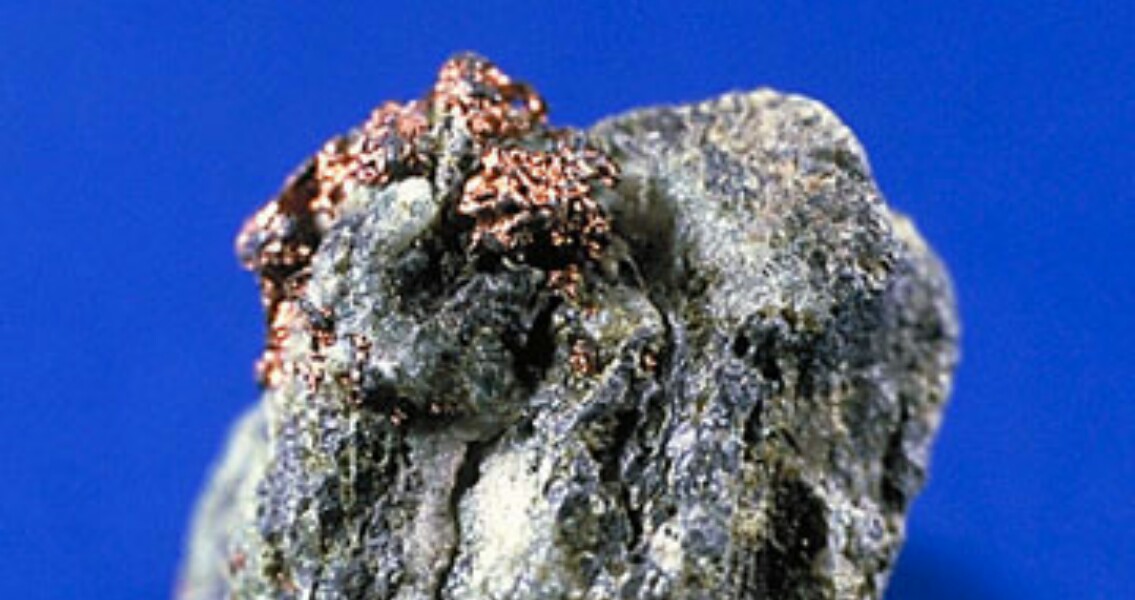
CBC News, a new research study has found that humans from the Neolithic era ended up polluting a river that once flowed in the Wadi Faynan region of southern Jordan in the Middle East. The form of the pollution was from these ancient humans learning how to smelt ore into metal, the international team of scientists report. The now-dry riverbed bears the telltale evidence of pollution left behind during the Copper Age, where humans living and working near the river built fires and then heated charcoal and copper ore over these fires. The find underlines the point when early humanity began to construct tools not from stone but from metal, according to Russell Adams, an anthropology professor from the University of Waterloo in Canada. These individuals and communities were in the middle of experimenting with not just fire but its effects on pottery, ceramics, and copper ore, said Professor Adams in an interview with CBC News Kitchener-Waterloo. These three components were all involved in the production of copper from ore in the early parts of the Copper Age. The spread of these technological innovations, and the adoption of these methods and the use of the metals they made, are often seen as the beginning of what modern anthropologists speak of as the “modern world”, Adams added. At first, the only items created by this primitive smelting process would have been beads or other small, symbolic pieces. However, as the technology developed the scope of the project grew as well, leading to the construction of factories and mines. In essence, the region became the epicenter of the first industrial revolution, thousands of years before the nineteenth century’s industrialization and mechanization. Adams stated that the area of southern Jordan would have been the home of incredibly innovative technology for the time period. However, the waste material from the smelting process – known as slag – was not given a second thought. Without this slag being contained, metals present in this waste, like thallium, arsenic, lead, zinc and copper, would have been absorbed by the plants growing nearby. These plants would then become food for local fauna – including humans. The polluted vegetation would have had a negative impact on the health of those who worked or lived near the copper smelting operations, possibly including malformation, infertility and premature death. Scientists have found high copper and lead levels in human remains from the Roman period. The new discoveries have prompted a desire to conduct an analysis as to how much pollution would have been present during the Bronze Age, which began around 3200 BCE, in order to measure its impact on human communities. The new research paper, published recently in the journal Science of the Total Environment, can be found here]]>
Environmental Research Letters argues that the level of distortion caused by anthropogenic emissions can actually be precisely identified. He believes this can be done by measuring the carbon isotope C13. For a long time radiocarbon dating has been widely considered the best method for determining the age of organic materials. It is believed to be accurate for objects with a biological origin dating to up to 50,000 years old. All living things contain a mixture of carbon 14 and carbon 12 atoms, with the ratio between the two remaining close to constant. Although carbon 14 atoms are constantly decaying, they are replaced by new carbon 14 atoms at a constant rate. As soon as an organism dies, the carbon 14 atoms stop being replaced. As the carbon 14 decays the ratio between it and carbon 12 starts to change, because the amount of carbon 12 remains constant. As scientists know the half life of carbon 14 (5,700 years), they can work out the age of any dead organism by comparing the ratio of carbon 12 to carbon 14 in it with the ratio in a living thing. Last year however, a problem was found which threatened the long term reliability of the radiocarbon dating method. Scientists discovered that humanity’s use of fossil fuels such as oil, natural gas and coal was significantly altering the balance between the two carbon isotopes. They concluded radiocarbon dating could become inaccurate within decades. “If the global emissions of fossil carbon dioxide continue to rise in the near future, as is proposed by the business-as-usual scenario of the Intergovernmental Panel on Climate Change, the results of our age readings of new organic material in 2050 will be identical to 1000-year-old samples. In 2150 new samples will appear to be the same age as 3000-year-old carbon, and in extreme cases even the same as 4300-year-old material,” explained Dr Peter Köhler, geoscientist at the Alfred Wegener Institute, Helmholtz Centre for Polar and Marine Research (AWI). “This means that fresh samples, for example of a tree felled within the next century, when measured using radiocarbon dating will appear to be the same age as wood that is several thousand years old.” This process is known as the Suess effect, named after the physicist Hans E. Suess. Köhler, the author of the new study, set himself the task of finding a way to determine if material had been distorted, and how significantly. “If we determine the 13C value of the sample as well as using the radiocarbon method, we can find out whether the age is trustworthy. That’s because the 13C value tells us whether the carbon of the sample has been affected by fossil carbon dioxide,” he said in a press release from the Alfred Wegener Institute. Put simply, the factors that affect carbon 14 also affect carbon 13. Carbon 13 however, is a stable isotope like carbon 12. “The burning of oil, coal and gas not only changes the 14C signal in the atmosphere, but also the stable 13C signal. This means: If my measurement shows a distorted 13C signal, then this also tells me that the 14C-based age has been affected by fossil carbon. If, on the other hand, my 13C signal is within the expected range, then the fossil carbon has not had an effect and the 14C dating method shows the correct age,” Using a range of computer models which simulate global carbon cycles, Köhler calculated the Suess effect of carbon 13 and carbon 14 up to the year 2500. He then tested a number of scenarios where mankind managed to reduce the amount of carbon dioxide. In all of the scenarios, he found that any distortions in the dating method could be detected and calculated with the 13C Suess effect. ]]>

Plasmodium falciparum. Malaria, which can cause a flu-like illness, chills and fever in those it infects, was likely a significant force in ancient Rome resulting in widespread death, according to Hendrik Poinar, the director of McMaster University’s Ancient DNA Center in Canada. The evolutionary geneticist and one of the authors of the new research report said in an interview with CNN that the death toll from Malaria in ancient Rome could have been close to the toll it takes in modern Africa. There are approximately 438,000 fatalities a year from malaria, according to the World Health Organization, and the vast majority of these cases – a full 91 percent – originate from sub-Saharan Africa, despite the treatable and preventable nature of the disease. Prior to this new discovery, the only evidence of malaria – or illnesses with symptoms that matched malaria – was found in texts from the period. Poinar stated that there were difficulties classifying these illnesses as malaria. There were simply too many infections that cause fevers for a malaria diagnosis to be definitive. However, the clues were there, especially since the outbreaks seemed to be repeated at the same time each year. This indicated that the culprit could be malaria, as it’s possible to be re-exposed again and again without building immunity to the infection. However, without any sort of DNA evidence to back up the theory, there was no way to support it with raw data – until now. Malaria was found to be quite widespread, not only present on the coast of the Italian peninsula but also in deep inland rural regions as well. Normally it would be next to impossible to find evidence of malaria infection in 2,000-year-old remains as the parasites most often leave evidence behind in organs that decompose quickly, and do not cause changes in skeletal remains. New methods allow scientists to extract minute particles of DNA from dental pulp, purifying and enriching the remains enough to test for the presence of modern malaria. The researchers used an innovative method that has been employed in studying the plague and cholera which involves attaching molecules of a modern version of the pathogen with magnetic beads. These beads “pulled down” the low concentration of parasite DNA and found its signature. The new research study, which appears in the journal Current Biology, can be found here]]>