Categories
Breaking News

Could Neanderthals Speak Like Modern Humans?

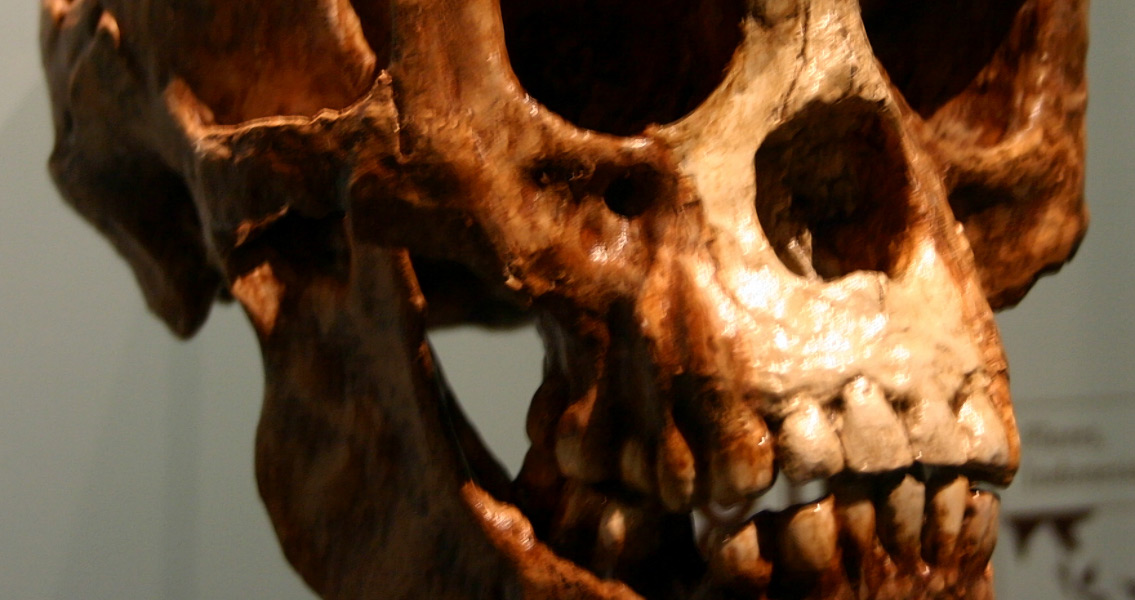
producing jewelry. Following the discovery of the first Neanderthal fossils at the the start of the twentieth century, archaeologists dismissed our closest extinct cousins as primitive; the latest discoveries are increasingly challenging this assumption. Published in the Proceedings of the National Academy of Sciences, the study led by Alexander Stoessel and Jean Jacques Hublin from the Department of Human Evolution, Max Planck Institute for Evolutionary Anthropology, analysed ossicles in both Neanderthals and Homo Sapiens. The three tiniest bones in the body, ossicles are the coupling between the ear drum and the oval window of the inner ear. Until now, it was considered impossible to perform detailed comparisons of Neanderthal ossicles due to an extremely limited sample size, and the unavailability of methods to analyse the relationship between the bones and other parts of the ear structure. For their study, the authors present the largest sample of Neanderthal ossicles unearthed to date, from a variety of different geographic regions, and times. Using detailed ‘Micro CT scans’, the team were able to quantify the shape and functional properties of Neanderthal ossicles. From this, they were able to make comparisons with AMHs, as well as African Apes. “Based on microcomputed tomography images, our comparative 3D shape analysis of Neandertal ossicles shows striking shape differences between Neandertals and anatomically modern humans. However, these morphological differences do not affect the functional properties of the ossicles, potentially indicating consistent aspects of vocal communication in Neandertals and AMHs.” the team write in the study. Scientists have previously suggested that Neanderthals were so primitive they were only able to speak in grunts and groans. The new research adds to other recent studies arguing Neanderthals may in fact have had the ability to speak. The team’s findings suggest that despite some clear anatomical differences between the ears of Neanderthals and modern humans, they essentially functioned in the same way, giving Neanderthals similar auditory sensitivity to humans. When compared to the African apes however, the human and Neanderthal ear anatomies have little in common. “These functionally equivalent solutions could indicate selective pressures acting on the middle ear for conserving a similar auditory sensitivity inherited from the last common ancestor of anatomically modern humans and Neanderthals.” It’s a conclusion that suggests the differences between humans and Neanderthals could be more down to the species taking separate evolutionary paths than one being more advanced than the other. The study also raises fascinating questions about the origins of the complex languages humans use today For more information, the study itself can be found here]]>
Categories
Breaking News

Spectacular Irrigation Systems Revealed in Petra

Haaretz that the massive pool was the end point for a sophisticated aqueduct that fed water into Petra from a spring in the hills outside of the city. The ostentatious nature of the pool – and the exquisite gardens fed by the flowing water – would have sent a clear message to outsiders regarding how successful the Nabataeans were at providing water to the city, she added. Excavations within the city have found a shaft that seems to have funneled water at least 10 meters down, linking the aqueduct to the pool below. Scientists have likewise uncovered subterranean channels that would have provided support for runoff during the region’s rainy season, showcasing how the Nabataeans left nothing to chance. This seemingly unending array of underground water tanks, cisterns, ceramic pipes and channels would have done more than simply supply drinking water to those living in the desert city. In addition to naturally filtering the water, this system would have also made it possible to cultivate growth such as olives, grapes, fruit trees and other crops, and was so efficient that there was enough left over for a massive open-air pool surrounded by lavish gardens. With only 10 to 15 centimeters a year in rainfall, the flourishing of Petra is nothing short of miraculous. It was necessary to develop these advanced irrigation techniques, scientists say, or the city would have never been able to exist. These water preservation and filtration systems conserved every drop of rain that fell in or around Petra, which combined with the Nabataeans’ efforts in piping in fresh water from nearby springs, allowed the desert city to bloom in a remarkable way as early as the first century BCE, when the monstrously-large pool is thought to have been built. Images of the recent excavations can be found here]]>

Categories
Breaking News

New Carbon Dating May Tie Early Humans to Hobbits' Extinction

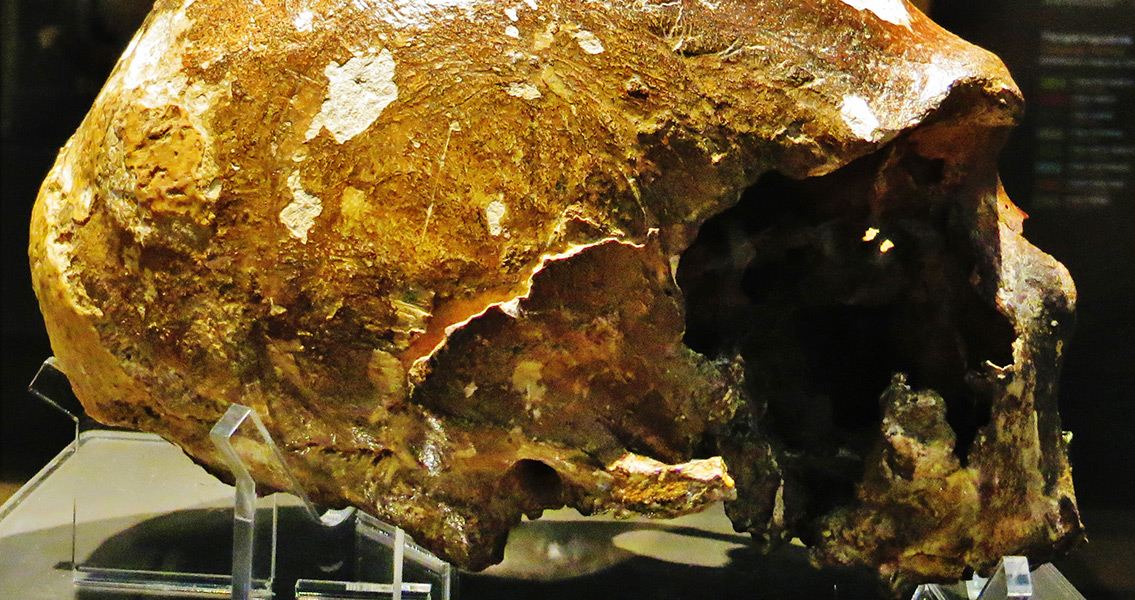
Homo floresiensis – the “hobbit” species – was discovered, have been carbon dated to approximately 46,000 years ago. Because the upper premolar and lower molar are somewhat younger than any of the known hobbit remains, this new information seems to support the theory that humans were involved in the demise of H. floresiensis. Discovered at Liang Bua in 2003, the remains of H. floresiensis, widely believed to be in the genus Homo, suggest they would have been around 3.5 feet (1.1 m) tall. Nine partial skeletons from nine individuals, including a single complete skull, have been discovered. Recent re-dating efforts in the cave moved the hobbits’ extinction back to approximately 50,000 years ago, when early humans were known to already be living in South-East Asia, according to the study co-authored by geochronologist Richard Roberts and archeologist Thomas Sutikna, both with the University of Wollongong, Australia. “It’s a smoking gun for modern human interaction, but we haven’t yet found the bullet,” Roberts told Nature, which published the research. Although the team is confident the teeth are from H. sapiens, partly because they’re larger than those of H. floresiensis; a paleoanthropologist from University College London, María Martinón-Torres, believes that the premolar appears slightly more primitive. To conclusively prove the teeth are human, she believes they should be compared to a wide range of H. sapiens and H. erectus remains. There is other evidence which puts humans on Flores Island immediately after H. floresiensis disappeared, supporting the possibility that humans contributed to the hobbits’ extinction by out-competing them for limited resources on the island. Animals which may have been a food source for early human hunter–gatherers, including giant storks (Leptoptilos robustus), miniature elephants; known as stegodons (Stegodon florensis insularis), and vultures (Trigonoceps), all vanish from the sediment layers in the cave after approximately 46,000 years ago. During this same time period, freshwater mollusk shells start to show up. These shellfish are commonly found at other early human sites across Africa and Eurasia. Stone tools constructed using chert, a material which is also regularly seen at other early human sites, and evidence of fire hearths are further examples of findings more recent than the Liang Bua hobbit remains. “What we don’t yet know is whether there was at least a short overlap in the populations, thus raising the question once again of the possible role of modern humans in the extinction of floresiensis”, paleoanthropologist Chris Stringer with the Natural History Museum in London told Nature, adding that if humans and hobbits had overlapped, interbreeding is also a possibility. Meanwhile, the research team intends to return to Liang Bua in order to explore cave deposits from 46,000 to 50,000 years old. The discovery of the teeth was revealed at the European Society for the study of Human Evolution in Madrid’s annual meeting. ]]>

Categories
Breaking News

80-Year-Old Nazi Time Capsule Unearthed in Poland

Mein Kampf, other books and historical materials describing the town of Falkenburg, as it was known then. Ordensburg Krössinsee was one of three educational centers constructed in the 1930s in Germany for the purpose of training future leaders of the Nazi Party. It was built near the town of Falkenburg in what was Germany at the time. Today it’s the town of Zlocieniec, Poland, and the former training camp is used by the Polish army The individual buildings and designated areas which made up the facility included a Hall of Honor, twenty separate living quarters, a dining hall, an educational hall, the commander’s house, administrative buildings, a house for female employees, a sick bay, a sports field, an arena for riding, horse barns and two towers (although four had been planned). A hotel, swimming pool and water sports facility were also planned but never constructed. To attend the educational center, cadets, called Ordens Junkers, had to be a minimum 5 feet 4 inches (1.63 m) tall and be between 23 and 26 years old. They were required to be racially pure, in good health and have no physical limitations. Classes included the study of politics, world history and philosophy, while afternoons were spent on battle tactics, military drills, equestrian techniques (a program for which it was recognized), and sports. In 1937, the facility was shared with the Hitlerjungen or Hitler Youth. Between 1933 and 1945, the Hitler Youth was Germany’s only official youth organization and consisted of the Hitlerjugend for males between the ages of fourteen and eighteen and the Deutsches Jungvolk for younger boys between ten and fourteen years old, as well as the League of German Girls. The Hitler Youth members would become the sole occupants of the camp following the invasion of Poland in 1939 and the start of World War II. The capsule and its contents have been transferred to the National Museum in Szczecin for translation, categorizing, preservation and display. ]]>

Categories
Breaking News

Vikings, Ancient Egyptians and the Spread of the House Cat

in up to 37% of homes in the USA. However, until now, little was known about the history of cat domestication. Indeed, scientists still debate whether the house cat can truly be called a domesticated animal, debating whether its behaviour and anatomy are truly that different from its wild relatives. “We don’t know the history of ancient cats. We do not know their origin, we don’t know how their dispersal occurred,” Eva-Maria Geigl, an evolutionary geneticist at the Institut Jacques Monod in Paris, told Nature. Geigl presented the study, along with her colleagues Claudio Ottoni and Thierry Grange. The team carried out the first ever large scale study of ancient feline DNA, taking specimens excavated from thirty archaeological sites in Europe, the Middle East and Africa. All together, they sequenced the DNA of 209 cats, dating from 15,000 years ago to the eighteenth century CE. Tellingly, a 9,500 year old human burial in Cyprus contained the remains of a cat. According to the authors of the study, this suggests that the connection between humans and felines dates back at least as far as the dawn of agriculture, which began in the nearby fertile crescent around 12,000 years ago. Geigl and colleagues’ results suggest that cat populations grew in two distinct waves. As early farming communities expanded into the Eastern Mediterranean they brought Middle Eastern wildcats with a particular mitochondrial lineage with them. Geigl suggests that the grain stockpiles of these early farming communities attracted rodents, which in turn attracted wild cats. Humans might have started to domesticate cats after seeing the benefits they offered in keeping stores free of rats and other rodents. Meanwhile, around 6,000 years ago wild cats started to be tamed in ancient Egypt, the civilisation’s feline fixation deepening to the point that millions of cats were mummified. Thousands of years after the Middle Eastern cat lineage had entered the Mediterranean, cats descended from Egypt started to spread across Eurasia. A mitochondrial lineage present in cat mummies from the fourth century BCE to the fourth century CE was also found in cats in Turkey, Bulgaria and Sub-Saharan Africa. Again, rodents were likely responsible for the spread of cats. The study suggests that sea-faring people likely used them to keep rodents in check on ships. Fascinatingly, the team also found cat remains from the Egyptian lineage at a Viking site in northern Germany dating to between the eighth and eleventh century. “There are so many interesting observations” in the study, Pontus Skoglund, a population geneticist at Harvard Medical School in Boston, told Nature. “I didn’t even know there were Viking cats.” Geigl’s team also analysed the DNA mutation responsible for the blotched coats found on tabby cats. They found the unique mutation didn’t occur until the Medieval period. The scientists now hope to sequence more nuclear DNA from ancient cats, to further our understanding of the mysterious, under studied history of our feline friends. This article was corrected on 25th September 2016. The original said that cats were kept as pets in over 75% of homes in the US. The correct figure is in fact between 30% and 37%.]]>

Categories
Breaking News

Scientists Use New Tech to Virtually Unwrap Biblical Scroll

New York Times, Seales has been working for the past 13 years on imaging techniques to digitally restore ancient scrolls too damaged to be read. Inspired by the charred scrolls found in Herculaneum, one of the locations destroyed by the eruption of Mount Vesuvius in 79 CE, the computer scientist was unsatisfied with traditional computer tomography (CT) scans as this technique would reveal only a jumbled mass of ink within a scroll. The solution that Seales devised was to reconstruct the writing surface of the scroll digitally before placing the inked letters back on it, resulting in an almost miraculously clear and legible image. The text of the scroll has been verified by Biblical experts to be the first two chapters of Leviticus from the Hebrew Bible. While the En-Gedi manuscript is not the first instance of this version of the text to be discovered by archaeologists, it is the very first time a severely damaged scroll thought to be impossible to read has been unrolled and then identified using non-invasive techniques. Additionally, the version of Leviticus recorded in the scrolls was found to be identical to the Masoretic text, making it the earliest instance of the use of such a text considering the document has been dated to between 50 and 100 CE. The Masoretic text is considered the authoritative version of the Hebrew Bible, and is one of the texts most often used for Protestant translations of the Old Testament. The revelation that the Masoretic text was in use as far back as nearly 2,000 years ago has prompted some paleography experts to suggest the En-Gedi text should be officially categorized as a Dead Sea scroll, especially if the age of the scroll is indeed accurate. Researchers have responded with enthusiasm to the news, proclaiming that Seales’ new technique could be the key to unlocking the secrets of any number of scrolls too damaged to open without risking permanent damage to the texts concealed within. The suite of software tools the computer scientist developed will be made available under an open source license once his current government grant period expires. The new research study, published recently in the journal Science Advances, can be found online here]]>

Categories
Breaking News

23,000-Year-Old Fish Hooks Discovered on Okinawa

CNN that humans are thought to have originally crossed over to Australia approximately 50,000 years ago, but that any evidence of maritime adaptation by humans had only been reported between Australia to Wallacea, a collection of primarily Indonesian islands. “Our findings suggest that Paleolithic people had adapted their maritime technologies to live not only in Wallacea and Australia, but a much wider geographic zone,” Fujita told CNN. “We found fish and human bones that dated back some 30,000 to 35,000 years. We don’t know what kind of tools were used to catch these fish, but we’re hoping to find some even older fishing tools.” The study was recently published in the journal Proceedings of the National Academy of Sciences. An image of the hooks can be found here: here ]]>

Categories
Breaking News

New Research Says Neanderthals Were Jewelry-Makers

Science, other scientists have been touting the new research as “a landmark study” proving that Neanderthals had enough intelligence to make these cognitive symbolic leaps. Much of the controversy stems from the date of the artifacts, as they were made around 42,000 years in the past – a time when Neanderthals were well in decline while modern humans were spreading across Europe and replacing them. However, after University of York bioarchaeologist Matthew Collins examined some of the unidentified bones discovered at the dig site and found them too small to use more traditional DNA identification methods on, he and his colleagues made the decision to use the new ancient protein analysis method instead. Analysis proved conclusively that the bone fragments were human, but it was still unclear if they had once belonged to a modern human or an archaic species such as a Neanderthal. To further pinpoint the identity, Collins and his colleagues conducted a comparison of the collagen within the fragments to those produced by modern humans and those produced by archaic humans. Collagen in Neanderthals contained high levels of an amino acid known as aparagine, as evidenced from previously-sequenced Neanderthal DNA; modern humans do not produce aparagine but instead have aspartic acid in their collagen. The researchers found evidence of aparagine amino acid, pointing to the bone fragments being of Neanderthal origin. Additionally, the type of collagen within the bone is only present in types of bone that are still growing, which combined with the presence of nitrogen isotopes associated with breast-fed children has led the scientists to believe that at least a portion of the bone fragments were from a Neanderthal infant. The findings have fanned the flames of debate when it comes to claiming that Neanderthals were incapable of creating symbolic jewelry of the type found on the site. It may be, according to some scientists, that Neanderthals living on site learned of the tools and techniques used for creating such jewelry from modern humans migrating to the area. The new data points towards renewed evidence that our archaic human cousins created these pieces of art themselves. Collins and his research team’s new study, published in the Proceedings of the National Academy of Sciences, can be found online here]]>

Categories
Breaking News

Human Remains Found in Antikythera Shipwreck

The Guardian, an international team of researchers from the Greek Ephorate of Underwater Antiquities and the Woods Hole Oceanographic Institution discovered the jumbled skeleton near the end of August during an exploratory dive to the seafloor where the ship rests. Woods Hole representative Brendan Foley, one of the participants in the underwater study of the Antikythera wreck, says that the remains may be the most exciting scientific discovery made during the current efforts to study the sunken ship. Judging by the well-preserved state of the bones, researchers say the person was male, likely a teenager or in his early twenties, and might have been trapped when the ship went down. Foley added that the remains of the young man, who has been dubbed “Pamphilos” by the researchers, may have been buried fairly quickly in silt as a result. This bodes well for the possibility of extracting genetic material from Pamphilos’ bones and sequencing them successfully, raising hopes that this will lead to the first instance of a victim of an ancient shipwreck having his entire DNA mapped for study. In fact, the only similar efforts include remains from the Vasa, a Swedish warship that sank beneath the waves in 1628, and the Mary Rose, the great British warship of King Henry VIII. Pamphilos – or what was left of him – was discovered in a jumble of bones: arm bones lying atop leg bones and rib pieces, with teeth and the skull all scattered close by. The skeleton was found surrounded by other artifacts such as broken pieces of pottery. The young man’s nickname comes from a drinking vessel bearing the name discovered on a previous underwater dig. In ancient Greek, Pamphilos means “friend of all.” There is of course no proof that the identity of these remains is the same as the original owner of the cup. However, Foley says that it can be surmised that a Greek male bearing that name had been either a passenger or a crewmember present on the ship during its final, fateful voyage. These remains are not the first to be found within the wreck. Indeed, the famous Jacques Cousteau, who visited the site in 1976, brought several bone fragments to the surface. However, the most recent find is much more complete, much more well preserved, and has the merit of being discovered after several decades’ worth of advances in archaeological technology methods for analyzing ancient remains. ]]>

Categories
Breaking News

American Alligators are as Old as They Look

Gavialosuchus americanus: the huge crocodile which once dominated the coastline of Florida but went extinct around 5 million years ago, and alligator fossils at a variety of locations indicated that the two species could have coexisted. Despite their adaptability and resilience, American alligators were nearly driven to extinction by hunting early in the twentieth century. The number of alligators left in the wild has significantly increased under The Endangered Species Act, and with a more comprehensive evolutionary history, conserving the habitats where alligators have been the dominate species for millions of years may be more effective. “The same traits that allowed alligators to remain virtually the same through numerous environmental changes over millions of years can become a bit of a problem when they try to adapt to humans,” Whiting is quoted as saying in the statement, “Their adaptive nature is why we have alligators in swimming pools or crawling around golf courses.” Although modern alligators do appear prehistoric, the group they’re part of, Crocodylia, has been around for at least 84 million years, with a diverse line of ancestors that dates back to over 200 million years ago, as far as the Triassic. This research was published in the Journal of Herpetology and Palaeogeography, Palaeoclimatology, Palaeoecology. ]]>