Categories
Breaking News

Will the Story King Solomon be Validated by Animal Droppings?

National Geographic interview. “There’s clear evidence of an Egyptian presence during those centuries… But high-precision radiocarbon dating of the dung, as well as textiles and other organic material, showed that the mining camp’s heyday was the tenth century BCE—the era of the biblical kings David and Solomon.” In the Bible, King Solomon ruled a wealthy kingdom with a temple decorated extravagantly with objects made of bronze and gold in Jerusalem. To build something this grand would have necessitated the import of metal from large-scale mining operations, most likely from the Middle East. The validity of Solomon’s wealthy kingdom has never been agreed on. Some archaeologists make the argument that Solomon was actually just a small-time chieftain and incapable of organizing such a large-scale undertaking. However, in the late 1990s, another team of archaeologists discovered a copper-rich area in Jordan which indicated that metal had been produced there on an enormous scale. This site, along with the other smelting camps across the region, support the theory that the legend of the biblical king’s vast wealth may have been true. The mining operation discovered in Timna Valley has not been connected to Solomon directly, it does suggest however, that a more complex society than originally believed, possibly the Edomites, had inhabited that area and may have paid taxes to Jerusalem. The manure samples included pollen spores and seeds, enabling Ben-Yosef’s team to determine what the animals ate. Surprisingly, they found that the feed had been imported from a region over 100 miles north, near the Mediterranean cost. Long distance trade was essential to survival in the desert and during this period metal was an essential commodity, making the investment in such an operation worthwhile. During the interview, Ben-Yosef explains that more than 1,000 tons of smelting debris have been discovered on Slaves’ Hill, making it an industrial-scale operation worthy of such a kingdom. Whether or not this site is directly linked to the kingdom of King Solomon in the tenth century is yet to be determined. Ben-Yosef remains encouraged by the findings, saying in the interview: “Until recently we had almost nothing from this period in this area. But now we not only know that this was a source of copper, but also that it’s from the days of King David and his son Solomon.” ]]>

Categories
Breaking News

Construction Work Reveals Russian Spy Room

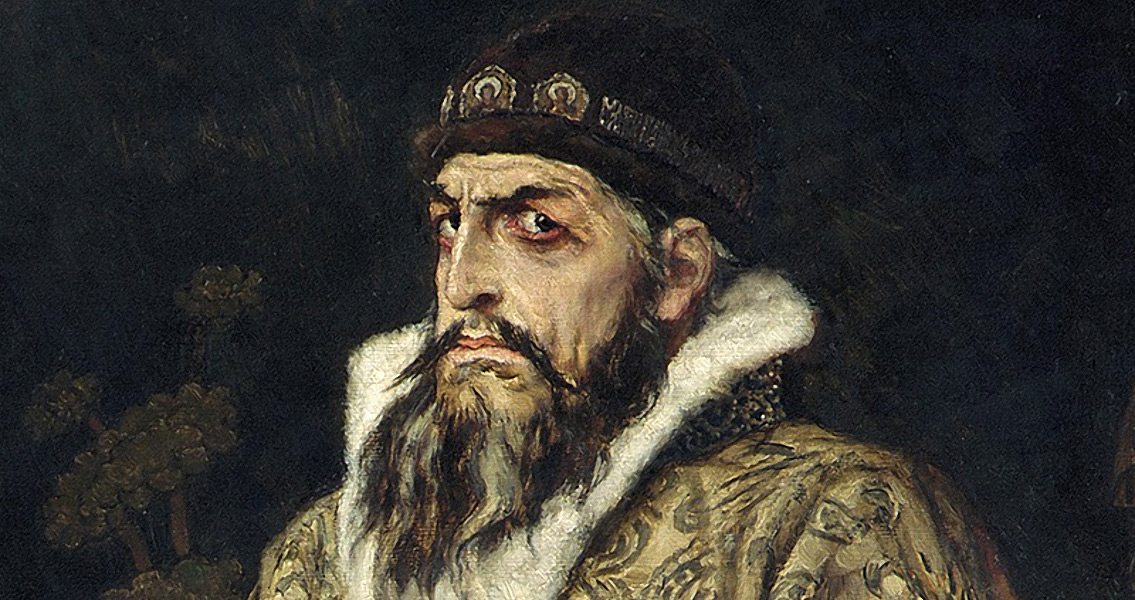
RT’s Ruptly news agency. Ivan IV Vasilyevich, also known as Ivan the Terrible, was the Grand Prince of Moscow between 1533 and 1547. During his reign, Russia conquered several neighboring regions to become a multicontinental and multiethnic state that spanned approximately 4,050,000 square kilometers (1,560,000 square miles). Historic sources offer dissimilar accounts of Ivan’s character. He’s often described as devout and intelligent, and a patron of the arts and trade (he established Russia’s first publishing house), yet he was prone to rages and episodic periods of mental instability that grew more common as he aged. During one such outburst, he reportedly killed his second son and heir Ivan Ivanovich during a heated argument that resulted in Ivan Vasilyevich striking him in the head with a pointed staff. In total, archeologists recovered approximately 150 artifacts dating back to between the sixteenth and nineteenth centuries, the majority of which are eighteenth and nineteenth century ceramics, including fragments of bowls and pots, as well as an intact ceramic cup. Trade sealing marks made of lead, 12 copper coins, nails, and iron knives were also recovered from the room. Experts are currently considering whether the room should be opened up for the public to see or preserved as it is. ]]>

Categories
Breaking News

Study Examines Centuries Old Efforts to Prevent the Dead from Rising

Journal of Archaeological Science. ]]>

Categories
Breaking News

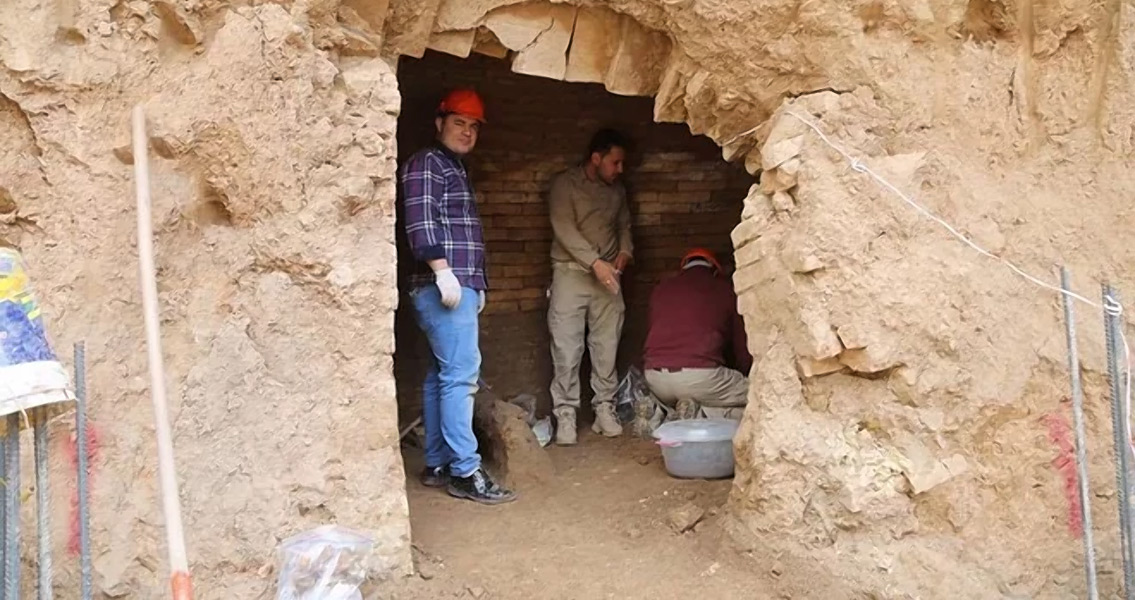
Neo-Assyrian Tomb Complete with Skeletons Discovered in Iraq

Categories
Breaking News

Archeologists Discover a Palatial Complex at Palenque

Proceedings of the National Academy of Sciences. ]]>

Categories
Breaking News

New Findings at Poseidonia Suggest the Wealth of its Greek Founders

Categories
Breaking News

Construction Workers in Israel Find Coins from the Time of Jesus

National Post, adding, “It is difficult, perhaps even impossible, to find proof of one ordinary person from thousands of years ago.” However, based on finds from hundreds of archaeological digs, Avni believes archaeologists can accurately reconstruct Jesus’ life from the Church of the Nativity, the site revered as his birthplace, to the Church of the Holy Sepulchre, where he is believed to have been buried after the Crucifixion. Professor of Christian archaeology, Eugenio Alliata, explained to the National Post that the artifacts corroborate the biblical accounts of Jesus and his life, putting his existence into context. “We have not found any evidence of the person of Jesus, but we have found lots of things about what happened at the time he lived, such as the population and the material culture that grew because of him,” Eugenio Alliata, a professor of Christian archaeology at the Franciscan biblical school in Jerusalem, is quoted as saying. Image courtesy of MENAHEM KAHANA/AFP/Getty Images ]]>

Categories
Breaking News

Giant Polar Bear Skull Could Belong to 'King' Bear

Western Digs article, adding, “The back of the skull is longer and comparatively narrow, for example, with features that are noticeably different from those of modern polar bears. The front part of the skull, from roughly the eyes forward, is like that of typical polar bears,” Jensen said. Research biologist Dr. Raphaela Stimmelmayr compared The Old One to over 300 polar bear skulls kept at the University of Alaska Museum of the North and discovered several others that had similar features, making it unlikely that The Old One was entirely unique. “It’s possible it’s a subspecies,” Jensen says in the article, “or perhaps it’s more like [with] domestic dogs, where a borzoi and pug are considered members of the same species, [and] not [a] subspecies, even though their skulls are far more different than this is from a standard polar bear skull.” Ethnographers have documented stories of oversized polar bears from a number of Inuit groups. For example, the Inuvialuit people of Canada’s Northwest Territories have tales about a giant “weasel bear”, and the indigenous peoples on St. Lawrence Island and other locations have shared accounts of what they refer to as a “king bear.” Ethnographic accounts from the Utqiagvik area, however, don’t include any mention of a giant bear, either because these bears weren’t present when the ethnographic accounts were collected or because researchers didn’t ask the right questions. The archeological site Walapka, an ancient settlement, was occupied off and on over a 4,000-year period. Jensen, along with her colleagues, intend to further research the skull, including the cross-sectioning of several teeth as well as DNA analysis. The team’s findings were reported in Anchorage, Alaska, during the Alaska Marine Science Symposium. Images of the skull can be found here]]>

Categories
Breaking News

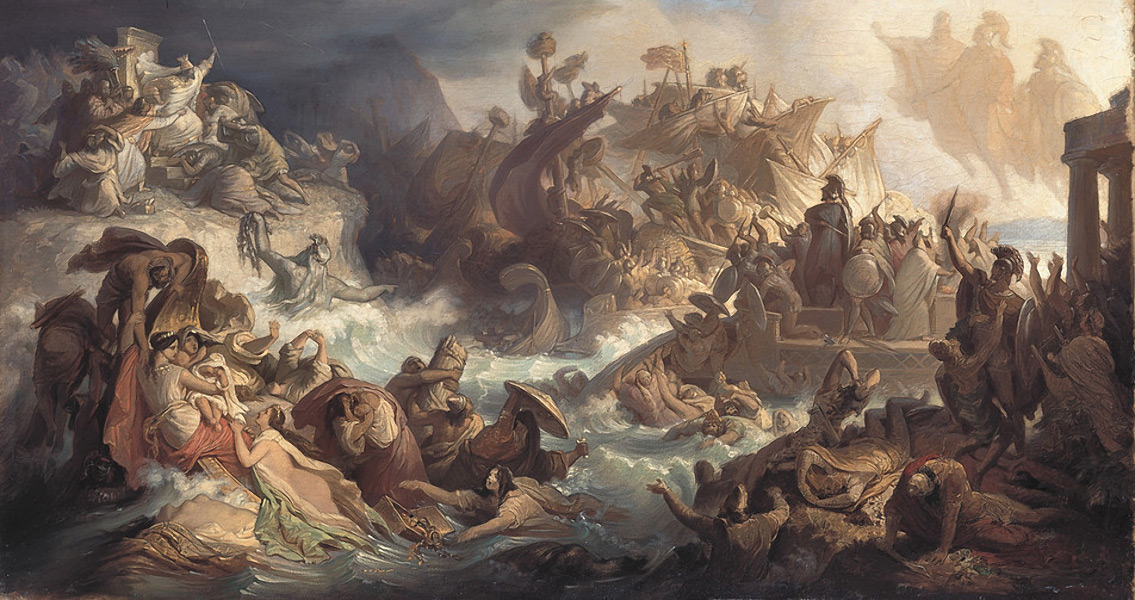
Ancient Greek Battle of Salamis Site Discovered

Categories
Breaking News

Warrior Armor Made of Reindeer Antlers Found at Sacred Site

Siberian Times, adding, “The ornamentation on the plates can be individual, that is after the thorough analysis we could say how many warriors left armour here, judging by the style of decorations.’” The largest plates are between 23 and 25 centimeters long and in ancient times would have been attached to a leather surface, offering a dependable type of protection. Other plates, which are are between 12 and 14 centimeters in length, are thinner and richly ornamented. Conical shaped armor has also been seen on the plated helmets which were worn by ancient warriors in the taiga zone (also known as boreal forest) of Western Siberia. The discovery of iron helmets is extremely rare, however, bronze images from the middle of the first century CE that show people wearing headdresses that clearly resemble helmets have been found. The armor resembles the armor worn by warriors of the Kualai people, fishermen and hunters indigenous to the taiga. Previous finds at the site include a 2,000-year-old ring, believed to be evidence of a bear cult. These ancient people didn’t leave any written records. Made using high quality bronze, the ring, so tiny in diameter researchers believe it was put on a bear claw, features the image of the head and paws of a bear. Experts theorize that the ring was on the claw of a previously slain bear, an animal that was worshipped by Khanty tribes as sacred and an ancestor. After the slaying of the bear, the paws and head were adorned with rings and a handkerchief, followed by a festival honoring the animal. Image courtesy of Andrey Gusev ]]>