Categories
Breaking News

How Ancient Roman Chariots Were Kept From Crashing

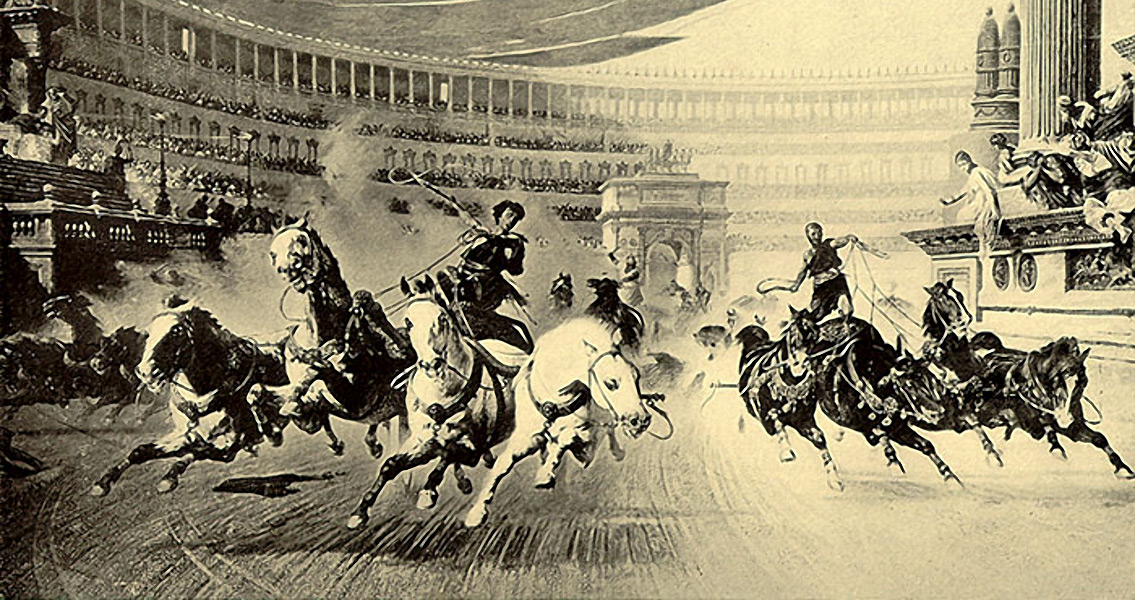
Seeker. “Any iron tire for racing would be a very thin strip of iron on the outside of the wooden rim, best when heat-shrunk on the wood, to consolidate the whole wheel. The solution makes full sense in engineering thinking, ancient or modern.” Horse and chariot races were part of the sacred games, known as ludi, which were held during archaic Roman festivals. The race’s sacral meaning, although diminished across time, has been preserved by the iconography found at Rome’s primary racetrack, the Circus Maximus. No actual Roman chariots are known to have survived. The small toy model, currently being displayed at the British Museum, is the only archaeological evidence for the reinforced single-tire design. The bronze, hand-sized model represents a biga, a racing chariot with two wheels, driven by two horses. The model is missing the charioteer as well as one of the horses and was likely a toy for a prosperous individual, possibly even Emperor Nero himself who, according to historians, played with toy chariots. “The wheels originally rotated freely on the axle. It was made by someone who knew a lot about racing chariots,” Sandor says in the article. Given that it’s easier to guide horses into left-turns, a majority of chariot races ran counter-clockwise. Therefore, chariots’ had only the right wheels strengthened because the chariots naturally leaned right, overloading the right wheel during left-hand turns. The single tire reinforcement configuration didn’t always mean a faster chariot, however, it may have prevented the wheel from failing, consequently reducing crashes. This alone made it statistically superior on the racetrack. In general, Sandor estimates that the chariots with no iron tires had a 50 percent chance of winning, while vehicles with two iron tires would only win 30 percent of the time. The study, which has been published in the Journal of Roman Archaeology, found that a racing chariot with one iron tire on the right was the best design in regards to durability, safety and chance of winning. ]]>
Categories
Breaking News

2,400-year-old Skeletons Discovered in Northern Iraqi Tomb

Categories
Breaking News

Calendar Rock to Mark the Winter Solstice Found in Sicily

Seeker, adding: “At 7:32 am the sun shone brightly through the hole with an incredible precision. It was amazing.” The 23-foot tall stone would have marked the turning point of the seasons and the change to colder weather. The moment likely had ritualistic importance as well, considering the investigation revealed the site was considered a sacred place towards the end of the third millennium BCE. A short distance away from the stone, researchers unearthed a number of complete burials referred to as grotticella tombs. Dug out of the rock, the chamber-like tombs were the primary form of burial for the Castelluccio’s, the culture that thrived in the early Sicilian Bronze Age. La Spina’s research team also located what seems to be a menhir (upright stone) to the east of the holed rock. Although lying on its side when discovered, the more than 16 feet tall stone originally stood upright, as indicated by the pit found near its base. The geological composition of the menhir and the calendar rock are not the same, suggesting the monolith was transferred to the site from another location. “It stood at a distance of 26 feet, right in front of the rock’s hole. This obviously reinforces the sacrality of the site.” La Spina is quoted as saying in Seeker. At least two additional holed stones have been unearthed in Sicily. They were discovered near Palermo by Alberto Scuderi, the Italian Archaeologist Group’s regional director and an archeo-astronomy expert, who told Seeker: “The newly found calendar rock appears to have been made by the same hand that carved the other two rocks. One lined up with the rising sun at the winter solstice, the other produced the same effect with the rising sun at the summer solstice,” adding, “For this reason, I believe that another holed calendar stone, marking the summer solstice, may be found near Gela.” ]]>

Categories
Breaking News

Unusual Burial Discovered at the Settlement that Doesn’t Exist

Lincolnshire Live: “What makes this a really interesting burial is the fact that they have been buried on their front. But there’s something else that really makes it special. You see how narrow it is in the grave. It’s about 25cm between the shoulders, it’s really crammed together.” The incredible discovery featured in an episode of Digging for Britain, presented by Anthropologist Professor Alice Roberts. Professor Roberts described the burial of a Christian person in this fashion as “bizarre”, adding, “What we can say for definite is it was buried after the body had started to decompose. The limbs have started to fall away from the rest of the body, but great care has been made to try to put the body back.” Dr. Willmott is quoted by Lincolnshire Live as saying: “A great deal of care has been taken in this burial. So this could be an individual who perhaps has died away from the site and been brought here to be interred here specially. There are stories of the bodies of kings being moved. And of course saints and holy people. So there could be something like that going on here, which suggests Little Carlton was a place of great importance.” The unusual skeleton was just the first of many rare and intriguing finds, including writing tools, approximately 300 clothing pins, a large number of coins dating to the seventh and eighth centuries called Sceattas, a lead tablet with the faint, but still legible word Cudberg (an Anglo-Saxon woman’s name) on it, and glassware that suggested the inhabitants traded with the European mainland. Another rare find in Britain, an iron manacle, was also found, suggesting the site was the location of a slave-trade operation or slaves were owned by the occupants. Additionally, a pair of tweezers commonly used to turn book pages were recovered and may have been used by Christian monks as they read religious manuscripts. Today the site is completely surrounded by dry land, however, it’s believed that in the past the site would have been surrounded by water, and that it was probably occupied by either a trading post or monastery within the Anglo-Saxon Kingdom of Lindsey. The settlement also produced woven textiles that were exported to northern Europe, while German pottery and wine were imported from the mainland. Bizarrely, there is no record of the settlement ever existing. It’s believed that it was abandoned when the Viking raids in England started in the later part of the eighth century, and there was no trace of it ever being there by the time the Domesday Book (a survey of England and areas in Wales) was completed in 1086. Images of the burial can be found at Lincolnshire Live ]]>

Categories
Breaking News

Testing Reveals Stones Set as Memorial to Scottish Independence

Herald Scotland newspaper: “These stones have been linked to Randolph’s skirmish, though I thought they were more likely to be prehistoric and possibly incorporated into the battle. This year I received funding and I have now obtained a radiocarbon date in association with the foundation of the stone. The date that came up is contemporary with the battle. It raises the very real possibility that the stones were constructed to mark the site of Randolph’s victory on the first day.” It was a highly significant battle in that it prevented the English from reaching Stirling Castle, as well as setting up the Scots for their historic victory over the much larger army of King Edward II on the following day. Like a modern day commemorative plaque, the stones, believed to have come from Castle Rock, would have been placed there as a memorial. Police Scotland, who permitted the investigation, have stated that after this new discovery the stones may be made more visible and accessible to the public. Stirling’s Local Area Commander, Chief Inspector Lynn Ratcliff, told The Herald: “These stones are literally in our front yard. We’ve been aware of them, but we did not know their history or background.” The Battle of Bannockburn, during the First War of Scottish Independence, is considered a milestone in Scottish history. The Scots fortress, Stirling Castle, was occupied at the time by the English, and was under siege by the Scottish forces. The English king put together a formidable army to end the siege and keep the castle. His attempt was a failure and his troops were defeated by the much smaller army led by Robert the Bruce, the King of Scots, in a fierce battle. The Wars of Scottish Independence, fought between Scotland and England, started in 1296 with the English initially successful, having won a series of important victories such as the Battle of Dunbar (1296) as well as the Capture of Berwick (1296). However, when Robert the Bruce took the Scottish throne in 1306, the war was restarted. The Bannockburn battlefield is part of the Historic Battlefields in Scotland and is protected by Historic Scotland under the Historic Environment Act. ]]>

Categories
Breaking News

Pueblo Population at Chaco Canyon Imported Resources

Categories
Breaking News

You Say Potato and I Say 3,899 Wild Wapato Potatoes

Science Advances. ]]>

Categories
Breaking News

New Discovery from Egypt’s Old Kingdom

Egypt Independent that the stone wall was dated using the pottery fragments that were embedded in the mortar used to build the wall. Among the fragments were pieces of carinated bowls, fashioned in a style that was typical of the Sixth Dynasty (2278-2184 BCE) reign of King Pepi II. The Old Kingdom is generally regarded as the time period between the Third Dynasty and Sixth Dynasty (2686–2181 BCE) in the third millennium BCE, when Egypt achieved its first ongoing peak of civilization. The three ostensible “Kingdom” periods: the Old, the Middle, and the New Kingdoms, indicate the peaks of civilization within the lower Nile Valley. The Old Kingdom is notable for being a dynamic time for Egyptian art. During this period, sculptors created the earliest known individual portraits as well as the first life-size statues in copper, wood, and stone. Masons and architects mastered the building techniques that were necessary in the construction of monumental stone structures. Additionally, the art of carving precisely detailed reliefs was perfected. Egypt’s Middle Kingdom (also referred to as The Period of Reunification) is the time period between 2050 BCE and 1800 BCE, covering the twelfth and thirteenth dynasties. The New Kingdom, also known as the Egyptian Empire, between the sixteenth century BCE and the eleventh century BCE, covers the eighteenth, nineteenth, and twentieth dynasties. Qubbet el-Hawa is the site of a cemetery containing Rock-cut tombs, located on the west bank of the Nile river, across from the Egyptian city of Aswan. The elite tombs discovered there date primarily to the Old Kingdom and include the well-known tomb of Harkhuf. A member of the research team, Carl Graves is quoted by the Egypt Independent as saying: “The findings are dramatically altering our understanding of the funerary landscape in this area during the Old Kingdom and First Intermediate Period in 2278-2184BC. I don’t think anyone yet knows who the tombs might have belonged to.” The discovery was made as part of the project’s first field season. ]]>

Categories
Breaking News

More Dead Sea Scroll Fragments Found in the Cave of Skulls

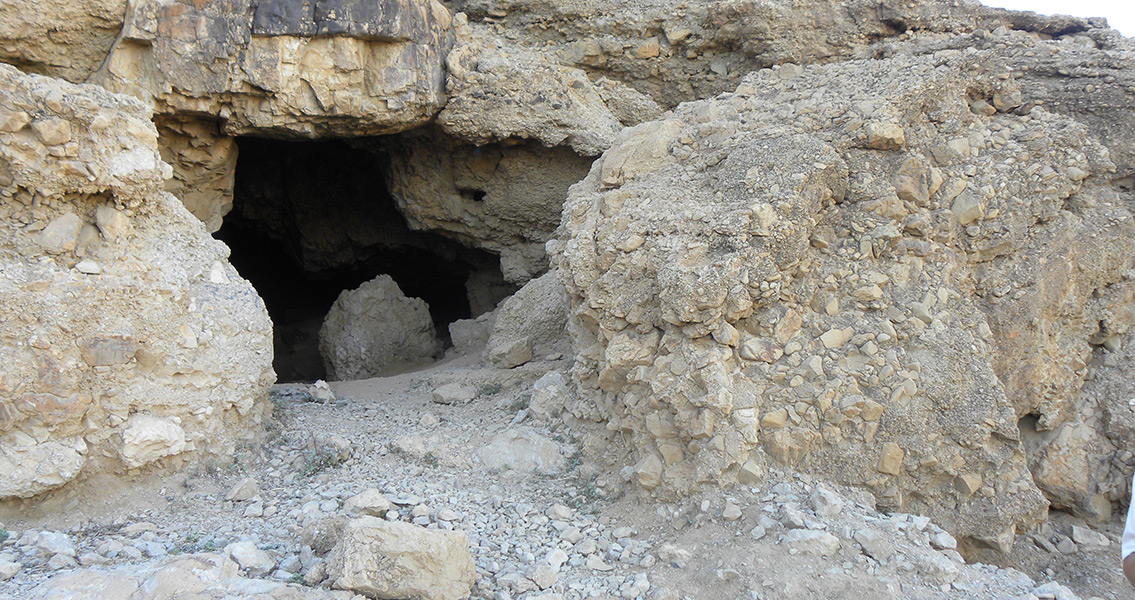
Haaretz. In 1947, a shepherd tossed a stone into a cave in Israel’s West Bank and heard the sound of earthenware cracking, leading to the the twentieth century’s biggest archaeological discovery: the Dead Sea Scrolls. Named for the seven human skulls along with other skeletal remains found there, The Cave of the Skulls was discovered in 1960 by Professor Yohanan Aharoni. Part of a series of naturally formed spaces on top of a steep cliff known as the Large Cave Complex, the Cave of Skulls is located in one of the starkest regions of the Judean Desert. The complex is also home to the Cave of the Arrows, where the extremely arid conditions helped preserve a dozen reed arrow shafts (30 inches long) for around 1,800 years. The latest discovery, two papyrus fragments each measuring approximately two centimeters squared, along with several pieces with no discernible writing, was made during a joint salvage excavation conducted by the Hebrew University of Jerusalem and the Israel Antiquities Authority. Along with the papyri artifacts, dozens of stone vessels, pottery fragments and flint items were discovered within the cave. Several different metal objects were also found, including needles, cosmetic tools, and hobnails with hollow heads which were used to make sandals. Another interesting find was a bundle, a textile wrapping around a collection of beads, which was found inside a natural crevice in the west wing of the cave. This bundle has not yet been opened, but its contents have been identified through X-rays. It joins two other bundles previously discovered by Aharoni, making up the largest bead collection ever found from the time period known as the Chalcolithic, an ancient period that predates the Copper Age. What these caves were used for in early Chalcolithic times is unknown. Suggestions vary from seasonal habitats for traders or herders, to hiding places during times of social tensions within the settlements located on that side of the Judean Desert. “These caves are very difficult to access, and they were used in their natural forms without changes or modifications that would make them more convenient for prolonged occupation,” Davidovich said in the Haaretz article. “This does not make sense when you think of ephemeral stays by shepherds or the like, but is much more plausible when you consider that they served as temporary refuge places.” ]]>