Categories
Breaking News

Walking On Two Legs Changed Evolution of Human Skulls

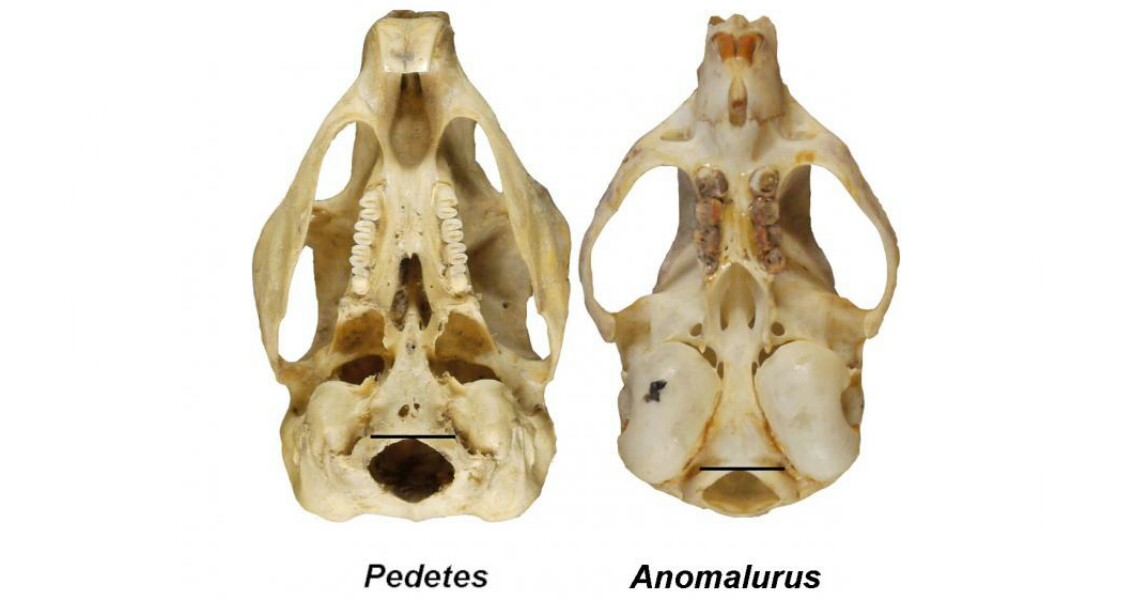
Journal of Human Evolution. This connection has long been highly controversial among biologists and archaeologists. The earliest humans climbed trees and walked on the ground, offering them flexibility of movement and the ability to evade predators. It is widely held that between 6 and 3 million years ago the gradual transition began from climbing trees to walking upright the majority of the time. This switch to exclusively walking on two legs inevitably coincided with significant physical changes, such as longer legs. Homo erectus, around 1.9 millions years ago, had leg and thigh bones very close to those of modern humans, evolved for walking on two legs over long distances. Humans differ from other primates in that the foramen magnum, the large hole at the base of the skull which the spinal cord passes through, is shifted forward. Many scientists argue that this is down to the evolution of bipedalism – the head needing to be balanced directly on top of the spine to aid walking. This connection between the foramen magnum and bipedalism is far from universally accepted, however. In 1925, Raymond Dart first questioned the connection in his description of ‘Taung child’, a 2.8 million-year-old fossil skull of the extinct South African species Australopithecus africanus. Last year, a study by Kent State University biological anthropologist Aidan Ruth further questioned the connection between walking on two legs and the forward shifted foramen magnum. Gabrielle Russo, an assistant professor at Stony Brook University, and UT Austin anthropologist Chris Kirk have provided convincing evidence in their new study that the forward shifted foramen magnum is not just a feature of humans and their fossil relatives, but bipedal mammals more generally. “This question of how bipedalism influences skull anatomy keeps coming up partly because it’s difficult to test the various hypotheses if you only focus on primates,” Kirk said in a press release. “However, when you look at the full range of diversity across mammals, the evidence is compelling that bipedalism and a forward-shifted foramen magnum go hand-in-hand.” Their groundbreaking study sampled the largest number of mammal species to date, as well as deploying new methods to measure aspects of foramen magnum anatomy. By comparing the position and location of the foramen magnum in 77 mammal species, from primates to rodents, Russo and Kirk make their case that bipedal mammals have a more forward-positioned foramen magnum than even their most closely related quadrupedal relatives. “We’ve now shown that the foramen magnum is forward-shifted across multiple bipedal mammalian clades using multiple metrics from the skull, which I think is convincing evidence that we’re capturing a real phenomenon,” Russo said. Establishing the link between bipedalism and the foramen magnum’s position is hugely significant. The connection could allow archaeologists to determine much more accurately whether extinct fossil hominids walked on two feet like modern humans, or on four like modern great apes. The specific measurements offered by the study could be applied to future research to provide a map of the evolution of bipedalism. “Other researchers should feel confident in making use of our data to interpret the human fossil record,” Russo concluded. Image shows comparison of the positioning of the foramen magnum in a bipedal springhare (left) and its closest quadrupedal relative, the scaly-tailed squirrel (right). Image credit: Russo and Kirk, Journal of Human Evolution ]]>
Categories
Breaking News

Mammoth Preservation Project Underway in Mexico

IB Times, adding, “The discovery in Tultepec is important because it indirectly supports the presence of humans 40,000 years ago.” Preliminary research reports the woolly mammal was approximately 25 years old at the time of its death, it was 3.5 meters (11.5 feet) tall and 5 meters (16.5 feet) in length, and weighed around 5 tons. The experts are hopeful that the mammoth remains are in good enough condition to be reassembled and displayed. Woolly mammoths died off around 5,000 years ago. “We are talking about 40,000 years ago so it is a very considerable period of time. The affect (on the bones) over such a period is that the bones are very sensitive.” explained assistant archaeologist Felipe Munos in the article. However, the fact that the remains were found in sediment at the bottom of a lake, and the mud was of a good level, helped to conserve the mammoth remains. Mexico was a hotbed of dinosaur activity at one time, and although the area surrounding modern-day Tultepec is arid, in earlier eras it is thought to have had an ample water supply and lush vegetation. Off the coast of Yucatan, around 825 miles south of Mexico City, is the Chicxulub crater, an impact crater that’s buried underneath Mexico’s Yucatán Peninsula. It was left behind when a large comet or asteroid, approximately 6 miles (10 kilometers) in diameter, struck the Earth. The impact coincides exactly with the Cretaceous–Paleogene (K–Pg) boundary some 66 million years ago, and it’s widely accepted that the global climate disruption caused by the event caused the mass extinction (the Cretaceous–Paleogene extinction event) of 75% of the earth’s animal and plant species, including all of the non-avian dinosaurs. ]]>

Categories
Breaking News

Did Neanderthals and Leopards Exist Side-by-side in Italy?

LiveScience, an ancient bone found in 2014 by Renato Bandera, an amateur scientist, turned out to be the shinbone of a leopard. The find was made in northern Italy on the banks of the River Po, not far from the entrance to Cremona’s harbor. The fossilized bone, which Bandera donated to the Paleoanthropological Museum of Po in San Daniele Po, is not the first specimen to be found in the region. Indeed, many fossils discovered nearby have led researchers to suggest a number of species made their home there, from elk, rhinos and giant deer to woolly mammoths, steppe bison and straight-tusked elephants. However, finding the fossilized remains of carnivorous species is much rarer. Only a handful of fossils from foxes, hyenas, wolves, and bears have been discovered in the region; the newest discovery – that leopards were present as well – fills in a major gap in our knowledge of the ecology of the time period. Researchers say that the leopard was likely just shy of 100 pounds, was around 3.6 feet long and had a 2.8-foot tail, all according to the size of the shinbone. Davide Persico, the study’s co-author and a paleontologist from the University of Parma, said this suggests the creature was either a young male or a large female. While the exact age of the fossilized remains has yet to be pinpointed, fossils found nearby place the leopard remains in context. According to Persico, the leopard is likely to have lived up to 180,000 years ago. The presence of leopards in Europe isn’t unheard of, especially since previous research has discovered evidence of the large cat living on the continent during the Pleistocene. The oldest known example of leopards living in Ice Age Europe comes from Vallonet Cave, a site in France that yielded leopard remains dated to between 900,000 and 1 million years old. Researchers said that as the climate continued to shift colder, leopards would have migrated closer to the equator. As a result, the large felines would have moved down from the mountainous regions into the Po River plain – and would have lived there at the same time as Neanderthals. In fact, the only other leopard fossils in Italy were found in the Apennines and the Alps exclusively. The fossil discovery shows that this ancient leopard species was not limited to the mountains, remarked the paleontologist. Persico drew a connection between ancient leopards and modern ones, stating that both have demonstrated the ability to adapt to different climates. Modern leopards do indeed demonstrate a wide distribution, in fact the largest of any wild cat. The largest spotted cats in modern-day Asia and Africa, leopards range from mountainous regions to forests, grasslands, and even semi-arid deserts. The new research study, published in the journal Quaternary International, can be found here]]>

Categories
Breaking News

Humans May Have Turned The Sahara to Desert

Frontiers in Earth Science, can be found online at here]]>

Categories
Breaking News

New Study Traces Aboriginal Ancestry Back 50,000 Years

Popular Archeology, adding, “This is unlike people anywhere else in the world and provides compelling support for the remarkable Aboriginal cultural connection to country. We’re hoping this project leads to a rewriting of Australia’s history texts to include detailed Aboriginal history and what it means to have been on their land for 50,000 years – that’s around 10 times as long as all of the European history we’re commonly taught.” This research is the first phase of a 10-year project intended to allow people to trace their Aboriginal heritage and regional ancestry in order to construct a family genealogical history. Additionally, it will also help with the return of Aboriginal artifacts. “Aboriginal people have always known that we have been on our land since the start of our time,” said Mr. Lewis O’Brien, a Kaurna Elder who was among the original hair donors and is a member of the study’s advisory group. “But it is important to have science show that to the rest of the world. This is an exciting project and we hope it will help assist those of our people from the Stolen Generation and others to reunite with their families.” The research will be further extended to study paternal Aboriginal lineages and obtain additional information in the nuclear genome. Team member Dr. Ray Tobler, a postdoctoral researcher who has an Aboriginal heritage from his father’s side, was granted an Australian Research Council (ARC) Indigenous Discovery Fellowship to continue the AHP research, and investigate how the longevity of the Aboriginal populations in various habitats in different regions of Australia has helped form the amazing physical diversity found in today’s Aboriginal Australians. The research findings have been published in the journal Nature. ]]>

Categories
Breaking News

Rare 400,000 Year Old Skull Discovered in Portuguese Cave

The Proceedings of the National Academy of Sciences, can be found here Image courtesy of Javier Trueba]]>

Categories
Breaking News

First Ever Study of a Garment from the Mediterranean Neolithic

IBTimes UK. “The presence of red deer canines is unique in the region, and the combination with columbella is unique too,” adding, “This burial is also important because there burial constructs containing grave goods are rare. But the materials worn by the dead here are obvious and ornaments are visible. The burial is exceptional.” The single, isolated grave was discovered and partly unearthed in the 1970s, with various artifacts from it exhibited and then stored at the Calvet Museum. The grave’s rediscovery in 2009 revealed that the deceased male had been buried in primary deposition with no preserved architectural features. Using calibrated AMS dates researchers were able to reliably date the garment to the early 5th millennium BCE, which reinforces existing evidence of long distance relationships between the Neolithic cultures in Europe. Avignon and the surrounding region have been inhabited since the Neolithic, evidenced by the discovery of a small anthropomorphic monument carved from Burdigalian sandstone in the shape of a tombstone. This stele is believed to represent the first Avignonnais and dates from the Copper Age to the Early Bronze Age, a period which is referred to as the southern Chalcolithic. The face of the stone is engraved with a stylized human figure that has no mouth, and eyes marked by small holes. At the bottom there’s a deep indentation that has eight radiating lines that form a representation of the sun, unique for this type of monument. Other findings from this time period include two polished axes made from greenstone, several Chalcolithic objects used for adornment and numerous shards of Hallstatt pottery. The study has been published in the Journal of Field Archaeology. Image courtesy of Aurélie Zemour ]]>

Categories
Breaking News

Crusader Shipwreck Discovered off Israel's Coast

Haaretz. Taking Acre was a major victory for the Mamluks, as Christian European forces had long used the site as a landing point for countless knights and soldiers. When Jerusalem fell out of Crusader hands after being recaptured by Saladin in 1187, Acre became the new Crusader capital in the Holy Land. Marine archaeologists from Haifa University Prof. Michal Artzy and Dr. Ehud Galili spearheaded the investigation of the Crusader shipwreck. The ship itself suffered damage while the modern harbor of Acre was being dredged during its construction; the surviving wreckage includes some ballast-covered wooden planks, the ship’s keep, and a few sections of its hull. Carbon dating has revealed the wood used to construct the hull dates to between 1062 CE and 1250 CE, firmly within the window for Crusader activity in the region. In addition to the associated golden coins found near the wreckage, marine archaeologists also discovered imported ceramic bowls and jugs from southern Italy, Syria, and Cyprus; corroded pieces of iron, mostly nails and anchors, were additional finds. The biggest find, however, is certainly thought to be the gold coins found with the wreck. A total of 30 florins were found, according to the Israel Antiquities Authority’s coin expert Robert Kool; minted in the Italian republic of Florence – where the coins get their name – the florins were minted from 1252. Speculation as to how the ship – and the florins – ended up on the bottom of Acre’s harbor is closely tied to the Siege of Acre, as historical eyewitness accounts from the event reported nobles and merchants fleeing from the besieged fortress by boat, often after bribing the owners of these boats with valuables. Many never made it out of the harbor, thought to have drowned there with their riches as the Christian defenders sought futilely to buy them some time to escape. The Crusader fortress fell on May 18th, 1291, after more than 100 years of Frankish rule. The final defenders, a contingent of Knights Templar, refused to abandon their holdfast. As a result, when Mamluk sappers undermined the walls of the Templar fortress, the entire edifice collapsed, killing the remaining defenders – and around a hundred of the Sultan’s own soldiers as well. The fall of Acre was the last gasp of the Christian crusades during the medieval era. Once the stronghold was taken by the Mamluks and summarily destroyed, the Catholic Church and the European nobles that supported it abandoned their quest to “liberate” the Holy Land. ]]>

Categories
Breaking News

Unusual 4,000 Year Old Dolmen Discovered in Galilee

JewishPress.com, “during that time all of those people had to be housed and fed. The building of such a huge construction necessitated knowledge of engineering and architecture that small nomadic groups did not usually possess. And even more importantly, a strong system of government was required here that could assemble a large amount of manpower, provide for the personnel and above all direct the implementation and control of a large and lengthy project.” The study has been published in the scientific journal PLOS One. Image courtesy of Gonen Sharon/Tel Hai College ]]>

Categories
Breaking News

The Silk Road Before it was the Silk Road

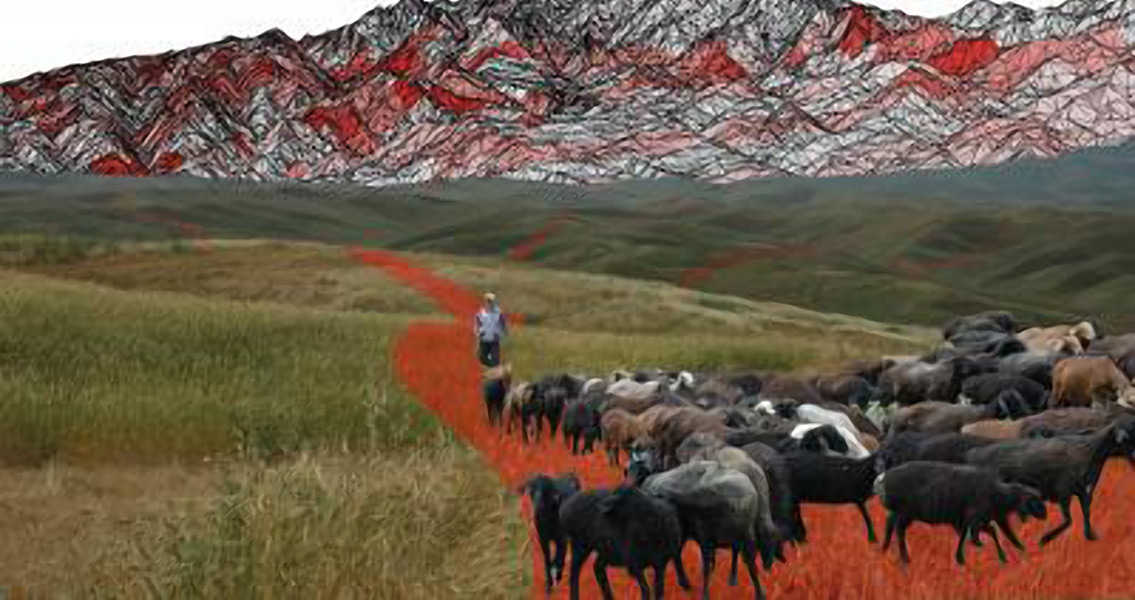
Nature. Illustration by M.Frachetti/ T. Bukowski. ]]>