Categories
Breaking News

Giant Polar Bear Skull Could Belong to 'King' Bear

Western Digs article, adding, “The back of the skull is longer and comparatively narrow, for example, with features that are noticeably different from those of modern polar bears. The front part of the skull, from roughly the eyes forward, is like that of typical polar bears,” Jensen said. Research biologist Dr. Raphaela Stimmelmayr compared The Old One to over 300 polar bear skulls kept at the University of Alaska Museum of the North and discovered several others that had similar features, making it unlikely that The Old One was entirely unique. “It’s possible it’s a subspecies,” Jensen says in the article, “or perhaps it’s more like [with] domestic dogs, where a borzoi and pug are considered members of the same species, [and] not [a] subspecies, even though their skulls are far more different than this is from a standard polar bear skull.” Ethnographers have documented stories of oversized polar bears from a number of Inuit groups. For example, the Inuvialuit people of Canada’s Northwest Territories have tales about a giant “weasel bear”, and the indigenous peoples on St. Lawrence Island and other locations have shared accounts of what they refer to as a “king bear.” Ethnographic accounts from the Utqiagvik area, however, don’t include any mention of a giant bear, either because these bears weren’t present when the ethnographic accounts were collected or because researchers didn’t ask the right questions. The archeological site Walapka, an ancient settlement, was occupied off and on over a 4,000-year period. Jensen, along with her colleagues, intend to further research the skull, including the cross-sectioning of several teeth as well as DNA analysis. The team’s findings were reported in Anchorage, Alaska, during the Alaska Marine Science Symposium. Images of the skull can be found here]]>

Categories
Breaking News

10,000-Year-Old Case of Cannibalism Discovered in Spanish Cave

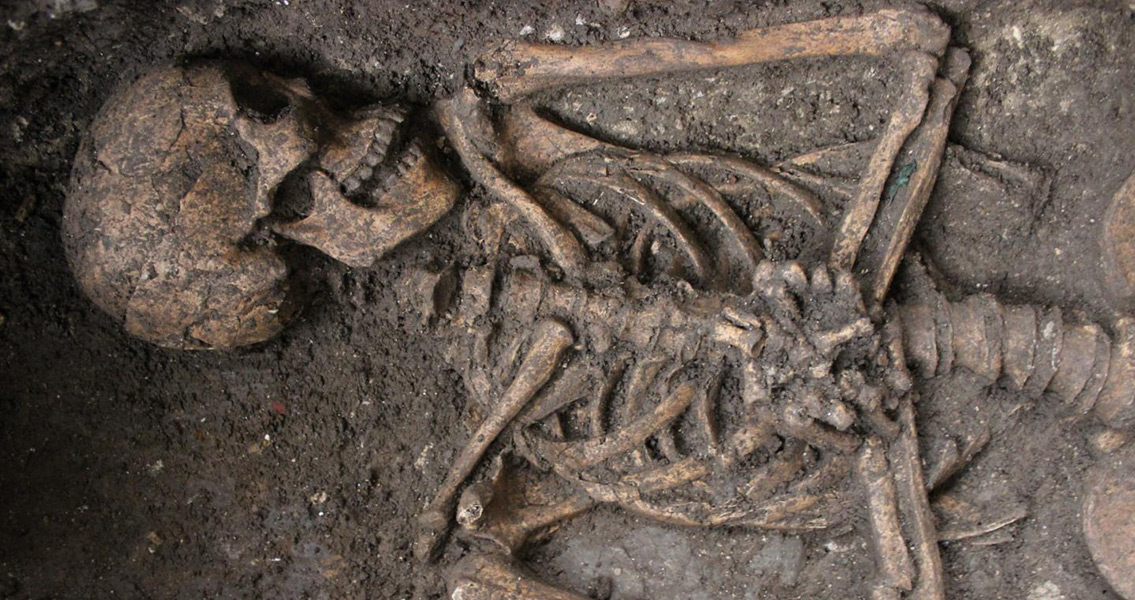
Ars Technica, the remains in question show no signs of violence, indicating that the bodies were likely consumed after death. Identifying cannibalism can be a tricky business, but Morales-Pérez and his team say the evidence was clear. The bones themselves were discovered buried alongside the remains of other, non-human animals; bore signs of being burned and butchered, and evidence of being bitten and scraped. Radiocarbon dating has set the age of the bones to between 9,000 and 10,000 years old. Finding evidence of the practice of cannibalism during this time period is not unheard of, though this is the first time that cannibalism has reared its ugly head in Spain during the Mesolithic. Other archaeological finds throughout Europe and the Levant dating to this time period have yielded evidence of humans eating their own. Additional questions have arisen after discovering the cannibalism. One such question – one that may not ever be able to be answered – is why the humans inhabiting this cave in Spain decided to turn to the practice in the first place. Necessity due to starvation is always one reason for cannibalism, but the multitude of animal remains found in the cave indicates that the food sources for the humans living there were varied and apparently abundant. Occasional periods of privation do occur of course, and the evidence of cannibalism could represent a desperate time in the lives of the people who lived there when food sources were scarce. However, the possibility that the cannibalism might have been ritual in nature cannot be discounted – there’s precedent of complex rituals for eating the flesh of the deceased, often important members of the community, dating back thousands of years. The beginning of the Mesolithic also represented a time period when humans were beginning to transition from their hunter-gatherer existence of the earlier Paleolithic, and taking up the trappings of a more sedentary, agrarian lifestyle. The conflict between these two ways of life could have precipitated some funerary practices that would seem gruesome and barbaric to our own modern sensibilities, researchers say. The state of the remains seems to contradict the idea that they were consumed as part of a ritual. Seemingly dumped unceremoniously in a midden heap at the rear of the cave, these butchered, fire-processed and chewed human bones don’t seem to have been treated with much care. However, with literally ten thousand years having passed between the event and the discovery of the evidence of that event, there’s no way of knowing if the remains had at one time been buried with reverence and then ended up in a new location due to rain runoff and soil erosion. The new research study, published in the Journal of Anthropological Archaeology, can be found online here Image courtesy of Journal of Anthropological Archaeology]]>

Categories
Breaking News

Massive Mars Volcano Last Active During Dinosaur Die-Off

here Image courtesy of NASA/JPL/USGS]]>

Categories
Breaking News

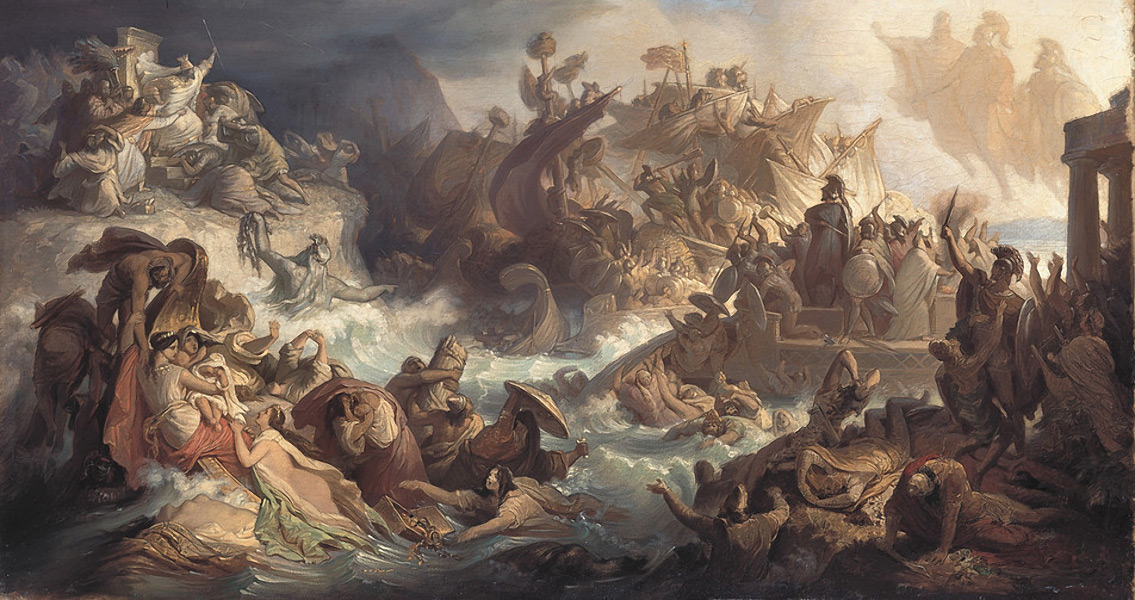
Ancient Greek Battle of Salamis Site Discovered

Categories
Breaking News

Amber From the Cretaceous Preserves Damselfly Courtship Ritual

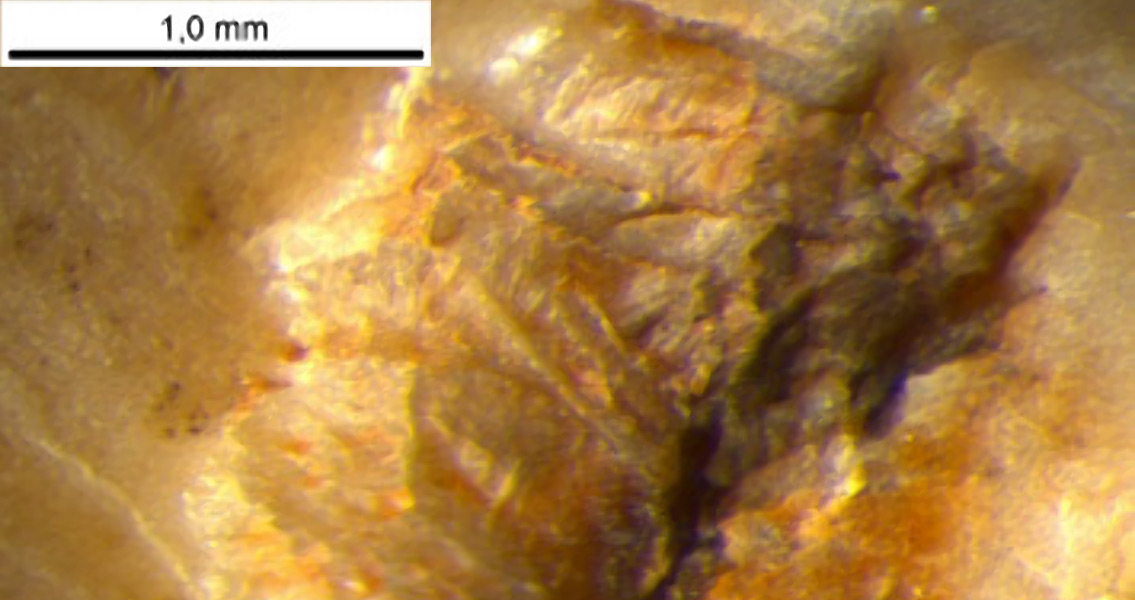
Yijenplatycnemis huangi in honor of the donor of the amber, Huang Yijen from Taiwan. The preserved Y. huangi specimens showcased large, expanded pod-like forelegs that would have improved chances of mating successfully by both attracting females as well as helping to fend off other suitors. These characteristics are commonly found in similar modern insects, the most common being the male Platycypha caligata damselfly found in Africa, who use their enlarged forelegs in an almost identical manner. East Asian damselfly species also exhibit similar traits as well, including feather-like legs that are only apparent in males. These modern East Asian damselfly males put on a display with their legs in front of females, and Dr. Zheng and Professor Wang believe the legs of Y. huangi would have been used in a similar manner. The fossil specimens have legs that are much more expanded than any other modern damselfly species, which could be an indication that Y. huangi’s forelegs were an extreme adaptation for courtship behavior. The excessively large forelegs of Y. huangi could have also played other crucial roles – both making males more easily noticeable by females of the species and also in warding off predators. The researchers say that Y. huangi’s forelegs were so large that they would have moved slower due to air resistance, attracting female attention more efficiently and increasing mating opportunities. Meanwhile, the pod-like shape and coloration of the ancient damselfly’s legs could have been used to distract or intimidate predators. The pigmentation of the legs, which are partially covered with a pair of brown bands and feature an eye-shaped spot, are similar to the wing spots on some modern butterfly species. These wing spots were also present on a species of extinct lacewings from the Early Middle Cretaceous. Dr. Zheng and Prof. Wang state in their study that the spots on Y. huangi’s legs were likely too small to do much in the way of deflecting predators. Instead, these dots may have been more similar to the “eyespots” on peacock feathers, providing yet another way to garner the attention of the females of the species. The research paper, recently published in the journal Scientific Reports, can be found here Image courtesy of Image by YANG Dinghua]]>

Categories
Breaking News

Major Viking Age Archaeological Find Discovered in Denmark

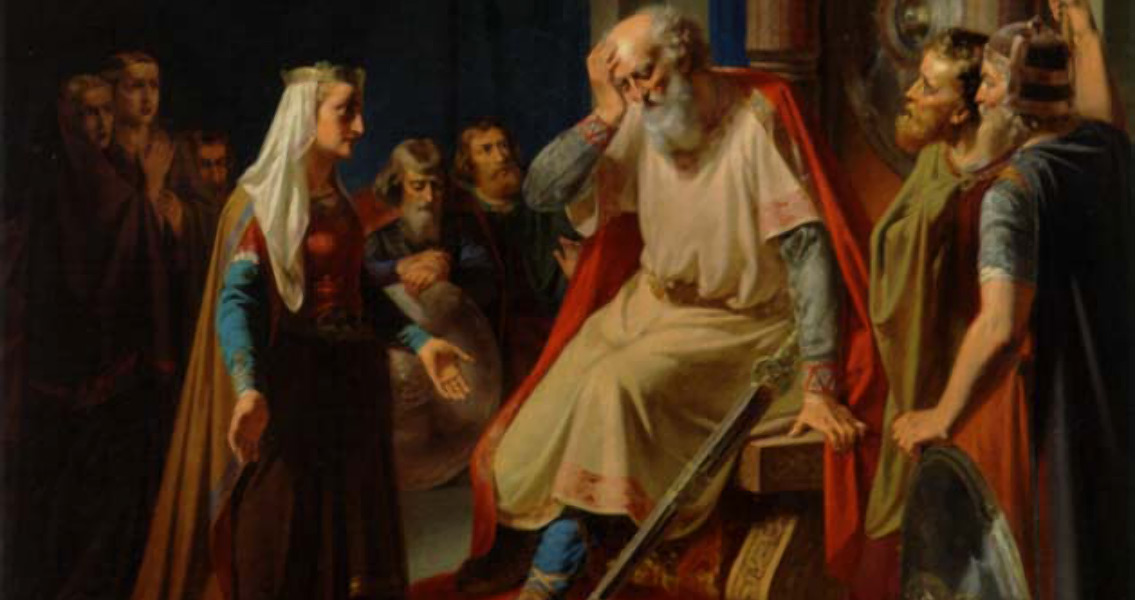
CPH Post Online, researchers have discovered several chamber graves in the Jutland Peninsula, the northern continental reaches of Denmark that splits the North and Baltic Seas. The new archaeological site was found in the hamlet of Hørning in eastern central Jutland, near Skanderborg. What makes this collection of grave sites stand out is that one of the chamber-graves discovered by archaeologists has been revealed to be a Viking Age treasure trove. Named the tomb of the Fregerslev Viking, the grave contains the remains of a high-status individual as well as several priceless grave goods. The quality of these items more than confirms the high standing of the individual who was interred alongside them. According to project manager Merethe Schifter Bagge, an archaeologist from the Museum of Skanderborg, the artifacts already recovered from the chamber-grave include ornate horse bridle fittings that were painstakingly gilded in gold. The researcher added that this particular type of bridle would not have been made available to just anyone; its presence indicates the Fregerslev Viking was an enormously important individual and that the bridle might have been a gift from the king after forging an important alliance. Researchers have dated the fittings to around 950 CE, which places the Fregerslev Viking during the reign of Gorm the Old, the Danish king who ruled from between circa 940 to 958. Harald, Gorm’s son and successor as king of the Danes, was known as Harald Bluetooth – for whom the modern wireless communication technology was named. The Viking interred in the chamber-grave could have been a trusted confidant of Gorm the Old, Schifter Bagge reasoned – or perhaps even a powerful rival. This new find is thought to be the most breathtaking one in the country since 1983. In fact, researchers are already comparing finding the Fregerslev Viking to that of the discoveries of Egtved Girl, the remains of a Bronze Age girl discovered in the 1920s, and Tollund Man, an incredibly well-preserved, naturally mummified corpse from the fourth century BCE discovered in the 1950s. Like the Fregerslev Viking, both these finds were discovered in Jutland as well. The chamber-graves in Hørning were initially discovered in 2012, but so far only a small area has been examined. Researchers plan to continue excavating starting in April of 2017, according to Ejvind Hertz, the Museum of Skanderborg’s director of archaeology. Hertz, who also serves as an inspector for the museum, has high hopes that the rest of the Viking’s grave goods will be discovered at that time. A selection of the discoveries made at the site will be on display at the museum for a month, starting April 7th. In the meantime, the museum will also be providing daily guided tours for local residents or tourists visiting the grave site. ]]>

Categories
Editorial

Oswald Mosley – From Tory MP to Anti-Semitic Fascist

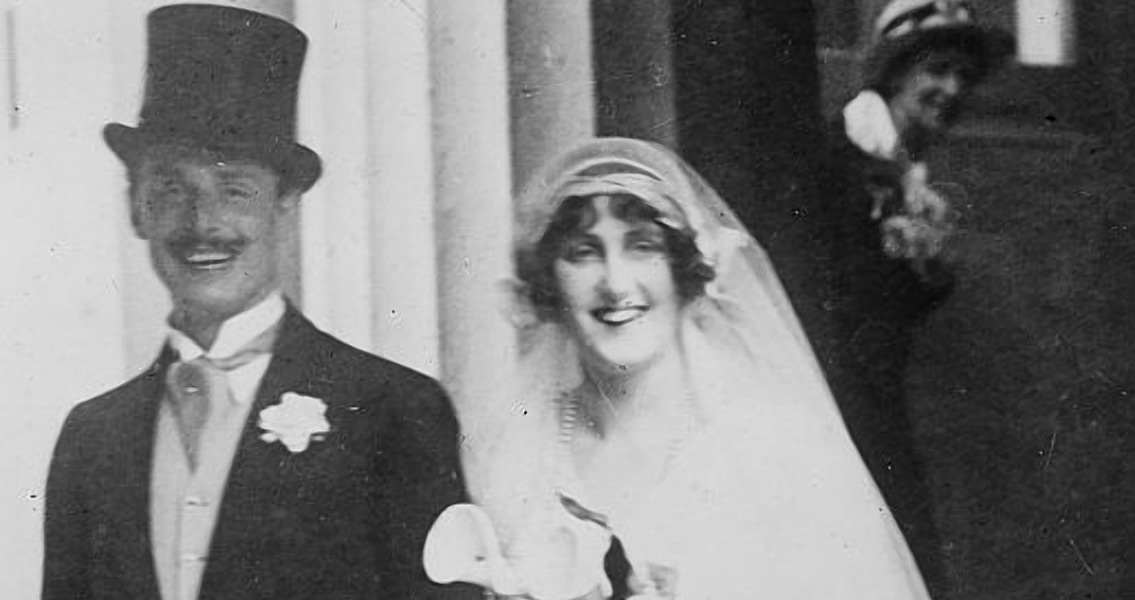
Who Was Oswald Mosley? “He struck me as being an earnest, rather humourless man; a bit of a bore, but in no way abhorrent; just rather dreary, like a Jehovah’s Witness, or one of those figures one meets in out-of-the-way places who produce a cyclostyled plan for world government which they have sent to Adlai Stevenson, Mrs Roosevelt and the late Duchess of Atholl.” Said Malcolm Muggeridge about Oswald Mosley in 1962, shortly after interviewing him for the BBC. Muggeridge’s description of the former leader of the British Union of Fascists makes him seem timid and harmless. Maybe by 1962 that was the case, but in the years leading up to the Second World War Oswald Mosley was a dangerous and influential voice in British politics. In 1932 Mosley united Britain’s fascist movements into the British Union of Fascists. The BUF gained widespread attention: MI5 claimed it had 50,000 members, including several prominent figures in society, and it won public support from the Daily Mail newspaper. The BUF was obsessively nationalistic to the point of authoritarianism. It was explicitly anti-Semitic and anti-Communist, while publicly supporting the policies and governments of Benito Mussolini and Adolf Hitler. The party, its members distinguished by their black shirt uniforms, was frequently involved in violent clashes. The most famous example came in 1936, when Blackshirts attempted to march through East London, an area with a high Jewish and Irish immigrant population. The violent confrontation that ensued has come to be known as the Battle of Cable Street. Mosley’s connections to the worst proponents of fascism was deep. His wedding to Diana Guiness took place in the home of Nazi propaganda minister Joseph Goebbels , and boasted Adolf Hitler as one of its few guests. Oswald Mosley and the Tory and Labour Parties Oswald Mosley was born in London in 1896. He served on the front lines of the First World War, as both a pilot and then as a soldier in the trenches on the Western Front. From 1916, when he was deemed unfit for front line duty due to an ankle injury, he took up a desk job for the rest of the war. In 1918 he became the youngest MP in the House of Commons, winning the Harrow seat for the Conservative Party. In 1924 he switched allegiances, joining the Labour Party. By 1927 he had become one of the leading figures in the party, viewed as a charismatic individual whose ideal of European Socialism meant many saw him as a future Labour prime minister. Mosley was influenced by the economic ideas of John Maynard Keynes, in particular government investing heavily to boost employment and secure the economy. In 1930 he proposed a radical programme to deal with Britain’s unemployment problem. Among other things it advocated a complete overhaul of the systems of government, with public funds being used to bolster the industrial sector. The proposals, which included the provision of old age pensions from the age of sixty, met massive resistance in the Labour government and Mosley’s radical ideas were ultimately blocked. Infuriated, he abandoned the Labour Party and founded the New Party in 1931. That year’s general election proved a disaster, with none of the New Party candidates being elected. Mosley Turns to Fascism and Antisemitism In 1932 Mosley met Benito Mussolini, who had been in power in Italy since the 1920s. Mosley was impressed by the Italian dictator’s government. Upon returning to England he dissolved the New Party, and replaced it with the British Union of Fascists. The new party quickly gained support, taking a fierce stand against Communism, and by October 1933 had its first elected official when Charles Bentinck Budd won a seat on Worthing Town Council. Soon however, the unsettling reality of the BUF’s ideology became apparent. BUF deputy leader William Joyce pledged to a public meeting in 1934 to rid British industry of foreigners “be they Hebrew or any other form of alien… Reclaim what is your own in the fullness of Fascist victory.” The anti-Semitic sentiment also saw the Blackshirts begin staging provocative marches in primarily Jewish populated areas, fostering tensions and igniting riots on British streets. Second World War and Mosley’s Arrest Throughout the 1930s the BUF remained a potent force in British politics, until the outbreak of World War Two. The declaration of war with Germany increasingly turned public opinion against the BUF, Mosley’s support of Hitler proving particularly alienating. On 23rd May, Mosley was arrested as part of new legislation allowing the Home Secretary to imprison without trial anyone believed to be a danger to national security. Soon other prominent BUF members were incarcerated, its publications banned, and the organisation quietly dissolved by 30th May 1940. ]]>

Categories
Breaking News

Colonisation and Globalisation Hit Asia Much Earlier Than Thought

Categories
Breaking News

Warrior Armor Made of Reindeer Antlers Found at Sacred Site

Siberian Times, adding, “The ornamentation on the plates can be individual, that is after the thorough analysis we could say how many warriors left armour here, judging by the style of decorations.’” The largest plates are between 23 and 25 centimeters long and in ancient times would have been attached to a leather surface, offering a dependable type of protection. Other plates, which are are between 12 and 14 centimeters in length, are thinner and richly ornamented. Conical shaped armor has also been seen on the plated helmets which were worn by ancient warriors in the taiga zone (also known as boreal forest) of Western Siberia. The discovery of iron helmets is extremely rare, however, bronze images from the middle of the first century CE that show people wearing headdresses that clearly resemble helmets have been found. The armor resembles the armor worn by warriors of the Kualai people, fishermen and hunters indigenous to the taiga. Previous finds at the site include a 2,000-year-old ring, believed to be evidence of a bear cult. These ancient people didn’t leave any written records. Made using high quality bronze, the ring, so tiny in diameter researchers believe it was put on a bear claw, features the image of the head and paws of a bear. Experts theorize that the ring was on the claw of a previously slain bear, an animal that was worshipped by Khanty tribes as sacred and an ancestor. After the slaying of the bear, the paws and head were adorned with rings and a handkerchief, followed by a festival honoring the animal. Image courtesy of Andrey Gusev ]]>

Categories
Breaking News

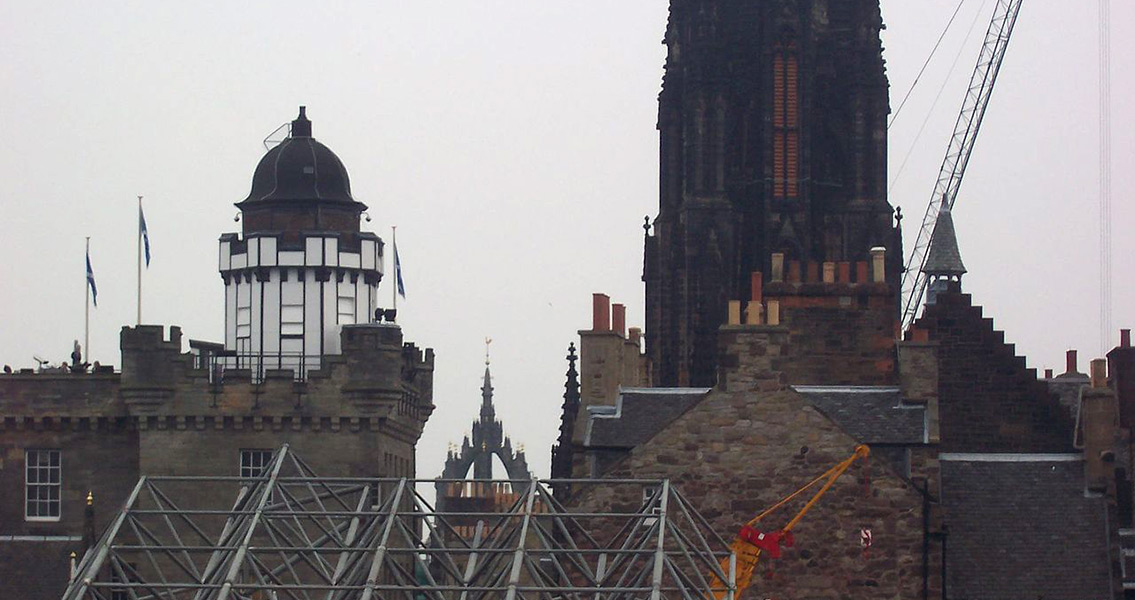
Mary Queen of Scots' Edinburgh Can Be Visited With New App

STV. 1544 was the year of the Rough Wooing, a vicious war between Scotland and England that exposed the complex political intrigues of the age. The death of King James V of Scotland in 1542 left his six day old daughter Mary as Queen of Scotland. Fueled by a powerful rivalry, the kings of France and England sensed an opportunity to secure Scotland’s allegiance through marriage to the new Scottish queen. Henry VIII of England ordered an invasion of Scotland to force the betrothal of Mary of Scots to his young son, Edward, hoping this marriage would secure the northern border and prevent a Franco-Scottish alliance against England. In May 1544 the Rough Wooing began when the Earl of Hertford, Edward Seymour, led a siege on Edinburgh. The attack failed to capture Edinburgh Castle, but the damage done to the city was considerable, with much of the medieval centre burnt to the ground. Rather poignantly, the map which the new app will be based on was actually made by Richard Lee, an English army engineer who served in the Earl of Hertford’s army. Archaeological data, the expertise of art and architectural historians, and documentary sources were also used in the creation of the map of how Edinburgh’s streets would have looked five centuries ago. The app is being marketed by Smart History, a company set up by St. Andrews University. Dr. Rhodes said in an interview with the Independent: “I hope it makes the public more aware of the layers in Edinburgh’s history and furthers understanding of the complex way in which the city evolved.”]]>