Categories
Breaking News

Infamous Healing Well Discovered Close to Liverpool

Discovery News. The well, measuring 6.5 feet square, was built with locally sourced sandstone blocks. It consists of the square basin with two steps. After going down the steps, pilgrims would submerge themselves in the pool, which was around 4 feet deep. Water seeped in from below the floor. “The fabric of the well is consistent with a Medieval date,” Quartermaine says in Seeker. “This well was probably a late Medieval foundation as the cult of St. Anne did not become widespread in England until after the end of the 14th century.” The dating is crucial according to Alexandra Walsham, with Cambridge’s Trinity College, who told Seeker that “a Medieval past for many healing wells was assumed or even invented by later antiquaries, especially in the 19th century.” According to local legend, recorded in documents held by Historic England Heritage, St. Anne’s Well was part of an estate held by a priory of around twelve monks which was lost when Henry VIII disbanded the monasteries. The story says that St. Anne had taken a bath in the well, which was said to heal skin and eye afflictions. Attracting a number of pilgrims, a small three-room structure was built around the well, and two monks were stationed there. Local folklore tells of a sixteenth century dispute between Father Delwaney, the prior, and Hugh Darcy, the manager of the neighboring estate, over property lines and access to the well. On one occasion, as the two stood near the well, Darcy predicted that Father Delwaney wouldn’t have his position for much longer. Two days later when the King’s officials arrived at the priory and proceeded to take possession of it and the well, the prior knew Darcy was to blame. A report on local legends published in 1877 in the St. Helens Leader, describes what happened next. The prior hissed out a curse, “With teeth tightly clenched, and his face white with suppressed passion.” Delwaney announced that Darcy would be dead within one year and a day, and then he collapsed and died. Inexplicably, a series of tragedies did befall Darcy. Three months after the prior’s curse, Darcy’s only son died after a mysterious illness, he suffered financially and “plunged recklessly into dissipation”, according to the St. Helens Leader. After a night of heavy drinking at a local tavern, he disappeared. “The search began. Nothing was seen until they came to the well, in which Darcy was found lying dead, his head crushed in”. Despite the legend, the well was revered and sought out, even after the dissolution of the priory, and people submerged themselves in the well waters up until the nineteenth century. Work is now underway to preserve and protect the site. Image courtesy of Jamie Quartermaine]]>


Categories
Breaking News

Indigenous Populations Had a Profound Effect on Forest Fires

Categories
Breaking News

Discovery of Egyptian Tableau Offers More Questions than Answers

International Journal of Nautical Archaeology (IJNA). Wegner adds that: “some images are small and simple, the smallest reaching only about 4 inches (10 centimeters) in length.” 120 boat images have survived, but it’s believed that there would have been more etched onto the walls of the building in ancient times. Additionally, the tableau contains etchings of cattle, gazelle and flowers. Near the building’s entrance, which measures 68 feet by 13 feet (21 meters by 4 meters), archaeologists found over 145 pottery vessels, a majority of which were buried with their necks facing the building’s entrance way. “The vessels are necked, liquid-storage jars, usually termed ‘beer jars’ although probably used for storage and transport of a variety of liquids”, writes Wegner in IJNA. The building was first documented in a 1904 report by an archeological team working at Abydos from 1901 to 1903. The team, however, didn’t have time for excavations at the building site and had no idea what it contained. The discoveries have left archaeologists with a number of mysteries they’re hopeful future excavations will help solve. For example, the creators of the tableau remain unknown, as does the reason for its creation. It’s possible that whoever built the boat also drew the tableau, or that a group of people participating in a funerary ceremony following pharaoh Senwosret III’s death drew the images on the walls of the building. Another possibility is that people accessed the building after the pharaoh’s death and created the etchings. Archaeologists have determined a group of individuals did enter the building sometime after the pharaoh died and salvaged the boat in order to reuse the planks. Also puzzling to archeologists is the purpose of the pottery vessels discovered by the building’s entrance. It’s possible that liquid from the vessels was spilt on the ground purposefully to imitate the boat “floating” into place. It’s also possible the wooden boat had been moved across the desert on a wooden sledge. The liquid in the vessels would then have been used to solidify and lubricate the ground along the path of the boat. Wegner says in IJNA “the ceramic vessels used in this journey may themselves have taken on a ritual significance, and both boat and jars were then buried together as ceremonial interment of objects associated with royal mortuary rites.” Excavations by the team are planned in the future, in collaboration with Egypt’s Ministry of State for Antiquities. ]]>

Categories
News

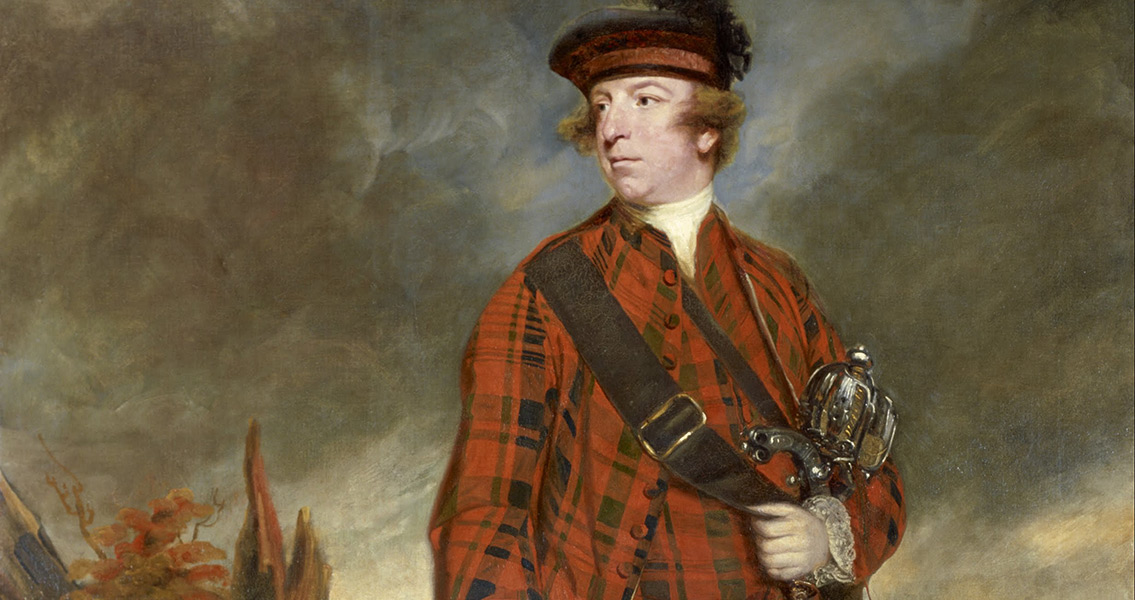
Lord Dunmore Offers Emancipation at a Price

Fowley. For several months he and the royal forces survived by launching guerilla style raids, stealing supplies from the colony. As early as 1772 Dunmore had made clear his belief that Virginia’s 180,000 strong slave population had the potential to be a formidable weapon if pushed to rebel against their masters. Initially, Lord Dunmore feared that an enemy power would take advantage of the slaves’ desire for freedom to sow discord in the colony, but by 1775 he was willing to use this weapon to his own ends as he desperately tried to counter the growing Patriot militia. Word of the plan spread. At the first signs of unrest in the colony, slaves began to offer their services to Dunmore. Once he had taken refuge on the HMS Fowley, Dunmore started recruiting slaves to his cause, building a force to bolster his perilously outnumbered troops. On 7th November Dunmore’s proclamation was drafted, and published soon after. The rebellion quickly escalated. The aim was clear. Slave insurrection would distract the patriots, forcing them to deal with slave rebellions while also crippling production in the colonies. At the same time, it would swell the forces willing to fight for Dunmore, whose armies had been cut off from reinforcements stationed in Boston. In practice the proclamation infuriated the colonists. Plantation owners who had hitherto remained uninvolved in the rebellion were suddenly pushed into action against the crown, incensed by Dunmore’s seemingly reckless actions. Around 800 slaves managed to break free and join Dunmore’s forces, 300 of them being inducted into ‘Lord Dunmore’s Ethiopian Regiment’. It wasn’t enough however, and by June 1776, Dunmore’s forces had been devastated by a small pox outbreak and a string of victories by the Patriots. Longer term however, Dunmore’s Proclamation was hugely significant. The British never repudiated it, and as the Revolutionary War wore on thousands of black slaves were encouraged to risk everything in an attempt to break free and join the British forces. Long after the American War of Independence had drawn to a close, the momentum continued; slaves continued to fight for emancipation, and more and more abolitionists in the USA and Britain were drawn to support the cause.]]>

Categories
Breaking News

Habitation of Inland Australia Dates to 49,000 Years Ago

Nature, can be found online here]]>

Categories
Breaking News

Domesticated Chickens Arrived In Africa Much Earlier than Thought

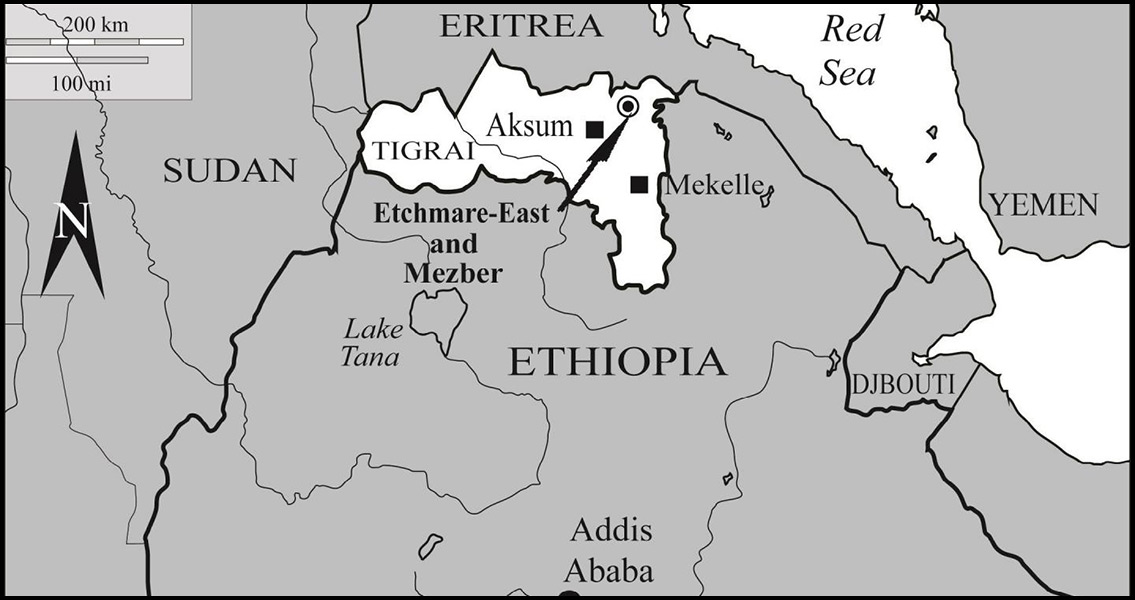
Gallus gallus, a species endemic to sub-Himalayan northern India, southern China and south-east China. First domesticated in the region between 6,000 and 8,000 years ago, the offspring of these chickens have spread across the globe. A team from Washington University in St. Louis radio carbon dated around 30 chicken bones unearthed from the site of an ancient farming village in what is today Ethiopia. Among them was a discarded chicken leg, etched with teeth marks from thousands of years ago. The bones provide physical evidence of the introduction of chickens to Africa. “Our study provides the earliest directly dated evidence for the presence of chickens in Africa and points to the significance of Red Sea and East African trade routes in the introduction of the chicken,” said Helina Woldekiros, lead author of the study and a postdoctoral anthropology researcher in Arts & Sciences at Washington University, in a press release. How the domesticated chicken arrived and then dispersed through Africa has long remained a mystery. Earlier research relied on depictions of chickens in ceramics and paintings, along with bones from other archaeological sites, to conclude that chickens were introduced to Africa through North Africa, Egypt and the Nile Valley about 2,500 years ago. Until now, the earliest actual bone based evidence of chickens in Africa was from the Saite levels at Buto, Egypt, and was dated to between 685 and 525 BCE. The new study, published in the International Journal of Osteoarchaeology, both pushes that date back by centuries and also suggests that the initial introduction could have happened on the east rather than north coast of Africa. “Some of these bones were directly radiocarbon dated to 819-755 B.C., and with charcoal dates of 919-801 B.C. make these the earliest chickens in Africa,” explained Woldekiros. “They predate the earliest known Egyptian chickens by at least 300 years and highlight early exotic faunal exchanges in the Horn of Africa during the early first millennium B.C.” Co-author of the study Catherine D’Andrea, professor of archaeology at Simon Fraser University in Canada, led the excavation team in Ethiopia. The bones used in the study were recovered from the kitchen and living room floors of an ancient farming community known as Mezber: a rural village located in northern Ethiopia about 30 miles from the urban center of the pre-Aksumite civilization. The pre-Aksumites were the first people in the Horn of Africa to form complex, urban-rural trading networks. Interestingly, linguistic studies into the ancient root words for chickens in African languages suggest the birds had arrived through multiple routes: North Africa through the Sahara to West Africa; and from the East African coast to Central Africa. Molecular studies revealing the biodiversity of domesticated African chickens further support this notion of domestic chickens arriving in Africa through multiple routes. Woldekiros said: “It is likely that people brought chickens to Ethiopia and the Horn of Africa repeatedly over a long period of time: over 1,000 years. Our archaeological findings help to explain the genetic diversity of modern Africans chickens resulting from the introduction of diverse chicken lineages coming from early Arabian and South Asian context and later Swahili networks.” Studies like Woldekiros and D’Andrea’s shed new light on ancient migration, exchange and trade; the spread of domesticated animals tracing the paths of ancient connections. Sometimes these trades were unsuccessful of course, with various zooarchaeological studies showing examples where the introduction of a new species to a new part of the world failed. Other times it took repeated introductions of a new species to a region, something which the recently published study points to. “Our study also supports the African Red Sea coast as one possible early route of introduction of chickens to Africa and the Horn,” Woldekiros said. “It fits with ways in which maritime exchange networks were important for global distribution of chicken and other agricultural products. The early dates for chickens at Mezber, combined with their presence in all of the occupation phases at Mezber and in Aksumite contexts 40 B.C.- 600 A.D. in other parts of Ethiopia, demonstrate their long-term success in northern Ethiopia.” Image Courtesy of International Journal of Osteoarchaeology]]>

Categories
Breaking News

Link Between Oil Drilling and California Earthquakes Examined

here Image courtesy of The Aerograph Co./ US Library of Congress]]>

Categories
Breaking News

Site with Reburied Skeletons Discovered by Accident

Western Digs: “This is one of the few archaeological contexts registered by archaeologists in this region, if we confirm the hypothesis [that this burial dates from] the Late Archaic, we could have a site with information about the transition to agricultural, sedentary communities in the region.” A number of the remains, both avian and human, had been naturally mummified by the arid climate. In addition to the skeletons and bird remains; textiles, baskets, stone points and other artifacts were also found. The two sets of remains were surrounded with an array of goods, including a large sea shell and a dress or bag made from deer hide. The gender and exact age of the child is unknown, although the size suggests at the time of death they were between one and three years old. The partial adult skeleton had large leg bones that had been tied together, similar to other, later finds in northern Mexico. The practice of reburying partial skeletons was not uncommon. Starting around 1100, the citizens of Paquime are known to have dug up and then re-buried their dead, sometimes collecting the bones in large jars or bundles, possibly to be buried with relatives. If this new cave site predates Paquime, the burial may be earlier evidence of the practice. Not found at the graves were artifacts, such as ceramics, associated with the Puebloans who built and then settled in trade centers like Paquime during the Medio Period. This absence indicates the graves predate the creation of Paquime, which happened around the year 700. The early date also makes the discovery of the bird, a scarlet macaw, especially significant because tropical birds are not indigenous to the high desert region of Chihuahua. The discovery of the macaw in this pre-Medio Period site indicates the presence of long-distance trade in exotic goods which pre-dates Paquime by centuries. “This finding verifies once again that the [mountains of Chihuahua] have been a cultural corridor between the coast and the desert north with the south,” Gallaga is quoted as saying in Western Digs. “At the end of the day, this discovery shows us that there is still a lot to do in the northern Mexico region, archaeologically speaking.” Gallaga’s team was called to the site when the property owner uncovered the strange remains while using heavy equipment to level the cave’s floor. “Many archaeological discoveries are the result of planned research and are conducted during years of intellectual efforts,” Gallaga says in Western Digs. “Others are the result of an accident.” ]]>

Categories
Breaking News

Archaeology Backs Up Lawrence of Arabia’s WWI Exploits

Categories
Breaking News

New Papyrus Discovery May Not Be Genuine, Experts Warn

New Historian covered in detail recently – sent shockwaves through the archaeological community, especially in light of a new UNESCO resolution that has been interpreted by some as an attempt to devalue the historical ties of Israel to the city. Many in the Israeli government, up to and including Prime Minister Benjamin Netanyahu, have cited the papyrus discovery as proof that UNESCO’s decision was incorrect, according to Haaretz. However, there are more than a few Israeli researchers who doubt not just the veracity of the papyrus and its text but also the decision to publicize the find, especially as the papyrus was not discovered at a supervised dig site. Initial analysis of the papyrus itself through carbon-14 dating revealed its age to be anywhere from 2,500 to 2,800 years old. The Hebrew text with which the scroll is inscribed is a match for the type of epigraphy used during the seventh century BCE, but Prof. Aren Maeir of Bar-Ilan University, leveling criticism at the IAA , said that while the papyrus may indeed be from that date, there are no indications that the script on the scroll isn’t a clever forgery. There are several well-known cases of antiquities thieves and forgers engaging in similar activity in the past, Prof. Maeir remarked. These forgers would purposely “sacrifice” a legitimate artifact in such a way to whet the appetite of collectors, thus setting up unsuspecting, credulous buyers for any more scrolls they “find” in the future. Additional tests are needed to verify the document, the professor stressed. George Washington University’s Prof. Christopher Rollston agreed with Prof. Maeir, claiming on his blog that there are no indications that the inscriptions on the piece of papyrus are as old as the medium they’ve been placed upon, even when the papyrus, as in this case, has been dated to a specific time. With the abundance of ancient papyrus available to the public – Prof. Rollston claims that nearly anyone can find and order some over the internet – he remains unconvinced of the legitimacy of the inscription. Despite this, the IAA continues to refer to the papyrus as a legitimate find, as it claims to have subjected the new scroll to the same rigorous study that the Dead Sea Scrolls were upon their discovery. However, skepticism still abounds, perhaps most likely due to the seemingly coincidental publication of the find so soon after the UNESCO resolution that sought to downplay and perhaps even sever Judaism’s connection to the Temple Mount, a location of high religious significance to all the Abrahamic faiths. ]]>