Categories
Breaking News

Slaves Helped Build University of Mississippi

The DM Online, there were a minimum of nine slaves – possibly more – who lived on a property known today as Rowan Oak, the home of celebrated American novelist William Faulkner. Located in Oxford, the Greek Revival house and its surrounding 40 acres of land were sold to Ole Miss in 1972 by the Faulkner family, but before the Nobel laureate purchased the property in 1930, it had been owned by Colonel Robert Sheegog, a Tennessean slave owner. Riley Anderson, an archaeology student involved in the research, remarked that Sheegog’s main residence was approximately an hour from Oxford at a location where he was known to have kept approximately 70 slaves. Research has shown that the slaves he kept at Rowan Oak – a mixture of men, women, and children that lived in a pair of structures on the property – were specifically leased to the university to aid in its construction efforts. This approach to history is often overlooked, Anderson stated, indicating that most historical research is concerned with discussing those responsible for the establishment of an institution such as Ole Miss, and not those that aided in physically building it. Anthropology professor Tony Boudreaux, the director of the university’s center for archaeological research, is co-teaching the course with Maurine Meyers. Boudreaux says that the impetus behind the initiative is to not only accomplish the center’s research goals but also to provide archaeology students with field experience, of which there has been much. In examining Rowan Oak, the class has assisted in surveying the ground in order to aid in determining where to excavate. Some artifacts have already been uncovered during this process, Boudreaux remarked. Broken glass, broken dishes, a handful of pottery shards and several nails that would have been used in fence posts or buildings have been gleaned from the site, but the anthropologist stated that more excavation will be needed to place the artifacts in proper context of the time. Anthropology graduate student Dalton Capps says that it’s important to recognize the history of slavery not just in the development of Ole Miss but on college campuses everywhere. Many universities are excellent at representing their own history, Capp said, but may not pay as much homage to the issue of slavery. Research data from the excavation will be submitted to the Mississippi Department of Archives and History as well as presented to Ole Miss administration members. ]]>

Categories
Breaking News

Spectacular New Cave Art a Treasure of Humanity

Categories
Breaking News

Prehistoric Sex: The Spread of DNA – and Sexually-Transmitted Infections

Categories
Editorial

Why Are So Many Flags Red, White and Blue? (Part Two)

first part of this article looked at the history of the flags of the Netherlands, the UK and France; but the prevalence of red, white and blue flags goes way beyond western Europe. On 14th June, 1777, the US flag was born in a resolution by the Marine Committee of the Second Continental Congress. “Resolved, that the flag of the United States be thirteen stripes, alternate red and white; that the union be thirteen stars, white in a blue field representing a new constellation.” The basis of the stars and stripes was born, although additional stars would be added as the USA expanded. An explanation for the decision to make the flag red, white and blue can be found in events a year earlier. The country’s great seal, also coloured red, white and blue, had been designed to reflect the beliefs of the Founding Fathers. It is therefore unsurprising that those same colours found themselves in the flag of the USA. Charles Thomson, Secretary of the Continental Congress, explained the meaning of the colours when he presented the seal to Congress. “White signifies purity and innocence. Red, hardiness & valour, and Blue… signifies vigilance, perseverance & justice.” Significantly, some historians have suggested that the colours were chosen because of their presence in the British flag. Despite having just won the war of independence, the US flag still reflected the heritage of many of the Founding Fathers. On the other side of the world these same colours had also started to be used in Russia, and then elsewhere in Eastern Europe. Again, the process was a combination of specific regional histories, external influences and coincidences. The origins of the Russian flag of horizontal white, blue and red stripes dates back to the seventeenth century. Tsar Peter the Great chose the design for Russia’s merchant ships, inspired by the Dutch design after a visit to the Netherlands. The flag became a poignant symbol for the Russian people, the colours taking on symbolic meanings, and by the late nineteenth century it was the flag of the country despite attempts by the Tsars to impose a black, orange and white tricolor as Russia’s symbol. The 1848 Pan Slavic Congress saw these colours spread throughout Eastern Europe. The meeting, held in Prague between representatives from all Slavic populations, was carried out as an act of defiance against growing German and Hungarian nationalism. Among the meeting’s outcomes was the declaration of red, white and blue as the colours of the Slavic peoples. Some historians say that this decision was inspired by the French flag, the members of the Congress drawing a link between their cause and the French Revolution. Others argue the colours were chosen in reference to the Russian flag, reflecting the belief that Russia could protect and foster Slavic nationalist movements. Whatever the case, following the Congress different nationalist groups such as Slovenians, Slovakians and Croatians started to use the colours on their flags, and they have stayed prominent into the twenty first century. Countless other examples of red, white and blue flags exist, in Chile for instance, or Thailand. Sometimes this can be explained by specific local circumstances – in Chile the blue stands for the sky, the white for the snow capped Andes and the red for the blood of the citizens who fell in the struggle for Independence. In other instances global events were at play – the blue in the Thai flag was added deliberately in 1917 to reflect the flags of its allies in World War One: Britain, France, Russia and the USA. Each of the examples mentioned, from the Netherlands to Chile, have their own story behind the use of red, white and blue in their national flags. Although there are of course some connections between the decisions, there are also examples which can only be explained by chance and circumstance. What is perhaps most striking however, is the multitude of meanings the three colours have come to hold, as history has seen red, white and blue weaved into countless different narratives of cultural identity and association. ]]>

Categories
Breaking News

Secrets of the Pyramids Being Revealed by Cosmic Particles

ScanPyramids project was launched in October 2015, with the aim of mapping some of the largest pyramids in Egypt. As well as studying the great pyramid of Khufu, the project is exploring the pyramid of Khafre on the Giza plateau, and two pyramids on the site of Dahshur known as Bent and Red. On 13th October, Dr Khaled El-Enany, Egypt’s minister of antiquities, met with the archaeological committee overseeing the project to review the findings of the first year of the mission. So far, the project has focused on only two pyramids: Khufu and Bent. Khufu in particular has yielded some interesting findings. Two anomalies in the great pyramid’s structure have been detected, one at the upper part of the entrance gate and another at its north eastern side, which could be evidence of secret cavities beneath the pyramid’s surface or potential clues into the pyramids’ construction. Further research has now started in order to work out the nature of the anomalies, as well as glean more information about their functions, nature and size. The goal of the ScanPyramids project is “to probe the heart of the largest pyramids in Egypt, without drilling the slightest opening”. The key to the non-invasive project is a host of cutting edge techniques. Radiographic muons (aka cosmic particles), infrared thermography and photogrammetry are being used to scan the pyramids and then create detailed 3D reconstructions. Muons are much more deeply penetrating than X-rays, meaning they can be used to see through much thicker material than the likes of computed tomography (CT Scanning). Although the ScanPyramids project isn’t the first time muons have been used to study pyramids the combination of innovative techniques aims to offer ground breaking insights into their construction, detecting hitherto unknown structures. All of the pyramids at the centre of the study date to the Fourth Dynasty of Ancient Egypt. The Bent and the Red pyramid, both located on the site of Dahshur about fifteen kilometres south of Saqqara, were built during the reign of Snefru, between 2575 BCE and 2551 BCE. The pyramids of Khufu and Khafre are situated on the Giza plateau about twenty kilometres from Cairo. They were built during the reigns of Snefru’s son and grandson respectively. Over four millennia old, the four ancient pyramids remain a mystery to scientists, engineers and archaeologists alike. Khufu, the last of the Seven Wonders of the Ancient World still standing, is a particular source of awe and bewilderment. With an original height of 150 metres, base of five hectares and mass of over 5 million tons, Khufu is the largest stone monument ever built by humans; yet no one can say with any certainty how the Ancient Egyptians managed to complete such a feat in just 25 years. The pyramids’ internal structures are another source of mystery. Plans and previous excavations of various pyramids have revealed a host of inexplicable anomalies that could be signs of hidden chambers. By measuring the density of walls and precisely mapping out the layouts of the pyramids, the ScanPyramids project hopes to solve these enduring mysteries that have baffled Egyptologists for centuries.]]>

Categories
Editorial

Why Are So Many Flags Red, White and Blue? (Part One)

Prior to the French Revolution, France’s state flag was based on the royal coat of arms – a blue shield with three golden fleur-de-lis, while different families and regions also boasted their own elaborate designs. After the Bourbon dynasty came to power, the blue shield started to be displayed against a background of the Bourbon dynastic colour: white. In the aftermath of the French Revolution the focus shifted towards much simpler flag designs. Blue and red, the traditional colours of Paris and popular among the revolutionaries, started to be added to flags alongside the traditional Bourbon white. Taking influence from the equally spaced horizontal stripes of the Dutch flag, the vertical tricolor of stripes ordered blue, white and red became the official French national flag in 1794. Although the flag has been temporarily changed at various points, for example during the Napoleonic period, the tricolor has been the official symbol of France since 1848. Seen to embody the French Revolution, the blue, red and white of the French flag have come to represent the ideals of liberty, equality, fraternity, democracy, secularism and modernization. Similarly, the colours used in the Dutch flag can be traced back to the history of the country’s sixteenth century struggle for independence. However, although the design of the French tricolor was influenced by the Dutch flag, and both have been taken to embody a crucial part of their respective nation’s identity; the presence of red, white and blue in the two flags in large part seems to be a coincidence – the consequence of unconnected regional events. Taking another notable red, white and blue flag from Western Europe, the Union Jack of the United Kingdom is a combination of the flags of England, Wales and Ireland. Each of the flags at the heart of the design is comprised of two colours (blue saltire on a white background for Scotland, red saltire on a white background for Ireland, and a red cross on a white background for England). The flags that make up the Union Jack each have their own stories explaining their colours. In Western Europe then, the repetition of red, white and blue designs in national flags would seem to owe a lot to specific local circumstances. Part two of this article will look at flags from further afield: to Eastern Europe, North and South America, and Asia. Click here for part two.]]>

Categories
Breaking News

Was the Terracotta Army the Result of Greek Influence?

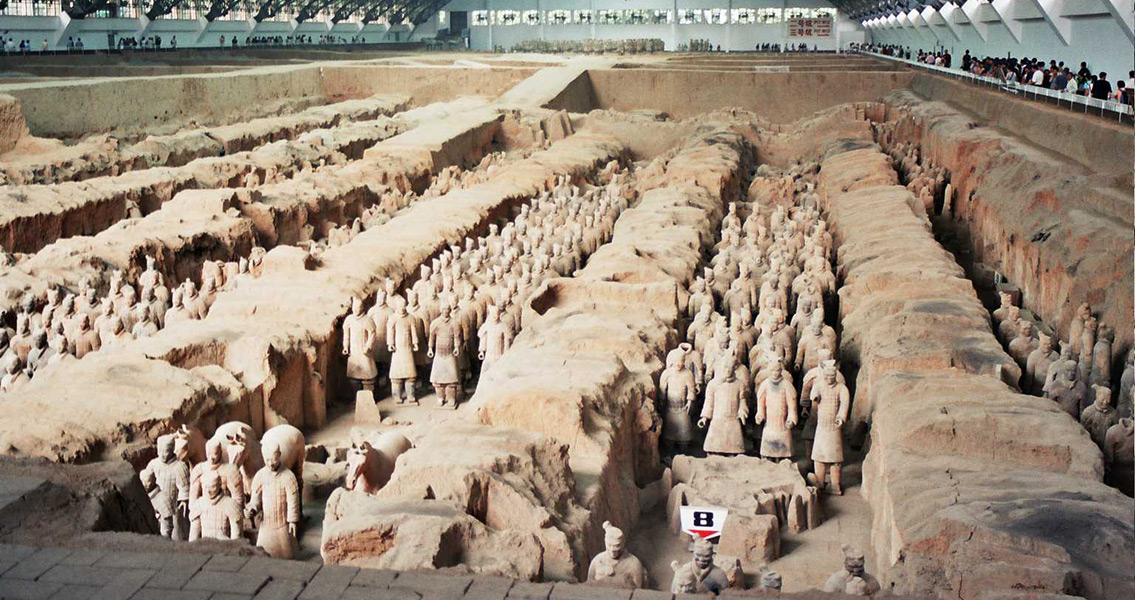
Guardian. “We now think the Terracotta Army, the acrobats and the bronze sculptures found on site, have been inspired by ancient Greek sculptures and art.” Lukas Nickel, from Vienna University, told the Guardian: “I imagine that a Greek sculptor may have been at the site to train the locals.” Ying Zheng, who took the name of Qin Shi Huang Di—the First Emperor of Qinook, ascended to the throne in 246 BCE when he was only 13-years-old. By 221 BCE, he had successfully unified a number of warring kingdoms. During his reign, Qin standardized coins, measures and weights; interlinked the kingdom’s states with roads and canals; and built the first Great Wall. According to the writings of the court’s historian Siam Qian, Qin ordered the construction of the mausoleum soon after becoming emperor. Over 700,000 laborers labored on the project, which was completed in 209 BCE, a year after Qin’s death. Archaeological finds from the site have already revealed the extent of early trade. The Silk Road, with numerous caravan stops and trading posts, was established in the third century during the Han dynasty. However, a number of the trade routes had already been in existence for years. Chinese historians documented the arrival of Roman traders when Augustus was emperor of Rome (27 BCE to 14 CE), during which time Chinese silk was flooding into Rome. Writers like Seneca even denounced those who wore it as immoral and effete. The research is discussed in the documentary, The Greatest Tomb on Earth, sponsored jointly by the BBC and National Geographic. ]]>

Categories
Breaking News

Ancient Footprints Persevered in the Shadow of African Volcano

Australopithecus afarensis. Engare Sero is unique in that the sheer number and diversity of the prints offers an amazingly detailed snapshot of our ancestors’ lives in Africa. William Harcourt-Smith, a paleoanthropologist at the City University of New York, told National Geographic: “It’s a very complicated site, one area where there are so many prints, we’ve nicknamed it the ‘dance hall,’ because I’ve never seen so many prints in one place. It’s completely nuts.” The Engare Sero site exists in large part because of the Ol Doinyo Lengai, a volcano which looms above Lake Natron. Known for its thin, silvery lava, the 7,650-foot-tall volcano is a pilgrimage destination for the Maasai people, who go there to plead with their god Engai for cattle, rain and children. The ash-rich mud that retains the footprints was originally wash off from the volcano, traveling downhill to eventually form the mudflats. In a matter of just hours to days, the surface of the mud dried out, capturing the prints in a cracked crust. A later flow of debris buried the footprints between 10,000 and 12,000 years ago, covering them for millennia. Local villagers discovered a small number of the footprints sometime before 2006, but the site didn’t receive scientists’ attention until 2008, when a conservationist from Pennsylvania, vacationing near Lake Natron (just several hundred yards away from the footprints), happened upon the prints. Discovering when the footprints were actually left at Engare Sero proved to be an enormous challenge for researchers, but once they realized that water had carried the ash to Engare Sero determining the footprints’ age became possible by determining the mud’s youngest crystals. The study was recently published in the journal Palaeogeography, Palaeoclimatology, Palaeoecology. ]]>

Categories
Breaking News

25 Dead Sea Scroll Fragments Translated and Published

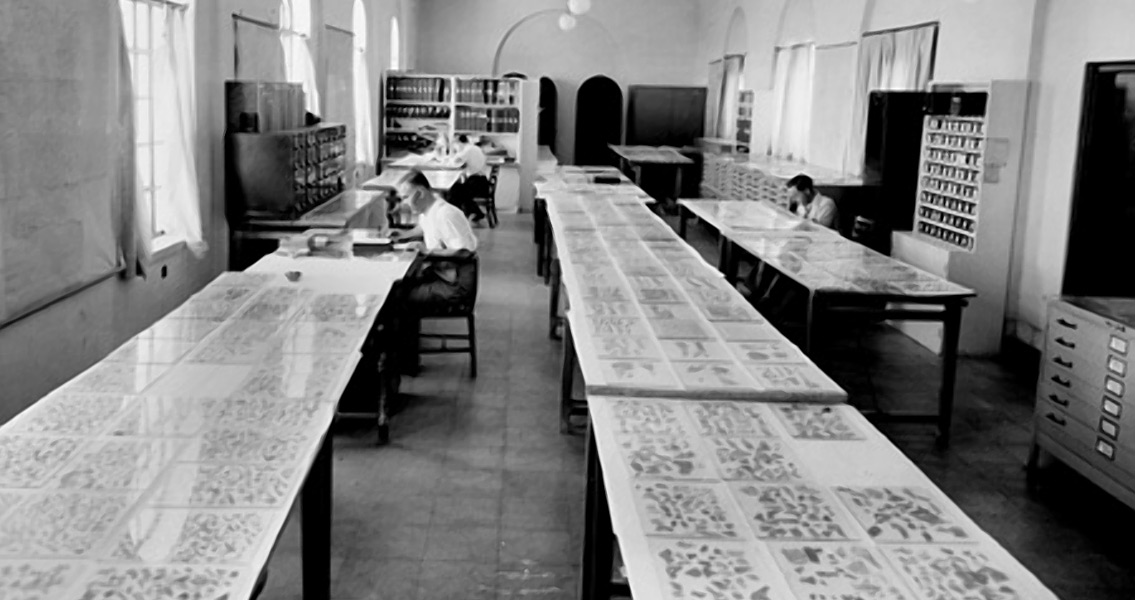
Dead Sea Scrolls has been published, providing a priceless look into the state of the Hebrew Bible nearly 2,000 years in the past. According to a recent story in Live Science, archaeologists have announced the publication of two books containing the fragments. Within these excerpts, researchers uncovered some of the promised rewards for the Hebrews that abided by the rules God put down for them so famously in the Book of Leviticus in the form of the Ten Commandments, among countless others. These fragments, discovered on the West Bank within caves at the archaeological site of Qumran, come from a wide array of books of the Torah, the Hebrew Bible – known as the Old Testament to those of the Christian faith. In addition to the books of Genesis, Exodus, and Leviticus, as many as 15 other books of the Torah are represented in these scroll fragments, including the books of Deuteronomy, Samuel, Ruth, Kings, Micah, Nehemiah, Jeremiah, Joel, Joshua, Judges, Proverbs, Numbers, Psalms, Ezekiel and Jonah. One of the two books, published by The Schøyen Collection, international collectors of landmark cultural manuscripts, includes newly-translated passages from the Book of Leviticus that delineate God’s promises of reward to the Hebrews. For observing the Sabbath and following the rest of the Ten Commandments, the fragment promises the faithful that their fields will be fertile and without drought, and that they will be blessed with peace: “I will look with favor upon you, and make you fertile and multiply you,” the fragment concludes. These scroll fragments are among the most ancient biblical manuscripts ever to be discovered by archaeologists. Originally placed within the caves of Qumran to safeguard them against vengeful Roman armies sent to quell revolution in Judea during the Second Temple period, the scrolls themselves have been radiocarbon dated to dates as ancient as 200 BCE. A combination of radiography and paleographic dating techniques has resulted in an age range of 385 BCE to 82 CE. Nearly 900 manuscripts were uncovered in Qumran during archaeological study ranging from 1947 to 1956. Who wrote the Dead Sea Scrolls is largely unknown. Many point to the Essenes as the scribes of these manuscripts, a sect of devout Jews that lived under Roman rule in Judea. Research and investigation is still underway on these fragments to ensure that they are not forgeries. Once questions of authenticity are answered fully, these fragments are likely to be incorporated into existing museum exhibits both in Israel and around the world. While the arid conditions of the Judean desert helped to preserve these scroll fragments for nearly two millennia, exposing them to handling and study has led to an increased risk of deterioration. Digital imaging techniques developed by tech giant Google have contributed to the distribution of virtual copies of these fragments around the world to aid in their study. Providing digital versions of these scrolls has enabled Israeli archaeological officials to preserve the physical fragments while still subjecting them to rigorous academic study. ]]>

Categories
Breaking News

Ancient City Gutted By Fire in Three Hours, Study Says

LiveScience, researchers from Israel’s Weizmann Institute of Science created their own mud bricks by taking soil, removing any large stones, and then creating a mixture of water, straw, and mud. This mixture was then poured into brick molds and cured in an oven. This method of construction was popular in antiquity and continues to be popular within the region today thanks to how cost-effective it is, according to Ruth Shahack-Gross, one of the scientists involved in the project, as the main building material is soil that can be sourced from the local landscape. Analysis of the remains of burned bricks at Tel Megiddo revealed that they reached a core temperature of approximately 600 degrees Celsius (more than 1,100 degrees Fahrenheit). Researchers subjected their own bricks to intense heat in an oven to re-create the conditions the ancient city’s bricks experienced, running the experiment on several different types of bricks made with varying construction ratios and of different shapes and sizes. The research results indicated that the bricks reached the temperature threshold in as little as two to three hours. Surprisingly, the amount of straw used in constructing mud bricks had little influence on how long it took for modern bricks to reach a core temperature of 600 C. Smaller bricks reached this target temperature more quickly than larger bricks, which was expected. Researchers said that the fire could have spread even faster thanks to items within Tel Megiddo’s dwellings such as bedding, oil, matting, furniture and wooden support beams. The new research study is the first of its kind, and to that effect many scientists have suggested follow-up experiments to account for any number of other factors that can contribute to a fire. The age of the bricks being subjected to heat may play a role, as older bricks with voids within them from decayed straw may not burn at the same rate as new bricks. Additionally, with fire being inherently chaotic, temperature alone may not be the best way to measure an event such as an entire city burning to the ground. In real-world situations, mud bricks may not be heated from all sides such as in the experiment but from only one side, depending on the location of the fire’s ignition point. Shahack-Gross stated that the limitations of this initial experiment are indeed clear, and that the research team is fully aware that conducting experiments in a laboratory under controlled conditions cannot truly mimic the events of the past. The research study, recently published in the journal Antiquity, can be found online here]]>