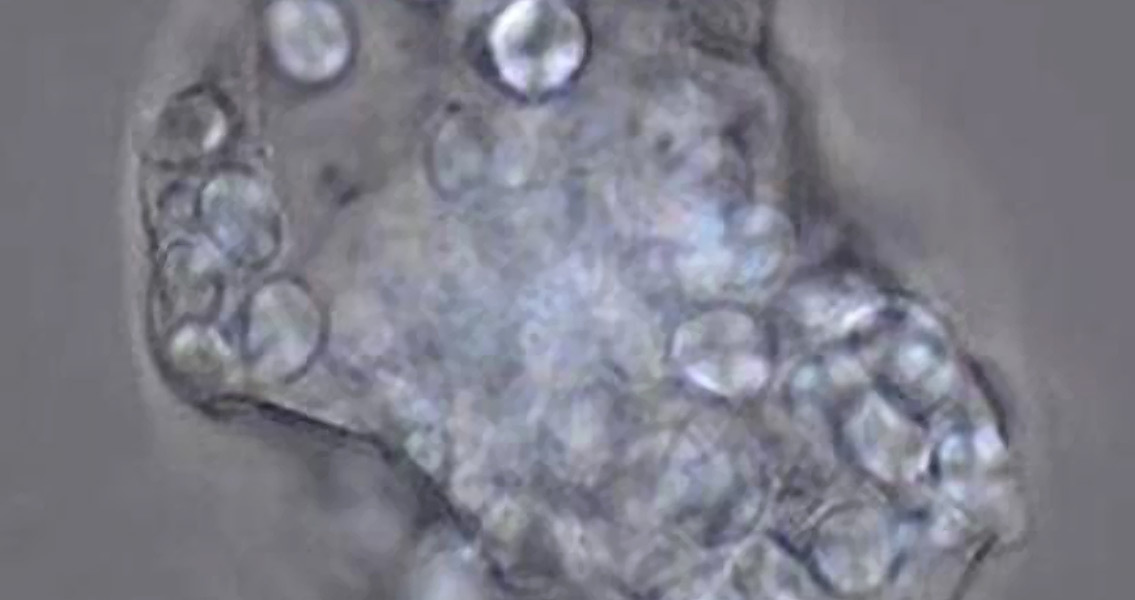
The Science of Nature. Traces of raw animal tissue, uncooked starch granules indicating consumption of grasses, pollen grains from a species of pine and insect fragments were among the other microfossils extracted from the hominin molar. All of these were uncharred and showed no evidence of inhalation of microcharcoal, in other words, they displayed none of the characteristics usually associated with having been in close proximity to fire. The teeth investigated by the team come from one of the two oldest sets of hominin remains found in Europe. The piece of jawbone, discovered at Sima del Elefante in 2007, is between 1.1 and 1.2 million years old. The site itself is one of several in the region covering a period between 300,000 and 1.2 million years old. Exactly when early humans first started to use fire is hotly contested, and the new study seems to add to the debate. Some researchers suggest habitual fire use started as far back as 1.8 million years ago, while others argue it happened as recently as 300,000 – 400,000 years ago. Some have argued that hominins mastered fire while still in Africa, but didn’t bring the skills with them when they reached Europe, something the lack of fire evidence at Sima del Elefante would seem to support. The earliest definitive evidence of fire use in Europe is 800,000 years ago at the Spanish site of Cueva Negra, and at Gesher Benot Ya’aqov, Israel, a short time later. Taken together, a timeline emerges suggesting that the development of fire technology in Europe occurred sometime between 800,000 and 1.2 million years ago. Dr Karen Hardy, lead author and Honorary Research Associate at the University of York and ICREA Research Professor at the Universitat Autònoma de Barcelona, said in a press release: “Obtaining evidence for any aspect of hominin life at this extremely early date is very challenging. Here, we have been able to demonstrate that these earliest Europeans understood and exploited their forested environment to obtain a balanced diet 1.2 million years ago, by eating a range of different foods and combining starchy plant food with meat.” According to Dr Hardy, the results follow ideas about the development of certain characteristics in humans. “This new timeline has significant implications in helping us to understand this period of human evolution – cooked food provides greater energy, and cooking may be linked to the rapid increases in brain size that occurred from 800,000 years ago onwards.” “It also correlates well with previous research hypothesising that the timing of cooking is linked to the development of salivary amylase, needed to process cooked starchy food. Starchy food was an essential element in facilitating brain development, and contrary to popular belief about the ‘Paleodiet’, the role of starchy food in the Palaeolithic diet was significant.” Image courtesy of Karen Hardy ]]>
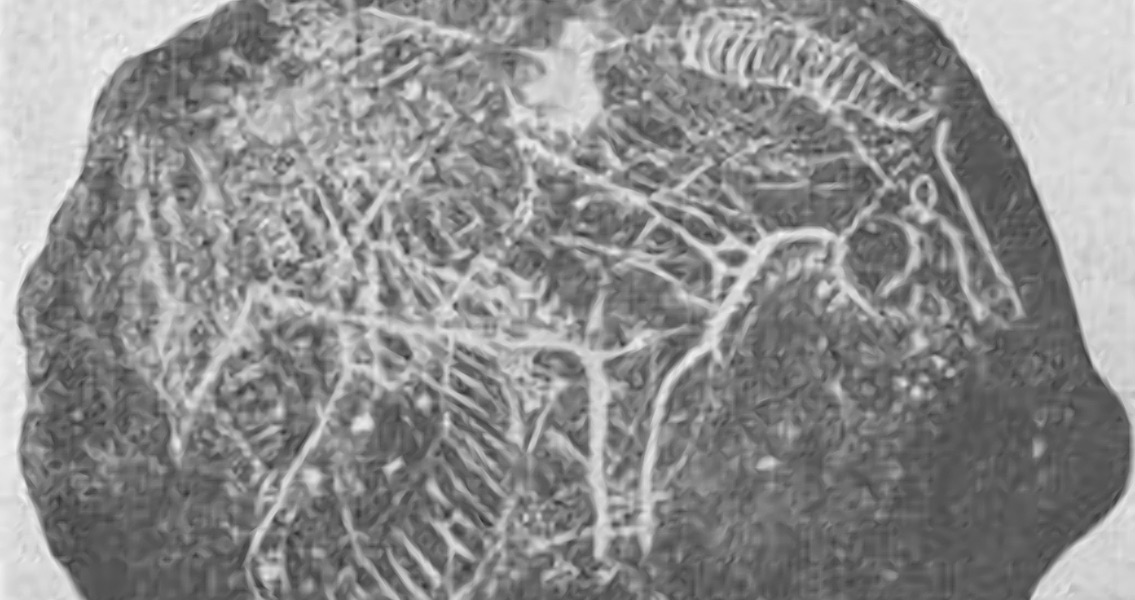
The Independent. The problem is that he can’t know for sure just how old these rock carvings are. A major hurdle – one that can’t be easily overcome – is the fact that sanctions are imposed on Iran by the United States, posing difficulties in data access and analysis tools. Despite these disadvantages, Dr. Naserifard has spent more than a decade in his journeys across the length and breadth of Iran, claiming to have found 50,000 ancient engravings and paintings. Despite the lack of help from the United States, archaeologists from other countries around the world have occasionally pitched in to help Dr. Naserifard. Such an instance occurred in 2008 when Dutch researchers accompanied the Iranian on a visit to the area, evaluating a series of drawings that had been made with the use of cups and determining that they could have been made as much as 40,000 years in the past. Meanwhile, one of the most noteworthy finds is that of the engraved figure of an ibex, a type of deer with long, curled horns. The piece is thought to be 4,000 years old and but one of several similar pieces of prehistoric art that adorn the trail. These discoveries are slowly but surely building evidence for a hypothesis that modern humans began to develop common art traditions well before any diaspora from the Middle East, Dr. Naserifard remarked. He described his excitement in finding these ancient works of art as comparable to “finding treasure.” However, US sanctions have deprived Dr. Naerifard and colleagues of access to much-needed technology used in analyzing and dating samples. The archaeologist has high hopes that such technology can be brought into Iran in order to provide better, more accurate data concerning these engravings. With the US ban on fissionable materials being sent to Iran, scientists within the country lack analysis tools that rely on uranium to conduct much of their research. The technology is being used in other regions of the world as an alternative to radiocarbon dating, as it provides accurate estimations as to the date an object was created. Despite the many limitations his research has faced as a result of the ban, the archaeology professor says he has plans to continue his work, involving other archaeological institutions from around the globe in order to help document his many finds. Hopes are that such international attention may provide avenues for a more accurate date analysis of the ancient art. ]]>

HMS Terror and HMS Erebus, led by explorer and Royal Navy officer John Franklin, left Britain to search for the last section of the Northwest Passage. When both ships became icebound, all 129 men were lost, but exactly how and why they perished has been an enduring mystery. In a new study, researchers chemically mapped the fingernail and toenail of one of the dead men and found new evidence regarding Franklin and his crew’s tragic fate. A number of researchers have theorized that lead poisoning – caused by the metal leaching from the food tins or water pipes found on the ships – had caused the men’s death. Lead exposure can bring on symptoms which include neurological problems, that could have easily doomed the explorers. But now, this latest evidence shows one of the few bodies ever found had a zinc deficiency, suggesting that it was this deficiency, not lead poisoning, that led to his death. “There’s increasing evidence that lead was not the issue,” Jennie Christensen with TrichAnalytics in North Saanich, Canada, says in an article published in Nature. Christensen and her team measured the levels of zinc, copper, and lead at different locations along at thumbnail and toenail from John Hartnell, a crew member who, along with two others, died and was buried on Beechey Island where the expedition overwintered in 1845 and 1846. After studying the accumulated growth of Hartnell’s finger and toe nails, the team was able to identify week-by-week changes as they occurred in his body. “You can actually see what the levels of lead were with John Hartnell, over the period of time he was present on the expedition. That is a pretty unique insight,” Keith Millar, with the University of Glasgow, says in Nature. Christensen’s team utilized a synchrotron particle accelerator located in Saskatoon, called the Canadian Light Source, along with other instruments to construct a picture of the metals inside of Hartnell over a period of time. They discovered the crewman suffered from a serious zinc deficiency, which would have affected his immune system, leaving him considerably more vulnerable to pneumonia and tuberculosis – the very diseases that are believed to have killed him. Hartnell had high lead levels only within his last few weeks of life, when his body, dying at this time, would have released the lead stored in his bones into his blood and ultimately his nails. “The lead theory is pretty much dismantled by this point,” Ron Martin, from the Western University in London, Canada, tells Nature. In 2013, Martin analyzed the bone fragments of several crewmembers (including Hartnell) and reached the conclusion that there was no spike of lead exposure during the expedition, but rather, the men had been exposed to lead consistently throughout the course of their lives. No samples from any of the other members of the expedition are available, so the research can’t be applied beyond Hartnell’s death. However, a zinc deficiency may help to explain why other expeditions to the Arctic suffered poor health. The findings have been published in the Journal of Archaeological Science. ]]>

D. vorax, with its incredibly powerful bite and sharp, bone-crushing teeth, put a new spin on the theory that marsupials originated in South America, instead suggesting the origin point was both much further north – and about 10 to 20 million years earlier – than previously thought. Gregory Wilson, vertebrate paleontology adjunct curator from Seattle’s Burke Museum and lead researcher on the study, remarked that D. vorax absolutely “crushes the mold” when it comes to what scientists expect from mammals of the time period. With most other mammals from the era about the size of a shrew, D. vorax would have been a “fearsome predator” Wilson stated – one whose prey included some of the smaller dinosaur species. Discovered in the Hell Creek Formation, D. vorax fossil specimens were found in rock dating to between 59 million and 66 million years in the past. This isn’t the first instance of evidence pointing to creatures of this kind in North America though; based on previous finds, which were primarily fragmented teeth or jawbones, scientists have established something close to 60 different species of marsupial-like animals classified as metatherians from the entire Cretaceous. However, these new findings are radically different as they entail a partial snout and upper jawbone, and a nearly complete skull. These D. vorax parts have never been seen before now and have revealed that the creature is the largest metatherian known to have lived during the Cretaceous. While perhaps not large by the standards of the gargantuan dinosaurs roaming the Earth at that point, D. vorax would have weighed anywhere from just over 5 pounds to as much as 11-and-a-half pounds, the scientists have concluded. Even more interesting is the possible bite force the creature had, based on computed tomography (CT) scans of the fossilized remains. After determining where the jaw muscles would have been attached to the creature’s skull, and then comparing these muscles with modern animal analogues whose bite forces are already recorded, the researchers revealed that D. vorax would have had the strongest mammal bite strength ever. Most similar to modern hyenas and felines, the metatherian’s bite was strong enough to bite through bone. D. vorax could have easily bitten through hard shells of marine crustaceans and even small-sized dinosaurs. Wear patterns on the creature’s teeth bear out these hypotheses, scientists remarked. The new research study, published in the journal Nature Communications, can be found online here]]>


Journal of Experimental Biology, explains why human’s walk the way they do Humans are very much set in the way they walk, something which obscures the fact that our stride is actually pretty curious. To Webber it is a particularly pertinent issue. Barefoot runners run in a way that sees them land on the middle or balls of their feet instead of their heels, a stride which would feel unnatural when walking. “Humans are very efficient walkers, and a key component of being an efficient walker in all kinds of mammals is having long legs,” Webber explains in a press release from the University of Arizona. “Cats and dogs are up on the balls of their feet, with their heel elevated up in the air, so they’ve adapted to have a longer leg, but humans have done something different. We’ve dropped our heels down on the ground, which physically makes our legs shorter than they could be if we were up on our toes, and this was a conundrum to us (scientists).” Webber suggests our stride can be explained by limb length. Key to his explanation is the idea that humans move like an inverted swinging pendulum. The body essentially pivots about the point where the foot meets the ground, with the centre of pressure sliding across the length of the foot from heel to toe as we take a step. This means that the true pivot point occurs in the centre of the foot, but at a ‘virtual point’ several centimetres below the ground. Our heel to toe stride then, extends the length of our ‘virtual legs’: the points we pivot around which are longer than our actual legs. “Humans land on their heel and push off on their toes. You land at one point, and then you push off from another point eight to 10 inches away from where you started.” Webber says in the press release. “If you connect those points to make a pivot point, it happens underneath the ground, basically, and you end up with a new kind of limb length that you can understand. Mechanically, it’s like we have a much longer leg than you would expect.” Webber and his team reached their conclusion after monitoring study participants on a tread mill. They compared those who walked normally with those they’d asked to walk toe first. They quickly observed that those who had to walk toe first were slower, and used 10% extra energy in their strides. “The extra ‘virtual limb’ length is longer than if we had just had them stand on their toes, so it seems humans have found a novel way of increasing our limb length and becoming more efficient walkers than just standing on our toes,” Webber said. “It still all comes down to limb length, but there’s more to it than how far our hip is from the ground. Our feet play an important role, and that’s often something that’s been overlooked.” Ancient footprints preserved in volcanic ash in Tanzania show that ancient hominins had a heel to toe stride up to 3.6 millions years ago. Nevertheless, our feet have changed over the years. Early bipeds had longer feet than modern humans – 70 percent of the length of the femur compared to 54 percent in modern humans, which likely helped them become very fast, efficient walkers. Webber suggests that as modern humans evolved the heel first style of walking their feet got proportionally smaller, allowing us to become better runners, possibly as a means to evade predators. “When you’re running, if you have a really long foot and you need to push off really hard way out at the end of your foot, that adds a lot of torque and bending,” Webber said. “So the idea is that as we shifted into running activities, our feet started to shrink because it maybe it wasn’t as important to be super-fast walkers. Maybe it became important to be really good runners.” ]]>


Sapajus libidinosus) uses rocks for a variety of purposes, such as cracking open a seed or fruit to extract the edible part. In addition, they hammer rocks against stone outcroppings, with the clear intention of smashing them. The process frequently produces sharp-edged conchoidal flakes with smooth rounded facets resembling the shape of a scallop shell. Crucially, the flakes are discarded by S.libidinosus, they are not used as tools. The monkeys performing this process have been observed licking and sniffing the quartz dust created by the rock fragmentation, leading scientists to speculate that the routine is performed for a dietary reason – perhaps in search of the trace element silicon, or to extract lichen from the rocks. A team of researchers from Sao Paulo University’s Psychology Institute (IP-USP), in collaboration with colleagues at the University of Oxford’s Archeology School and University College London’s Archeology Institute in the UK, have analysed the inadvertently produced rock fragments as part of the Thematic Project “Tool use by wild bearded capuchin monkeys (Sapajus libidinosus)”. Their results have been published in the online edition of the journal Nature. “We discovered that some of the stone flakes produced accidentally by these capuchin monkeys were very similar to Oldowan stone tools”, said Tiago Falótico, a postdoctoral fellow of IP-USP and one of the authors of the study, in a press release. First identified in Tanzania, Africa, Oldowan tools are among the oldest stone tools ever found and considered the earliest evidence of cultural behaviour, dating to as far back as 2.6 million years ago. Named after Olduvai Gorge, where they were first found, the tools are usually associated with Homo habilis, one of the earliest species of the Homo genus. The stone flakes and other materials gathered by Falótico and principal investigator Eduardo Ottoni over the course of several years were analysed by Tomos Proffitt, a researcher at Oxford University’s Archaeology School and expert on Oldowan tools, and Michael Haslam, a researcher at UCL’s Archaeology Institute. Proffitt and Haslam’s results showed that the stone flakes produced by the capuchin monkeys had identical characteristics and morphology to deliberately produced hominin tools. Half of the flakes exhibited conchoidal fractures, an attribute usually associated with the hominin production of tools. They also displayed varying levels of percussive damage as well as sharp edges, again, characteristics associated with hominin tools. “Paleoanthropologists use the characteristics of sharp-edged stone flakes both to distinguish them from naturally broken stones and to attribute them to the hominins that produced flakes with these shapes intentionally in order to use them as tools,” Falótico said. The fact the capuchin monkeys produced flakes which are indistinguishable from hominin produced ones, however, opens up a range of interesting questions about how we read the paleontological record. “When sharp-edged flakes are found at an archeological site, it’s usually easier to attribute them to hominins because the same digs generally also turn up many stone cores and signs of human occupation, such as fires,” Falótico said. “However, when they’re found in isolation with few or no other archeological artifacts, we should bear in mind that they might not necessarily have been produced by human ancestors.” ]]>

Western Digs: “The conventional thinking left a lot of room for speculation about when and why people might have abandoned the area. The new study doesn’t explain why violence occurred at the site, but it does provide a mechanism for the abandonment. Aside from a small research project conducted in the 1980s, very little archaeological work had been done since the 1930s.” When the site was originally studied approximately 80 years ago, archaeologists discovered a large amount of evidence, including burnt roof beams and charred areas on the wall plaster. One of the structures, the one that became known as Montezuma Castle, was built inside a natural alcove on the face of the limestone cliff, about 90 feet (27 meters) above the canyon floor. The other, erected on the ground next to the canyon’s north wall, was named Castle A. The charred remains of both buildings led many to the conclusion that the buildings burned after they had been abandoned. Later, however, that changed, and some experts came to think the sites had been burned intentionally by the Sinagua as part of some unknown ritual performed as they were leaving. This new research was undertaken to see if new archeological methods and technology could uncover information about why the dwellings were abandoned. Guebard, along with his colleagues, reviewed notes from the original excavations, studied features of the site as well as artifacts which included roof beams, ceramics, and a variety of other architectural elements. Additionally, Guebard solicited several tribal groups whose ancestors were from the Verde Valley, for their input. “Generally speaking, we spend a lot of time and effort working closely with culturally associated Native American tribal governments”, Guebard says in Western Digs. “They review many of our projects and provide important feedback that helps to develop project objectives.” Following these lines of evidence, a completely new picture of the final days at the cliff dwellings started to become clear. For example, new dating of the charred plaster indicates the fire occurred between 1375 and 1395, while the pottery from the dwelling showed signs of having been made in styles from that same time period, suggesting that Castle A was inhabited right up to the time it was burned. Even more persuasive are the four bodies. Discovered in the original excavation in the 1930s, at the time it was believed that the deceased had been buried well before the fire, but a closer look at the earlier research reveals the dead had suffered trauma before their deaths, such as bones with cut marks, burn marks, and skull fractures in three of the four bodies. “We learned that the interior portion of each fracture displayed evidence of singeing on live bone,” Guebard is quoted as saying in the article. “So, the sequence of events seems to be blunt trauma followed closely by burning. It is also interesting to note that all of the remains with reported evidence of trauma and burning were found in a single grave.” The research was corroborated by the oral histories of the Native Americans, which describe Castle A being attacked by rival bands seeking to drive the Sinagua away. “Years before starting the project, I had heard from tribal members that there were stories about violence at the site”, Guebard explains in the article. “So as I started to realize that the archaeological evidence was supporting violence at Castle A, I felt it would be helpful to get their unique perspectives on the project and on my interpretation of the data. What was interesting is how close the oral histories match up with the archaeological evidence, but also how each story provided a unique and different perspective of the event represented by the archaeological evidence.” A Hopi Bearstrap Clan member recounted stories of Sinagua villagers running into Montezuma Castle and then pulling up the ladders, while invaders set it on fire. Members of the Dil zhe’e, also known as the Tonto Apache, recount the story of how their ancestors joined with the Yavapai, and together they evicted the Sinagua by setting fire to the dwellings. ]]>