Categories
Breaking News

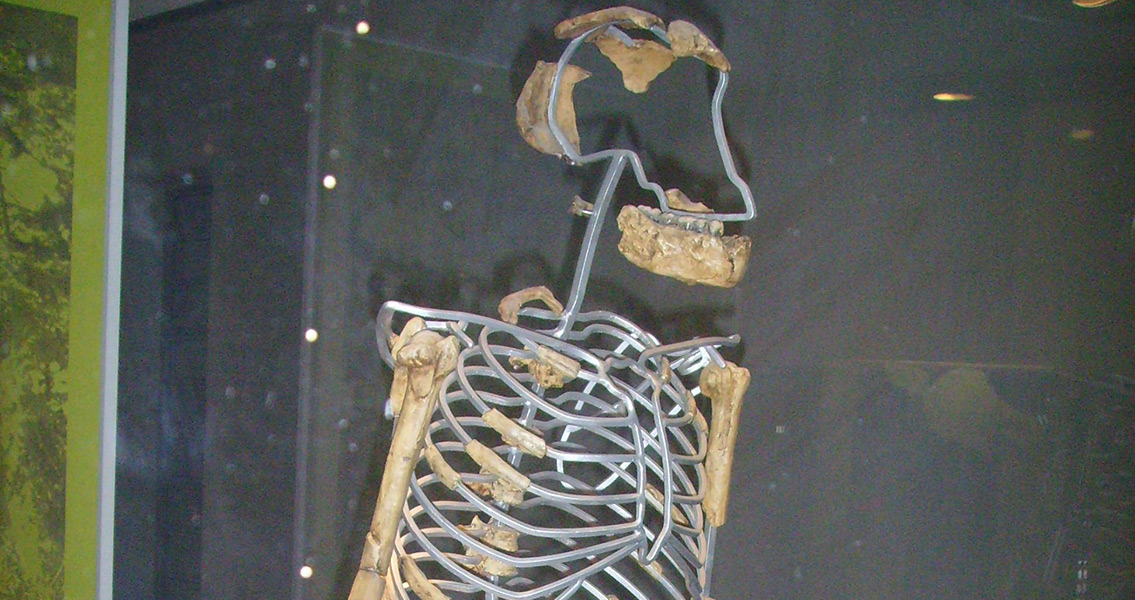
Research Shows “Lucy” Could Walk Upright and Swing Through Trees

New Scientist. The debate may finally be settled based on the work completed by Christopher Ruff with Johns Hopkins University School of Medicine in Baltimore, Maryland, along with his colleagues. Using CT scans taken of Lucy’s skeleton, they studied the cross sections of both (left and right) upper arm bones along with the left thigh bone — the thigh bone from the right leg was never found. What the team discovered was that Lucy’s arm bones had thick walls, suggesting unusual strength. Bone strength is considered a “use it or lose it” characteristic directly related to an animal’s behavior and not inherited; meaning that at least some australopiths were at home on the ground and in trees. “It would not be present unless Lucy mechanically loaded her upper limbs more than most modern humans,” Ruff told New Scientist. “Ours is the best evidence to date that A. afarensis actually spent a significant portion of their time engaged in arboreal behaviour.” Over the course of a person’s life, bone structure changes depending on the way we use, or don’t use, our bodies. Human thigh bones typically have thicker walls due to all of our walking, our arm bones however, have relatively thin walls because we seldom use them to carry or lift our full body weight. Chimpanzees on the other hand develop arms with thick-walled bones because of their tree climbing. Previously, Ruff and his team discovered injuries to Lucy’s skeleton that indicated she may have died from a high fall, most likely from a tree. That study also suggested that Lucy spent a significant amount of time climbing trees, but it was far from conclusive. “I could fall out of a tree and present the same injuries as they suggest Lucy had,” Harcourt-Smith says in the article. The study has been published in the online journal PLOS One. ]]>
Categories
Breaking News

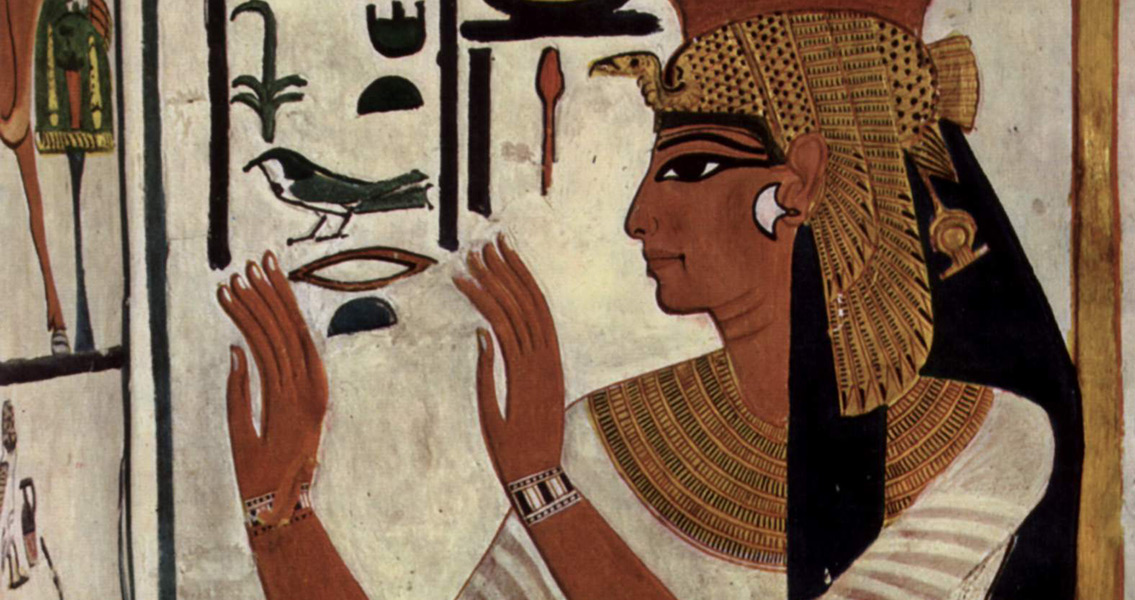
Long Discovered Mummified Legs Belonged to Queen Nefertari

Categories
Breaking News

Rare Medieval Black Death Burial Pit Discovered in England

The Telegraph. A total of 48 sets of skeletal remains – 21 of them belonging to children – were found at the site, which at one time was a monastery hospital. Researchers say that it seems quite clear that the local community was overwhelmed when the Black Death came to the region, forcing them to cope in the only way they could – by burying their dead in one mass grave. One of the worst plagues to ever blaze across humanity, the Black Death claimed the lives of anywhere from 75 to 200 million people in Europe from 1346 through 1353; according to historical records, Lincolnshire was struck by the disease in the early months of 1349. The Black Death as a whole completely changed the social landscape of Europe in a myriad of ways in addition to the massive loss of life. Sheffield University researchers partnered with scientists from Canada’s McMaster University, sending tooth samples from the deceased in order to extract ancient DNA from the pulp of these teeth. Analysis confirmed the presence of Yersinia pestis, the bacterium behind the Black Death, according to Sheffield University’s Dr. Hugh Wilmott. Dr. Wilmott, from the university’s Department of Archaeology, remarked that while the death toll in England from the disease was astronomical – up to 50 percent of the population – it’s extremely rare to find multiple graves within the country. For the most part, local communities seemed to simply treat fatalities from the Black Death in an ordinary way – in fact, the only other two sites dating to the fourteenth century where the Y. pestis bacterium has been found were London cemeteries with accompanying historical documentation detailing how the burgeoning numbers of urban dead necessitated the opening of new burial grounds. The discovery of this completely unexpected and previously unknown fourteenth century burial ground in the rural reaches of Lincolnshire stands as a unique event in the history of the Black Death in England, the scientist stated. If anything, it clearly illustrates how the community at the time was completely unprepared to withstand such a terrible threat. More analysis is slated to be undertaken, with research into the skeletal remains as a whole. This will enable researchers to identify the gender and age of each set of remains, as well as create a detailed study of any other illnesses and ailments they might have suffered from, using the telltale signs left behind in their skeletal structure according to the University of Sheffield’s Dr. Diana Mahoney Swales. ]]>

Categories
Breaking News

Thousands of Animal Artifacts Entombed with Emperor

Categories
Breaking News

New Research Reveals Existence of Ancient Antarctic Beetles

ZooKeys, is available here ]]>

Categories
Breaking News

New Evidence There Was Life Before Oxygen

Geology, looks like it could change that. The team of researchers, including Andrew Czaja; an assistant professor of geology at University of Cincinnati, Nicolas Beukes from the University of Johannesburg and Jeffrey Osterhout; a recently graduated master’s student from UC’s department of geology, present new evidence for bacteria found fossilised in two separate locations in the Northern Cape Province. “These are the oldest reported fossil sulfur bacteria to date,” said Professor Czaja in a press release. “And this discovery is helping us reveal a diversity of life and ecosystems that existed just prior to the Great Oxidation Event, a time of major atmospheric evolution.” The 2.52 billion year old sulfur oxidising bacteria were abundant in deep water areas of the ocean in a geologic time known as the Neoarchean Eon. Described by Czaja as large and spherical shaped, the smooth walled microscopic structures were much bigger than most modern bacteria, but similar in size to some modern single-celled organisms that live in deep water, sulfur-rich ocean settings today. “These fossils represent the oldest known organisms that lived in a very dark, deep-water environment,” explains Czaja in the University of Cincinnati press release. “These bacteria existed two billion years before plants and trees, which evolved about 450 million years ago. We discovered these microfossils preserved in a layer of hard silica-rich rock called chert located within the Kaapvaal craton of South Africa.” The oxygen deficiencies in the earth’s atmosphere billions of years ago have led scientists to presume that any life would have had to live in mud at the deepest reaches of the ocean. Such lifeforms would have been able to survive without oxygen or sunlight. According to Czaja, the discovery made by his team marks the first direct evidence for these earliest life forms. Scientists have theorised previously that South Africa and Western Australia were once joined together in a supercontinent called Vaalbara. Based on radiometric dating and geochemical isotope analysis, Czaja suggests the fossils could have formed in this early Vaalbara supercontinent in an ancient deep seabed containing sulphate from continental rock. Based on this dating, the fossil bacteria would have been thriving just before the time other shallow water bacteria began creating more oxygen through photosynthesis. “We refer to this period as the Great Oxidation Event that took place 2.4 to 2.2 billion years ago,” said Czaja. Just as modern bacteria recycle decaying plant matter into minerals and gases, Czaja and his team suggest the Neoarchean bacteria could have performed a similar role, consuming volcanic hydrogen sulfide and emitting sulfate. “While I can’t claim that these early bacteria are the same ones we have today, we surmise that they may have been doing the same thing as some of our current bacteria,” explained Czaja. “These early bacteria likely consumed the molecules dissolved from sulfur-rich minerals that came from land rocks that had eroded and washed out to sea, or from the volcanic remains on the ocean’s floor.” Scientists believe that the origin of sulfur-oxidising bacteria was a pivotal moment in the evolution of life on earth. Determining exactly when these bacteria came into existence therefore has the potential to be hugely informative. “…these fossils tell us that sulfur-oxidizing bacteria were there 2.52 billion years ago, and they were doing something remarkable.” Image courtesy of Aaron Satkoski, UWM postdoc on the excursion.]]>

Categories
Breaking News

Low-Mass Supernova May Be Behind Formation of Solar System

here ]]>

Categories
Breaking News

Amphipolis Site Could Harbor Second Monument

Categories
Breaking News

Bandicoot Fossils Show Marsupials were Ancient Survivors

Lemdubuoryctes aruensis however, the remarkably archaic new bandicoot fossil discovered by Alpin, didn’t live in a rainforest but on an expansive savannah plain stretching from Australia to New Guinea at the time of the last glacial maximum. “While retreating rainforests and spreading grasslands did provide a backdrop for ecosystem change 5-10 million years ago. The Australian fauna likely adapted via changing its distribution rather than undergoing wholesale extinction and replacement,” Michael Westerman, with La Trobe University in Australia, says in the article, adding, “This agrees with our results from DNA, which indicate that modern desert-living bandicoot groups pre-date the onset of aridity by as much as 40 million years.” These timeframes coincide with the proliferation of Eucalyptus woodlands in Australia’s interior. “Bandicoots, like other Australasian marsupials, probably occupied a range of different habitats over many millions of years. However, our study has further implications for future conservation. Arid zone bandicoots are amongst the most vulnerable mammals in Australasia today, with multiple species having gone extinct within the last 100 years. By demonstrating their profound evolutionary antiquity, we can thus serve to highlight how extremely urgent it is to protect these living fossils as part of Australia’s unique biodiversity”, Dr. Kear is quoted as saying in the Heritage Daily article. The study has been published in Scientific Reports. ]]>

Categories
Breaking News

Nazi Networks in Post War Germany Under Investigation

Adolf Eichmann, were eventually captured, while others managed to evade justice for the rest of their lives. While many who’d worked in the higher echelons of the Nazi regime were either killed in the Second World War or prosecuted at the Nuremberg Trials, lower level party members or soldiers were often allowed to continue unpunished, forging careers in Germany’s post war society. ]]>