The Times of Israel, dig leader Gilad Itach remarked that the figurine was discovered on the very final day of excavations, just prior to modern construction efforts commencing at the site. The pot itself is relatively characteristic of the period, Itach stated, but the statue that was added after it had been created is unique, as there have never been any discoveries of such a figurine in previous digs. Archaeologists say that the sculpture features an incredible attention to detail for its age. The arms and legs, as well as the face, seem to have been added on to the neck of the jug which was used as the base for the formation of the upper torso of the figure. Along with the figure, which measures seven inches in height, a large number of other items were found as well. Sheep and donkey bones were discovered at the dig site, in addition to an ax head, arrowheads and daggers. The items were likely used as burial goods, Itach explained, probably for the grave of one of the Canaanites who inhabited the region during the Middle Bronze Age. It would have been customary to provide a large number of funeral goods for prominent members of the community, the researcher remarked, as beliefs were that the objects individuals were interred with would have traveled with them to the next world. To Itach’s knowledge, this is the first burial to feature such a wide assortment of objects, especially the remarkable pottery find. The resemblance to “The Thinker” is quite uncanny. The face of the figure rests on one of its hands as it sits on the pot, looking as if it is lost in thought. There’s no way of telling whether the potter who created the jug added the figure or if a second craftsman did so, Itach added. The Yehud dig site yielded more than just the unique set of burial goods. Several other artifacts were discovered that date even older than the Middle Bronze Age, including a shattered earthenware butter churn and the remains of what might have been an ancient well dating to the Chalcolithic period, around 6,000 years in the past. Meanwhile, an earlier archaeological dig in Yehud in close proximity to the location of the statue revealed a massive necropolis dating to the Bronze Age containing nearly 100 pit graves. The remains of men, women and children were found within, complete with grave goods that included jewelry, animal bones, scarabs, pins, daggers and pots. Researchers say that the location saw continued use as a cemetery for several centuries afterwards as well. Images of the newly discovered artifact can be found here: here ]]>


Live Science. That was not always the case, however. “There are literally many thousands of Safaitic inscriptions and petroglyphs in the Jebel Qurma region, which suggests that people intensively used the area.” The petroglyphs (rock art) include renderings of lions, horses, gazelles and large birds – possibly ostriches. The writing found near the petroglyphs is mostly short texts of names. Several texts contain information on the activities of people, while a few hint of a conflict between the people of Jebel Qurma and the Nabataeans, the people responsible for building the ancient city of Petra. One such inscription reads: “I am on the lookout for the Nabataeans.” Other inscriptions describe the challenges and obstacles encountered by the residents of Jebel Qurma. “May there be strength against hunger,” one text reads, while another describes a man who was “distraught over his beloved.” Specialists are analyzing petroglyphs and texts to get a clearer understanding as to their meaning and the reason they were created. “The precise reason for producing rock art — inscriptions and/or representations — is still unclear and open to discussion. What was the message which the producers of the rock art tried to convey?” Akkermans asks in Live Science. In addition to the inscriptions and rock art, archaeologists discovered the remains of shelters, camps and tombs which were used by the people living in the area, who were likely nomadic. The team continues to look for additional evidence indicating what the environment may have been like in ancient times and how the landscape turned into the desolate region of today. “Our excavation at one site revealed masses of charcoal from the third century A.D., which appeared to represent several taxa [groups] of trees, which needed water year-round,” Akkermans says in the Live Science article. “Hence, the conditions in at least the third century A.D. may have been quite different from today. This is certainly something I wish to explore in the next field seasons, by coring for pollen.” The goal of the Jebel Qurma Archaeological Landscape Project is to study the extraordinary archaeological heritage in Jordan’s Black Desert. The project involves field surveys and excavations in the Jebel Qurma range east of the oasis of Azraq, close to the Jordan-Saudi border. The findings have been published in the American Journal of Archaeology. ]]>

Live Science, researchers from the Norwegian Institute for Cultural Heritage Research (NIKU) say that they have found the remains of the church where the Norwegian king’s body was taken in 1031, when he was raised to sainthood and became known as Saint Olaf. The former Viking raider was baptized into the Roman Catholic faith in 1013, shortly before embarking on a quest to unite the disparate kingdoms of Norway under a single ruler – a task he accomplished in 1016. Olaf ruled as king until 1028, when he was deposed and forced to flee to Russia. In 1030 he attempted to retake the throne, only to be killed in battle at Trondheim, where he was buried. The following year, after rumors had spread how the dead king had been associated with the performance of many local miracles, his body was exhumed. Upon discovering that Olaf was in a state that satisfied the church’s requirements for miraculous preservation, the English Bishop Grimkell declared Olaf a saint, having him reinterred in St. Clement’s Church. While the earthly remains of St. Olaf no longer reside on the site – they were relocated to the site of Trondheim’s Nidaros Cathedral at a later date – NIKU researchers now believe they have found the stone foundation of the original St. Clement’s Church. Additionally, a small rectangular stone platform was uncovered at the east end of the building, which archaeologists surmise as the base of the altar of the church – the very same alter that would have been constructed over the grave of Saint Olaf. Anna Petersén, the site’s excavation director, remarked that the church has a unique place in the intersection of Norwegian politics, culture, and religion. Put in a historical perspective, a large proportion of the Norwegian national identity has its roots in the canonization of Olaf Haraldsson, and the recently discovered church is literally the place where that process began. In life, King Olaf was arguably Christian in name only, as while he had been baptized to the Catholic faith his rule is categorized historically as harsh enough to warrant him becoming deposed in 1028. A former Viking raider, Haraldsson spent time in England, where he pledged his sword to King Ethelred to fight against the Danes, a common enemy – King Canute of the Danes was instrumental in providing support to the Norwegian nobles that overthrew their heavy-handed monarch a little over a decade into his reign. While Bishop Grimkell declared the dead king a saint in 1031, he was not officially recognized as such by the Roman Catholic Church until 1164, when he was canonized by Pope Alexander III. Despite his problematic reign, Saint Olaf is seen as a figure of Norwegian independence. The Norwegian coat of arms features a representation of Saint Olaf in the form of the ax held by a crowned rampant lion on a red field. ]]>

New Scientist: “I’ve met Indigenous Australians who remember their granddads wearing nose bones for special occasions,” adding, “In some groups, nose bones were only worn by elders, but in others, there were no restrictions, so all men and women could wear them to look more appealing.” The first humans to reach Australia would likely have brought the skills to craft bones from Africa where they were originally developed, and then adapted them to work with the bones of animals found in Australia. Kangaroo bones, which are strong, hard and easy to acquire, were easy replacements for ivory and horns. In Africa, humans have used bones as tools for more than a million years, however, the oldest recorded bone ornament on the continent is only around 15,000 years-old. It’s possible some of the bone artifacts which were older were mistakenly identified as tools as opposed to ornaments. This mistake in identification seems more probable than Australia being where bone jewelry was first developed. “Ancient bone technology discovered in Australia is important because it reshapes our understanding of the first inhabitants.” Langley says in New Scientist, “Findings of early bone tools and ornaments have been rare, leading to a long-held theory that Indigenous Australians initially lost the skills they brought from Africa.” “This shows that the first people in Australia were just as capable as those everywhere else of complex actions,” Ian Lilley from the University of Queensland is quoted as saying in the New Scientist article, “So whether this artefact was used as a nose bone or for sewing skins doesn’t really matter – it’s evidence of complicated behaviour.” To date, the oldest jewelry ever made by early humans are the 100,000-year-old shell beads discovered at sites in Africa as well as the Middle East, which look as if they had been strung together to create necklaces. Our cousins the Neanderthals appear to have beaten us to it, as they might have been creating jewelry around 80,000 years before early humans even made it to Europe. Eagle talons discovered at the Krapina Neanderthal site in modern-day Croatia date back 130,000 years and have features that suggest they may have been used in a bracelet or necklace. ]]>

Phys.Org, a new research paper has revealed that domesticated turkey eggs have been found in Oaxaca, Mexico dating to the fifth-sixth century CE. The 1,500-year-old eggs are the oldest evidence of turkey domestication to be found in the Americas, according to Field Museum archaeologist Gary Feinman, one of the authors of the paper. Before this, educated guesses had been made concerning turkey domestication based solely on the presence of turkey bones – or their absence – at other archaeological sites, Feinman remarked. However, this new discovery is the first strong evidence of domestication, and the archaeologist states that it’s being used to confirm prior hypotheses. The eggs were found in a region of Oaxaca that is known to have been the territory of the Zapotec, a native population that has had ties to the land for millennia. The find was quite unexpected, Feinman said, adding that discovering an entire clutch of intact eggs is exceedingly rare. Thanks to the expertise of Feinman’s colleague, University of North Carolina-Chapel Hill archaeologist Heather Lapham, the eggs were identified immediately as turkey eggs. They were found next to the remains of seven newly-hatched turkey chicks, possibly as an offering, explained the researcher. Analysis of the shells via scanning electron microscope verified Lapham’s positive identification. Feinman says that it’s clear these turkeys were domesticated, based on the entire clutch of unhatched eggs as well as the other turkey bones found at the excavation. The discovery aids in confirming historical information regarding the Zapotec and how they made use of turkeys in the past. There are Zapotec people still living in Oaxaca today, and the domesticated turkey is still very much a part of their culture. Feinman pointed out that the birds are raised as poultry, used in rituals and given as gifts; food items prepared for religious festivals, weddings, baptisms and birthdays all feature turkey heavily. The story of Mesoamerican animal domestication has been filled in by a significant extent thanks to the new discovery. While the Eurasian continent features a high number of domesticated animals, few such examples are present in Oaxaca and beyond. The only domestic meat sources available in Oaxaca 1,500 years in the past would have been dogs and turkeys, Feinman said, unlike the variety of meat sources available to Eurasian inhabitants. Today, this has changed dramatically thanks to the Spanish bringing over animals such as pigs, cattle and chickens during their colonization of the region. However, the turkey, with its strong roots in Zapotec culture, is still highly significant in the area both ritually and economically. The modern domesticated turkeys of Oaxaca are not so different from those that would have been present in the original American colonies during the time of the first Thanksgiving, nor are they too dissimilar to the domesticated turkeys bred in North America today, Feinman remarked. The research study, which appears in The Journal of Archaeological Science: Reports, is available here]]>
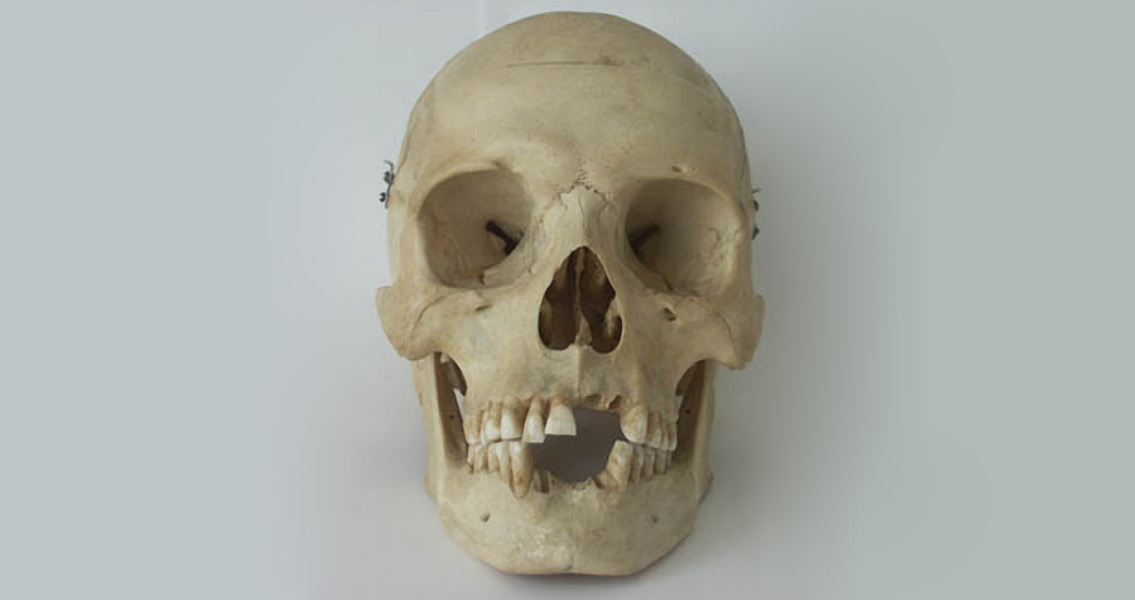
PLOS ONE, can be found here]]>
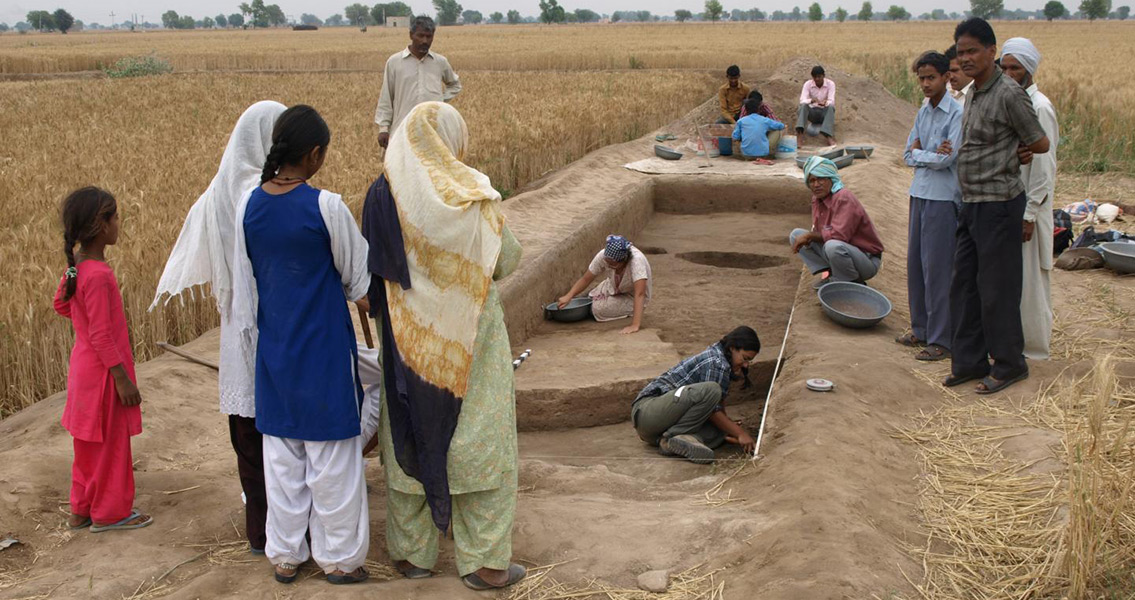
Antiquity and the Journal of Archaeological Sciences, have found evidence of domesticated rice in South Asia from up to 430 years earlier. “We found evidence for an entirely separate domestication process in ancient South Asia, likely based around the wild species Oryza nivara. This led to the local development of a mix of ‘wetland’ and ‘dryland’ agriculture of local Oryza sativa indica rice agriculture before the truly ‘wetland’ Chinese rice, Oryza sativa japonica, arrived around 2000 BC,” said study co-author Dr Jennifer Bates in a University of Cambridge press release. “While wetland rice is more productive, and took over to a large extent when introduced from China, our findings appear to show there was already a long-held and sustainable culture of rice production in India as a widespread summer addition to the winter cropping during the Indus civilisation.” The team’s results suggest that the Indus had established seasonal crop rotation before other civilisations, such as the Ancient Egyptians and Chinese. Dr Cameron Petrie, one of the authors of the study, suggests this could be because the location and climate of the region inhabited by the Indus. “Most contemporary civilisations initially utilised either winter crops, such as the Mesopotamian reliance on wheat and barley, or the summer crops of rice and millet in China – producing surplus with the aim of stockpiling,” explained Petrie. “However, the area inhabited by the Indus is at a meteorological crossroads, and we found evidence of year-long farming that predates its appearance in the other ancient river valley civilisations.” The team focused their study on Indus villages within a few kilometres of Rakhigari: a former Indus city that could have had a population of up to 40,000 people. They found evidence of a host of winter staples, such as wheat; barley; peas and vetches, and summer staples such as domesticated rice, millet and the tropical beans urad and horsegram. Radio carbon dating revealed dates for the earliest instances of Indus multi-cropping: 2890-2630 BCE for millets and winter pulses, 2580-2460 BCE for horsegram, and 2430-2140 BCE for rice. Exactly what crops were consumed in Rakhigari and the surrounding region, and which were traded with cities further afield, is yet to be determined, but the team’s research has raised some fascinating questions. “It is certainly possible that a sustainable food economy across the Indus zone was achieved through growing a diverse range of crops, with choice being influenced by local conditions.” said Dr Bates. “It is also possible that there was trade and exchange in staple crops between populations living in different regions, though this is an idea that remains to be tested.” Such a diverse system was probably well suited to mitigating risk from shifts in climate,” added Dr Petrie. “It may be that some of today’s farming monocultures could learn from the local crop diversity of the Indus people 4,000 years ago.” ]]>