Categories
Breaking News

History News of the Week – Minoan 'Masterpiece' Unearthed

Discovery of Minoan Sealstone Could ‘Rewrite’ History of Ancient Greek Art Researchers working at the tomb of 3,500 year old Bronze Age warrior in the southwest of Greece have unearthed an ‘intricately carved’ sealstone which University of Cincinnati (UC) archaeologists are heralding as one of the finest works of prehistoric Greek art ever discovered. Depicting an intense hand-to-hand battle, the artefact has been dubbed the ‘Pylos Combat Agate’. “Looking at the image for the first time was a very moving experience, and it still is,” said Shari Stocker, a senior research associate in UC’s Department of Classics “It’s brought some people to tears.” “What is fascinating is that the representation of the human body is at a level of detail and musculature that one doesn’t find again until the classical period of Greek art 1,000 years later,” explained Jack Davis, the university’s Carl W. Blegen professor of Greek archaeology and department head, in a statement from UC. Davis and Stocker have been leading a dig at the tomb of the Bronze Age warrior, which was first discovered in 2015. The tomb’s occupant has been dubbed the ‘Griffin Warrior’, and his final resting place has already yielded a wealth of fascinating artefacts, including four gold signet rings. The size of the hand carved stone is perhaps the most remarkable thing about it, measuring just 3.6cm in length. Many of its details can only be viewed with a powerful camera lens and photomicroscopy. “Some of the details on this are only a half-millimetre big,” said Davis. “They’re incomprehensibly small.” The dramatic image of a warrior plunging a sword into a shielded enemy’s neck is reminiscent of the kinds of scenes described in Homer’s Iliad. Although the researchers can’t say if the image reflects a Homeric epic, they’re confident it would be from a legend familiar to Minoans and Mycenaeans. “It would have been a valuable and prized possession, which certainly is representative of the Griffin Warrior’s role in Mycenaean society,” Stocker explained. “I think he would have certainly identified himself with the hero depicted on the seal.” The sheer skill that would have been needed to create the sealstone is causing a re-evaluation of the history and development of Ancient Greek art. “It seems that the Minoans were producing art of the sort that no one ever imagined they were capable of producing,” explained Davis. “It shows that their ability and interest in representational art, particularly movement and human anatomy, is beyond what it was imagined to be. Combined with the stylised features, that itself is just extraordinary.” “This seal should be included in all forthcoming art history texts, and will change the way that prehistoric art is viewed,” said Stocker. Date of Biblical Eclipse Pinpointed Researchers have determined the date of an ancient eclipse which is referred to in the Bible. They believe it could be the oldest date of a solar eclipse yet recorded. The researchers used a combination of the Bible and Ancient Egyptian texts to pinpoint the date of the eclipse to 30th October 1207 BCE. From this information they’ve been able to refine the dates of Egypt’s ancient pharaohs, particularly the reign of Ramesses the Great. Biblical scholars have long been perplexed by the book of Joshua, which describes Joshua leading the people of Israel in Canaan, a region which covers modern day Israel and Palestine. According to the Biblical text, Joshua prayed “Sun, stand still at Gibeon, and Moon, in the Valley of Aijalon. And the Sun stood still, and the Moon stopped, until the nation took vengeance on their enemies.” “If these words are describing a real observation, then a major astronomical event was taking place – the question for us to figure out is what the text actually means,” said paper co-author Professor Sir Colin Humphreys from the University of Cambridge’s Department of Materials Science & Metallurgy. “Modern English translations, which follow the King James translation of 1611, usually interpret this text to mean that the sun and moon stopped moving,” said Humphreys, who is also a Fellow of Selwyn College. “But going back to the original Hebrew text, we determined that an alternative meaning could be that the sun and moon just stopped doing what they normally do: they stopped shining. In this context, the Hebrew words could be referring to a solar eclipse, when the moon passes between the earth and the sun, and the sun appears to stop shining. This interpretation is supported by the fact that the Hebrew word translated ‘stand still’ has the same root as a Babylonian word used in ancient astronomical texts to describe eclipses.” Evidence that the Israelites were in Canaan between 1500 and 1050 BCE can be found in the Merneptah Stele, an Egyptian text dating from the reign of the Pharaoh Merneptah, son of Ramesses the Great. The large granite block, held in the Egyptian Museum in Cairo, says that it was carved in the fifth year of Merneptah’s reign and mentions a campaign in Canaan in which he defeated the people of Israel. Using an innovative eclipse code, one which considers variations in the planet’s rotation, the team determined that the only annular eclipse visible from Canaan between 1500 and 1050 BCE was on 30 October 1207 BCE, in the afternoon. If the team’s calculations, which have been published in the Journal of Astronomy and Geophysics, are correct, then it is possible to date the reign of both Ramesses and his son to within a year. “Solar eclipses are often used as a fixed point to date events in the ancient world, Humphreys said. If Humphreys et al’s results of accepted, then the reign of Merneptah began in 1210 or 1209 BCE. As it is known from Egyptian texts how long he and his father reigned for, it would mean that Ramesses the Great reigned from 1276-1210 BCE, with a precision of plus or minus one year, the most accurate dates available. Hitler Only Joined the Nazis After Being Rejected by Another Far-Right Group Adolf Hitler only joined the Nazi Party after being rejected by another far right group, a historian at Aberdeen University is claiming. According to the Independent, historian Dr Thomas Weber unearthed an unpublished document which reveals that the German Socialist party told Hitler in 1919 they did not want him in their party nor to write for their newspaper. Weber argues that this rejection by the German Socialist Party should be seen as a crucial historic event, a turning point which ultimately led to Hitler joining the Nazi party and becoming its leader. Weber suggests that Hitler would have found it much more difficult to rise to the leadership of the much larger German Socialist Party. “I can only speculate why they did not let him join but one would imagine it had something to do with the fact Hitler was opinionated and they did not want to have someone there who was telling them what to do,” he told the Independent. He added: “If he had been accepted into the German Socialist party he would have almost certainly remained on the sidelines. Hitler managed to push over the established leadership of Nazi party but that would have been very unlikely to have happened if he had joined the German Socialist party.” The document Weber has discovered is from the testimony of Hans Georg Grassinger, the founding chairman of the German Socialist party, reports the Guardian. It describes how, in 1919, Hitler approached Grassinger to join the Party. Hitler also asked Grassinger to borrow money. Hitler, who was 30 at the time, was informed that the party did not him in their ranks. Featured image: The tiny sealstone depicting warriors in battle measures just 1.4 inches across but contains incredible detail. Credit: University of Cincinnati ]]>

Categories
Breaking News

History News of the Week – Neanderthals Showed Compassion

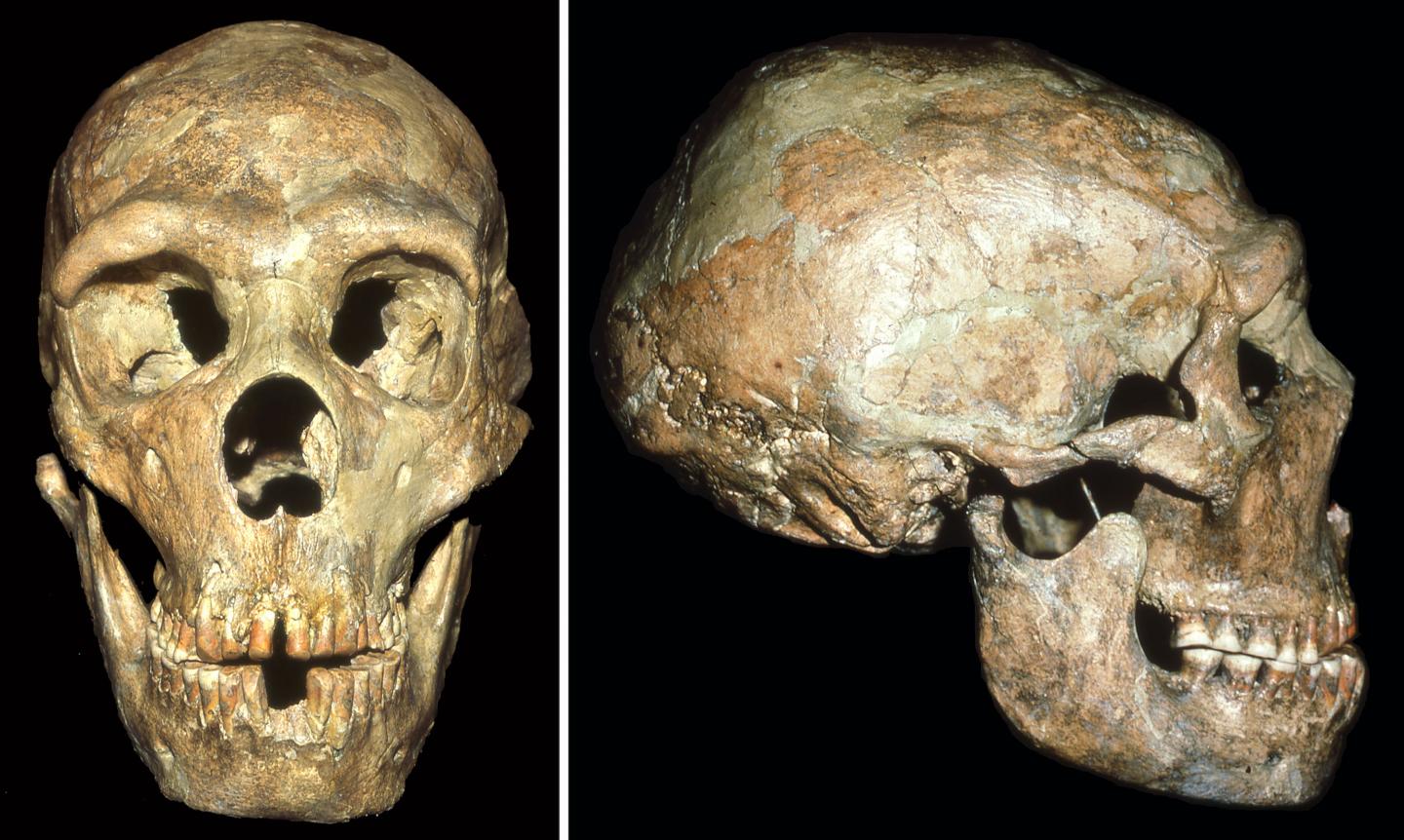
Neanderthals Were Compassionate, New Evidence Suggests Around 50,000 years ago, an older Neanderthal who had suffered multiple debilitating injuries and became deaf likely relied on others to avoid prey and survive into his forties, new analysis suggests. “More than his loss of a forearm, bad limp and other injuries, his deafness would have made him easy prey for the ubiquitous carnivores in his environment and dependent on other members of his social group for survival,” said Erik Trinkaus, study co-author and professor of anthropology in Arts & Sciences at Washington University in St. Louis. Trinkaus and colleagues’ research has been published in the online open access journal PLOS ONE. Known as Shanidar 1, the Neanderthal’s remains were discovered in 1957 at the Shanida Cave in Iraqi Kurdistan by Ralph Solecki, an American archaeologist. Previous studies of Shanidar 1’s remains had found evidence of multiple injuries, including a serious blow to the side of the face, fractures and the eventual amputation of the right arm at the elbow. It was also noted that he had suffered a systematic degenerative condition. In the latest analysis, Trinkaus and Sébastien Villotte of the French National Centre for Scientific Research confirm that bony growths in Shanidar 1’s ear canals would have produced profound hearing loss. Surviving in the hostile Pleistocene environment would have been highly challenging, even without hearing loss. As with other Neanderthals who have been found to have survived with serious injuries or disabilities, the authors suggest Shanidar 1 most likely required significant social support to reach old age. “The debilities of Shanidar 1, and especially his hearing loss, thereby reinforce the basic humanity of these much maligned archaic humans, the Neandertals,” said Trinkaus. Squirrels Spread Leprosy to England The prevalence of leprosy in the south-east of England during the medieval period could be explained by squirrel fur trade with Scandinavia, according to new research. Genetic analysis of a pre-Norman woman’s skull, unearthed from a garden in Suffolk, has added to growing evidence that East Anglia was the epicentre of a leprosy epidemic that spread through medieval England. New research, published in The Journal of Medical Microbiology, suggests the disease reached England through either contact with Scandinavia via Anglo-Saxon movement, or through the sustained trade in squirrel fur. Radiocarbon dating by researchers from the University of Cambridge confirmed that the woman, dubbed the “The Lady of Hoxne,” lived sometime between 885-1015 CE. Their analysis of the skull also detected traces of Mycobacterium leprae, the bacteria which cause leprosy. Squirrels are a known carrier of these bacteria. The disfiguring effects of leprosy were clear on the woman’s skull, providing evidence that she would have suffered extensive facial lesions and possibly nerve damage to her extremities. She was infected with the same strain of the disease that has been found in other remains in East Anglia. Sarah Inskip, Research Associate at St John’s College, Cambridge, and lead author of the paper, said: “This new evidence coupled with the prevalence of leper hospitals in East Anglia from the eleventh century onward adds weight to the idea that the disease was endemic in this region earlier than in other parts of the country. “It is possible that apparent clustering of leprosy cases in the East Anglia region could be attributed to chance – perhaps more medieval human remains have simply been uncovered in the region and the discoveries have been better conserved by a soil type containing high levels of bone-preserving chalk. However, the same conditions are also found in areas such as Hampshire and Dorset, where many early Anglo-Saxon cemeteries have been excavated, but no cases of leprosy have yet been reported.” Significantly, the same strain of leprosy that seems to have been prevalent in East Anglia has also been identified in medieval remains in Sweden and Denmark. This has led the authors to claim that North Sea trade links could have brought the disease to England. “It is possible that this strain of leprosy was proliferated in the South East of England by contact with highly-prized squirrel pelt and meat which was traded by the Vikings at the time this woman was alive. Strong trade connections with Denmark and Sweden were in full flow in the medieval period, with Kings Lynn and Yarmouth becoming significant ports for fur imports,” added Dr Inskip. Although leprosy has not been found in humans on the British Isles for over two centuries, a recent study has detected the infection in red squirrels on Brownsea Island in Dorset. Sequencing of the M.leprae strain that affects the squirrels found it to be closely related to that detected in the woman from Hoxne. “Research has already established that leprosy can be passed from armadillos to humans, so that it may also come from squirrels is an interesting idea,” said Inskip. “It is questionable how long the bacteria could have survived on fur or meat, but it’s notable that squirrels were also sometimes kept as pets.” “Perhaps it’s the movement of people and prolonged connection between East Anglia and Scandinavia that’s important to our understanding of the history of leprosy in the UK, but further research refuting or confirming the role of the fur trade could be highly enlightening and exciting”. Modern Society hasn’t Made Mankind less Violent Two anthropologists claim that people living in ‘modern-day nations’ are not less violent than their ancestors or people currently living in smaller hunter-gathering and horticultural societies. The research also claims that living in ‘a large, organised’ society increases the likelihood of surviving a war, pointing out that although ‘modern’ societies may have a larger number of soldiers or combatants who die in a war, they represent a smaller percent of the total population. Florida State University Distinguished Research Professor of Anthropology Dean Falk and Charles Hildebolt, a professor from the Washington University Medical School in St. Louis, make their claims in the journal Current Anthropology. “Rather than being more violent, people who live in small-scale societies are more vulnerable to a significant portion of their community being killed in warfare than those living in states because, as the old saying goes, ‘there is safety in numbers,'” Falk said in a press release. “We recognise, of course, that people living in all types of societies have the potential not only for violence — but also for peace.” Falk and Hildebot have found that war deaths for both small-scale and more modern state societies escalate with increasing population sizes. They attribute this, at least partly, to developments in weapons and military strategy. The authors claim their study challenges the idea that as nations and modern societies develop, there is a reduction in violence. Falk and Hildebolt analysed data on population sizes and death from intergroup conflicts in 11 chimpanzee communities, 24 human non-states, 19 countries that fought in World War I and 22 countries that fought in World War II. It was discovered that on the whole the chimpanzees were less violent than humans, pointing to humans having more severe forms of warfare. It was also found that, as with humans, the annual average percentage of deaths among chimpanzees declined as their populations increased. Featured image: The skull of a Neanderthal known as Shanidar 1 shows signs of a blow to the head received at an early age. Credit: Erik Trinkaus ]]>

Categories
Breaking News

History News of the Week – Volcanoes Caused Upheavals in Ancient Egypt

Volcano Led to Unrest in Ancient Egypt An event that “changed everything about Near-East history,” according to Yale University historian Joseph Manning, could be explained by volcanic eruptions. In the middle of a highly successful campaign against the Seleucid Empire, Ptolemy III, leader of the Ancient Egyptian Ptolemaic Kingdom, abruptly decided to return his forces back to Egypt in around 245 BCE. It was a dramatic and hugely significant move which historians have long been unable to explain. Manning and colleagues believe Ptolemy’s actions could be explained by the effects of volcanic eruptions. In particular, they’ve found evidence that by cooling the planet’s atmosphere, major volcanoes can disrupt the flow of the Nile River. This could have led to drastic food shortages in the region, and heightened tensions. Beyond the war with the Seleucid Empire, Manning believes that volcano eruptions could be linked to a host of upheavals and uprisings in Ptolemaic Egypt. Manning’s study, which has been published in the journal Nature Communications, drew on evidence ranging from ice core records to ancient papyri to analyse the effects of climate events on Ancient Egyptian society. “That’s the beauty of these climate records. For the first time, you can actually see a dynamic society in Egypt, not just a static description of a bunch of texts in chronological order,” Manning says. “This is of absolutely enormous importance.” During the Ptolemaic period, which spread from just after the death of Alexander the Great until the death of Cleopatra, Egyptian farmers depended hugely on flooding of the Nile in the summer months to irrigate their grain fields. “When the Nile flood was good, the Nile valley was one of the most agriculturally-productive places in the Ancient World,” says Francis Ludlow, a climate historian at Trinity College in Dublin and a co-author of the new study. “But the river was famously prone to a high level of variation.” If the Nile didn’t flood the land, it could lead to grain shortages. The authors suggest it was one such grain shortage that forced Ptolemy to return home in 245 BCE. The study authors highlight how this lack of flooding in the Nile could have been caused by volcano eruptions elsewhere on the planet. The key is a band of monsoon weather around the equator called the intertropical convergence zone. Most years, in the summer months, this band of weather moves up from the equator and floods one of the major tributaries to the Nile. When volcanoes erupt they blast out sulphurous gases which can ultimately cool the atmosphere. When this happens in the northern hemisphere, it can prevent the monsoon rains moving as far as normal. “When the monsoon rains don’t move far enough north, you don’t have as much rain falling over Ethiopia,” Ludlow said in a press release. “And that’s what feeds the summer flood of the Nile in Egypt that was so critical to agriculture.” Using computer simulations, the team found that poor flood years on the Nile matched up with major volcanic eruptions at locations across the globe. They then found that these volcanic eruptions also preceded major political and economic events that affected Egypt, including Ptolemy III’s abandonment of the campaign against the Seleucid empire, as well as the Theban Revolt. The volcanic eruptions didn’t cause these upheavals on their own, both Ludlow and Manning stress, but they likely added fuel to existing economic, political and ethnic tensions. Ominously, Ludlow claimed the findings could hold a warning for the future. “The twenty-first century has been lacking in explosive eruptions of the kind that can severely affect monsoon patterns. But that could change at any time,” he says. “The potential for this needs to be taken into account in trying to agree on how the valuable waters of the Blue Nile are going to be managed between Ethiopia, Sudan and Egypt.” Permian-Triassic Extinction Happened a Million Years Earlier than Thought New research in the remnants of the Godwanides mountain range has discovered evidence that one of the greatest mass extinction events in history happened earlier than previously thought. “We’ve established that climatic changes related to the devastating end of the Permian mass extinction event about 250 Million years ago were beginning earlier than previously identified,” said Dr. Pia Viglietti from the Witwatersrand University. The Permian-Triassic was one of history’s most significant mass extinction events, wiping out 96% of all marine species and 70% of terrestrial vertebrate species. Viglietti analysed fossil rich sediments present in the Karoo region of South Africa, which were deposited in the tectonic events that created the spectacular Gondwanides mountains. She found that the vertebrate animals in the area started to go extinct much earlier than would be expected under conventional dating of the mass extinction event. “The Karoo Basin takes up a huge portion of South Africa and most of us who drive through it do not think much of it,” explained Viglietti. “But if you know what you’re looking for, the Karoo represents a wealth of knowledge about the story of life on Earth.” She continued: “The Gondwanides not only influenced how and where rivers flowed (depositing sediment), it also had a significant effect on the climate, and thus the ancient fauna of the Karoo Basin,” As mountains erode, they place less weight on the earth’s crust, meaning the depression they’ve created in it starts to reduce. 100 million years ago, the Gondwanides would have had this effect on the Karoo region. This process is recorded in the sediment by periods of deposition and non-deposition. “During my PhD, I have identified a new tectonic “loading” event (mountain building event) that kick-started sedimentation in the Latest Permian Karoo Basin,” explained Viglietti. The sediments during this loading event also provided evidence of climatic changes as well as evidence of a previously overlooked “faunal turnover”, which points to the start of the end Permian mass extinction event, according to Viglietti’s findings. “Within the last million years before this major biotic crisis, the animals had already started to react. I interpret this faunal change as resulting from climatic effects relating to the end-Permian mass extinction event – only occurring much earlier than previously identified,” concluded Viglietti. Viglietti’s study has been published in the journal Scientific Reports. Amber Room Discovered? Three German researchers claim to have discovered the most valuable piece of treasure looted by the Nazi regime, the Independent reports. A series of ornate panels, the legendary Amber Room is often considered the most expensive item stolen by the Nazi’s in the Second World War. Embellished with amber and gold leaf, the panels were gifted to Peter the Great in 1716. Estimated to be worth £224 million, their whereabouts has remained a mystery since the end of the war. After examining witness reports compiled by the Stasi and KGB after World War Two, treasure hunters Leonhard Blume, Peter Lohr and Günter Eckhardt concluded that the Amber Room had been hidden in a network of tunnels in a cave in the Ore Mountains, eastern Germany. They used radar to reveal what lay beneath the cave outside the town of Hartenstein, close to the Czech border. “We discovered a very big, deep and long tunnel system and we detected something that we think could be a booby trap,” Blume told The Times. The three explorers also claim to have found evidence of an explosion in the area, which they say fits with witness accounts of items being hidden in the tunnel and then the entrance blown up to hide them. According to the Independent, historians tend to argue that either the Amber Rooms were destroyed in an air raid on Konigsberg, or by Soviet soldiers at the end of the war. Blume, Lohr and Eckhardt are now seeking funding from a sponsor, so they can excavate the location. Featured Image Caption: This piece of papyrus from the mid-Third Century BCE describes a period of famine in Egypt that occurred when the Nile River failed to flood for several years in a row. It was collected from the Egyptian city of Edfu. Credit: © Department of Papyrology, Institute of Archaeology, University of Warsaw ]]>

Categories
Breaking News

History News of The Week – Ancient Amazonians, Rapa Nui and Medieval Jewellery

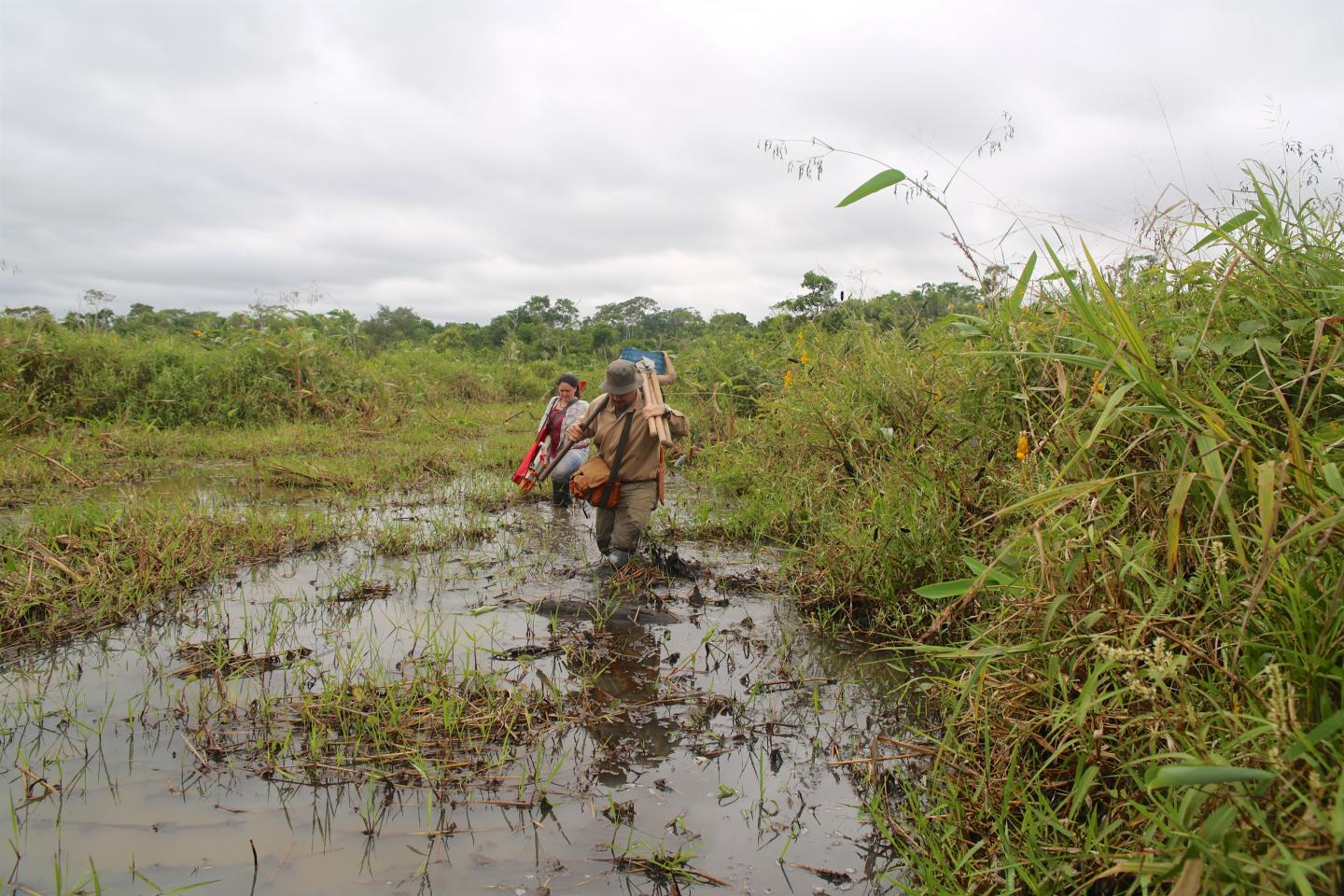
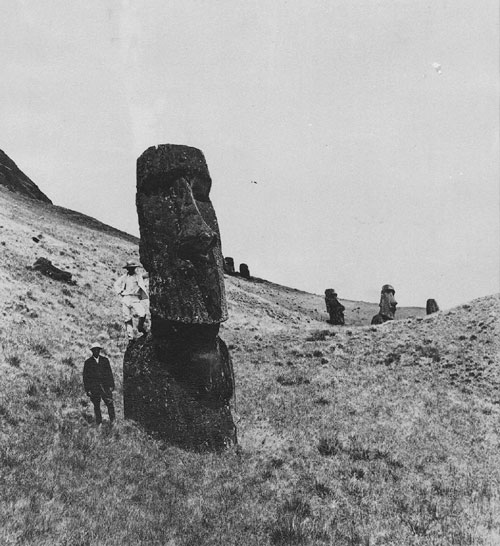
Amazonians Domesticated Wild Rice 4,000 Years Ago Amazonian farmers were manipulating wild rice to boost food production more than 4,000 years ago, long before Europeans arrived in South America, according to new research. A team of scientists from the UK and Brazil have discovered the first evidence that ancient South American farmers had domesticated wild rice to grow bigger crops with larger grains. The researchers speculate that this knowledge may have been lost with the arrival of Europeans and the decimation of the indigenous population in 1492. Different species of rice were first grown around 11,000 years ago near the Yangtze River in China, and around 2,000 years ago in West Africa. Led by the University of Exeter, the latest study has unearthed evidence of successful rice farming on the vast wetlands of Guaporé River in Rondônia state, Brazil The study highlights the importance of the huge wetlands of lowland South America in providing food for the ancient settlers of the continent. Ancient inhabitants also managed to domesticate cassava, peanut and chilli pepper crops for food. By analysing 16 samples of microscopic plant remains from ten different time periods, which were excavated by a team from the University of São Paulo in South West Amazonia, it was determined that more phytoliths – hard, microscopic pieces of silica made by plant cells, were found at higher ground level. This suggests that rice began to play a bigger role in the diet of the people who lived in the area over time, leading to increasing amounts being farmed. It was also revealed that the Amazon residents likely became more efficient farmers over time. Changes in the ratio of husk, stem and leaves at different ground levels suggest they brought more grain and fewer leaves to the site. Professor Jose Iriarte, from the University of Exeter, who led the research, said: “This is the first study to identify when wild rice first began to be grown for food in South America. We have found people were growing crops with larger and larger seeds. Even though they were also eating wild and domesticated plants including maize, palm fruits, soursop and squash, wild rice was an important food, and people began to grow it at lake or river edges.” The results of the study have been published in the journal Nature Ecology and Evolution. New Light Shed on the Mysteries of Rapa Nui The history of Rapa Nui, popularly known as Easter Island, has long been shrouded in mystery. As well as the obvious fascination with the monolithic stone heads that dominate the island, the history of the Rapa Nui people prior to the arrival of Europeans is far from clear. New palaeogenomic research carried out by a team of scientists led by University College Santa Cruz has shed some new light on Rapa Nui’s ancient history. The study has ruled out any intermixing between the inhabitants of the incredibly remote island and other South Americans prior to the arrival of Europeans in 1772. The international team of scientists, led by Lars Fehren-Schmitz, associate professor of anthropology at UC Santa Cruz, analysed bone fragments from the remains of five individuals excavated in the 1980s. Three of the individuals lived on the island prior to contact with Europeans, and two after. “We found no evidence of gene flow between the inhabitants of Easter Island and South America,” said Fehren-Schmitz. “We were really surprised we didn’t find anything. There’s a lot of evidence that seems plausible, so we were convinced we would find direct evidence of pre-European contact with South America, but it wasn’t there.” Previous research found genetic traces of early inhabitants of the Americas in present-day indigenous residents of Easter Island. It was suggested that this was likely the result of intermixing that occurred sometime between 1280 and 1425. Fehren-Schmitz is the first to use paleaogenomic analysis to test that hypothesis, and the results suggest that the contact must have happened after 1722. “The most likely scenario is that there wasn’t a single episode,” said Fehren-Schmitz. Acknowledging that his results answer one question but leave many others unanswered, he said, “The story is simply more complicated than we expected.” The findings don’t solve one of the most enduring mysteries of Rapa Nui, which is how a landmass 1,300 miles from the nearest inhabited island and 2,200 miles from central Chile on the nearest continent of South America came to be populated. Some archaeologists have suggested that sea travel between Polynesia and the Americas was plausible, leading to the intermingling of those populations and perhaps even the peopling of the Americas. Fehren-Schmitz pointed out in a statement that plausibility isn’t proof. “We want to do more work to determine more precisely when this gene flow between Native Americans and the people of Rapa Nui occurred, and where in the Americas it originated,” he said. “The population dynamics of these regions are fascinating. We need to study the ancient populations of other islands–if remains exist.” New technological advances mean such insights could eventually be gained, yielding new clues from materials long kept in museum collections. “Our methodologies have evolved so much in the last five years that we might need to re-study samples we gave up on in the past to see if we can get DNA out of them,” Fehren-Schmitz concluded. Secrets of Medieval Jewellery Manufacture Revealed Scientists have gained startling insights into the techniques used to make gold jewellery in the Medieval period. The techniques used by artisans to manufacture the gold-coated silver threads found in textiles from the Middle Ages have long perplexed historians, despite the wealth of examples in the form of artefacts available to study. Four decades of intensive research have yielded limited insights, comprehensive investigation of the materials restricted by their small size. A single metal thread is sometimes no thicker than a human hair, while its gold coating is only a hundredth of that. Scientists from the American Chemical Society set out to fill in the knowledge gap. Tamás G. Weiszburg, Katalin Gherdán and colleagues examined medieval gilded silver threads, and silver and gold strips produced during and after the Middle Ages, from a variety of European cultures. Using high-resolution scanning electron microscopy, electron back-scattered diffraction with energy-dispersive electron probe microanalysis and other analytical methods, the scientists were able to gather remarkable new insights. Their results suggest that the threads were gilded exclusively by using an ancient method that survived for a millennium. The goldsmiths simply heated and hammered the silver sheets and the gold foil together, and then cut them into strips. The results show that this process was used in the thirteenth century, and was still widely practiced well into the seventeenth century. These new insights, which are revealed in a study published in the journal Analytical Chemistry, could help scientists restore, preserve and date medieval artefacts. Featured image courtesy of University of Exeter]]>

Categories
Breaking News

History News of the Week – Scott of the Antarctic Cover-Up

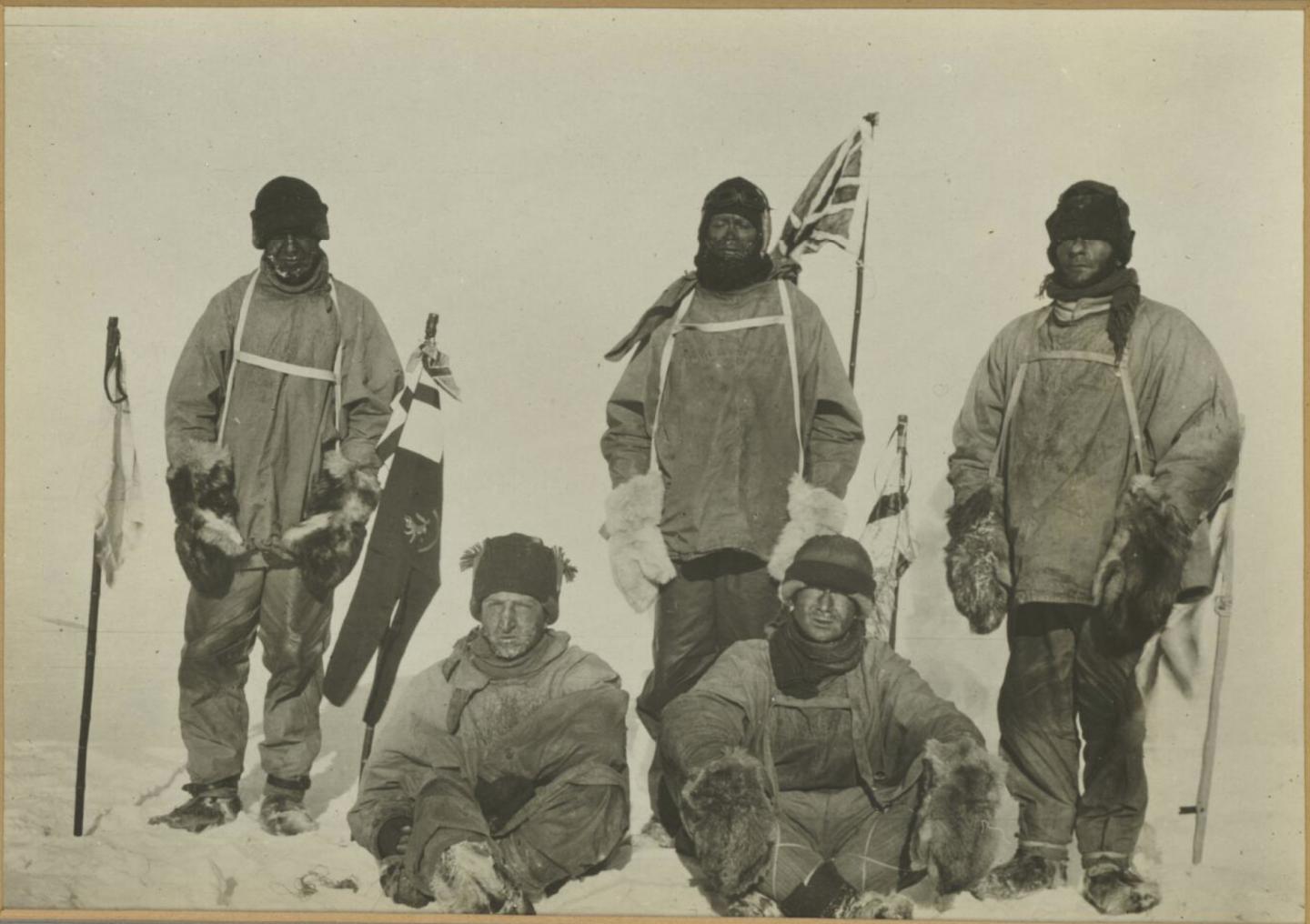
Scott of the Antarctic Death Cover-up? New research claims to have unearthed a cover-up over the death of Robert Falcon Scott, aka Scott of the Antarctic. The death of Scott and his four companions on their return from the South Pole is typically attributed to poor planning. The new study claims not only that the tragic end of the expedition was the result of failures on the behalf of Scott’s second-in-command, but also suggests this has been deliberately covered-up for over a century. In a study published in the journal Polar Record, Prof Chris Turney from University of New South Wales details documents revealing how Scott’s Lieutenant, Edward “Teddy” Evans, undermined him, stealing rations from food depots and failing to pass on orders to a dog sled team that could have brought Scott home safely. “The documents also show how public records were altered in later recounts of the expedition and why a Committee of Inquiry into the expedition was rapidly shut down almost before it began,” said Turney in a statement. According to Turney, Scott, as well as several members of the expedition, had doubts about Evans’ ability to be second-in-command on the ambitious journey. It is likely this that led to Scott sending Evans back to base before the quest to the South Pole had been completed. Travelling back from the South Pole, Scott and his team discovered that rations carefully planted on their way had disappeared. On top of this, orders Scott gave to Evans to send a dog sled team out to meet the party on their return from the Pole were never carried out. The documents uncovered by Prof Turney reveal how Evans had a history of taking more than his share of supplies and how public statements were altered to deflect blame from Evans’ role in the missing rations after Scott’s death. “For too long Scott has been held responsible for the death of himself and the men of his party who made the fateful expedition to the South Pole,” said Prof Turney. “These new documents tell a very different story about how Scott’s planning for the expedition was undermined, reveal that his orders were fatally ignored and why the man who arguably contributed the most to his death was never held accountable for his actions.” Humans Avoided Inbreeding 34,000 years ago Prehistoric humans formed mating networks to avoid the dangers of inbreeding as far back as 34,000 years ago, new research claims. The results suggest that humans have long been aware of the dangers of inbreeding. The study, which has been published in the journal Science, examined genetic information from the remains of anatomically modern humans who lived during the Upper Palaeolithic, a period when modern humans from Africa first colonised western Eurasia. The results suggest that people deliberately sought partners beyond their immediate family, and that they were probably connected to a wider network of groups from within which mates were chosen, to avoid becoming inbred. “What this means is that even people in the Upper Palaeolithic, who were living in tiny groups, understood the importance of avoiding inbreeding,” said Professor Eske Willerslev, who holds posts at the universities of Copenhagen and Cambridge. “The data that we have suggest that it was being purposely avoided.” Objects and jewellery buried with the remains were also studied. The authors say that these objects suggest the Upper Palaeolithic humans developed rules and ceremonies to accompany the exchange of mates between groups, perhaps foreshadowing modern marriage ceremonies. In the study, the researchers sequenced the genomes of four individuals buried at Sunghir, an Upper Palaeolithic site in Russia believed to have been inhabited 34,000 years ago. The individuals buried there appear to have lived at the same time and were buried together. However, in genetic terms they were not closely related, at most being second cousins. The researchers argue that if small hunter-gatherer bands were mixing at random, there’d be more evidence of inbreeding. The fact there isn’t could suggest these ancient humans had put a system in place to avoid it. Led by Willerslev, the study involved researchers from both the University of Copenhagen and the University of Cambridge. Saint Nicholas’ Grave Close to Being Found? Turkish archaeologists claim they might be on the verge of unearthing the burial site of Saint Nicholas, the saint who is the subject of the Santa Claus myth. According to an article on the Hurriyet Daily News, the team of archaeologists have discovered a grave under the St. Nicholas church in Turkey’s southern Antalya province, which could be the final resting place of the Christmas saint. The surprise discovery was made as the team conducted digital surveys below the surface of the church. “We believe this shrine has not been damaged at all, but it is quite difficult to get to it as there are mosaics on the floor,” the head of Antalya’ Monument Authority, Cemil Karabayram, told the Hurryiet Daily News. The team now need to remove each tile, one-at-a-time, from the mosaic, but hope they’ll eventually reach what they believe to be the remains of St. Nicholas. Admired for his piety, legend has it that St. Nicholas gave away all his wealth and travelled the countryside helping the poor. St. Nicholas is a popular figure across Christianity, celebrated not only for his generosity, but for his refusal to renounce his faith when imprisoned during the ‘Great Persecution’ by the Romans. His legend has continued to grow and spread, leading to him becoming an international symbol of Christmas. It was previously believed that his remains were smuggled to Italy in 1087. The archaeologists at Antalya are now looking for researchers from various disciplines to help continue their exploration at the church in southern Turkey. Featured Image: An image of Scott and his team who all died on the return from the South Pole. Courtesy of the National Library. ]]>

Categories
Breaking News

History News of the Week – Modern Humans Originated Earlier Than Thought

Modern Humans Emerged 300,000 Years Ago A new study claims that modern humans originated much earlier than previously thought, suggesting that the split between modern humans and earlier human groups occurred between 350,000 and 260,000 years ago. Researchers from the Universities of Witwatersrand and Johannesburg in South Africa, and the University of Uppsala in Sweden, used the 2000-year-old remains of a boy discovered in Ballito Bay in KwaZulu-Natal during the 1960s to make their conclusions. They reconstructed the Ballito Bay child’s entire genome, as well as the genome of six other individuals from KwaZulu-Natal who lived between 2300 and 300 years ago. Because the child from Ballito Bay was of hunter-gatherer descent, his DNA could be used to estimate that the split between earlier human groups and modern humans took place between 350,000 and 260,000 years ago. “This means that modern humans emerged earlier than previously thought”, says Mattias Jakobsson, population geneticist at Uppsala University, who headed the project together with Marlize Lombard from the University of Johannesburg. Significantly, the 350,000 to 260,000 years ago period coincides with the Florisbad skull, which would have been a contemporary of the small brained Homo naledi in what is now South Africa. “It now seems that at least two or three Homo species occupied the southern African landscape during this time, which also represents the early phases of the Middle Stone Age”, said Professor Marlize Lombard from the University of Johannesburg, who initiated the research. Interestingly, the fossil, ancient DNA and archaeological records indicate that the transition from archaic to modern humans might not have occurred in only one place in Africa. It seems likely that regions including southern and northern Africa also played a role. “Thus, both palaeo-anthropological and genetic evidence increasingly points to multiregional origins of anatomically modern humans in Africa, i.e. Homo sapiens did not originate in one place in Africa, but might have evolved from older forms in several places on the continent with gene flow between groups from different places”, said Carina Schlebusch, who worked on the study. The team’s research has been published in a recent edition of the journal Science. Sabre-toothed Kittens Born with Thicker Bones New research claims that although sabre-toothed kittens were born with thicker bones than contemporary kittens, they had a similar pattern of bone development. Previous research has pointed towards sabre-toothed cats from the Pleistocene Era having more robust bones than other wild cats of the time. However, how and when these stronger bones developed remained a mystery. Katherine Long from California State Polytechnic University, USA and colleagues measured and analysed hundreds of bones at various stages of development from both Smilodon fatalis and the contemporary tiger-sized cat Panthera atrox in the La Brea Tar Pits museum. It was discovered that rather than the difference in strength of the cats’ bones developing as the animals matured, the sabre-toothed cats were in fact born with more robust bones. Like other primitive cat species, Smilodon fatalis’ bones grew longer and slenderer as the creature aged. “Sabre-tooth cats had extraordinarily strong front limbs for tackling and subduing prey before they slashed their throats or bellies with their saber-like canine teeth,” said study co-author Don Prothero. “Using the extraordinary collection of limb bones of saber-tooth kittens at La Brea tar pits, we found that their limbs don’t become more robust as they grew up, but instead retain the stereotypical growth pattern where the limbs grow longer more quickly than they grow thick. To compensate, saber-tooth kittens were born with unusually robust limbs and retained that pattern as they grew.” The research has been published in the open access journal PLOS. Ancient Scandinavian Farmers Exchanged Terminology with Indo-Europeans New linguistic research shows that the proto-Indo-European language that arrived in Europe around 5,000 years ago absorbed vocabulary from the local languages it ultimately replaced. When the Yamnaya culture migrated into Europe from the Caspian Sea it brought with it the proto-Indo-European language that would replace local languages over the coming millennia and form the basis of most modern European languages. Researchers from the University of Copenhagen have now shown that local cultures also influenced the new language, particularly in southern Scandinavia where Neolithic farmers made lasting contributions to Indo-European vocabulary before their own language went extinct. Historical linguists generally agree that many of the words in modern European languages can be traced back to the Yamnaya people, however, not all of the words in modern European languages are of proto-Indo-European origin. There are words for flora and fauna which must have been incorporated into Indo-European languages from local cultures, which raises questions as to where this exchange took place. According to the new study published in the American Journal of Archaeology by archaeologist Rune Iversen and linguist Guus Kroonen from the University of Copenhagen, southern Scandinavia 2,800 BCE provides a perfect setting for such an exchange. “The archaeological evidence tells us that between 2,800 and 2,600 BCE two very different cultures co-existed in southern Scandinavia: there was the local, Neolithic culture known as the Funnel Beaker Culture with its characteristic funnel-shaped ceramics and collective burial practices and the new Single Grave Culture influenced by the Yamnaya culture. The Funnel Beaker Culture was eventually superseded by the Single Grave Culture, but the transition took hundreds of years in the eastern part of southern Scandinavia, and the two cultures must have influenced each other during this time, ” said Iversen. Kroonen points to a number of words which are clearly not derived from an Indo-European language. “There is a cluster of words in European languages such as Danish, English, and German – the Germanic languages – which stand out because they do not conform to the established sound changes of Indo-European vocabulary. It is words like sturgeon, shrimp, pea, bean and turnip that cannot be reconstructed to the proto-Indo-European ancestor,” Guus Kroonen explained. “This tells us that these words must have entered Indo-European after it had spread from the Caspian steppe to the various parts of Europe. In other words: the new Single Grave Culture is likely to have adopted much farming and hunting terminology from the local Funnel Beaker Culture that inhabited southern Scandinavia and Denmark till around 2,600 BCE. When Indo-European in Northern Europe developed into Proto-Germanic, the terminology for local flora and fauna was preserved, which is why we know and can study the terms today.” Featured image: Dr. Helena Malmström (Uppsala University) sampling in South Africa for ancient human DNA. Credit: Mattias Jakobsson (Uppsala University) ]]>

Categories
Breaking News

History News of the Week – St. Francis of Assisi Myth, Neanderthal Children, and the Rapa Nui

Saint Francis of Assisi Myth Proven true? For more than seven centuries the Friary of Folloni near Montella in Italy has gone to great lengths to protect some small fragments of textile. This is because of a myth claiming the fragments originate from a sack of bread that appeared on the doorstep of the friary in the winter of 1224, a sack allegedly sent from Francis of Assisi and carried to the friary by an angel. Now, an international team of scientists has determined that at least part of this myth is true. C-14 analysis has confirmed that the textile can be dated to between 1220-1295, while there is also evidence that bread had been kept in the sack. “Our studies show that there was probably bread in the sack. We don’t know when, but it seems unlikely that it was after 1732, where the sack fragments were inmured in order to protect them. It is more likely that bread was in contact with the textile in the 300 years before 1732; a period, where the textile was used as altar cloth — or maybe it was indeed on the cold winter’s night in 1224 — it is possible,” said research leader Kaare Lund Rasmussen, a specialist in archaeo-chemical analysis from the University of Southern Denmark, and the leader of the research team. Unfortunately, the researchers have not been able to address the question of how the bread sack ended up at the friary. “This is maybe more a question of belief than science,” said Rasmussen, in a statement. The results of the study have been published in the journal Radiocarbon. New Insights Into How Neanderthals Grew Pioneering research has shed light on how Neanderthals, the closest extinct evolutionary cousins to modern humans, grew. A study led by Antonio Rosas, researcher at the Spanish National Research Council (CSIC), looked at the fossilised remains of an eight-year-old Neanderthal child’s skeleton to establish whether there are any differences in the growth of Neanderthals and Homo sapiens. Published in the journal Science, the study determined that both species do indeed regulate their growth differently. Neanderthals had a greater cranial capacity than modern humans, an intracranial volume of 1,520 cubic centimetres for a Neanderthal adult compared to 1,195 cubic centimetres for a modern human. Tellingly, the intercranial volume of the Neanderthal child had already reached 1,330 cubic centimetres at the time of his death. In other words, it had reached 87.5% of the total by around eight years of age. For a modern human child, the full development of cranial capacity would already have been reached by that age. “Developing a large brain involves significant energy expenditure and, consequently, this hinders the growth of other parts of the body. In sapiens, the development of the brain during childhood has a high energetic cost and, as a result, the development of the rest of the body slows down,” Rosas explained. According to the research, the skeleton and dentition of the young Neanderthal present a physiology which is similar to that of a sapiens of the same age, except for the thorax area, which corresponds to a child between five and six years, in that it is less developed. “The growth of our Neanderthal child was not complete, probably due to energy saving”, explains CSIC researcher Antonio Rosas. It was also determined by the study that the maturation of the Neanderthal child’s vertebral column occurred around two years later than it would in an anatomically modern human. In all hominids, the cartilaginous joints of the middle thoracic vertebrae and the atlas are the last to fuse, but in this Neanderthal, fusion occurred about two years later than in modern humans. “The delay of this fusion in the vertebral column may indicate that Neanderthals had a decoupling of certain aspects in the transition from infancy to the juvenile phase. Although the implications are unknown, this feature could be related to the characteristic enlarged shape of the Neanderthal torso, or slower brain growth”, says Rosas. New Insight into the Size of Rapa Nui’s Population When Europeans first arrived on Rapa Nui (aka Easter Island), they estimated the population to be between 1,500 and 3,000, numbers which seemed strikingly low considering the nine hundred giant stone statues located around the island. Now, a new study hopes to give a new estimation of the population of Rapa Nui, based on the island’s farming potential, and hopefully provide some explanation as to how the spectacular statues could have been built. “Despite its almost complete isolation, the inhabitants of Easter Island created a complicated social structure and these amazing works of art before a dramatic change occurred,” said Dr. Cedric Puleston, lead author of the study, from the Department of Anthropology, University of California, Davis, USA. “We’ve tried to solve one piece of the puzzle – to figure out the maximum population size before it fell. It appears the island could have supported 17,500 people at its peak, which represents the upper end of the range of previous estimates.” He added: “If the population fell from 17,500 to the small number that missionaries counted many years after European contact, it presents a very different picture from the maximum population of 3,000 or less that some have suggested.” Rapa Nui’s history has long been a source of controversy. Much archaeological evidence has suggested that the population had been much higher than the small number encountered by the first Europeans to arrive at the island. What caused this massive population drop-off however, has remained shrouded in mystery, with theories ranging from war to the island’s resources being exhausted through over use. Puleston and colleagues examined the agricultural potential of the island, to calculate how many people the island could have sustained. “We examined detailed maps, took soil samples around the Island, placed weather stations, used population models and estimated sweet potato production. When we had doubts about one of these factors we looked at the range of its potential values to work out different scenarios,” Puleston explained. “The result is a wide range of possible maximum population sizes, but to get the smallest values you have to assume the worst of everything. If we compare our agriculture estimates with other Polynesian Islands, a population of 17,500 people on this size of island is entirely reasonable.” ]]>

Categories
Breaking News

History News of the Week: Earthquakes Shaped Ancient Greek Culture

Did Earthquakes Shape Ancient Greek Culture? New research claims that earthquake faults could have played a central role in shaping the culture of Ancient Greece. Professor of Geoscience Communication Iain Stewart MBE, Director of Plymouth University’s Sustainable Earth Institute, has presented a host of documentaries about how the power of earthquakes has shaped landscapes and communities. Now, he claims the Ancient Greeks could have deliberately built sacred or treasured sites on land affected by seismic activity. It has previously been argued that Delphi, once home to a legendary oracle, gained its important role in Classical Greek society as a result of a scared spring and intoxicating gases that emanated from a fault line formed by an earthquake. Stewart argues that Delphi might not be the only such case, suggesting that the cities of Mycenae, Ephesus, Cnidus and Hierapolis could have all been constructed around fault lines. “Earthquake faulting is endemic to the Aegean world, and for more than 30 years, I have been fascinated by the role earthquakes played in shaping its landscape. But I have always thought it more than a coincidence that many important sites are located directly on top of fault lines created by seismic activity,” Professor Stewart said. “The Ancient Greeks placed great value on hot springs unlocked by earthquakes, but perhaps the building of temples and cities close to these sites was more systematic than has previously been thought.” The Aegean region has an abundance of fault lines and ruined ancient settlements, but Stewart claims that many seismic fault traces in the region run through the heart of some ancient settlements’ most sacred structures. In Delphi, for instance, a sanctuary was destroyed by an earthquake in 373BCE. The city’s temple was subsequently rebuilt directly on the same fault line. It’s previously been suggested that legendary tales of individuals descending into the underworld to gain oracular status, could be referring to caves or grottoes formed by seismic activity. Professor Stewart concludes: “I am not saying that every sacred site in ancient Greece was built on a fault line. But while our association with earthquakes nowadays is that they are all negative, we have always known that in the long run they give more than they take away. The ancient Greeks were incredibly intelligent people and I believe they would have recognised this significance and wanted their citizens to benefit from the properties they created.” Frog and Salamander Ancestors had a Full Mouth of Teeth Modern frogs and salamanders are close to toothless, but a new study from the University of Toronto highlights that this was far from the case with some of their ancestors. According to the study, published online in the journal PeerJ, the ancient amphibian ancestors had a full array of teeth, large fangs and thousands of tiny hook-like structures called denticles on the roofs of their mouths that would snare prey. The authors of the paper, Professor Robert Reisz and his colleagues Bryan Gee and Yara Haridy, two graduate students, believe that the tooth bearing plates “were ideally suited for holding on to prey, such as insects or smaller tetrapods, and may have facilitated a method of swallowing prey items via retraction of the eyeballs into the mouth, as some amphibians do today.” In many vertebrates, ranging from fish to early synapsids (ancestors of mammals), denticles are commonly found in dense concentrations on the bones of the hard palate (roof of the mouth). However, in one group of tetrapods, temnospondyls (which are thought to be the ancestors of modern amphibians), these denticles were also found on small, bony plates that filled the large soft part of the palate. Suspended in soft tissue, these toothy palettes are often lost during the process of fossilisation. “Denticles have all of the features of the large teeth that are found on the margin of the mouth,” says Reisz. “In examining tetrapod specimens dating back ~289 million years, we discovered that the denticles display essentially all of the main features that are considered to define teeth, including enamel and dentine, pulp cavity and peridontia.” The team’s study saw them analyse specimens unearthed from the fossil rich Dolese Brothers Limestone quarry near Richards Spur, Oklahoma. Reisz and colleagues claim that the next area of study will be determining why modern amphibians have reduced or no teeth, but their ancient ancestors had mouths full of them. Nazi Relics Discovered in Austrian Parliament A range of Nazi artefacts have been discovered in the Austrian parliament building in Vienna during renovation works, the Jerusalem Post reports. Two busts of Hitler, four Nazi era paintings and a relief were discovered in a box hidden in the building’s basement, reports claim. Following the Anschluss, when Nazi Germany annexed Austria in 1938, the parliament building was turned into a “Gauhaus”, a local Nazi party headquarters. It continued to serve as the Nazi base in Vienna until the end of the Second World War. According to the Jerusalem Post, the Nazi artefacts have now been handed to University of Vienna historians Bertrand Perz and Verena Pawlowsky, who are exploring the building’s Nazi history. They will make recommendations on how best to preserve the relics for the future, the Jerusalem Post writes, citing Austrian newspaper Der Standard. Image courtesy of Free On Line Photos [Copyrighted free use], via Wikimedia Commons]]>

Categories
Breaking News

History News of the Week – Viking Women, Cultural Exchange in the Bronze Age and a Discovery at Hadrian’s Wall

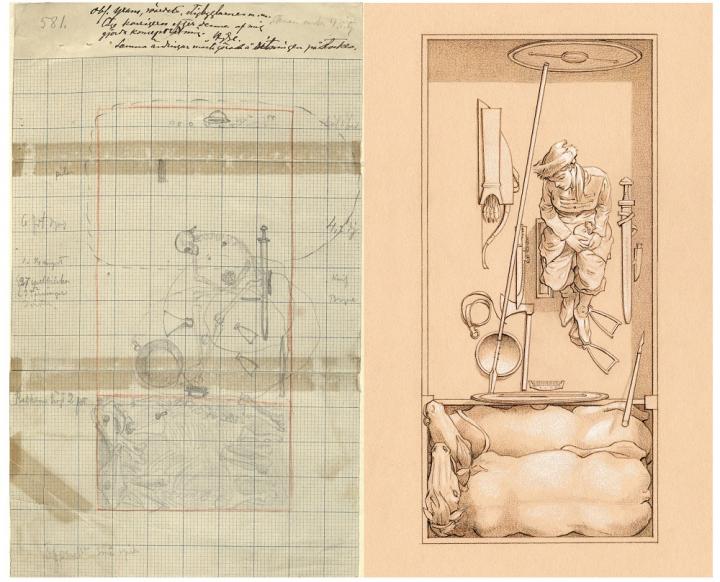
Viking Woman was a Warrior and a Leader Viking society was not as male dominated as one might expect, a new study claims. According to new research from the universities of Stockholm and Uppsala, Viking women took on leadership roles on the battlefield. Charlotte Hedenstierna-Jonson, who led the study, explained: “What we have studied was not a Valkyrie from the sagas but a real life military leader, that happens to be a woman”. At the heart of the research, published in the American Journal of Physical Anthropology, is the grave of a woman Viking warrior, complete with the remains of two horses and a selection of weapons. Significantly, the burial also contained a set of gaming pieces and a gaming board among the remains. “The gaming set indicates that she was an officer,” said Hedenstierna-Jonson. “Someone who worked with tactics and strategy and could lead troops in battle”. Buried in the Viking town of Birka during the mid-tenth century, isotope analysis has shown that the woman had an itinerant lifestyle, commonplace in the martial society that was prevalent throughout Europe between the eighth and tenth centuries. First discovered in the 1880s, it was long assumed that the Viking warrior in the burial had been a man. Thanks to new research techniques however, that assumption has been comprehensively put to bed, allowing the remains to present a fascinating new dimension to Viking culture. Anna Kjellström, who also participated in the study, said: “The morphology of some skeletal traits strongly suggests that she was a woman, but this has been the type specimen for a Viking warrior for over a century, [which was] why we needed to confirm the sex in any way we could.” The team turned to genetics to confirm the Viking woman’s sex, retrieving a molecular sex identification based on X and Y chromosomes. “This burial was excavated in the 1880s and has served as a model of a professional Viking warrior ever since. Especially, the grave-goods cemented an interpretation for over a century,” said Jan Storå, lead author of the study. “The utilisation of new techniques, methods, but also renewed critical perspectives, again, shows the research potential and scientific value of our museum collections”. Women drove Bronze and Stone Age Cultural Exchange A new study has shown the importance of female social mobility for cultural exchange in Bronze Age Europe. Findings published in the Proceedings of the National Academy of Sciences reveal a fascinating trend among Bronze Age families in the Lechtal, south of Augsburg in what is now Germany. While the men in these families had tended to stay in the region of their birth, many of the women came from outside the area, possibly from Bohemia or Central Germany. According to the findings, the pattern of female mobility was not a short-term trend, but one that can be observed over an 800-year period during the transition from the Neolithic to the Early Bronze Age. “Individual mobility was a major feature characterising the lives of people in Central Europe even in the 3rd and early 2nd millennium,” stated Philipp Stockhammer from the Institute of Pre- and Protohistoric Archaeology and Archaeology of the Roman Provinces of the Ludwig-Maximilians-Universität München, the leader of the collaborative research project. The researchers suggest in their study that this mobility was significant in the exchange of ideas and objects, something which increased significantly in the Bronze Age and in its wake encouraged the development of new technologies. For this study, the researchers examined the remains of 84 individuals using genetic and isotope analyses in conjunction with archaeological evaluations. The individuals were buried between 2500 and 1650 BCE in cemeteries that belonged to separate homesteads, and that contained between one and several dozen burials made over a period of several generations. “We see a great diversity of different female lineages, which would occur if over time many women relocated to the Lech Valley from somewhere else,” remarked Alissa Mittnik from the Max Planck Institute for the Science of Human History, a contributor to the study. Corina Knipper, from the Curt-Engelhorn-Centre for Archaeometry explained: “Based on analysis of strontium isotope ratios in molars, which allows us to draw conclusions about the origin of people, we were able to ascertain that the majority of women did not originate from the region.” The burials of the women did not differ from that of the native population, suggesting that the formerly foreign women were integrated into the local community. As well as shedding new light on the role female mobility played in cultural exchange in the Bronze Age, the new findings point to the immense scale of human mobility in general in the period. “It appears that at least part of what was previously believed to be migration by groups is based on an institutionalised form of individual mobility,” concluded Stockhammer. Roman Barracks Unearthed Near Hadrian’s Wall Archaeologists have unearthed a 2,000-year-old Roman Barracks near Hadrian’s wall, the Guardian reports. Over the course of the last two weeks a “treasure trove” of thousands of artefacts has been unearthed, including military and personal possessions from Roman soldiers and their families, according to the Guardian. Remarkably, the barracks itself actually predates Hadrian’s Wall, allowing the findings to provide unique insight into the military build-up in the area prior to the Wall’s construction. Cavalry lances, arrowheads and ballista bolts are among the weapons found at the site, alongside combs, bath clogs, hairpins, brooches and stylus pens. The barracks, which date from 105CE, were discovered under the fourth century fort of Vindolanda, south of Hadrian’s near Hexham in Northumberland. According to the Guardian, the artefacts survived because they were concealed beneath a concrete floor laid by the Romans about 30 years after the barracks was abandoned, shortly before 120CE. The concrete created oxygen-free conditions that helped preserve materials such as wood, leather and textiles. Featured Image: Reconstruction of the Grave in Birka – The drawing is a reconstruction of how the grave with the woman originally may have looked. Credit:The illustration is made by Þórhallur Þráinsson (© Neil Price).]]>

Categories
Breaking News

History News of the Week – A New Titanosaur, the Oldest Trigonometric Table, and the Fate of the H.L. Hunley

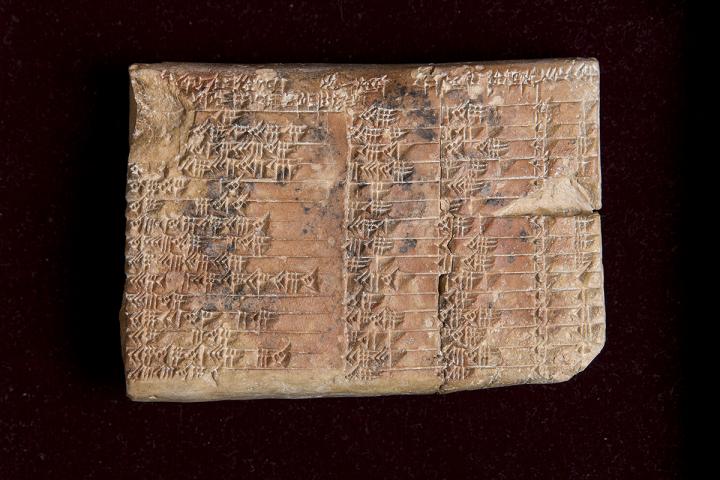
New Species of Titanosaur Discovered in Tanzania A new species of titanosaur has been discovered in Tanzania. A member of the gigantic, long-necked sauropod group, the creature’s fossil remains were discovered in Cretaceous period (70-100 million years ago) rocks in southwestern Tanzania. Although titanosaur remains have been found across the globe, they are most common in South America and rarely found in Africa. The new dinosaur has been named Shingopana songwensis, derived from the Swahili term ‘shingopana’, which means wide neck. The second part of the name comes from the Songwe region of the Great Rift Valley, where the remains were discovered. “There are anatomical features present only in Shingopana and in several South American titanosaurs, but not in other African titanosaurs,” said Eric Gorscak, a paleontologist at the Field Museum of Natural History in Chicago and the lead author of a paper in Journal of Vertebrate Paleontology detailing the find. “Shingopana had siblings in South America, whereas other African titanosaurs were only distant cousins.” Fascinatingly, Shingopana songwensis seems more closely related to sauropods found in South America than those that have been discovered in Africa. “This discovery suggests that the fauna of northern and southern Africa were very different in the Cretaceous Period,” said Judy Skog, a program director in the National Science Foundation’s Division of Earth Sciences, which supported the research. “At that time, southern Africa dinosaurs were more closely related to those in South America, and were more widespread than we knew.” Mysterious Babylonian Tablet Is the World’s Oldest Trigonometric Table Scientists have revealed that a 3,700-year-old Babylonian clay tablet is the world’s oldest trigonometric table. The researchers from UNSW Sydney believe the tablet could have been used by ancient mathematical scribes to calculate how to construct palaces, temples and canals. The findings unveil a previously unknown level of mathematical sophistication among the ancient Babylonians, showing they had begun to study the mathematics of triangles long before the ancient Greeks. Named Plimpton 322, the small tablet, which was discovered in what is now southern Iraq, has four columns and 15 rows of numbers written on it in the cuneiform script of the time using a base 60, or sexagesimal, system. Previously, scientists argued the tablet would have been a teaching aid for checking solutions to quadratic problems. “The huge mystery, until now, was its purpose – why the ancient scribes carried out the complex task of generating and sorting the numbers on the tablet,” said UNSW’s Dr. Daniel Mansfield, co-author of the study published in the journal Historia Mathematica. “Our research reveals that Plimpton 322 describes the shapes of right-angle triangles using a novel kind of trigonometry based on ratios, not angles and circles. It is a fascinating mathematical work that demonstrates undoubted genius.” The Greek astronomer Hipparchus, who lived circa 120 years BCE, is typically regarded as the father of trigonometry, with his “table of chords” on a circle considered the oldest trigonometric table. “Plimpton 322 predates Hipparchus by more than 1000 years,” said Dr Wildberger, the study’s other coauthor. “It opens up new possibilities not just for modern mathematics research, but also for mathematics education. With Plimpton 322 we see a simpler, more accurate trigonometry that has clear advantages over our own.” “A treasure-trove of Babylonian tablets exists, but only a fraction of them have been studied yet. The mathematical world is only waking up to the fact that this ancient but very sophisticated mathematical culture has much to teach us.” Confederate Submarine Crew Were Killed by Shockwave from Their Own Torpedo On 17th February, 1864, the Confederate H.L Hunley became the first combat submarine to sink an enemy vessel when it torpedoed a 1,200-ton Union warship, the USS Housatonic, outside Charleston Harbor, South Carolina. The torpedo blast, below the waterline of the Housatonic, was enough to sink the ship in under five minutes. Five seamen were killed in the attack, the rest were saved, rescued thanks to the fact the stricken ship came to rest upright in the water. For years, the fate of the Hunley crew remained a mystery. The 40-foot vessel was found in 1995, about 300 metres away from Housatonic’s resting place, and raised in 2000. Scientists from Duke University now think that firing the explosive torpedo instantly killed the submarine’s own eight-man crew. When the vessel was first unearthed, scientists were shocked to find the skeletons of the crew still at their stations. They had suffered no broken bones, the ships bilge pumps hadn’t been used and the air hatches remained closed. Except for some slight damage, the submarine was largely intact. Thorough research from Duke University, which has included modelling blasts next to a scale model of the Hunley, shooting Civil War weapons at iron plates and studies on the transmission of blast energy, has led Rachel Lance, a Duke Engineering graduate, to conclude that a powerful shockwave from the torpedo killed the submarine’s crew instantly. “This is the characteristic trauma of blast victims, they call it ‘blast lung,'” said Lance, who worked as a biomechanist at the U.S. Navy’s base in Panama City, Florida for three years before entering graduate school at Duke. “You have an instant fatality that leaves no marks on the skeletal remains. Unfortunately, the soft tissues that would show us what happened have decomposed in the past hundred years.” Lance observes that the physical evidence backs up her conclusion, showing no sign the crew took actions in response to either a flood or loss of air. “If anyone had survived, they may have tried to release the keel ballast weights, set the bilge pumps to pump water, or tried to get out the hatches, but none of these actions were taken,” she writes in her paper, which is part of her dissertation research and has been published in the journal PLOS ONE. Featured Image: The 3,700-year-old Babylonian tablet Plimpton 322 at the Rare Book and Manuscript Library at Columbia University in New York. Credit: UNSW/Andrew Kelly]]>