Categories
Breaking News

New Evidence There Was Life Before Oxygen

Geology, looks like it could change that. The team of researchers, including Andrew Czaja; an assistant professor of geology at University of Cincinnati, Nicolas Beukes from the University of Johannesburg and Jeffrey Osterhout; a recently graduated master’s student from UC’s department of geology, present new evidence for bacteria found fossilised in two separate locations in the Northern Cape Province. “These are the oldest reported fossil sulfur bacteria to date,” said Professor Czaja in a press release. “And this discovery is helping us reveal a diversity of life and ecosystems that existed just prior to the Great Oxidation Event, a time of major atmospheric evolution.” The 2.52 billion year old sulfur oxidising bacteria were abundant in deep water areas of the ocean in a geologic time known as the Neoarchean Eon. Described by Czaja as large and spherical shaped, the smooth walled microscopic structures were much bigger than most modern bacteria, but similar in size to some modern single-celled organisms that live in deep water, sulfur-rich ocean settings today. “These fossils represent the oldest known organisms that lived in a very dark, deep-water environment,” explains Czaja in the University of Cincinnati press release. “These bacteria existed two billion years before plants and trees, which evolved about 450 million years ago. We discovered these microfossils preserved in a layer of hard silica-rich rock called chert located within the Kaapvaal craton of South Africa.” The oxygen deficiencies in the earth’s atmosphere billions of years ago have led scientists to presume that any life would have had to live in mud at the deepest reaches of the ocean. Such lifeforms would have been able to survive without oxygen or sunlight. According to Czaja, the discovery made by his team marks the first direct evidence for these earliest life forms. Scientists have theorised previously that South Africa and Western Australia were once joined together in a supercontinent called Vaalbara. Based on radiometric dating and geochemical isotope analysis, Czaja suggests the fossils could have formed in this early Vaalbara supercontinent in an ancient deep seabed containing sulphate from continental rock. Based on this dating, the fossil bacteria would have been thriving just before the time other shallow water bacteria began creating more oxygen through photosynthesis. “We refer to this period as the Great Oxidation Event that took place 2.4 to 2.2 billion years ago,” said Czaja. Just as modern bacteria recycle decaying plant matter into minerals and gases, Czaja and his team suggest the Neoarchean bacteria could have performed a similar role, consuming volcanic hydrogen sulfide and emitting sulfate. “While I can’t claim that these early bacteria are the same ones we have today, we surmise that they may have been doing the same thing as some of our current bacteria,” explained Czaja. “These early bacteria likely consumed the molecules dissolved from sulfur-rich minerals that came from land rocks that had eroded and washed out to sea, or from the volcanic remains on the ocean’s floor.” Scientists believe that the origin of sulfur-oxidising bacteria was a pivotal moment in the evolution of life on earth. Determining exactly when these bacteria came into existence therefore has the potential to be hugely informative. “…these fossils tell us that sulfur-oxidizing bacteria were there 2.52 billion years ago, and they were doing something remarkable.” Image courtesy of Aaron Satkoski, UWM postdoc on the excursion.]]>

Categories
Breaking News

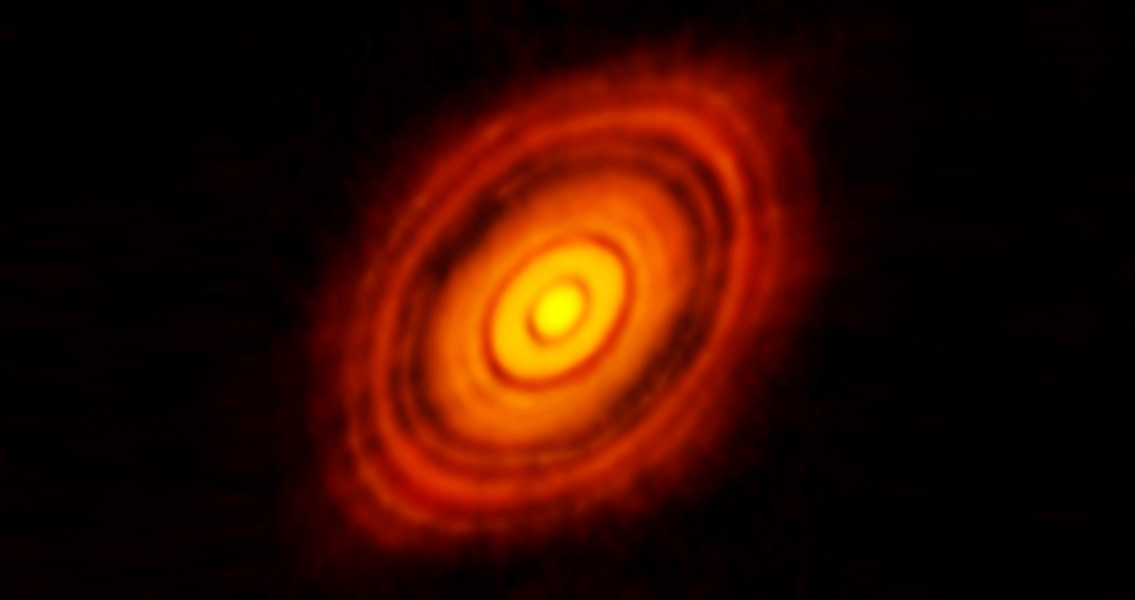
Low-Mass Supernova May Be Behind Formation of Solar System

here ]]>

Categories
Breaking News

Amphipolis Site Could Harbor Second Monument

Categories
News

230 Years Since The Death Penalty Was Abolished for the First Time

Categories
Breaking News

Bandicoot Fossils Show Marsupials were Ancient Survivors

Lemdubuoryctes aruensis however, the remarkably archaic new bandicoot fossil discovered by Alpin, didn’t live in a rainforest but on an expansive savannah plain stretching from Australia to New Guinea at the time of the last glacial maximum. “While retreating rainforests and spreading grasslands did provide a backdrop for ecosystem change 5-10 million years ago. The Australian fauna likely adapted via changing its distribution rather than undergoing wholesale extinction and replacement,” Michael Westerman, with La Trobe University in Australia, says in the article, adding, “This agrees with our results from DNA, which indicate that modern desert-living bandicoot groups pre-date the onset of aridity by as much as 40 million years.” These timeframes coincide with the proliferation of Eucalyptus woodlands in Australia’s interior. “Bandicoots, like other Australasian marsupials, probably occupied a range of different habitats over many millions of years. However, our study has further implications for future conservation. Arid zone bandicoots are amongst the most vulnerable mammals in Australasia today, with multiple species having gone extinct within the last 100 years. By demonstrating their profound evolutionary antiquity, we can thus serve to highlight how extremely urgent it is to protect these living fossils as part of Australia’s unique biodiversity”, Dr. Kear is quoted as saying in the Heritage Daily article. The study has been published in Scientific Reports. ]]>

Categories
Breaking News

Nazi Networks in Post War Germany Under Investigation

Adolf Eichmann, were eventually captured, while others managed to evade justice for the rest of their lives. While many who’d worked in the higher echelons of the Nazi regime were either killed in the Second World War or prosecuted at the Nuremberg Trials, lower level party members or soldiers were often allowed to continue unpunished, forging careers in Germany’s post war society. ]]>

Categories
Breaking News

Original Site of the Plymouth Colony Identified

Categories
Editorial

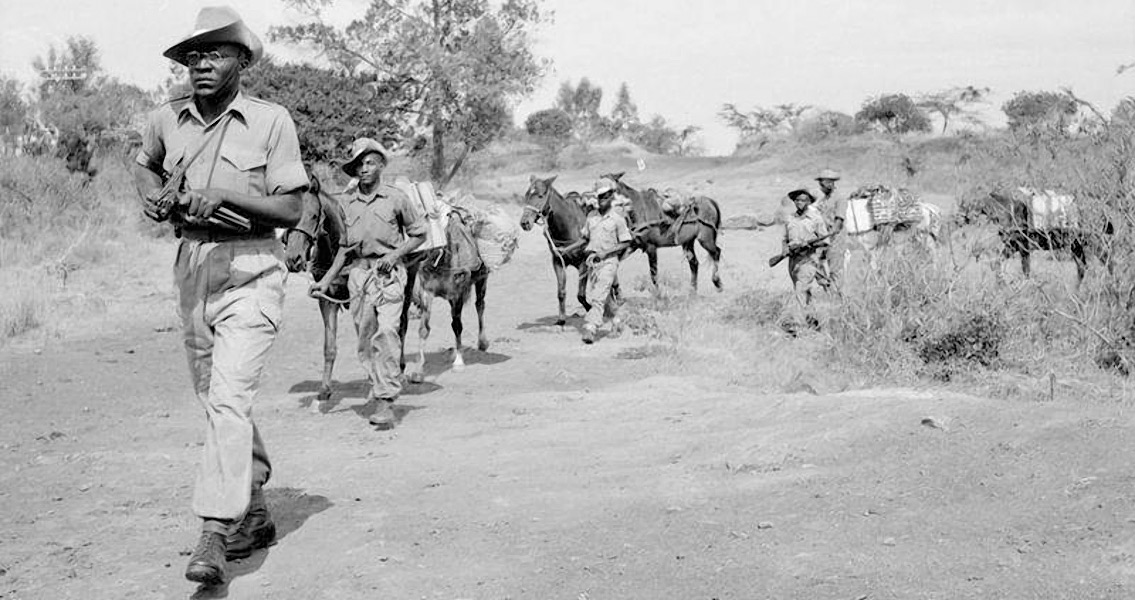
Detention Camps and Surveillance, Britain Responds to Mau Mau Uprising

concentration camps created in the Boer War. 1.5 million Kikuyu, Embu and Meru civilians were feared to hold allegiances to the Mau Mau. As Dr Huw Bennet wrote in a 2015 Guardian article: “Africans living in the so-called Kenya Emergency areas were deemed guilty until proven innocent.” The majority of those people living in the Emergency Area were either sent to detention camps or forcefully relocated to new villages where they could be kept under heavy surveillance. Official records described these detention camps as rehabilitation centres, places where occupants received classes in home-crafts and civics. Any acts of violence or brutality reported were deemed isolated incidents, exceptional cases far from the norm. It is a description which matches the broader narratives given by defenders of the British Empire, a description that suggests a benevolent, civilising imperialist force. As the years went on however, sickening cracks started to appear in this account of British involvement in the Mau Mau uprising. Accusations of torture, beatings and sexual assault in the detention camps started to arise. Recent work by historians such as Bennet, David Anderson and Caroline Elkins has started to unravel the scale of the detention camp system. The figure for the number of detainees has been brought into question. Official accounts state 80,000 were held in the camps, while Elkins’ work suggests that number was in fact somewhere between 160,000 and 320,000. Meanwhile, the work of journalists and investigators at the time who exposed human rights abuses has also been revisited, helping paint a more detailed image of what truly happened. A pivotal question is to what extent the abuses at the camps in Kenya were the result of British government policy, as opposed to the excesses of individuals. It’s a controversy which garnered particular attention in 2014, when a group of elderly Kenyans launched a £200 million damages claim against the UK Government. In 2013, then UK foreign minister William Hague had admitted “The British government recognises that Kenyans were subject to torture and other forms of ill-treatment at the hands of the colonial administration”. Still, the true extent of the atrocities in the Mau Mau uprising and the level of complicity of the British government remain shrouded in ambiguity, in large part due to severe gaps in the records available. The eight years of the Mau Mau uprising saw 1,800 African civilians killed, an unknown number of Mau Mau rebels killed, 32 white settlers killed and 200 British soldiers killed. Beyond that, it stands as an atrocious moment at the close of Britain’s imperial history, the true extent, nature and meaning of which is still being unraveled. ]]>

Categories
Breaking News

Newly Discovered Sculpture Looks Like Rodin’s “Thinker”

The Times of Israel, dig leader Gilad Itach remarked that the figurine was discovered on the very final day of excavations, just prior to modern construction efforts commencing at the site. The pot itself is relatively characteristic of the period, Itach stated, but the statue that was added after it had been created is unique, as there have never been any discoveries of such a figurine in previous digs. Archaeologists say that the sculpture features an incredible attention to detail for its age. The arms and legs, as well as the face, seem to have been added on to the neck of the jug which was used as the base for the formation of the upper torso of the figure. Along with the figure, which measures seven inches in height, a large number of other items were found as well. Sheep and donkey bones were discovered at the dig site, in addition to an ax head, arrowheads and daggers. The items were likely used as burial goods, Itach explained, probably for the grave of one of the Canaanites who inhabited the region during the Middle Bronze Age. It would have been customary to provide a large number of funeral goods for prominent members of the community, the researcher remarked, as beliefs were that the objects individuals were interred with would have traveled with them to the next world. To Itach’s knowledge, this is the first burial to feature such a wide assortment of objects, especially the remarkable pottery find. The resemblance to “The Thinker” is quite uncanny. The face of the figure rests on one of its hands as it sits on the pot, looking as if it is lost in thought. There’s no way of telling whether the potter who created the jug added the figure or if a second craftsman did so, Itach added. The Yehud dig site yielded more than just the unique set of burial goods. Several other artifacts were discovered that date even older than the Middle Bronze Age, including a shattered earthenware butter churn and the remains of what might have been an ancient well dating to the Chalcolithic period, around 6,000 years in the past. Meanwhile, an earlier archaeological dig in Yehud in close proximity to the location of the statue revealed a massive necropolis dating to the Bronze Age containing nearly 100 pit graves. The remains of men, women and children were found within, complete with grave goods that included jewelry, animal bones, scarabs, pins, daggers and pots. Researchers say that the location saw continued use as a cemetery for several centuries afterwards as well. Images of the newly discovered artifact can be found here: here ]]>

Categories
Breaking News

Howard Carter's First Glimpse Into Tutankhamun's Tomb