Categories
Breaking News

Ancient Statue of Goddess Kybele Unearthed in Turkey

Hurriyet Daily News, Mayor Enver Yilmaz said that the decision was made to support the dig after 2015’s initial one million Lira provision to begin excavations of Kurul Castle. Hopes are high that the restored, excavated castle will bolster tourism in the area, providing opportunities for visitors to observe archaeological artifacts such as the sculpture in an open-air museum. Researchers working on site say that the new statue is one of the most significant finds discovered within Turkey so far in 2016. Besides its historical significance, the Kybele sculpture is the first of its kind to have been discovered in situ – an extremely rare event. This is made even more noteworthy because of the state of Kurul Castle, as the main gate’s walls collapsed during an early occupation by Roman forces. Thought to be constructed during the reign of Mithridates the Sixth, king of Pontus and Armenia Minor from circa 120 BCE to 63 BCE, Kurul Castle may not have been the original home of the Kybele statue. The sculpture likely belonged to the Hellenistic Pontus Kingdom, and could have been transported to Kurul from a more western province, most likely that of Afyon. Located on a mountain ridge outside the village of Bayadi, a close suburb of the city of Ordu, Kurul Castle stands at an elevation of some 1800 feet (571 meters). The site once consisted of an open-air temple, surrounded by a pair of curtain walls. The interior of the castle also held a gallery, a water cistern, and at least four living spaces unearthed by recent excavations. Archaeologists plan to leave the statue in place for now until it can be secured for transport and conservation to a suitable museum in Ordu. Images of the statue can be found here ]]>
Categories
Breaking News

DNA Confirms the Bacteria Responsible for the Great Plague

Yersinia pestis, was present in the victims, a year after the discovery of a suspected mass burial pit during excavation work associated with the Crossrail project at Liverpool Street, in East London. The identity of which microbes were responsible for the Great Plague has long been debated. The search for the bacterium was conducted by the osteology department of the Museum of London Archeology (MOLA), where the finds from Liverpool Street are stored. Michael Henderson led the examination of a number of skeletons from the site. He told BBC News, “They’re carefully boxed, individual elements, legs separately, arms separately, the skulls and the torsos. We excavated in the region of three and a half thousand skeletons, one of the largest archaeologically excavated to this date. A vast data set that can give us really meaningful information.” Teeth from the London remains were extracted and sent for DNA analysis at the Max Planck Institute for the Science of Human History, in Germany. “The best thing to sample for DNA is the teeth; they’re like an isolated time capsule,” Henderson explained in the BBC News interview. Once in Germany, Kirsten Bos, a molecular palaeopathologist with the institute, led the painstaking effort to drill out the tooth pulp used in the search for the seventeenth-century bacteria, resulting in positive results from five of the individuals tested. “We could clearly find preserved DNA signatures in the DNA extract we made from the pulp chamber and from that we were able to determine that Yersinia pestis was circulating in that individual at the time of death. We don’t know why the Great Plague of London was the last major outbreak of plague in the UK and whether there were genetic differences in the past, those strains that were circulating in Europe to those circulating today; these are all things we’re trying to address by assembling more genetic information from ancient organisms.” Bos told BBC News. The horrific fate of the infected Londoners was described in the eighteenth-century account of the event: A Journal of the Plague Year, by Daniel Defoe. “The plague, as I suppose all distempers do, operated in a different manner on differing constitutions; some were immediately overwhelmed with it, and it came to violent fevers, vomitings, insufferable headaches, pains in the back, and so up to ravings and ragings with those pains,” Defoe wrote. “Others with swellings and tumours in the neck or groin, or armpits, which till they could be broke put them into insufferable agonies and torment; while others, as I have observed, were silently infected.” Alison Telfer, from MOLA, told the BBC’s Today program, “We’ve found about three-and-a-half thousand burials on this site. We’ve been working here for the last five-and-half-years on and off and we’re hoping we’ll be able to get positive identification of the plague on a number of the individuals.” Bos’s team will continue sequencing the full DNA genome in order to completely understand the spread and evolution of the disease. ]]>

Categories
Breaking News

First-Ever Hittite Human Remains Discovered in Turkey

Categories
Breaking News

9/11 Triggered Sharp Spike in Mental Disorders Outside the USA

American Journal of Epidemiology. Using population data from the Danish Psychiatric Central Research Register, covering the period from 1995 to 2012, the team looked for changes in the incidences of mental disorders around the time of the 9/11 attacks. By analysing 1,448,250 contacts with psychiatric services, the team found the week following September 11, 2001, coincided with a 16% rise in the incidence rate of stressor and trauma related disorders, such as post traumatic stress or adjustment disorders. For six months after the attacks, the incidence of stressor and trauma related disorders remained elevated by around 5% above the normal level. The surge did not dissipate until roughly a year after 9/11. No similar increases were found for other mental disorders in the same period. “[the outcome of the study] sadly confirms that one of the alleged purposes of [certain types of] terrorism – to generate mass-scale attention and intimidation – is in fact achieved”. the authors write, in their conclusion. Anyone old enough to remember 9/11 will know that one of the most startling things about the events that day was the extensive mass media coverage they received, a tragedy transmitted across the globe almost in real time. Unsurprisingly, the study authors think this was key to the effect they observed. “The extra-national character of the post-9/11 deterioration of mental health observed in this study also highlights the pronounced importance of mass media in transmitting stress-inducing information to populations in countries far removed from the target of the [terrorist] attack.” The study, by Bertel T. Hansen; Søren D. Østergaard; Kim M. Sønderskov and Peter T. Dinesen, highlights the impact of 9/11 as it was experienced vicariously in Denmark – across the Atlantic and thousands of miles away from the actual site of the attacks. Beyond this historical insight however, it also offers an ominous warning for the future. “Although this remains to be examined, it seems likely that such an effect [as observed in the study] would become even stronger in the future, given the highly visual and real-time nature of today’s mass media.” For more information: oxfordjournals.org]]>

Categories
News

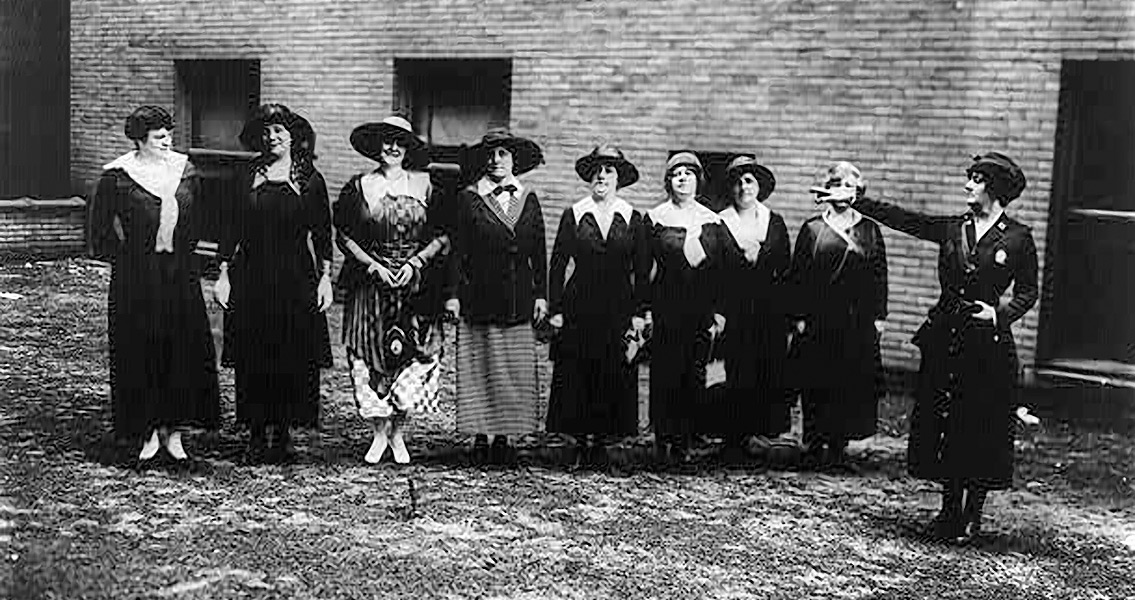
The LAPD's First Woman Officer and the Fight for Equality

Categories
Breaking News

Children Sacrificed to Serve as “Guardians” for Chornancap Priestess

Categories
Breaking News

Sunken WWII-Era British Submarine Found off Danish Coast

Categories
Breaking News

High Protein Diet Caused Differences Between Neanderthals and Humans

homo sapiens‘ closest extinct relatives. Although bearing many physical similarities to a modern human, there is no doubt that the two species are markedly different in appearance. Neanderthals were shorter and stockier than humans, with significantly wider rib cages and larger pelvises. Published in the July edition of the American Journal of Physical Anthropology, the new study argues that these differences were the result of Neanderthals having to adapt to a high-protein diet. The conclusion was reached using a model the researchers developed to detect dietary stress. Neanderthals lived in Ice-Age Europe, demonstrating remarkable resilience by surviving the brutally cold conditions. The authors of the study, from the Tel-Aviv University (TAU) in Israel, suggest that Neanderthals changed their diets during the coldest periods of the Ice Age, taking between 74% and 85% of their caloric intake from animal fat when carbohydrates weren’t available. However, during winter, large animals shed some of their fat content, a fact which according to the model developed by the researchers would have led to a “significant stressful dietary fat deficit” for the Neanderthals. The authors suggest that this deficit could have been ameliorated by an increased capability to convert protein into energy. “Given that high protein consumption is associated with larger liver and kidneys in animal models, it appears likely that the enlarged inferior section of the Neandertals’ thorax and possibly, in part, also his wide pelvis, represented an adaptation to provide encasement for those enlarged organs.” the authors write, in the abstract to their study. “During harsh Ice-Age winters, carbohydrates were scarce and fat was in limited supply. But large game, the typical prey of the Neanderthal, thrived,” explained study coauthor Miki Ben-Dor, of the Department of Archaeology and Ancient Near Eastern Cultures at TAU, in an interview with the Pakistan Observer. “This situation triggered an evolutionary adaptation to a high-protein diet – an enlarged liver, expanded renal system and their corresponding morphological manifestations. All of these contributed to the Neanderthal evolutionary process.” Ben-Dor continued. The liver is the organ responsible for converting protein into energy, and is therefore likely to enlarge with a high protein diet. Such a diet also increases metabolism, placing a greater demand on the kidneys and bladder to remove toxic urea, and in turn leading to their enlargement. Consequently, the study reasons, Neanderthal pelvises and rib cages had to evolve to house these larger organs. Protein only makes up 30% of the diet for homo sapiens on the other hand, meaning humans have a limited ability to convert protein to energy. Homo sapiens therefore increase their intake of fat and carbohydrates to meet their nutritional needs. ]]>

Categories
Breaking News

Floor Tiles from Second Temple of Jerusalem Reconstructed

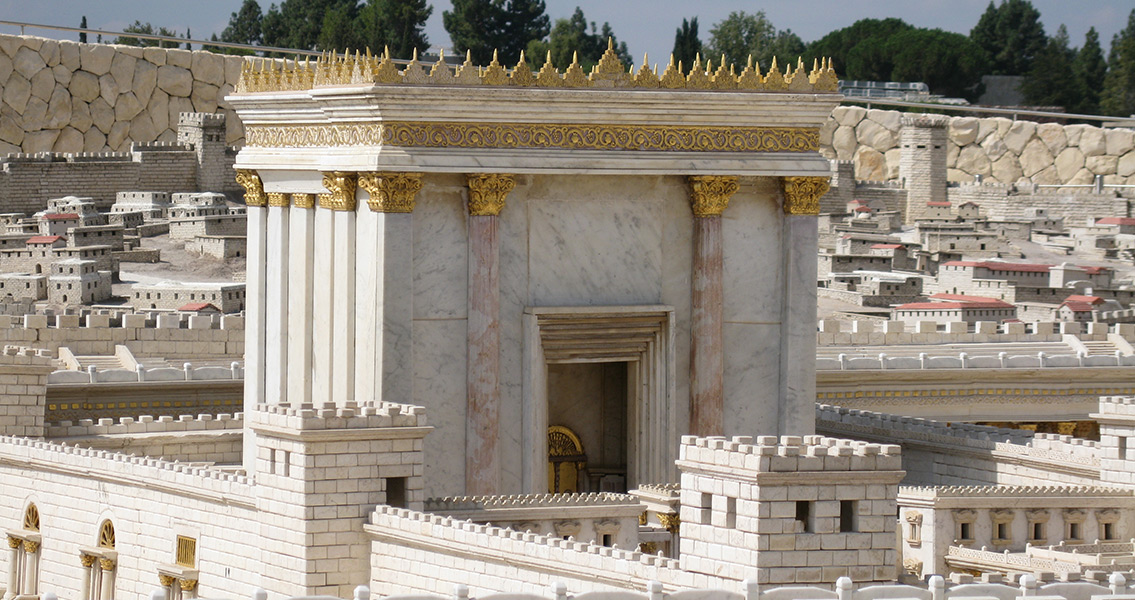
Haaretz, representatives from the Temple Mount Sifting Project believe that these ornate tiles had once been used as adornment on the Temple Mount, decorating porticos – or colonnades covered by roofs – between 37 BCE and 4 BCE. If true, it means the tiles were there during the reign of Herod, Jerusalem’s ruler and a vassal of the Romans. Project director and co-founder Zachi Dvira stated in a blog post that this marks the first time a portion of the Second Temple complex has been restored. The shards of shattered marble were discovered through a painstaking process of debris sifting. The detritus was left over by an excavation of the 600-square-yard underground prayer space known as Solomon’s Stables, undertaken by the Jerusalem Islamic Waqf: the civil organization that maintains Islamic centers of worship within Old Jerusalem. The Israeli authorities classify the 1999 excavation of the site as illegal, citing that the Waqf began its excavation and renovation efforts without first seeking a permit to do so. Around 600 pieces of colored floor tile have been found in the rubble. Around 100 of these pieces have so far been traced back to the Second Temple period with a high degree of certainty. Archaeologists say these tiles share characteristics of other relics dating to the time, specifically in other monuments built for and by Herod. Two of these – the Herodian palaces at Jericho and Masada – have been a rich source of artifacts in the past. Cut with precision in a wide array of geometric shapes, the multicolored stone that comprises these tiles is thought to have been polished to a bright shine. The majority of the stones used in constructing the tiles had been imported from Egypt, Tunisia, Asia Minor, and of course Rome. Additional clues as to the origin of the tiles is that they were sized to correspond with the pes, the Roman unit of measurement that is roughly equivalent to a foot (0.971 feet). The particular design of tile, referred to as “opus sectile”, originated during Herod’s time; researchers say that the elite of the Second Temple era preferred these tiles due to their increased cost and prestige. The newly restored tiles – seven in total – are to be displayed this month at the City of David Archaeological Conference. While these reconstructions are only potential designs –the flooring was not discovered in situ and therefore these designs cannot be proven conclusively to have been the ones the tiles were set in all those centuries ago – the best guess of some of the world’s foremost experts on the Second Temple of Jerusalem represents the closest we may ever be able to come to recapturing the alleged splendor of Herod’s Temple. The project, which is officiated by the Israel Parks and Nature Authority, is funded by the City of David Foundation. Images of the the reconstructed floor tiles can be found here ]]>

Categories
Breaking News

Oldest Maya Codex Proven Authentic

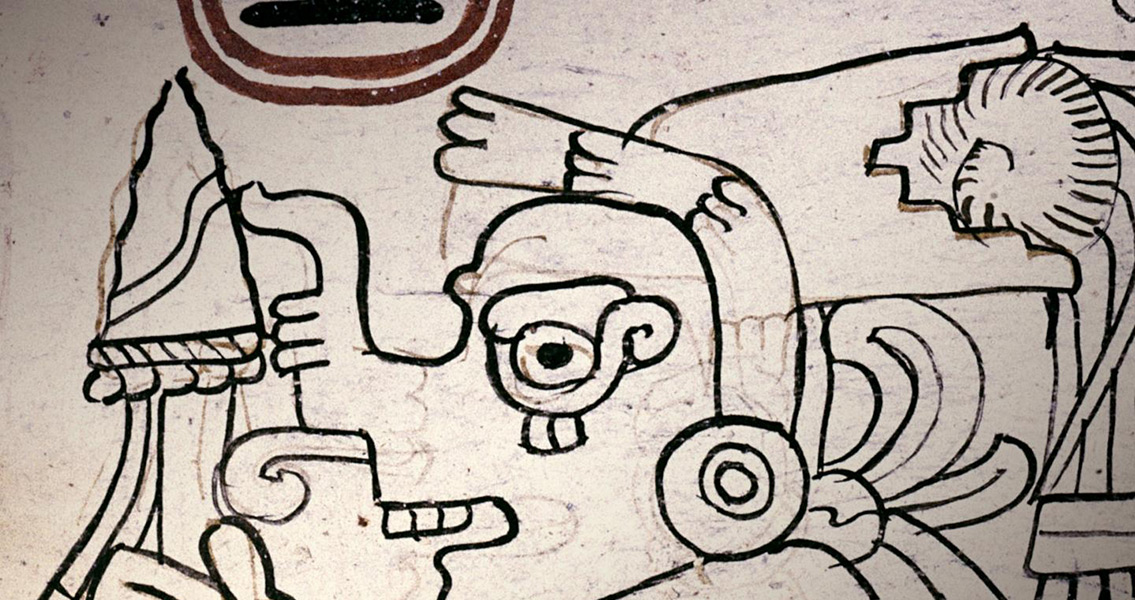
Maya Archaeology, are: “… a confirmation that the manuscript, counter to some claims, is quite real.” said Houston, in a Brown University press release. Coe’s team carried out a rigorous analysis of the codex to reach their conclusion, looking at everything from the manuscript’s style and iconography, to the paper it was produced on. Most crucially, they radio carbon dated it and found it came from the thirteenth century, predating three other well known Mayan codices: the Dresden, Madrid and Paris – named after the cities in which they are now housed. The authors note that because the Dresden, Madrid and Paris codices were discovered first, their features are regarded as canonical. The Grolier is undoubtedly different to those three codices, but the authors argue that in itself isn’t proof it is inauthentic. Most significantly, Coe et al point out that it actually would have been almost impossible for forgers to have created the forgery by 1964. The Grolier Codex depicts in detail gods and deities which archaeologists had yet to discover at that point; while the illustrations and paintings contain perfect Maya blue pigments, pigments that were not successfully synthesised in a laboratory until the 1980s. As the authors write in the study: “A reasoned weighing of evidence leaves only one possible conclusion: four intact Mayan codices survive from the Precolumbian period, and one of them is the Grolier.” For more information: Journal of Maya Archaeology Image courtesy of Justin Kerr ]]>