Categories
Breaking News

Passage Graves from 4000 BCE May Have Been Used as Telescopes

Daily Mail, in order to accurately detect and time the very first appearance of this star, it has to be viewed at twilight. At the time the graves were constructed, between 4,300 and 3,700 BCE, Aldebaran would have risen between April 18th and 27th, in the exact spot in the sky that’s visible from inside every entrance passage at Carregal do Sal. The first sighting of Aldebaran may have been used by early humans to mark the seasons. Upon the star’s arrival, Neolithic communities would have likely moved their cattle to higher pastures located nearby in Serra da Estrela. Additionally, given that the tombs were widely considered sacred places, this ability to detect stars too faint for anyone outside of the tomb to see may have been considered a sort of secret knowledge, obtainable only in the company of their deceased ancestors. How does it work? There are several factors at play, according to what Dr. Silva told the Daily Mail. The long entrance behaves like a telescope without a lens, simply a long tube, the characteristics of which affect how and what you see. For instance, your attention is directed to a particular area while the distraction of other stars is removed, and the total darkness of the structure would be helpful for adjusting your eyes to the darkness of the sky – which in turn makes it easier to detect faint details like distant stars. Previous studies have shown that the majority of passage tombs located in Portugal are positioned to align with two or three different stars, Aldebaran being the primary attraction. Although there are over a thousand known passage graves throughout Europe, it’s estimated that only around 10% of them are oriented towards a particular star, including the well-known passage graves at Bryn-celli-Ddu on Anglesey, and Newgrange in Ireland; which appear to have been orientated towards either the sunset or sunrise on the winter or summer solstice. The research was presented at the 2016 Royal Astronomical Society’s national meeting during a special session about how historical societies and cultures studied the sky. Image courtesy of ESO/Luis Calçada/Herbert Zodet ]]>

Categories
Breaking News

Carthage Used Liquid Cooling for Chariots and Horses

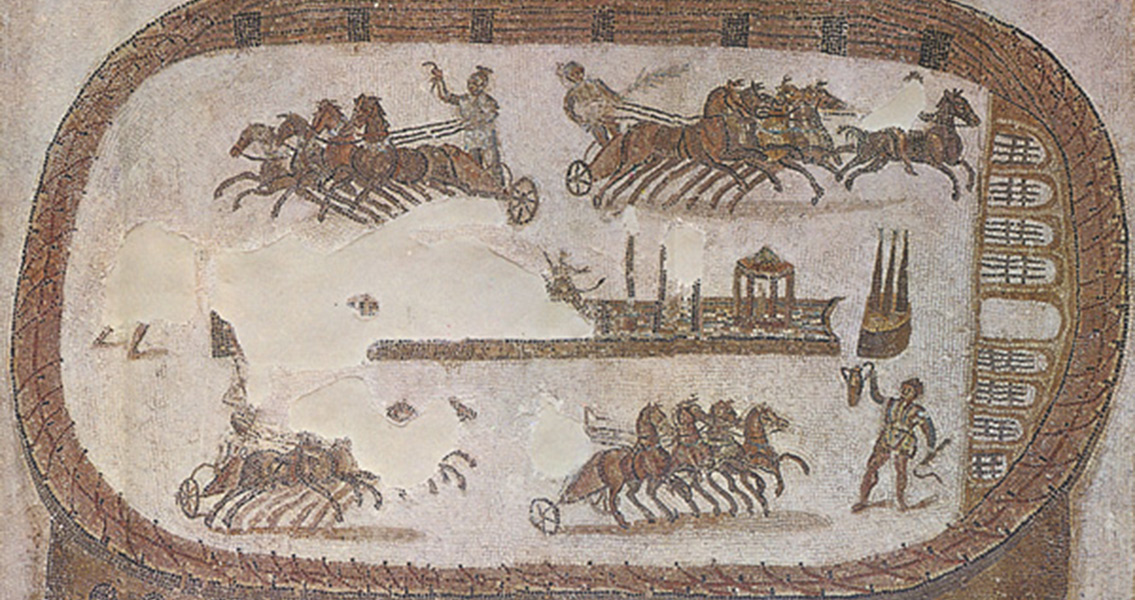
Haaretz, water resistant mortar was discovered within the median strip of the circus known as the spina. This hydraulic mortar, created by mixing lime with pulverized and crushed ceramics, was often used in Roman hydraulic engineering, Tübingen University’s Frerich Schön told Haaretz. The ends of the spina at any circus were often adorned with ornate statues and columns. Archaeologists realized that the spina at the Circus of Carthage had been festooned with water basins, and sprinklers known as sparsores would drop down and dip a clay amphora into each basin in order to sprinkle water on the chariots and their horses as they rounded the corner of the spina, said excavation co-director Dr. Ralf Bockmann. Water basins appearing at the ends of the spina were apparently a common occurrence, as there have been basins found at the Circus of Maxentius, located on the Via Appia outside Rome. Additionally, Carthaginian mosaics depicting the basins, located on the spina of the Circus, have also been found. However, the sprinkling of the chariots as they came around the bend would have been a harrowing job. A career as one of the sparsores meant tossing water from amphorae by hand as the chariots screamed around the arena at high speed, usually from the spina itself. It likely would have required careful organization and timing, Bockmann remarked, adding that it undoubtedly would have been a highly dangerous vocation. The Circus of Carthage was massive in its heyday, as it was at least 500 meters in length according to geophysical surveys undertaken in the 1970s. This is only 80 meters shorter than the Circus Maximus located in the heart of Rome. The Circus Maximus could hold approximately 150,000 spectators at a time, and while Carthage’s chariot ring was slightly smaller, the number of people it could accommodate was also likely to have been quite high. Bockmann, along with co-leader Dr. Hamden Ben Romdhane from Tunisia’s Institut National du Patrimoine, will be studying the Circus for several more years. ]]>

Categories
Breaking News

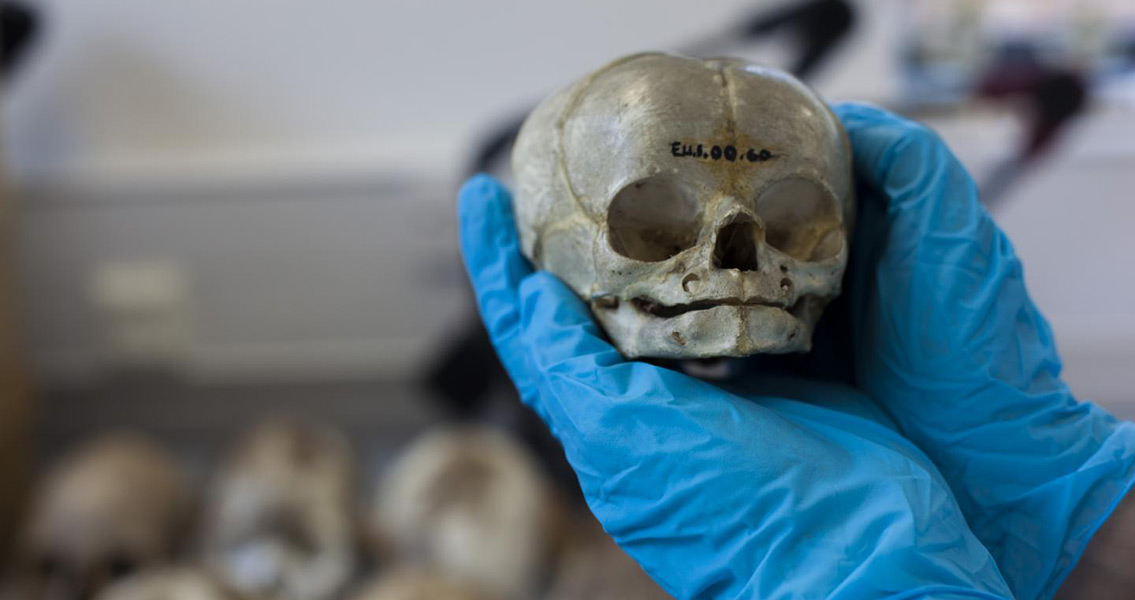
Infant Cadavers Commonly Used by 19th Century Anatomists

Journal of Anatomy, the study is a pioneering look at how the changing anatomy of childhood in the 1800s was studied and investigated by British scientists. The research was carried out by Jenna Dittmar and Piers Mitchell from Cambridge’s Department of Archaeology and Anthropology. The skeletons under analysis came from the dissecting room of the university’s Department of Anatomy. The dates of the specimens ranged from 1768 to 1913. A number of differences quickly became apparent to the researchers in terms of the type of tests that had been carried out on the varying age groups. The bodies of adults were generally subjected to a craniotomy, a procedure in which the top of the skull is opened with a saw. The skulls of foetuses and children on the other hand, were generally kept intact. Of the 54 infant and foetal specimens in the collection, a craniotomy had only been performed on one. Another surprising discovery of the research is that the bodies of infants and foetuses were often kept by anatomists for use as teaching aids or in further research. Adult bodies however, tended to be discarded swiftly. “Foetal and infant bodies were clearly valued by anatomists, illustrated by the measures taken to preserve the remains intact and undamaged,” said Dittmar, in a press release from the University of Cambridge. “The skulls appear to have been intentionally spared to preserve them for teaching or display. This may explain why so few children with signs of dissection on their bones have been recovered from the burial grounds of hospitals or parish churches, compared with adults.” According to the researchers, a number of historical factors could explain this surprising trend. Literature from the late eighteenth century suggests that smaller bodies were viewed as valuable teaching tools, making it easier for lecturers to highlight the intricacies of the circulatory and nervous systems for example, by injecting the entire cadaver with coloured wax. “The valuable and unique knowledge that could only be obtained from the examination of these developing bodies made them essential to the study of anatomy,” Dittmar explained. Legal factors could also explain the common use of child bodies. Although the Murder Act of 1752 allowed the bodies of executed murderers to be given to medical research, it had little impact on the growing demand for bodies, leading to a black market forming. Resurrectionists or body snatchers, who often obtained bodies by grave robbing, tended to sell cadavers by the inch, making infant bodies less profitable and thus more readily available. The Anatomy Act of 1832 let workhouses and hospitals donate unclaimed bodies to research. Waves of cholera and tuberculosis devastated the urban population during the industrial revolution, particularly infants, while workhouses were often lethal places for the young; factors that could have led to a greater number of infant bodies being donated to dissection. Potentially most significant, according to the authors of the study, was the New Poor Law Amendment Act of 1834, which ended parish relief for unmarried women and the obligations on the fathers of illegitimate children. Designed to cut the illegitimate birth rate, the law only succeeded in heightening the plight of unwed mothers, triggering a shocking outbreak of infanticide by the 1860s. “This left very few options for these women: the workhouse, prostitution, abortion and infanticide – all of which were life-threatening,” said Dr. Mitchell. As Britain progressed through the industrial revolution and its population increasingly moved to densely populated cities, the strains on the traditional family unit increased and the spread of diseases worsened. Meanwhile, for medical science, new ailments inherent in industrialisation and massive population growth led to a dramatic increase in the need for medical research and training. “Our research shows that the major sources of the bodies of very young children were from stillborn babies of destitute mothers, babies who died from infectious diseases, those dying in charitable hospitals, and unmarried mothers who secretly murdered their new-born to avoid the social stigma of single parenthood,” Mitchell said. “Poor and desperate women at the time of the industrial revolution could not only save the cost of a funeral by passing their child’s body to an anatomist, but also be paid as well. This money would help feed poor families, so the misfortune of one life lost could help their siblings to survive tough times.” Image courtesy of Nick Saffell]]>

Categories
Breaking News

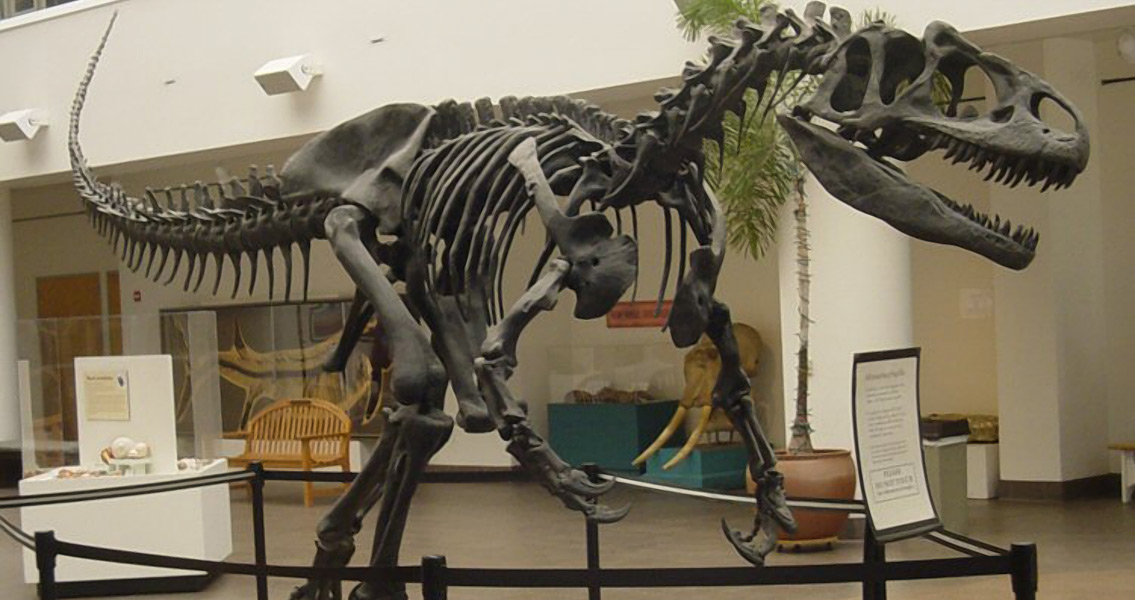
With the Dinosaurs Gone the Speed of Human Evolution Tripled

Phys Org as saying, “Our findings refute those of other studies which overlooked the fossils of placental mammals present around the last mass extinction. Using rigorous methods, we’ve successfully tracked the evolution of early placental mammals and reconstructed how it changed over time. While the rate differed between species, we see a clear and massive spike in the rates of evolution straight after the dinosaurs become extinct, suggesting our ancestors greatly benefitted from the demise of the dinosaurs. The huge impact of the dinosaur extinction on the evolution of our ancestors really shows how important this event was in shaping the modern world.” The study was funded by the Natural Environment Research Council and published in Proceedings of the Royal Society. ]]>

Categories
Breaking News

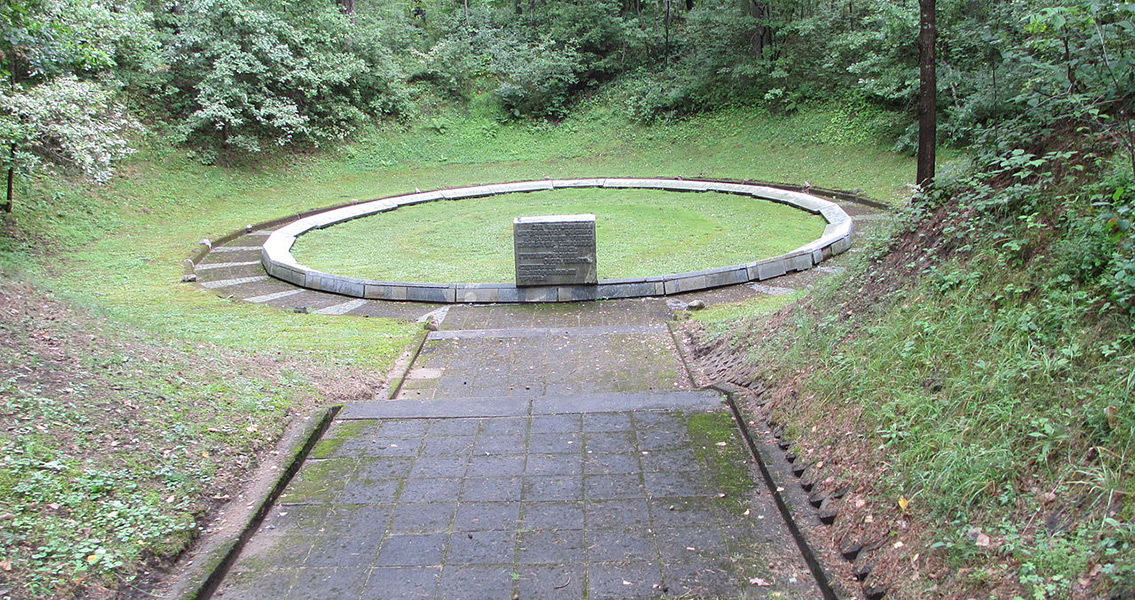
Holocaust-Era Escape Tunnel Found in Vilnius, Lithuania

Categories
Breaking News

41,000 Year Old Fires Shed Light on Hobbits' Fate

Homo floresiensis, the extinct ‘hobbit’ species of human. Published in the Journal of Archaeological Science, the new study presents evidence that modern humans (Homo sapiens) were likely using fire at Liang Bua 41,000 years ago. It’s a conclusion that narrows the gap between the disappearance of Homo floresiensis and the arrival of the first modern humans on the Island of Flores, and could provide new insight into the fate of H.floresiensis. Called the discovery of the century, the first H.floresiensis remains were unearthed in the Liang Bua cave on Flores in 2003. Surrounded by stone tools and animal remains, the female H.floresiensis would have been 3.5 foot (1.06 metres) tall and thirty years old at the time of her death. Subsequent discoveries of eight similarly diminuitive individuals led scientists to conclude in a study published in 2009 that the initial discovery had not been an anomally. The latest discovery on the Island of Flores provides some of the earliest evidence yet found of the presence of modern humans in South East Asia. Lead author of the study Dr Mike Morley, a research fellow and geoarchaeologist at UOW’s Centre for Archaeological Science (CAS), said the discovery could be “extremely important” in the mission to determine how and why the hobbit species disappeared, roughly 50,000 years ago. In March, a study published in the journal Nature revised the initial dating estimates for the original hobbit skeleton, concluding the bones were between 190,000 and 60,000 years old, much older than previous studies that claimed the creature survived on Flores until as recently as 12,000 years ago. With the most recent stone tools on the island dated to 50,000 years old, scientists were suddenly presented with a glaring gap in the chronology of the site’s sediment sequence: What happened there, and who lived there between 46,000 and 20,000 years ago? Dr Morley and colleagues, including CAS geoarchaeologist Professor Paul Goldberg and archaeologist Thomas Sutikna, have now been able to fill in some of that gap. On top of detailing environmental changes at the site between 190,000 and 20,000 years ago, they found evidence of fire places that were in use between 41,000 and 24,000 years ago. With no evidence that H.floresiensis used fire in their 130,000 year occupation of the site ever discovered, Morley’s team believe these fire places were most likely the work of modern humans. “We now know that the hobbits only survived until around 50,000 years ago at Liang Bua. We also know that modern humans arrived in Southeast Asia and Australia at least 50,000 years ago, and most likely quite a bit earlier” Dr Morley said in a press release from UOW. “This new evidence, which is some of the earliest evidence of modern human activity in Southeast Asia, narrows the gap between the two hominin species at the site.” A technique known as micromorphology was part of the team’s study, allowing sediments from the site to be examined in microscopic detail. Sediment blocks from the rear of the cave, an area separate from where the fossils were discovered, were extracted and shipped to UOW. Wafer thin slices (just 30 microns thick) were studied under microscopes, subjected to spectroscopic analyses and radiocarbon dated to determine the age of each layer. The team’s findings add further support to the idea that modern humans dispersed through South East Asia and Australia around 50,000 years ago. The researchers at Liang Bua are now looking for more evidence to narrow the time gap between modern humans and H.floresiensis; allowing them to decipher exactly when humans first inhabited the island, and perhaps even revealing a cross over between the two species. Image courtesy of University of Wollongong]]>

Categories
Breaking News

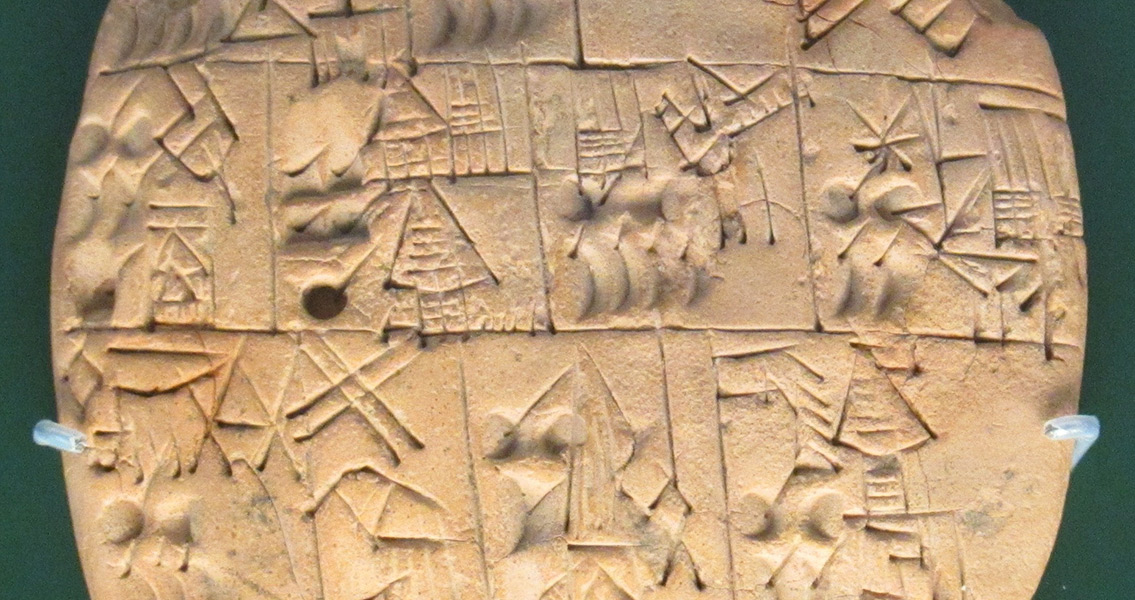
Sumerian Workers Paid in Beer, Cuneiform Tablet Reveals

New Scientist, the tablet bears specific symbols including a stylized human head eating from a bowl (which meant “ration” to the Sumerians) and a conical vessel for containing an alcoholic beverage (the cuneiform for “beer”). Around the tablet appear markings that record how much beer a specific worker was entitled to, the article explains. Mesopotamians weren’t the only ones to use alcohol as a currency. In fact, ancient Egyptians were often paid anywhere from 4 to 5 liters of beer a day for working on the pyramids. The custom persisted until much later in history, records exist from as late as the fourteenth century, such as the 252 gallons of wine a year which was part of Geoffrey Chaucer’s salary as decreed by King Richard II. This system differs from even more ancient evidence indicating that many prehistoric settlements were more egalitarian – instead of getting paid for work, everyone within the community would share the work and then reap the rewards collectively. While this has changed, and while it seems a no-brainer to award workers with alcoholic beverages to keep them in line, there’s more at play here than just keeping workers happily drunk. Ancient beer doubled as a food item, as it was loaded with starches that made it an excellent choice for nutrition. Meanwhile, popular thought from the Middle Ages included the belief that consuming wine regularly was excellent for your health. Some historians believe that wine might have been the healthier choice during times that Europe was gripped by plague, as water supplies could easily become tainted; wine sealed in casks and bottles, by comparison, would have been relatively safe to drink. The tradition isn’t without its modern adherents as well. The city of Amsterdam began a controversial new initiative in 2013, aimed at helping alcoholics and encouraging them to become functioning members of society once more, that involves reimbursing them in beer for picking up trash. Less strange is the common practice of many Silicon Valley companies providing free drinks to their staff on Friday afternoons. However, with this newly-translated pay stub, one that stretches back literally thousands of years, it’s clear that the modern practice of compensating workers with a few alcoholic beverages now and again is hardly a new or controversial idea but instead one that’s been present throughout recorded history. Image courtesy of Wikimedia Commons user: BabelStone]]>

Categories
Breaking News

Ancient Stone Furnaces Discovered Under a Road to Russian Tourist Spot

Siberian Times. “The first finds were made in 1998 and the numerous discoveries came in the following years showing us that the Baikal region was one of the largest metallurgical regions in Asia at the end of first millennium B.C., and early in the first millennium A.D.” Despite the migration processes occurring at the time, these metallurgical technologies not only continued, they were improved upon and passed on to future generations. The earliest known metal used by humans appears to have been gold which is naturally occurring. Small quantities of natural gold have been unearthed in Spanish caves used during the late Paleolithic era (around 40,000 BCE). Silver, tin and copper can also be found in their native form, and allowed for limited metalworking in ancient cultures. ]]>

Categories
Editorial

Tragedy, Poison and The Jungle – The Pure Food And Drug Act

Appeal to Reason to write an undercover report on the meat packing industry in Chicago. His investigations eventually culminated in his most famous novel, The Jungle, one translated into seven languages and praised by figures as well known as Winston Churchill. Designed to highlight the poor conditions for workers in Chicago’s meat packing industry, The Jungle, published in February 1906, in fact caused more indignation for its depiction of bad meat. Laying bare the procedures and practices behind the meat industry, the novel grew wider and wider circulation, and placed increasing pressure on the government to act. Other journalists and writers had written investigative pieces on the meat industry, but The Jungle, due to both its popularity and the fact it was published shortly before the passing of the Pure Food and Drug Act, is often regarded as the most influential. The obligations and legal mechanisms incorporated in the Pure Food and Drug Act are now common place around the globe, to the point they can often be taken for granted. On the 110th anniversary of the passing of the Act in the USA, its history provides a pertinent reminder of the multitude of factors behind the implementation of such crucial legislation. ]]>

Categories
Breaking News

Discovery in Devon Expands the Boundary of Roman Rule in Britain

This article was changed on 1st July 2016. The original wrongly claimed that the Roman Empire had ruled over the entirety of Great Britain]]>