Categories
Breaking News

Roman Era Pottery Workshop Discovered in Galilee

Live Science details the find, which included a ceramics factory where vessels and jars to hold oil and wine would have been made around 1,600 years in the past. Researchers conducting the dig reported that the shop site is noteworthy due to its kiln, which was cut from the living rock of the region. Exhibiting careful construction, the kiln was cut out of the bedrock, according to excavation director Joppe Gosker. This is unique in that the majority of kilns dating to the period would have been constructed not just of stone but of mud and earth as well, Gosker added. The kiln itself was constructed in two parts, the first being a chamber where the unfired clay jars and vessels would have been placed in order to cure them for hours in the blistering heat. The other, the firebox, would have been where combustible materials such as tinder and wooden branches were burned to provide that heat. Based on the types of broken ceramic shards found in piles close to the sides of the kiln, archaeologists are led to believe that there were two types of pottery created at the site. One type, likely exported from the site via the Mediterranean, were large-handled jugs known as amphorae that were typically used to transport oil or wine, while the others were jars that would have been ideal for transporting over land routes. According to Israel Antiquities Authority geologist Anastasia Shapiro, the geological conditions in the town of Shlomi were ideal for creating such a unique type of kiln. Shapiro stated that the chalky bedrock of the region has a high level of durability, making it strong enough to withstand the high temperatures of curing pottery in a kiln, yet at the same time it was not so hard that it would have been difficult to quarry. Researchers have been conducting excavations in the area for the past six months, prior to plans to construct new residences in the region. A portion of the site will be set aside for a public-access archaeological park. Additional discoveries include a handful of mosaic floor tiles and an ancient system for storing water, while geophysical surveys have revealed the ruins of several Byzantine-era walls that date to between the fourth century and the seventh century CE. The Roman-era pottery workshop is not the only one of its kind to be discovered within the borders of Israel recently. Earlier in 2016, researchers announced the discovery of a glass kiln near Haifa that had been traced to the fourth century CE, making it the oldest such kiln ever to be found in Israel. ]]>
Categories
Breaking News

First Mass Extinction Event Caused by Arrival of Animals

Palaeogeography, Palaeoclimatology, Palaeoecology, a recently released study suggests that newly evolved biological organisms, deemed ‘ecosystem engineers’, changed the environment so drastically the older species were driven to extinction. For more than 3 billion years the only life on earth had consisted of microbes – various types of single celled organisms. That all changed with the arrival of the first multi-cellular life, including Ediacaran biota. Around 600 million years ago the Ediacarans spread across the planet, largely in the form of immobile marine life, shaped as discs and tubes, fronds and quilted mattresses. The first evidence of the Ediacaran biota was found in the form of fossil impressions in the Ediacaran mountains of South Australia in 1946. It proved a major turning point in the study of evolution, highlighting the complex array of life that existed on the planet prior to the Cambrian Explosion. 60 million years into the Ediacaran period, another drastic evolutionary innovation occured with the arrival of metazoans, the first animals. Unique for being the first creatures with the ability to move independently, the metazoans heralded the beginning of the Cambrian Explosion, a 25 million year period that saw most of the world’s major animal families: vertebrates, athropods, jellyfish, mollusks, sponges and annelids, come into existence. By the end of the explosion however, the Ediacarans had all been wiped out. A number of theories have been put forward to explain the Ediacaran’s fate. Two main schools of thought exist: the first that drastic environmental changes, such as changes in sea level, pushed the Ediacaran biota to extinction, the second that it was due to ecosystem changes brought about by the arrival of animals. The second view is very much the one taken by the authors of the latest study. “These new species were ‘ecological engineers’ who changed the environment in ways that made it more and more difficult for the Ediacarans to survive,” said Simon Darroch, assistant professor of earth and environmental sciences at Vanderbilt University and lead author of the new study – titled: ‘A mixed Ediacaran-metazoan assemblage from the Zaris Sub-basin, Namibia.’ Key to Darroch and colleagues’ study is one of the best preserved examples of a mixed community of Ediacarans and animals, which provides the best evidence yet seen of a close ecological association between metazoans and Ediacarans. “Until this, the evidence for an overlapping ecological association between metazoans and soft-bodied Ediacaran organisms was limited,” explained Darroch. “Here, we describe new fossil localities from southern Namibia that preserve soft-bodied Ediacara biota, enigmatic tubular organisms thought to represent metazoans and vertically oriented metazoan trace fossils. Although the precise identity of the tracemakers remains elusive, the structures bear several striking similarities with a cone-shaped organism called Conichnus that has been found in the Cambrian period.” Although not providing definitive answers to the Ediacaran’s fate, the fossil localities used in the study help paint a clearer picture of the crossover between Ediacarans and animals, which in turn could boost our knowledge of the mass extinction. “With this paper we’re narrowing in on causation; we’ve discovered some new fossil sites that preserve both Ediacara biota and animal fossils (both animal burrows – ‘trace fossils’ – and the remains of animals themselves) sharing the same communities, which lets us speculate about how these two very different groups of organisms interacted”, said Darroch. Even though it took place millions of years ago, the extinction of the Ediacarans due to mass ecosystem change has ominous repercussions for today. “There is a powerful analogy between the Earth’s first mass extinction and what is happening today,” said Darroch. “The end-Ediacaran extinction shows that the evolution of new behaviors can fundamentally change the entire planet, and today we humans are the most powerful ‘ecosystems engineers’ ever known.” Image courtesy of Simon Darroch, Vanderbilt University]]>

Categories
Breaking News

How Cleaning Windows Led to the Destruction of History

Categories
Breaking News

Water Tunnel Under Palenque Pyramid Was a Conduit to the Underworld

Sci-Tech Today that this belief was shared by other pre-Hispanic people as well; like those who lived at Teotihuacan near Mexico City, where a water tunnel was also found. Sanchez Nava cited the allegorical meaning that water had for these cultures, as the cycle of life beginning and ending Excavations began in 2012, when researchers using geo-radar detected underground anomalies in the area directly in front of the pyramid. Fearing a geological fault or hole that might cause the pyramid to settle or even collapse, they excavated the area and unearthed three layers of stone which had been carefully fitted to cover the top of the tunnel. Arnoldo Gonzalez, an archaeologist at the site, told Sci-Tech Today that the same type of layered stone covering had been discovered in the floor of Pakal’s tomb inside the pyramid, adding that there doesn’t appear to be a connection between the tunnel and the tomb, although the conduit hasn’t been thoroughly explored because it’s too small for a person to crawl through. Most of the tunnel has been viewed using a robotic camera. The Temple of Inscriptions was built as the funerary monument of Hanab-Pakal, the most famous ruler of Palenque. The temple is home to a glyphic text, the second longest from the Maya world, and records the city’s history from the fourth through the twelfth K’atun, a period of around 180 years. In his 1968 book ‘Chariots of the Gods?’, author Erich von Daniken suggested that Pakal’s stance, as engraved on the lid of the stone sarcophagus lid, resembled the position astronauts take. Von Daniken also claimed that it looked like the ruler was seated in a contraption that had flames shooting out of it. Experts, however, say that the “flames” are actually depictions of the Maya’s “Tree of Life” or “World Tree” which, the Maya believed, had roots that reached into the underworld. The Maya city of Palenque was at its peak during the seventh century. The Palenque ruins have been dated from 226 BCE to 799 CE. After it declined, the city was enveloped by the jungle of cedar, sapodilla, and mahogany trees. It has since been unearthed and restored, becoming a popular archaeological site that attracts thousands of visitors annually. ]]>

Categories
Breaking News

Earliest Human Cancer Pushes its Origins Back Over a Million Years

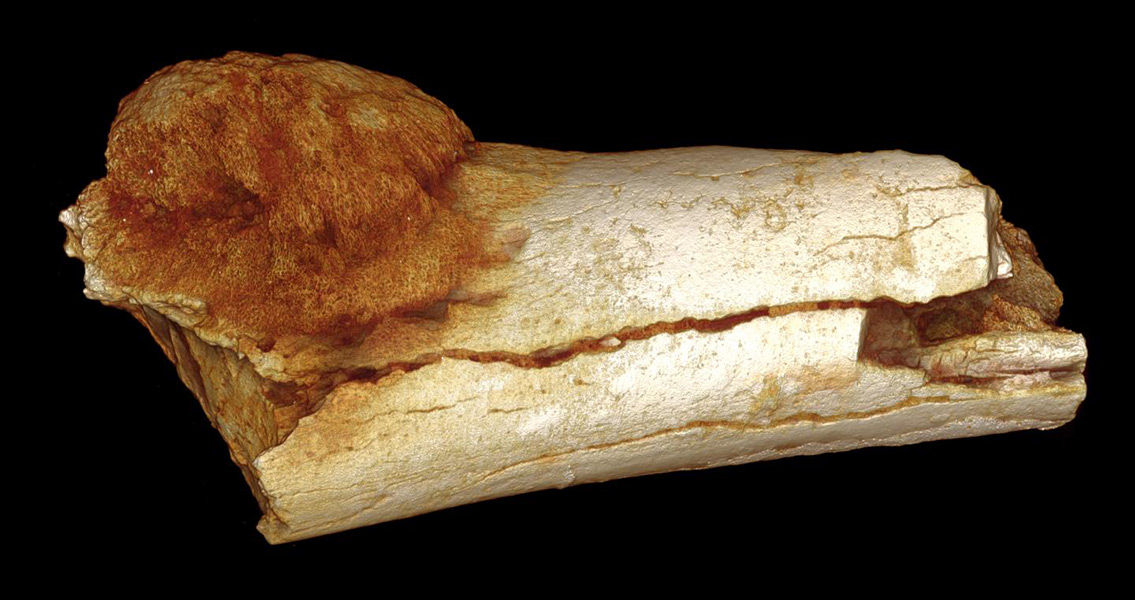
South African Journal of Science, an ancient cancer case and an ancient tumour case are detailed. Until now, the oldest documented incidence of a tumour had been discovered on the 120,000 year old remains of a Neanderthal. The two new studies suggest that cancer and tumours were in fact around well over a million years ago. A 1.7 million year old foot bone discovered in Swartrans, South Africa, bore definitive evidence of malignant cancer. Although the species to which the foot belongs remains unclear, the researchers behind the first paper say it is clearly that of a hominin or bipedal human relative. The accompanying paper identifies the oldest tumour ever found in the human fossil record. A benign neoplasm was found in the vertebrate of Karabo, the close to two million year old remains of an Australopithecus sediba child discovered at the site of Malapa. “Modern medicine tends to assume that cancers and tumours in humans are diseases caused by modern lifestyles and environments.” said Edward Odes, a Wits doctoral candidate and lead author of the cancer paper, and co-author on the tumour paper. “Our studies show the origins of these diseases occurred in our ancient relatives millions of years before modern industrial societies existed”. In the case of the foot bone, the cancer: an agressive osteosarcoma, was discovered on the metatarsal. It’s a form of cancer most commonly found in younger humans, which if left untreated proves fatal. “Due to its preservation, we don’t know whether the single cancerous foot bone belongs to an adult or child, nor whether the cancer caused the death of this individual, but we can tell this would have affected the individual’s ability to walk or run”, explained Dr Bernard Zipfel, a Wits Scientist and expert on the feet and movement of early human relatives. Both discoveries further complicate the picture we have of the causes and history of cancer and tumours. The diseases are typically linked to aspects of modern life, such as our diet, urban living and background radiation. Prevailing thought also suggests that the reason cancer and tumours seem to exhibit themselves more often now is due to increasing life expectancies. However, the tumour discovered on the child’s vertebrate is one associated with adulthood. Indeed, it is the first evidence of the disease in a young individual in the whole of the fossil record. Professor Lee Berger, the leader of the Malapa project and an author on both papers, highlighted just how much of a game changer in the study of oncology both discoveries could prove to be. “…not only has there been an assumption that these sorts of cancers and tumours are diseases of modernity, which these fossils clearly demonstrate they are not, but that we as modern humans exhibit them as a consequence of living longer, yet this rare tumour is found in a young child. The history of these types of tumours and cancers is clearly more complex than previously thought”. In both studies, cutting edge imaging technology was used to diagnose the incidences of disease. The results show the potential of modern technology to not only further our understanding of our ancient human relatives, but also the origin and development of modern diseases. “This is another good example of how the modern clinical sciences and the science of palaeoanthropology are working together in South Africa and with international collaborators to advance our understanding of diseases in both the past and the present.” said Dr Jacqueline Smilg, a radiologist based at Charlotte Maxeke Hospital, who is an author on both papers and was involved in the clinical diagnoses. Image courtesy of Patrick Randolph-Quinney (UCLAN)]]>

Categories
Breaking News

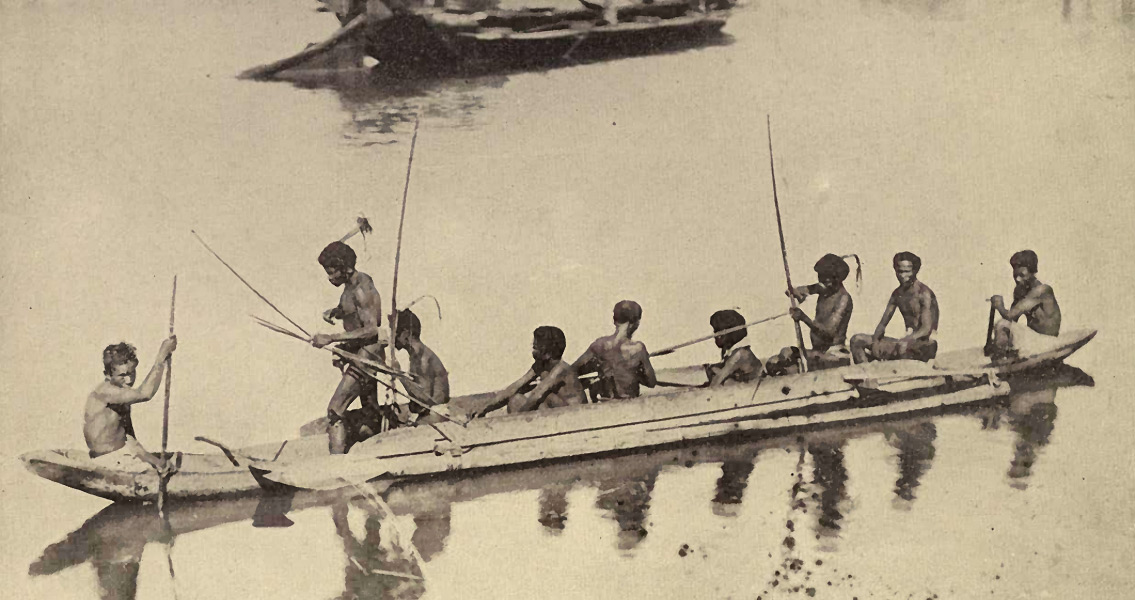
DNA Evidence of New Human Ancestor from Australasia Found

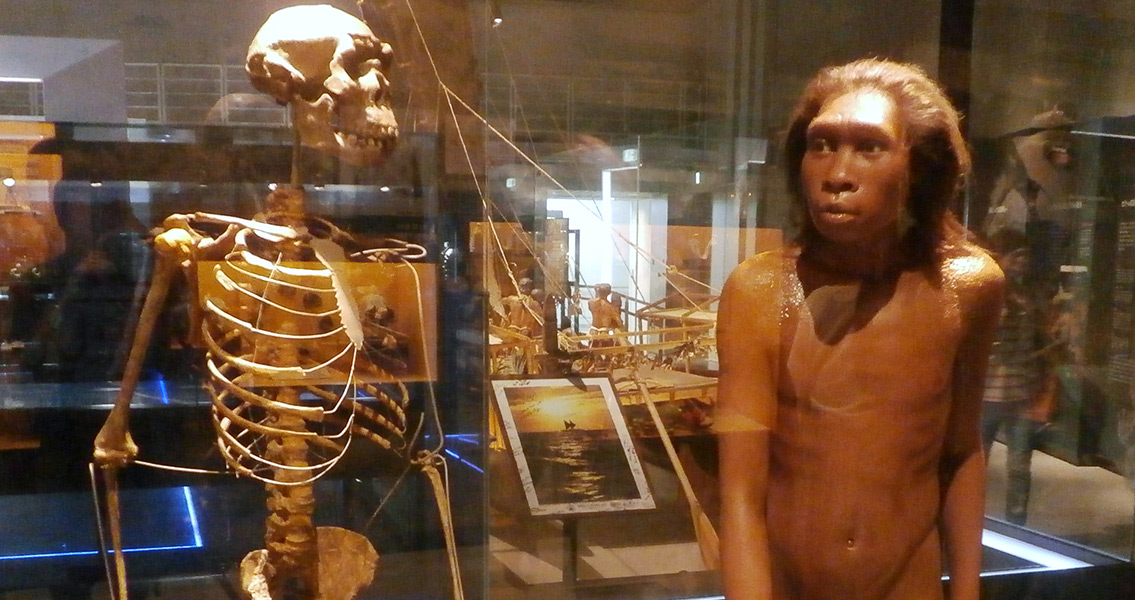
Homo erectus. While there’s no direct evidence that this was the case, the hominin, which is thought to have been the first to walk upright in a manner similar to modern humans, was the first to migrate from Africa. H. erectus fossils present in the Asian fossil record, dated to between 1.8 million years and 33,000 years old, put them in the right place at the right time to have contributed their genetic material. The only way to prove the theory would be to extract DNA samples from the remains of a H. erectus and then compare it to modern populations living in Australasia. This has proven difficult, as there has yet to be a H.erectus fossil discovery with enough genetic data intact to sample successfully. This differs from how scientists have derived the genome of an early hominin species known as the Denisovans after a cave in Siberia yielded a remarkably well-preserved finger bone. As if identifying the identity of the mystery species wasn’t complicated enough, it’s possible that the mystery DNA found within the samples was contributed by more than one unknown hominin living in or migrating to the region. With no frame of reference, there’s no way to isolate the new genetic material conclusively; with Denisovans, Neanderthals and at least one more hominin present within the region and interbreeding, it may be impossible to pinpoint just how many were there without additional ancient genomes to sequence. This is unlikely, as the climate of the Asia-Pacific features warm temperatures and high humidity levels which cause genetic material to degrade much more quickly than elsewhere. Regardless, this new study – and several others – have been building a case for just one single migratory movement by early humans out of Africa around 60,000 years in the past, changing the narrative when it comes to human evolution. The new study, published online in the journal Nature Genetics, can be found online at www.nature.com]]>

Categories
Breaking News

Orangutan Mimics Human Voice, Gives Clues to Human Speech Evolution

Scientific Reports could provide the key to understanding how human speech evolved from the time of the ancestral great apes. Scientists played an imitation ‘do as I do’ game with Rocky, an eleven year old orangutan housed at Indianapolis Zoo, Indiana, USA. Remarkably, they found that Rocky was able to imitate the pitch and tone used by researchers, to make vowel like calls of his own. The tests were carried out at the zoo between April and May 2012, when Rocky was just eight years old. It is traditionally believed that great apes, our closest relatives, don’t have the ability to learn new sounds. If true, that would mean that speech, a learned behaviour, could not have originated with them. However, the findings of the latest study throw that assumption into question, suggesting that orangutans might have the ability to control their voices. For the imitation game, a researcher made random sounds with their voice, varying the pitch and tone. Rocky then mimicked those sounds, which the researchers recorded on a hand held recording device. The next step for the team was to determine whether these sounds were normal for an orangutan. The recordings of Rocky’s voice were compared with the largest available database of orangutan calls, one which has been compiled from over 12,000 hours of orangutan field recordings spread across more than 120 orangutans from 15 wild and captive populations. Led by Dr Adriano Lameira of Durham University, the team concluded that the sounds made by Rocky were indeed distinct from those typically made by an orangutan. Rocky was able to learn new sounds, and even use them in something close to a conversational context. “Instead of learning new sounds, it has been presumed that sounds made by great apes are driven by arousal over which they have no control, but our research proves that orangutans have the potential capacity to control the action of their voices.” explained Dr. Lameira, in a press release from Durham University. “This indicates that the voice control shown by humans could derive from an evolutionary ancestor with similar voice control capacities as those found in orangutans and in all great apes more generally.” This isn’t the first time Dr Lameira has shown that orangutans are able to pick up certain elements of speech. In a January 2015 study he reported that Tilda, a female orangutan, was able to make sounds comparable to human consonant and vowels at a pace and rhythm similar to human speech. The revolutionary findings open up new lines of study for scientists looking to understand the development of human speech. Lameira and colleagues’ results suggest that, rather than simply looking at humans in isolation to understand how we learnt to speak, it might be necessary to go back to our extinct ancestors. “This opens up the potential for us to learn more about the vocal capacities of early hominids that lived before the split between the orangutan and human lineages to see how the vocal system evolved towards full-blown speech in humans.” Lameira said. For more information: www.nature.com Image courtesy of Wikimedia Commons user: Nino Verde]]>