Categories
Breaking News

Breeding With Neanderthals Altered Human Immune Systems

study suggested that this process could have contributed to the Neanderthals’ extinction, humans passing on unfamiliar viruses from Africa to the Neanderthals. According to the two new studies, recently published in the journal Cell, this breeding could have also helped humans from Africa adapt to the new pathogens they encountered in Europe. Breeding with Neanderthals might have seen humans obtain the Neanderthals’ different immune system responses. This would have helped them fight off the new infections they encountered on the continent. Neanderthals left Africa much earlier than modern humans, arriving in Europe up to 300,000 years ago. Humans made their way to the continent sometime between 100,000 and 60,000 years ago. In the first of the studies, geneticist Luis Barreiro of the University of Montreal and colleagues collected blood samples from 80 African Americans and 95 people of European descent. A type of immune cell called macrophages, which engulfs and destroys bacteria, was isolated in each of the samples. The isolated macrophages cells were grown in a dish, and then infected with two types of bacteria. It was found that the macrophages from African Americans killed the bacteria three times faster than those from Europeans. The researchers also discovered that gene expressions responded differently to the infections. Many of the genes whose activity changed the most during the immune reactions had sequences that were very similar to Neanderthals and Europeans, not Africans. In the second study, population geneticist Lluis Quintana-Murci and his colleagues at the Pasteur Institute in Paris collected samples from 200 people living in Belgium. 50% of their subjects were of African descent, 50% of European. Again, the researchers grew immune cells from the subjects in dishes and infected them with diseases and viruses, although this time the immune cells were monocytes. Once again, the two groups showed differences in the activity of various genes. Neanderthal-like gene variants in the European group playing a significant role in altering their response. For some diseases, such as tuberculosis, a lower immune response actually tends to improve chances of survival and recovery. Modern humans in Europe may have therefore adopted Neanderthal traits to survive the disease, the process perhaps happening as the result of an ancient outbreak. Similarly, modern African-American women are three times more susceptible to the autoimmune disease lupus than white Americans. This is a trend which can be seen beyond environmental, social and economic factors. Barreiro suggests that at least part of this difference could be explained by genetics. Beyond providing insight into the development of the immune system, the findings by these studies have the potential to deepen our understanding of modern disease, showing the importance of considering racial diversity and history for detecting the roots of disease. ]]>
Categories
Breaking News

Neanderthals' Extinction May Rest on Not Having a Coat

Journal of Anthropological Archaeology, the quartet describe how they determined the possible reason Neanderthals perished during the Ice Age while early humans survived, by looking at what’s been found at each groups’ campsites. It’s not what the researchers found by analyzing the data related to Neanderthal campsites that is so significant, but what they didn’t: any evidence the Neanderthals used animal fur to stay sufficiently warm. When the campsites of modern humans and Neanderthals were compared, the researchers discovered the one glaring difference at the Neanderthal sites was the absence of animal remains of the type that would have been used to make the parka style clothing needed in a cold climate. By comparison, numerous examples of fox, mink, rabbit and wolverine remains were identified at 56 locations of early human campfires, many of which might have been skinned for use in crafting fur coats or parkas. The discovery of wolverine remains in particular was of note because it’s the animal which people living in the Arctic often use to keep warm, as it works extremely well as a fringe and lining on the hood. The Neanderthal extinction happened suddenly, at around the same time modern humans started to expand into Eurasia. Since the discovery of the first Neanderthal remains, both their place within the human family tree and their relationship to modern humans has been a hot topic of debate. They’ve been classified, at different times, as both a separate species known as Homo neanderthalensis, and as a subspecies named Homo sapiens neanderthalensis. Following an analysis of 40 individual Neanderthal sites in western Europe, researchers concluded in 2014 that the Neanderthals became extinct around 40,000 years ago. Although much earlier than previous estimates, this date was established using improved methods of radio carbon dating (Neanderthals could have survived longer in Siberia and eastern Europe). Theories on the Neanderthals’ extinction include: an inability or failure to adapt to the changing climate, or competitive exclusion as a result of the encroachment of modern humans. It’s also possible their extinction was hastened by violent conflicts with early humans. Warfare and conflict were pervasive features within hunter-gatherer social groups. Additional evidence of early humans creating warm clothes has also been found, for example, bone needles and other types of tools used to scrape animal pelts. Also, a number of figurines discovered in Siberia, which have been dated back to around 24,000 years ago, were found wearing parka-like animal fur coats. No evidence of Neanderthals wearing or crafting cold weather clothing has ever been discovered. Why the Neanderthals didn’t have clothes warm enough to survive the colder climate remains a mystery, the researchers suggest in their paper that they might have lacked the know-how, or perhaps their cultural traditions somehow prevented it. ]]>

Categories
Breaking News

Earliest Human Cancer Pushes its Origins Back Over a Million Years

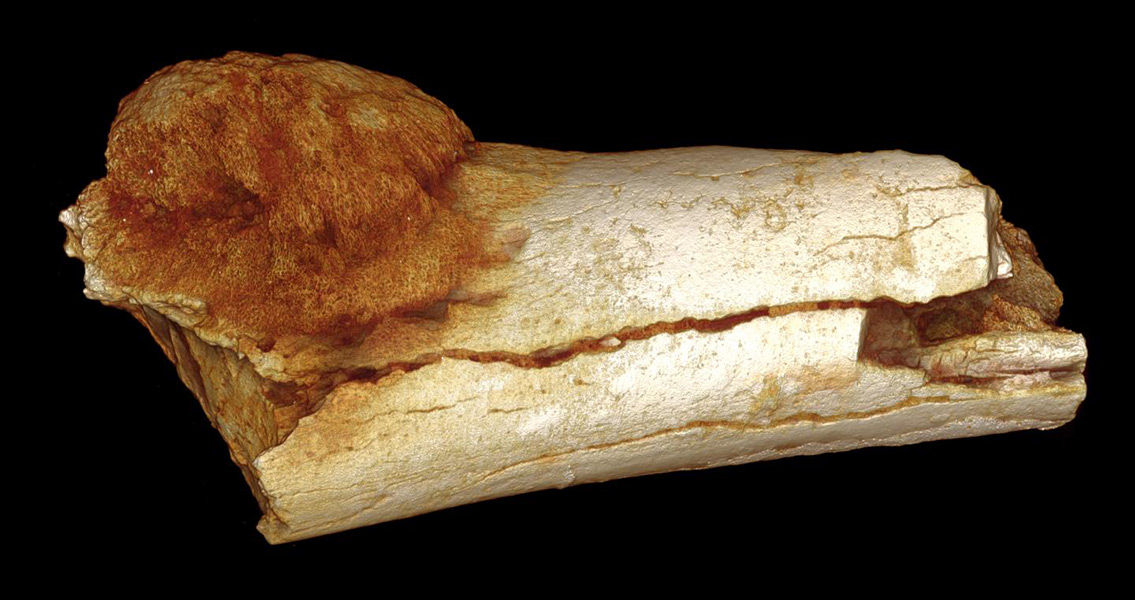
South African Journal of Science, an ancient cancer case and an ancient tumour case are detailed. Until now, the oldest documented incidence of a tumour had been discovered on the 120,000 year old remains of a Neanderthal. The two new studies suggest that cancer and tumours were in fact around well over a million years ago. A 1.7 million year old foot bone discovered in Swartrans, South Africa, bore definitive evidence of malignant cancer. Although the species to which the foot belongs remains unclear, the researchers behind the first paper say it is clearly that of a hominin or bipedal human relative. The accompanying paper identifies the oldest tumour ever found in the human fossil record. A benign neoplasm was found in the vertebrate of Karabo, the close to two million year old remains of an Australopithecus sediba child discovered at the site of Malapa. “Modern medicine tends to assume that cancers and tumours in humans are diseases caused by modern lifestyles and environments.” said Edward Odes, a Wits doctoral candidate and lead author of the cancer paper, and co-author on the tumour paper. “Our studies show the origins of these diseases occurred in our ancient relatives millions of years before modern industrial societies existed”. In the case of the foot bone, the cancer: an agressive osteosarcoma, was discovered on the metatarsal. It’s a form of cancer most commonly found in younger humans, which if left untreated proves fatal. “Due to its preservation, we don’t know whether the single cancerous foot bone belongs to an adult or child, nor whether the cancer caused the death of this individual, but we can tell this would have affected the individual’s ability to walk or run”, explained Dr Bernard Zipfel, a Wits Scientist and expert on the feet and movement of early human relatives. Both discoveries further complicate the picture we have of the causes and history of cancer and tumours. The diseases are typically linked to aspects of modern life, such as our diet, urban living and background radiation. Prevailing thought also suggests that the reason cancer and tumours seem to exhibit themselves more often now is due to increasing life expectancies. However, the tumour discovered on the child’s vertebrate is one associated with adulthood. Indeed, it is the first evidence of the disease in a young individual in the whole of the fossil record. Professor Lee Berger, the leader of the Malapa project and an author on both papers, highlighted just how much of a game changer in the study of oncology both discoveries could prove to be. “…not only has there been an assumption that these sorts of cancers and tumours are diseases of modernity, which these fossils clearly demonstrate they are not, but that we as modern humans exhibit them as a consequence of living longer, yet this rare tumour is found in a young child. The history of these types of tumours and cancers is clearly more complex than previously thought”. In both studies, cutting edge imaging technology was used to diagnose the incidences of disease. The results show the potential of modern technology to not only further our understanding of our ancient human relatives, but also the origin and development of modern diseases. “This is another good example of how the modern clinical sciences and the science of palaeoanthropology are working together in South Africa and with international collaborators to advance our understanding of diseases in both the past and the present.” said Dr Jacqueline Smilg, a radiologist based at Charlotte Maxeke Hospital, who is an author on both papers and was involved in the clinical diagnoses. Image courtesy of Patrick Randolph-Quinney (UCLAN)]]>

Categories
Breaking News

New Evidence of Neanderthal Cannibalism Found in Belgium

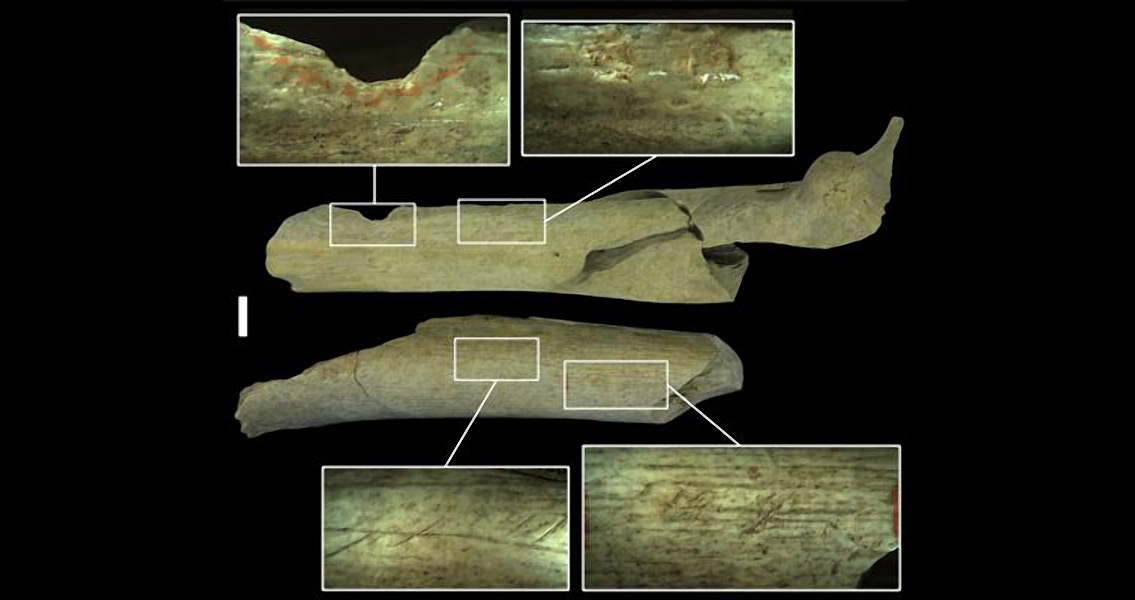
Scientific Reports, has helped expand the knowledge of known Neanderthal behavior in relation to the dead in northern Europe. As more and more insights are gradually revealed about the behavior of the Neanderthals, humanity’s closest extinct relatives, it becomes apparent that they displayed significant variability in their actions and customs. This perhaps shouldn’t be surprising, that different groups of Neanderthals had different practices, just as is the case among different groups of humans. This diversity of practices is clearest in the ways the Neanderthals dealt with their dead. At some sites, there is evidence that they buried the deceased. At others, there is evidence of cannibalism, that they broke the bones and ate the meat of other Neanderthals for food. These cannibalistic practices have been discovered at sites in both France and on the Iberian Peninsula. Neanderthals lived between roughly 200,000 and 30,000 years ago in Eurasia. Their appearance was similar to modern humans, though they were shorter, stockier, and had angled cheek bones, prominent brows and wide noses. Evidence has been found that they used tools, controlled fire, and in some cases (Chapelle-aux-Saints in France, and Sima de las Palomas on the Iberian Peninsula for example) buried their dead. Until the latest study however, the paucity of remains discovered north of latitude 50º meant it had been difficult to gain insight into how Neanderthals in the northern latitudes treated their dead. A third of the Neanderthal remains discovered at the Troisième caverne had cut marks, and a plethora had been crushed to extract marrow. The Neanderthal remains had been treated in a similar manner to horse and reindeer bones at the site, suggesting that all three species had been prepared and consumed in similar ways. Other Neanderthal remains at the site showed signs of having been used as soft percussors to shape stone. It is the fourth time a site has been found with evidence Neanderthals used the bones of their deceased to shape stone tools, joining Krapina in Croatia, and Les Pradelles and La Quina in France. Whereas the previous sites only contained a few examples of bones being used on tools, five sets of remains at Goyet had been used as retouchers. Due to their remarkable state of preservation it has been possible to date the remains at Goyet to between 40,500 and 45,500 years old. It has also been possible to extract the mitochondrial DNA of the remains, revealing that the Neanderthals at the cave were most similar genetically to those found in Feldhofer (Germany), Vindija (Croatia) and El Sidrón (Asturias, Spain). Such genetic similarity over such large distances suggests that the Neanderthal population of Europe was quite small. Earlier studies of partial Neanderthal skeletons discovered at Feldhofer, Germany and Spy, Belgium, showed evidence that Neanderthals had interred their dead. This latest study only adds to the increasingly complicated image of the contrasts between the different groups of humanity’s extinct cousins. Image courtesy of Asier Gómez-Olivencia et al.]]>

Categories
Breaking News

Earliest Evidence of European Fire Building Found in Spain

Homo heidelbergensis, a direct ancestor of Neanderthal Man, Homo neanderthalensis. Like other sites that show signs of early fire building, hominids at Black Cave left behind a variety of stone tools, indicating they possessed the technical skills needed for selecting the right material for striking sparks. Paleontologist Michael Walker with the University of Murcia explained in Science News that it’s unlikely a brush fire near the cave’s entrance could have sent sparks inside to ignite fires that were found between five and seven meters in, adding that dry brush wasn’t likely to be near the cave to begin with, given that 800,000 years ago the area bordered a swamp and a river. Other researchers told Science News they suspect the Cueva Negra’s artifacts are actually not as old as the report indicates, because it’s difficult to say where the artifacts originally were in relation to several different reversals of the planets magnetic field which are preserved in the sediment layers found in the cave. A 2011 study, published in the Journal of Archaeological Science, set an age limit for the tools made by the Homo species in Europe at no more than 600,000 years ago. Even at 600,000 years old though, the findings at the cave would still be the earliest evidence of fire making in Europe. The systematic excavation of the cave was started in 1990 and until 2004 researchers considered the site to be from the late Pleistocene era, however, rodent fossils were discovered from a species that became extinct 500,000 years ago. Other animal fossils include megaceroides (giant deer), wild boar, bison, hyena, turtles and rabbits, in addition to 60 different species of birds. ]]>

Categories
Breaking News

Ice Age Migration and Displacement Shown in Study

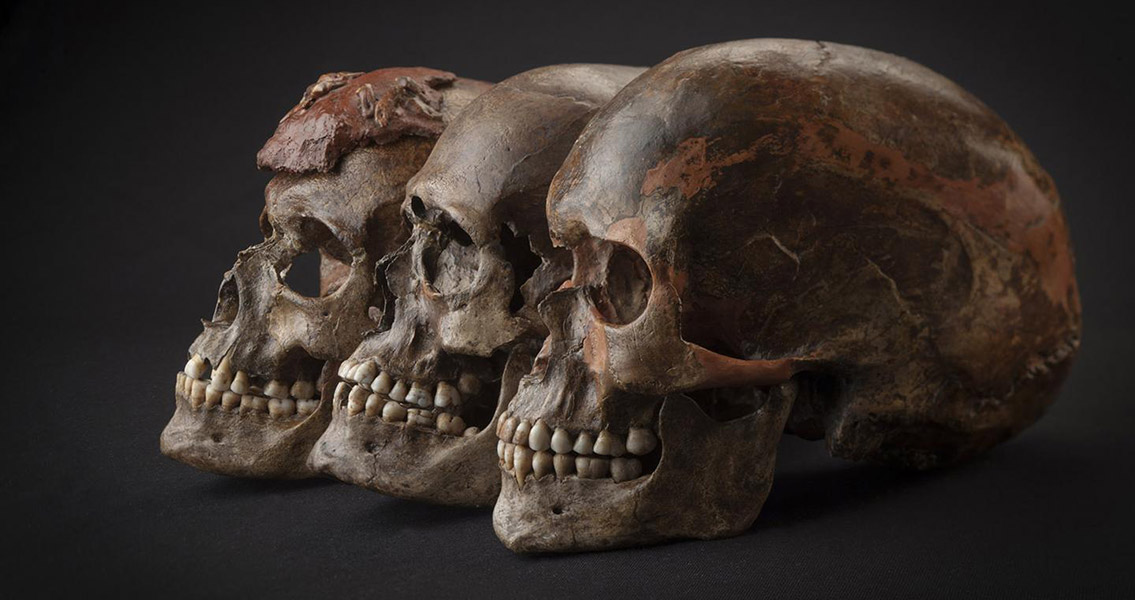
Nature on 2nd May, the study analysed the DNA of prehistoric humans to chart population changes over a period that stretched from the initial inhabitation of Europe by modern humans, to the end of the last Ice Age. The research was led by David Reich, Howard Hughes Medical Institute Investigator at Harvard Medical School. Two massive changes in prehistoric populations are revealed by the genetic data used in the research, which seem to be related to the end of the Ice Age around 19,000 years ago. The first has been documented previously, although in less detail. As the ice sheet retreated, northern Europe was repopulated by prehistoric humans from regions of southwest Europe, such as Spain. A second, more surprising event came some 5,000 years after that initial re-population. Populations from the southeast of Europe, such as what is now Turkey and Greece, migrated into Europe and displaced the first group of humans who had relocated there. The findings have the potential to cause a drastic rethink on how we understand the history of European migration and population. Previously, genetic data were only available for four samples of prehistoric European modern humans between 45,000 and 7,000 years old, but Reich and colleagues’ study has changed that; allowing much better insights to be gleaned on human populations in this distant period. “Trying to represent this vast period of European history with just four samples is like trying to summarize a movie with four still images. With 51 samples, everything changes; we can follow the narrative arc; we get a vivid sense of the dynamic changes over time,” said Reich, in a press release from the Howard Hughes Medical Institute. “And what we see is a population history that is no less complicated than that in the last 7,000 years, with multiple episodes of population replacement and immigration on a vast and dramatic scale, at a time when the climate was changing dramatically.” According to the team’s findings, all Europeans come from a single 37,000 year old population that survived through the last Ice Age. One of the branches of this population, which was represented by a specimen from Belgium, was displaced from most parts of Europe around 33,000 years ago, during the height of the last Ice Age. Some 19,000 years ago, a population related to it expanded across Europe, which the researchers believe could have originated in Spain. The second event took place 14,000 years ago, and would define Europe’s population until the advent of agriculture. “We see a new population turnover in Europe, and this time it seems to be from the east, not the west,” said Reich. “We see very different genetics spreading across Europe that displaces the people from the southwest who were there before. These people persisted for many thousands of years until the arrival of farming.” Fascinatingly, the study also showed the percentage of Neanderthal DNA in humans is decreasing, it consisting of between 3% and 6% of the prehistoric humans’ genetic makeup, but only 2% in most humans today. The results suggest that natural selection could be removing the toxic Neanderthal DNA. Reich and colleagues’ study shows that migration has long been an integral, complicated part of human history, shaping the world’s populations for thousands of years. Image courtesy of Martin Frouz and Ji?í Svoboda]]>

Categories
Breaking News

Neanderthal Extinction Accelerated by Opportunism

PLOS ONE, offers fresh insight into the fate of the Neanderthals, suggesting their adaptable subsistence strategies actually put them at a disadvantage compared to humans during the Last Glacial Maximum. The Neanderthal lineage existed successfully throughout Europe and Asia, surviving the harsh and shifting environments of glacial/interglacial cycles from the Pleistocene onward. However, as the climate commenced the deterioration which would result in the Last Glacial Maximum, just after the first humans had entered Eurasia, the Neanderthals disappeared. What happened to them is unclear, but the outcome is not, Western Eurasia was subsequently populated by just one homo species: modern humans. Led by Sireen El Zaatari from the Paleoanthropology department at the Eberhard Karls Universität Tübingen, Germany, the authors of the study analysed the fossilized molars of 52 Neanderthals and Upper Paleolithic Homo sapiens (modern humans). Their aim was to glean insights into the possible influence of dietary strategy, in particular by analysing the degree of microwear on the teeth. This information could be used to draw conclusions about diet type, which was then linked to prevalent climatic conditions. Surprisingly, the team found that dental microwear among Neanderthals varied significantly depending on ecological conditions. “Analyses of the data show that within the Neandertal lineage, dental microwear signatures are significantly associated with paleoecological conditions.” they wrote in the new study, published this week. Neanderthals that lived in wooded or mixed habitats possessed more complicated dental microwear than those from open habitats. The conclusion to be drawn from this is that Neanderthals adapted their diets to the resources available as climates and habitats changed. In cold, barren, open steppe environments, the Neanderthals had a diet made up mostly of meat. In forested landscapes they supplemented their diet with more plants, seeds and nuts. For modern humans, the situation was completely different. “For the Upper Paleolithic humans, unlike the case for the Neandertals, no significant correlation is detected through the paleoecological ranks.” Crucially, the modern humans’ adhered to the same dietary strategy despite environmental changes, retaining a large proportion of plant based foods. This could have fostered technical innovations which gave humans a distinct advantage. “To be able to do this, they may have developed tools to extract dietary resources from their environment” said El Zaatari, in a press release. Neanderthals had an opportunistic approach which allowed them to flourish throughout much of their history, eating whatever was available in the habitat they called home. Modern humans however, strove to access the same food resources despite the changing conditions, eventually pushing them to develop tools. According to the study, as humans’ technical complexity increased their diet started to change dramatically, as they were able to exploit their landscape much more effectively. When Neanderthals and modern humans came into contact and started to compete for resources, this technical superiority would have undoubtedly given the humans a significant advantage. El Zaatari and colleagues’ study offers a new take on the mystery surrounding the demise of the Neanderthals, suggesting their opportunism could have ultimately been a disadvantage. For more information: www.plos.org Image courtesy of Sireen El Zaatari PLOS ONE e0153277]]>

Categories
Breaking News

Neanderthal and Denisovan DNA in Modern Humans

www.science.sciencemag.org]]>

Categories
Breaking News

New Study Shows Diversity of Neanderthal Diet

Categories
Breaking News

Neanderthals Capable of Chemically Assisted Fire Making