Categories
Editorial

King Tut, Neanderthals and Plague – The History News of 2016 (Part 2)

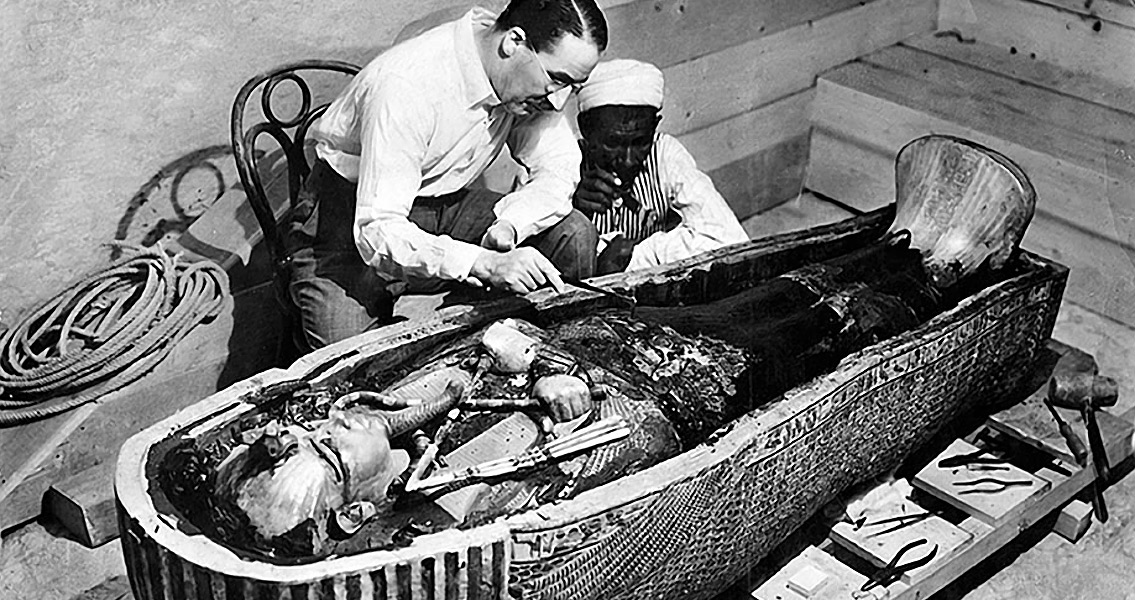
here. Controversy Surrounding King Tut’s Tomb One of the most bizarre stories of the year took place over a few months of the spring, and concerned the constantly fascinating tomb of Tutankhamun. In March, Egypt’s Antiquities Minister, Mamdouh Eldamaty, announced at a press conference that cutting edge radar scans had revealed the presence of hidden chambers in King Tutankhamun’s burial chamber. It was a revelation which sparked intrigue across the globe, as anyone with even the slightest interest in Egyptology began to speculate about what could still be hidden in the tomb of Ancient Egypt’s most famous Pharaoh. A few weeks later, doubts started to appear about the Egyptian Antiquities Ministry’s claims. Radar experts unconnected to the project started to question the findings, while others called for more evidence to be released to back up the claims and allow peer review. In May, the results of another series of scans were released, commissioned by National Geographic to verify the possibility of the existence of a hidden chamber. Announced at the Second Annual Tutankhamun Grand Egyptian Museum Conference in Cairo, the results of the second investigation suggested there was in fact no hidden chamber, directly contradicting the earlier study. The Egyptian Antiquities Authority is now carrying out additional scans in the hope of finding out once and for all if there are any more secrets to King Tut’s tomb. Just How Smart Were the Neanderthals? It’s a question that has been asked many times: just how similar are we to our closest extinct evolutionary cousins, the Neanderthals? For a long time the Neanderthals were considered to be primitive and unintelligent when compared to modern humans. Findings from 2016 however, brought that idea into question like never before. A study published in September added new fire to the long running debate over whether the Neanderthals were capable of creating jewellery. Almost since the moment they were discovered in central France half a century ago, a collection of prehistoric tiny, centimeter-long necklaces created from ivory, shells and animal teeth have been a source of contention among scientists who debate if the Neanderthals could have made the items. Using new research methods relying upon ancient proteins to date and identify bone fragments found at the site, researchers concluded that Neanderthals had lived there, supporting the idea they created the jewellery. Another study published in September carried out an in depth comparison between Neanderthal and modern human ears. The results of the pioneering research challenged the idea that Neanderthals would have only spoken in primitive grunts and groans, suggesting the possibility that Neanderthals had been capable of speech like modern humans. In December, a study from the University of Southampton revealed that Neanderthals had kept returning to the same coastal site on Jersey for a period of over 140,000 years. Through analysing stone tools, the study authors concluded that Neanderthals had kept making regular journeys back to the site for generations. The study raises interesting questions, firstly about what motivated the Neanderthals to keep returning to the site, but also about the extent to which they understood the geography around them – perhaps even some early form of mapping – to keep finding their way back there. What We Know, and What We Don’t About the History of Disease 2016 witnessed a series of shocking revelations and radical theories about the history of disease. In April, a startling study suggested that humans could have played a part in the extinction of Neanderthals by passing on a host of diseases, such as tapeworm, tuberculosis, stomach ulcers and types of herpes. The authors of the study argue that as humans left Africa, they exposed the Neanderthals to new diseases which their immune systems had not built any resistance to. Weakening the hunter-gatherer species, it would have made it harder for them to collect food, in turn causing communities to collapse. A study published in December made the shocking claim that smallpox is nowhere ear as ancient as often thought. Previously, it was believed that smallpox could be traced at least as far back as Ancient Egypt. However, a team of geneticists reconstructed the smallpox genome, based on DNA taken from the remains of victims in a crypt in Lithuania. They found that all strains of the disease had an ancestor from no further back than 1580. If true, the findings would cause a dramatic rewriting of history. Smallpox has been used by historians to explain millions of deaths and tragedies through the centuries, yet if it’s not as ancient as typically thought, such ideas will have to be rethought. Most significantly, the date of 1580 precludes the idea that the European colonisation of the Americas in the fifteenth century saw the devastating introduction of smallpox to the continent; resulting in millions of deaths for the indigenous populations. It was only in 2013 that scientists unequivocally proved that the bacteria Y.pestis played a role in both plague pandemics of the Middle Ages – the Plague of Justinian between the sixth and eighth centuries, and the second pandemic between the fourteenth and seventeenth centuries that peaked with the Black Death. A study published in January 2016 revealed that a single genotype of Y.pestis had persisted in Europe from the fourteenth to the seventeenth centuries. The findings suggest that the plague survived in Europe for three hundred years in as yet unidentified reservoir. In September, a new study reconstructed the bacterial genome responsible for the Plague of Justinian. The study found that the strain of Y.pestis responsible was far more diverse than previously thought, and also infected people far beyond the region historically documented. With plague reemerging in certain parts of the world, such studies have relevance beyond history. The greater our understanding of historical plague outbreaks, the better chance we have of combating it in the present. ]]>

Categories
Breaking News

You Say Potato and I Say 3,899 Wild Wapato Potatoes

Science Advances. ]]>

Categories
Editorial

King Arthur, Romans and Etruscans – The History News of 2016 (Part 1)

Where History Met Legend The Arthurian legend has long captured imaginations, and one of the biggest stories of 2016 involved the discovery of the remains of a royal palace at the fabled birthplace of King Arthur. Tintagel, a thirteenth century castle in Cornwall, has long been associated with the legend of King Arthur, the site purpotedly the place of his birth. Ongoing digs at the site by the Cornwall Archaeological Unit uncovered a series of one metre thick walls dating to the sixth century. The team behind the discovery believes these walls were part of a palace that was once part of Dumnonia, an ancient kingdom in the south-west of England. In excess of 150 glass and pottery fragments were also discovered at the site, suggesting its inhabitants were rather wealthy. If the findings are indeed evidence of a sixth century royal palace, it could fundamentally change our understanding of Tintagel – one of the most important archaeological sites in Europe. New Roman Revelations 2016 unearthed a host of new information about the history of the Romans, a wealth of archeological finds and new studies challenging existing ideas about life in the Roman Empire. In July, the discovery of a Roman settlement in the village of Ipplepen in the UK expanded the western boundaries of the Roman Empire by 20 miles. Archaeologists working on the Ipplepen Archaeological Project unearthed large amounts of pottery at the site, that had been made across the Roman Empire and imported to Britain, highlighting the extensive trade networks that connected the far corners of the empire. http://www.newhistorian.com/discovery-devon-expands-boundary-roman-rule-britain/6732/ In September, the callous image of the Roman family was challenged. For years, the discovery of the bones of tiny children at Roman cemeteries around Britain has been considered evidence of the widespread practice of infanticide among the ancient Romans. Using innovative new methods however, researchers from the Natural History Museum, Museum of London and Durham University were able to show that in fact many of these remains were those of stillborn children. Although not completely ruling out the practice of infanticide, the findings suggest it may not have been as widespread as previously believed. At the start of the year, a study published in the open access journal PLOS ONE provided the first hard proof that migrants from across the empire had made their way to settle in Rome itself. Janet Montgomery from the UK’s Durham University and Kristina Kilgrove from the US-based University of West Florida carried out isotope analysis on over a hundred sets of remains dating to the first through third centuries and excavated from Roman cemeteries. They found that many of the individuals studied had migrated to the Imperial capital from the Alps and North Africa. Fresh Insights Into a Mysterious Culture The Etruscans are one of the most fascinating yet mysterious ancient civilisations. The pre-Roman Italian culture had its origins around 700 BCE, and lasted until its eventual absorption into the Roman Empire in the fourth century BCE. Clearly a powerful, sophisticated people, little is known about the Etruscans, but in 2016 some tantalising clues into their lives were revealed. In March, archaeologists announced the discovery of a new religious text inscribed on an ancient piece of sandstone. Dated to the sixth century BCE, it is an incredible rarity due to the fact that most Etruscan texts found to date tend to focus on funerary practices. As the 500 pound slab is analysed, archaeologists hope to glean new information about Etruscan religion and expand their knowledge of the language of the ancient civilisation. Preliminary translations of the stone slab have already revealed the name of a pivotal Etruscan fertility deity – Uni. The discovery of an Etruscan gravesite in November pointed to a darker side to the early civilisation. It was found that the man interred in the 2,500 year old grave site had been shackled around the neck and ankles. It is believed that the man, aged between twenty and thirty, had died while wearing the chains. Often viewed as something of a benign, peaceful civilisation, the unusual burial adds to a growing body of evidence bringing that view into question. ]]>

Categories
Breaking News

Archaeologist May Get to Return to 30-Year-Old Hawaiian Dig Site

Categories
Breaking News

New Discovery from Egypt’s Old Kingdom

Egypt Independent that the stone wall was dated using the pottery fragments that were embedded in the mortar used to build the wall. Among the fragments were pieces of carinated bowls, fashioned in a style that was typical of the Sixth Dynasty (2278-2184 BCE) reign of King Pepi II. The Old Kingdom is generally regarded as the time period between the Third Dynasty and Sixth Dynasty (2686–2181 BCE) in the third millennium BCE, when Egypt achieved its first ongoing peak of civilization. The three ostensible “Kingdom” periods: the Old, the Middle, and the New Kingdoms, indicate the peaks of civilization within the lower Nile Valley. The Old Kingdom is notable for being a dynamic time for Egyptian art. During this period, sculptors created the earliest known individual portraits as well as the first life-size statues in copper, wood, and stone. Masons and architects mastered the building techniques that were necessary in the construction of monumental stone structures. Additionally, the art of carving precisely detailed reliefs was perfected. Egypt’s Middle Kingdom (also referred to as The Period of Reunification) is the time period between 2050 BCE and 1800 BCE, covering the twelfth and thirteenth dynasties. The New Kingdom, also known as the Egyptian Empire, between the sixteenth century BCE and the eleventh century BCE, covers the eighteenth, nineteenth, and twentieth dynasties. Qubbet el-Hawa is the site of a cemetery containing Rock-cut tombs, located on the west bank of the Nile river, across from the Egyptian city of Aswan. The elite tombs discovered there date primarily to the Old Kingdom and include the well-known tomb of Harkhuf. A member of the research team, Carl Graves is quoted by the Egypt Independent as saying: “The findings are dramatically altering our understanding of the funerary landscape in this area during the Old Kingdom and First Intermediate Period in 2278-2184BC. I don’t think anyone yet knows who the tombs might have belonged to.” The discovery was made as part of the project’s first field season. ]]>

Categories
Breaking News

Denisovan DNA May Be Behind Inuit’s Cold Tolerance

here]]>

Categories
News

Doubleday Myth Started By the Abraham Mills Commission

Categories
Breaking News

More Dead Sea Scroll Fragments Found in the Cave of Skulls

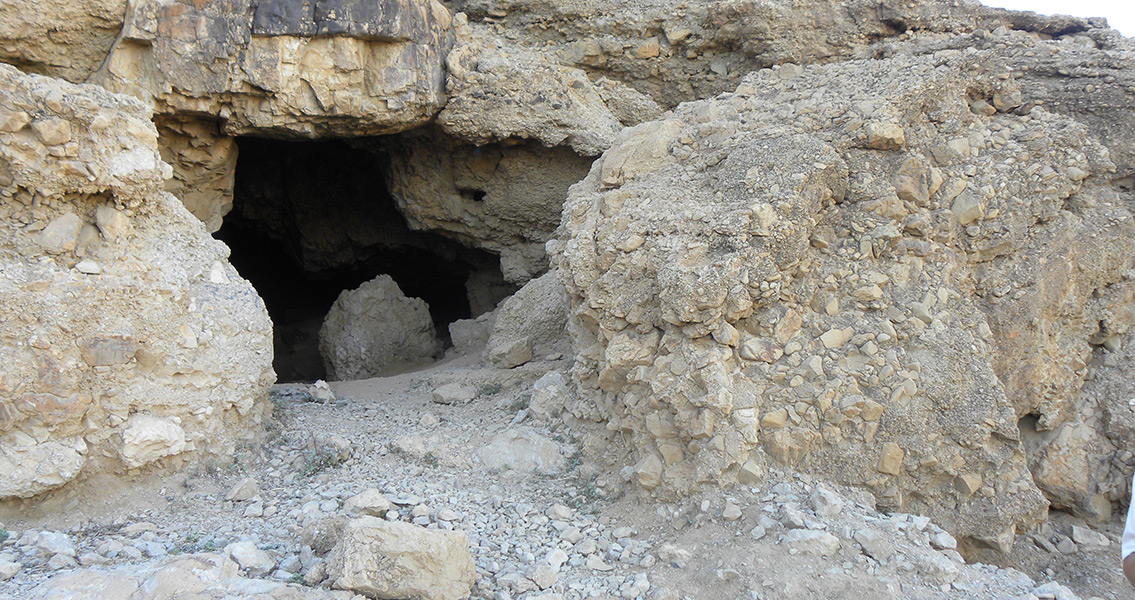
Haaretz. In 1947, a shepherd tossed a stone into a cave in Israel’s West Bank and heard the sound of earthenware cracking, leading to the the twentieth century’s biggest archaeological discovery: the Dead Sea Scrolls. Named for the seven human skulls along with other skeletal remains found there, The Cave of the Skulls was discovered in 1960 by Professor Yohanan Aharoni. Part of a series of naturally formed spaces on top of a steep cliff known as the Large Cave Complex, the Cave of Skulls is located in one of the starkest regions of the Judean Desert. The complex is also home to the Cave of the Arrows, where the extremely arid conditions helped preserve a dozen reed arrow shafts (30 inches long) for around 1,800 years. The latest discovery, two papyrus fragments each measuring approximately two centimeters squared, along with several pieces with no discernible writing, was made during a joint salvage excavation conducted by the Hebrew University of Jerusalem and the Israel Antiquities Authority. Along with the papyri artifacts, dozens of stone vessels, pottery fragments and flint items were discovered within the cave. Several different metal objects were also found, including needles, cosmetic tools, and hobnails with hollow heads which were used to make sandals. Another interesting find was a bundle, a textile wrapping around a collection of beads, which was found inside a natural crevice in the west wing of the cave. This bundle has not yet been opened, but its contents have been identified through X-rays. It joins two other bundles previously discovered by Aharoni, making up the largest bead collection ever found from the time period known as the Chalcolithic, an ancient period that predates the Copper Age. What these caves were used for in early Chalcolithic times is unknown. Suggestions vary from seasonal habitats for traders or herders, to hiding places during times of social tensions within the settlements located on that side of the Judean Desert. “These caves are very difficult to access, and they were used in their natural forms without changes or modifications that would make them more convenient for prolonged occupation,” Davidovich said in the Haaretz article. “This does not make sense when you think of ephemeral stays by shepherds or the like, but is much more plausible when you consider that they served as temporary refuge places.” ]]>

Categories
Breaking News

Manhattan Carpet Store May be Selling Reconstructed Tudor-Era Carpet

New York Post, University of Cambridge professor Mary Beard discovered the tapestry at the Persian Gallery in the midst of her research into images of Julius Caesar. The composition of the tapestry, which features images of the Roman Emperor, matches those that would have been commissioned by the Tudor king during the later years of his reign in the 1500s. Henry VIII commissioned a set of ten of these tapestries, each nine feet tall and depicting the life of the ancient Roman ruler, ostensibly to connect his reign to that of Caesar’s – though seemingly without spending much time thinking of how the emperor came to such a grisly and violent end. Beard says that at the time they were made the tapestries were of immense value to the royal household and would have been its most prized possessions. In fact, in the wake of the execution of Charles I, the tapestries were listed as the second most valuable objects in the entire royal collection during an inventory of the beheaded royal’s property. The original tapestries have long vanished – and the one found in the Manhattan gallery is not one of these originals, the professor remarked. However, the designs used to create the originals were used to reconstruct these tapestries in the late sixteenth century. Many of these tapestries, like the one found in the Persian Gallery, are valued at $50,000 or more based on their age, their condition, and the royal design from which they are copied. If one of the original ten royal tapestries were ever recovered, its value would likely be even more immense, if not incalculable. Beard commented that the designs of these tapestries are intriguing. Pulled from Suetonius’ “Life of Caesar”, the images showcase both the rise and fall of the ruler, up to and including his death at the hands of his assassins in the Senate. The university professor remarked that the idea that the walls of the Tudor king’s palace were adorned with one of the most obvious critiques of autocratic power during the classical period might be high irony indeed, considering the rule of Henry VIII was rife with behavior such as splitting with the Roman Catholic Church in order to create his own, all to facilitate his constant marriages and annulments in search of a bride who would provide him a male heir. The particular tapestry spotted by Beard is 14-foot by 15-foot, created from wool and inlaid with silk, depicting Caesar crossing the Rubicon River, the famous act that marked the point of no return in his successful attempt to seize control from his rivals Pompey and Crassus, the other members of the First Triumvirate. The term “crossing the Rubicon” has since passed into modern parlance, indicating when someone has taken an irrevocable step forward in a serious matter. More information about the discovery, as well as images of the tapestry, can be found on Prof. Beard’s blog: A Don’s Life]]>

Categories
Breaking News

The Dinosaur That Had Teeth as a Baby, but Not as an Adult

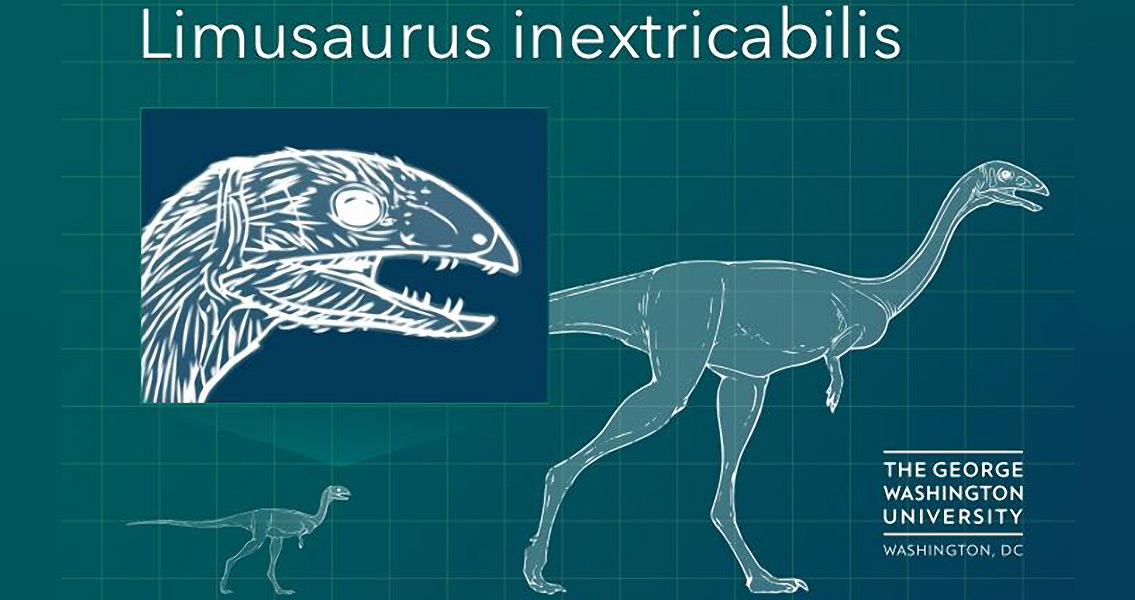
Current Biology, could explain why birds have beaks but not teeth. Limusaurus inextricabilis, the species in question, was a beaked therapod which lived in Western China during the Jurassic period – between 201.3 million years ago and 145 million years ago. Limusaurus inextricabilis is the only member of the Limusaurus genus. The research team from George Washington University in Washington D.C., USA, and the Capital Normal University in Beijing, China, analysed nineteen Limusaurus skeletons discovered in Xinjiang Province, China. The remains were unearthed from ‘death traps’ where the creatures had become fatally trapped and buried in mud. Ranging in age from babies to adults, the unfortunate victims of the muddy death traps provided the researchers with a pattern for Limusaurus‘ tooth development and loss over time. While the baby skeletons had small, sharp teeth, the adults were consistently toothless. “This discovery is important for two reasons,” said James Clark, a co-author on the paper and the Ronald Weintraub Professor of Biology at the George Washington University’s Columbian College of Arts and Sciences, in a press release. “First, it’s very rare to find a growth series from baby to adult dinosaurs. Second, this unusually dramatic change in anatomy suggests there was a big shift in Limusaurus’ diet from adolescence to adulthood.” Limusaurus is part of the theropod group of dinosaurs which are considered evolutionary ancestors of birds. Interestingly, theropods were ancestrally carnivorous but a number of species in the group were herbivorous or omnivorous. The team’s findings could point to an unusual change in diet for Limusaurus as they grew older. The babies of the species could have been meat eaters, while the adults were herbivores. The sharp teeth would have been needed to chew meat, but not plants. Chemical analysis of the Limusaurus bones supports this theory of a changing diet. It is hoped that further analysis of the Limusaurus fossils could provide an insight into how the descendants of theropods, such as birds, evolved with no teeth. It is possible that the origins of this trait can be found in the changes Limusaurus experienced in their development from childhood to adulthood. “For most dinosaur species we have few specimens and a very incomplete understanding of their developmental biology,” said Josef Stiegler, a graduate student at George Washington University and study co-author. “The large sample size of Limusaurus allowed us to use several lines of evidence including the morphology, microstructure and stable isotopic composition of the fossil bones to understand developmental and dietary changes in this animal.”]]>